



From Simple Appliances to Smart Kitchen Helpers
Not long ago, dishwashers were simple machines: you loaded the dishes, pressed a button, and hoped for the best. Today, smart technology is quietly changing that experience. Modern dishwashers are no longer just about cleaning plates — they’re becoming connected tools that help manage water use, energy efficiency, and daily routines more intelligently.
If you’re building or upgrading a modern kitchen, understanding how smart technology fits into dishwashers can help you make better long-term decisions. This isn’t about hype or “future promises.” It’s about how real features already affect everyday use in American homes.
What “Smart Technology” Means in Dishwashers
When manufacturers talk about smart dishwashers, they’re usually referring to appliances that can connect to your home network and adjust their behavior using sensors, software, and automation.
At a basic level, smart technology in dishwashers includes:
- Wi-Fi connectivity
- Sensors that monitor load size, soil level, and water temperature
- Software that adapts cycles instead of running fixed programs
The key difference from traditional models is adaptability. A standard dishwasher follows a preset cycle. A smart dishwasher reacts to what’s actually happening inside the machine.
Wi-Fi Connectivity and App Control
Wi-Fi allows a dishwasher to communicate with a smartphone app. In real-world use, this usually means:
- Checking cycle status remotely
- Receiving notifications when a load finishes
- Being alerted to errors or maintenance needs
This isn’t about controlling your dishwasher from across the country. It’s about convenience — especially in busy households where timing matters.
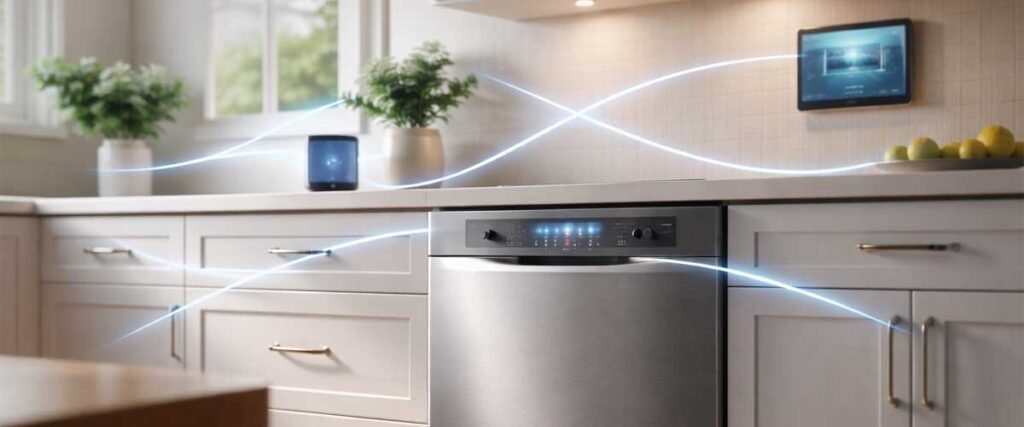
How Smart Dishwashers Work in Everyday Use
From practical experience, the biggest change smart technology brings is feedback. Traditional dishwashers stay silent unless something breaks. Smart models, on the other hand, provide information before small issues become bigger problems.
For example, sensors can detect:
- Incomplete drainage
- Water temperature inconsistencies
- Poor spray-arm performance
Instead of guessing why dishes aren’t coming out clean, users get clear alerts. That transparency improves trust and reduces unnecessary service calls.
In daily use, smart features tend to fade into the background — which is exactly the point. The best smart technology doesn’t demand attention; it quietly optimizes performance.
Key Smart Features Changing Modern Dishwashers
Not every “smart” feature matters equally. The most impactful ones focus on efficiency and reliability rather than novelty.
Sensors and Adaptive Wash Cycles
Modern dishwashers use turbidity sensors to measure how dirty the water becomes during a cycle. Based on that data, the machine can:
- Extend or shorten wash time
- Adjust water usage
- Modify temperature levels
This adaptive approach explains why newer models often use less water per cycle while still delivering better cleaning results.
These features vary widely by brand and model, which is why comparisons between smart dishwashers often reveal more than spec sheets alone.
Smart Dishwashers and the Modern Smart Home
Smart dishwashers don’t exist in isolation anymore. In modern homes, they’re increasingly designed to fit into broader smart home ecosystems. This usually means compatibility with popular platforms that allow appliances to share basic status information or respond to simple routines.
In practice, integration is subtle. A smart dishwasher might:
- Sync cycle completion alerts with a home assistant
- Adjust energy usage during off-peak hours
- Coordinate with other kitchen appliances for efficiency
What matters here is not automation for its own sake, but coordination. When appliances communicate, households gain better control over energy use and timing — especially useful in homes that already rely on smart thermostats or energy monitoring systems.
Benefits vs Potential Drawbacks of Smart Technology
Smart technology brings clear advantages, but it’s not without trade-offs. From an objective standpoint, the benefits usually center on efficiency and visibility:
- More precise water and energy usage
- Early alerts for maintenance issues
- Better consistency in cleaning performance
That said, smart dishwashers also introduce complexity. Connectivity depends on stable Wi-Fi, and software updates can occasionally affect features. For some users, that extra layer may feel unnecessary.
According to Energy Star, newer dishwasher technologies are designed to reduce both water and energy use without compromising performance.
The key is expectations. Smart features work best when viewed as enhancements, not essential functions. Even if the connection drops, the dishwasher should still clean dishes effectively — and reputable brands design them that way.
Who Benefits Most From Smart Dishwashers
Smart dishwashers make the most sense for households that value efficiency and oversight. Busy families, tech-comfortable users, and homeowners investing in long-term upgrades tend to benefit the most.
They may be less appealing for:
- Small households with light dishwashing needs
- Users who prefer minimal setup and no apps
- Kitchens where budget matters more than features
Choosing a smart dishwasher isn’t about chasing technology. It’s about whether the added insight and automation genuinely improve daily routines.
Are Smart Dishwashers the Future of Kitchen Appliances?
Smart technology is steadily becoming a standard part of modern appliances, and dishwashers are no exception. As efficiency standards tighten and households look for better ways to manage energy and water use, smart features are shifting from “nice to have” toward practical defaults.
That doesn’t mean every dishwasher will need advanced connectivity to stay relevant. What’s more likely is that certain smart elements—like adaptive wash cycles, diagnostic alerts, and efficiency optimization—will become common even in mid-range models. These features directly address real problems: inconsistent cleaning, wasted water, and unexpected breakdowns.
From an industry perspective, the direction is clear. Manufacturers are investing more in software and sensors because they improve performance without dramatically increasing resource consumption. For homeowners, this means smarter dishwashers won’t necessarily feel more complicated over time—they’ll simply feel more reliable.
If you’re curious how these smart features compare across real models, see our smart home dishwasher comparison and our Wi-Fi dishwasher buying guide. For standardized efficiency requirements, consult the ENERGY STAR dishwasher criteria.
A Smarter Approach to Everyday Cleaning
Smart technology is changing dishwashers in subtle but meaningful ways. Instead of flashy gimmicks, the most valuable improvements focus on efficiency, adaptability, and transparency. Sensors adjust cycles based on real conditions, apps provide useful feedback, and early alerts help prevent small issues from turning into costly repairs.
For modern homes, especially those already leaning toward connected appliances, smart dishwashers offer practical advantages that go beyond convenience. Still, they aren’t a requirement for everyone. The right choice depends on how much you value insight, automation, and long-term efficiency in your kitchen.
Understanding how smart technology works—and where it truly adds value—puts you in a stronger position to choose a dishwasher that fits your home today and still makes sense years down the line.