



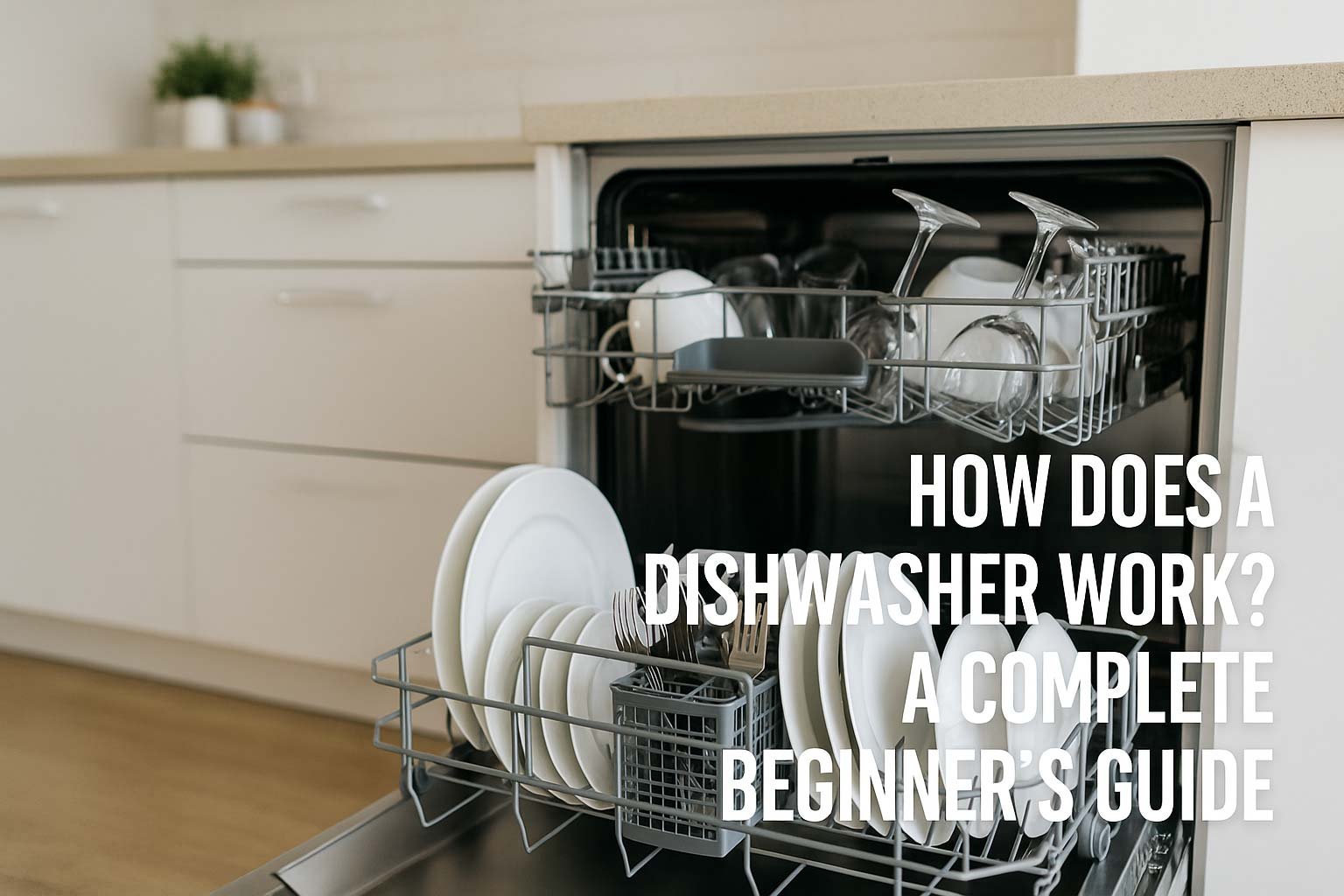
How Does a Dishwasher Work?
Wondering how does a dishwasher work? Dishwashers are essential in modern kitchens, but many people still don’t fully understand their operation. Whether you’re shopping for your first dishwasher or simply curious, this comprehensive guide explains everything—from cycle stages to key components and smart features—so you can use your appliance more efficiently and get cleaner dishes every time.
How Does a Dishwasher Work – Step-by-Step
Dishwashers follow a systematic, multi-step process designed to deliver spotless results:
1. Filling with Water
Once you start the cycle, the dishwasher fills the base with about 3 to 5 gallons (11–19 litres) of hot water. It doesn’t fill completely like a washing machine—only the bottom is submerged.
2. Heating the Water
A built-in heating element raises the water temperature to around 120°F–160°F (49°C–71°C). Hot water is essential for loosening grease and sterilising dishes.
3. Releasing Detergent
When the timing is right, the detergent dispenser opens automatically, allowing soap to mix with the hot water. Using the correct detergent and amount is crucial here.
4. Spray Washing with High Pressure
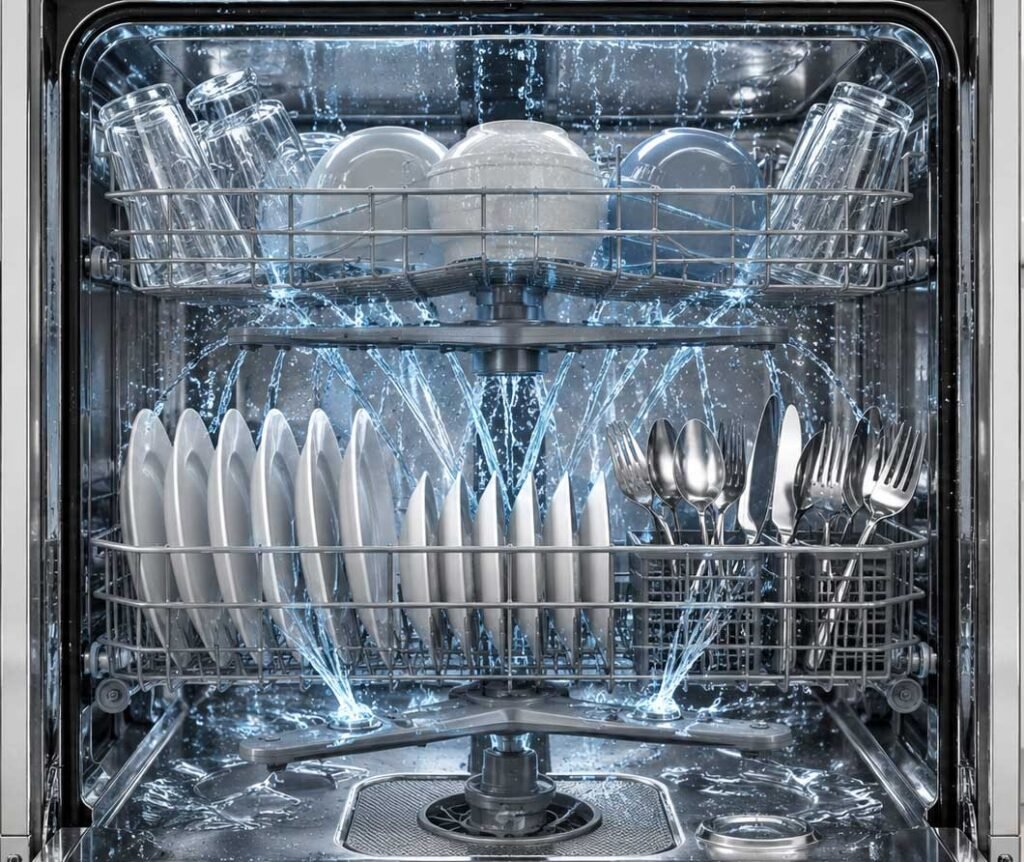
Rotating spray arms blast hot, pressurised water throughout the interior. On advanced models, sensors detect how dirty the dishes are and adjust spray patterns or water temperature accordingly.
Understanding how water moves inside a dishwasher is only half of the equation. The way dishes are arranged determines whether those spray arms can actually do their job. If you want to see how this theory translates into real-world results, this step-by-step guide on how to load a dishwasher the right way breaks it down clearly.
5. Draining Dirty Water
Used water is filtered to catch food particles, then pumped out of the tub and into your drain system.
6. Rinse Cycle
Clean, hot water sprays again to rinse away detergent and residue. Some machines perform multiple rinse cycles for optimal cleanliness.
7. Drying the Dishes
Depending on your dishwasher model, drying may involve:
- Heated Drying: Uses electric heating coils.
- Fan Drying: Circulates air inside the tub.
- Condensation Drying: Uses residual heat and room-temperature airflow (energy-efficient).
Key Parts That Make a Dishwasher Work
| Component | Function |
|---|---|
| Spray Arms | Moves water through spray arms and out the drain |
| Filter | Catches food debris to prevent clogging |
| Heating Element | Heats water and air for washing and drying |
| Pump | Moves water through spray arms and out drain |
| Dispenser | Releases detergent and rinse aid automatically |
How the Filter Handles Food Particles
As the spray arms loosen food from dishes, the debris has to be separated from the recirculating wash water. Most modern dishwashers use a filter at the bottom of the tub to capture food particles before the water is pumped around again.
Many newer machines use removable filter systems rather than older-style hard-food disposers. That can help keep operation quieter, but it also makes regular filter cleaning important. If you notice grit on glassware, persistent odors, or weaker cleaning, inspect the filter early in the troubleshooting process. See our dishwasher filter cleaning guide.
Why Loading Changes the Cleaning Process
A dishwasher can only clean surfaces the spray can reach. Bowls packed too closely, nested utensils, or a large pan blocking a spray arm can interrupt water coverage even when the machine itself is working correctly.
- Angle bowls and cups so water can drain.
- Keep tall items clear of the spray-arm path.
- Avoid nesting spoons and overcrowding racks.
- Place heavily soiled surfaces where spray coverage is strongest.
For a complete loading method, see our guide to loading a dishwasher correctly.
Main Dishwasher Parts and What They Do
The cleaning process depends on several components working in sequence. The water inlet valve controls incoming water, the circulation pump pushes it through the spray arms, and the detergent dispenser releases detergent at the appropriate stage. A filter captures debris, while the drain pump removes dirty water.
Depending on the design, an internal heater or exposed heating element can help raise water temperature and support drying. The door gasket keeps the tub sealed, and the control board coordinates filling, heating, washing, rinsing, draining, sensors, and timing. Understanding these parts also makes basic troubleshooting easier: blocked spray arms affect coverage, a dirty filter can cause grit or odors, and drainage problems can leave standing water.
Smart Features in Modern Dishwashers
Today’s dishwashers come packed with advanced features that enhance performance and save time:
- Soil Sensors: Adjust cycle time and intensity based on how dirty dishes are.
- Quick & Eco Wash Modes: Use less water and energy for lightly soiled loads.
- Sanitise Options: Raise water temperature to kill 99.9% of bacteria.
- Wi-Fi Connectivity: Start or monitor cycles via smartphone apps.
- Third Rack: For silverware, utensils, or flat items.
According to U.S. Department of Energy, modern dishwashers use significantly less water than handwashing.
Common Dishwasher Myths
Let’s clear up some widespread misconceptions:
- “You must pre-wash dishes”: Modern dishwashers are designed to handle food residue. Just scrape large chunks.
- “More detergent means better cleaning”: Too much can leave residue or harm components.
- “Dishwashers waste water”: Actually, most models use significantly less water than hand-washing.
How to Maximize Dishwasher Performance
Follow these tips to get the best results:
Loading Tips:
- Place plates and bowls angled down.
- Avoid nesting spoons and overcrowding the racks.
- Face dirty sides toward the spray arms.
Maintenance Tips:
- Clean the filter at least once a month.
- Wipe seals and spray arms occasionally.
- Use dishwasher cleaner monthly to prevent buildup.
Product Tips:
- Use rinse aid for streak-free drying.
- Select the right cycle based on dish types and soil level.
Thinking of Buying a New Dishwasher?
If you’re ready to upgrade or replace your old unit, check out our in-depth guide:
👉 Best Dishwashers for 2025
Top Recommendations:
- Bosch 800 Series – Quiet, powerful, feature-rich
- Whirlpool WDT730PAHZ – Great value for money
- Miele G 5056 SCVi SFP – Premium performance and eco-friendly design
Why a Dishwasher May Run but Still Clean Poorly
If the machine completes a cycle but dishes remain dirty, the cause is often not the basic wash sequence itself. Common problems include a clogged filter, blocked spray-arm holes, overcrowded racks, unsuitable detergent, hard-water deposits, insufficient water temperature, or choosing a light cycle for heavily soiled cookware.
Start with the simple checks: clean the filter, confirm the spray arms can rotate freely, avoid blocking their path, and match the cycle to the load. For persistent problems, use our dedicated guide to why a dishwasher does not clean well rather than turning this beginner explainer into a full troubleshooting manual.
❓ How Does a Dishwasher Work? FAQ
Can dishwashers remove baked-on food?
Yes, especially with soil-sensing and heavy-duty cycles. Just don’t stack dishes on top of each other.
How long does a typical cycle last?
Anywhere between 1.5 and 3 hours, depending on the cycle selected.
Do dishwashers sanitise dishes?
Many offer NSF-certified sanitising cycles that reach over 150°F to eliminate most bacteria.
Conclusion: Understanding how a dishwasher works helps you…
Dishwashers are far from simple machines—they’re efficient, high-tech tools that make kitchen cleanup easier than ever. By understanding how your dishwasher works, you can extend its lifespan, use it more effectively, and enjoy consistently spotless dishes.