



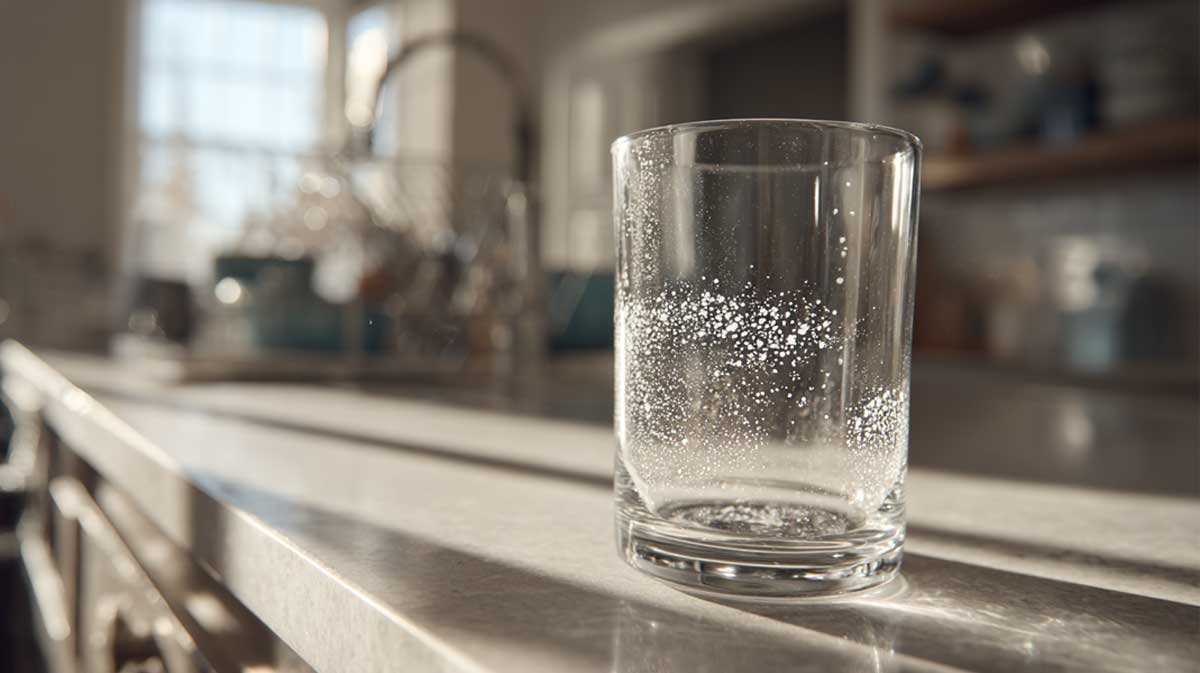
If your dishwasher leaves white residue or chalky spots on glasses, plates, or stainless steel, you’re not alone. This is one of the most common complaints homeowners have — and one of the signs your machine might not be performing at its best.
If you’re also considering an upgrade, check out our Best Dishwashers for 2025 — all tested for cleaning power, hard water handling, and drying performance.
In most cases, white residue isn’t a sign that your dishwasher is broken. It’s a signal that something in the water chemistry, detergent choice, or loading routine is slightly off. In this guide, we’ll break down why it happens, how to identify the exact cause, and what actually works to prevent it—based on real-world use, not guesswork.
Dishwasher white residue or spots are usually caused by:
- Hard water minerals that dry on dishes after rinsing
- Too much detergent or incompatible detergent formulas
- Lack of rinse aid or incorrect dispenser settings
The issue is rarely a mechanical fault and can usually be fixed with simple adjustments.
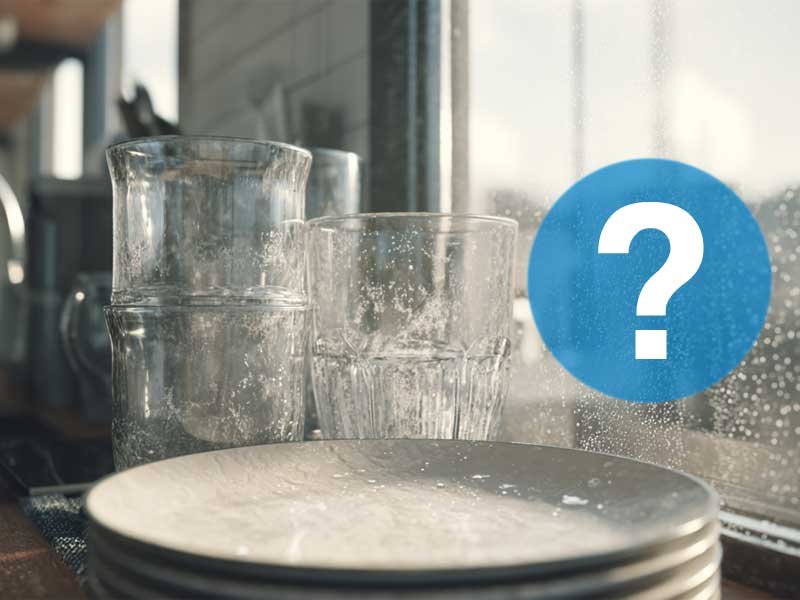
What Causes White Residue in a Dishwasher?
White residue usually comes from mineral buildup like calcium and magnesium. If you’re unsure about your area, check the USGS hard water map to see your regional hardness level.
However, hard water isn’t the only culprit. In practice, residue tends to come from one of four main sources:
- Hard water minerals not being neutralized
- Excess or incompatible detergent
- Lack of rinse aid or improper settings
- Incomplete rinsing due to loading or cycle choice
The key is figuring out which one applies to your situation, because the fix depends on the cause.
How to Tell If It’s Hard Water? (Our Quick Test)
Before changing anything, it helps to confirm whether hard water is the issue.
A simple test:
- Take a glass with white spots.
- Rub the spot with a cloth dipped in white vinegar.
- If the residue disappears easily, you’re dealing with mineral deposits, not detergent film.
Hard water residue is removable with mild acid (like vinegar). If your machine has a softener, adding the right dishwasher salt can also make a big difference.
Fix #1: Adjust Detergent Amount (Less Is Often More)
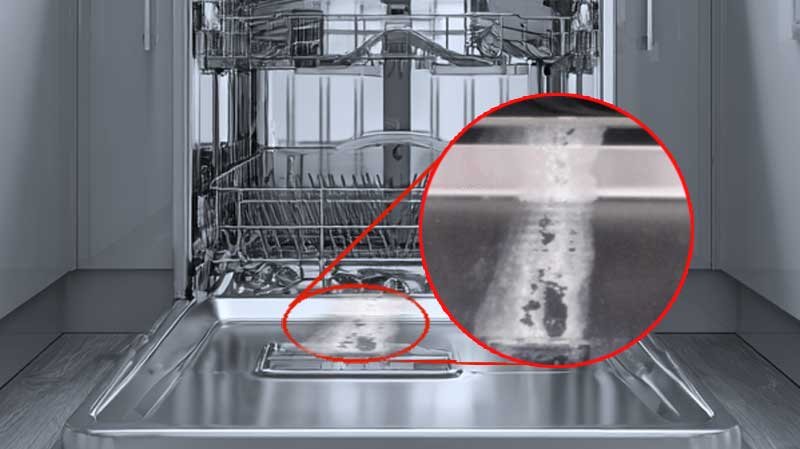
One of the most common mistakes is using too much detergent, especially in areas with soft or moderately hard water.
Modern dishwashers are designed to work with far less detergent than older models. Pods make this tricky, because you can’t adjust the dose.
What to do:
- If using powder or liquid, reduce the amount by 25–50%.
- If using pods and seeing residue, try switching brands or formats.
- Avoid combining pods with extra pre-wash detergent unless the load is extremely dirty.
More detergent does not mean cleaner dishes—it often means more residue left behind.
Fix #2: Use Rinse Aid (Even If You Think You Don’t Need It)
Rinse aid isn’t just about shine. It helps water sheet off dishes instead of forming droplets, which prevents minerals from drying onto the surface.
Even many people using “all-in-one” pods benefit from adding rinse aid separately.
Best practices:
- Keep the rinse aid reservoir filled.
- Set the dispenser to a medium or high level if spotting persists.
- If you see streaks instead of spots, lower the setting slightly.
In real-world testing, using the right rinse aid solves clouding issues more consistently than changing detergents alone.
Fix #3: Check Dishwasher Salt (If Your Model Uses It)
If your dishwasher has a built-in water softener, dishwasher salt is essential. Without it, the softener can’t neutralize hard water minerals effectively.
Signs salt may be the issue:
- White residue despite using rinse aid
- Cloudy glasses that worsen over time
- Living in a known hard water area
What to do:
- Use only dishwasher-specific salt.
- Refill when the indicator light turns on.
- Run a short cycle after refilling to stabilize the system.
Skipping salt doesn’t just cause residue—it can reduce long-term performance.
Fix #4: Improve Loading and Rinsing
Sometimes the problem isn’t chemistry—it’s water flow.
Poor loading can block spray arms or prevent proper rinsing, especially on upper racks where glasses sit.
Check the following:
- Spray arms spin freely.
- Tall items aren’t blocking water paths.
- Glasses aren’t nested or touching closely.
- Bowls aren’t facing downward and trapping water.
Even a perfectly tuned dishwasher can leave spots if water can’t rinse surfaces evenly.
Fix #5: Choose the Right Cycle for Your Water
Eco or quick cycles use less water and lower temperatures, which can struggle in hard water conditions.
If you’re consistently seeing residue:
- Try a normal or heavy cycle temporarily.
- Use higher-temperature options if available.
- Avoid ultra-short cycles for glassware.
Longer rinsing often makes a visible difference, especially when troubleshooting.
What If the Residue Is Actually Detergent Film?
If vinegar doesn’t remove the residue, it may be detergent buildup instead of minerals.
This often happens when:
- Too much detergent is used
- Water is very soft
- Low-temperature cycles are used repeatedly
Solution:
- Cut detergent dose significantly
- Run a hot cycle with an empty machine
- Avoid mixing detergent types
Detergent film feels slippery rather than chalky and usually requires reducing chemical load, not adding more.
Preventing White Residue Long-Term
Once the issue is resolved, a few habits help keep it from returning:
- Match detergent type to your water hardness
- Keep rinse aid topped up
- Clean the filter regularly (see full guide on (dishwasher maintenance here)
- Use the right cycle for the load
- Avoid overloading
These small adjustments matter more than switching machines or chasing “stronger” detergents.
When White Residue Signals a Bigger Problem
In rare cases, persistent residue can indicate:
- A failing water softener
- Clogged spray arms
- A worn heating element affecting drying
If none of the fixes above help, it may be time to inspect components—or consider whether the dishwasher is nearing the end of its service life.
Final Takeaway
White residue and spots are frustrating, but they’re almost always a setup issue, not a defect. By adjusting detergent use, adding rinse aid, checking salt levels, and improving loading, most households can eliminate the problem completely.
The goal isn’t to fight your dishwasher—it’s to align it with your water conditions and habits. Once that happens, clean, clear dishes become the norm again.
Dishwasher White Residue FAQs
Q1: Is white residue in a dishwasher dangerous?
A: No. It’s usually mineral buildup from hard water or detergent residue and doesn’t pose a health risk.
Q2: Will vinegar damage my dishwasher or dishes?
A: Occasional use for testing or cleaning is safe, but it shouldn’t be used regularly inside the dishwasher.
Q3: Do dishwasher pods cause white residue?
A: They can, especially if they release too much detergent for your water hardness or cycle type.
Q4: Can rinse aid really make a difference?
A: Yes. Rinse aid helps water sheet off dishes, preventing mineral spots and cloudiness.
Q5: Why does residue appear only on glasses?
A: Glass surfaces show mineral deposits more clearly, especially when drying conditions aren’t ideal.