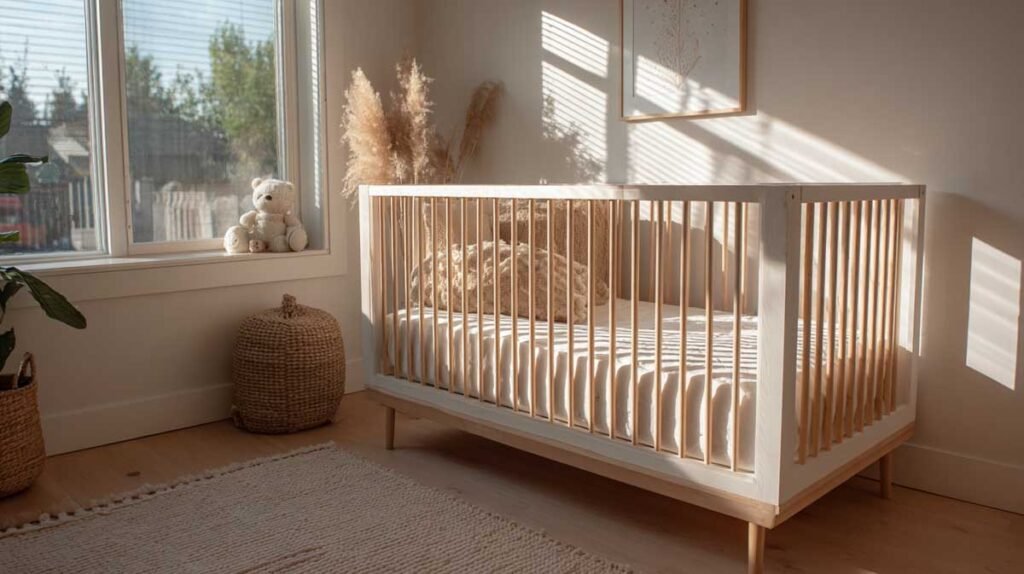



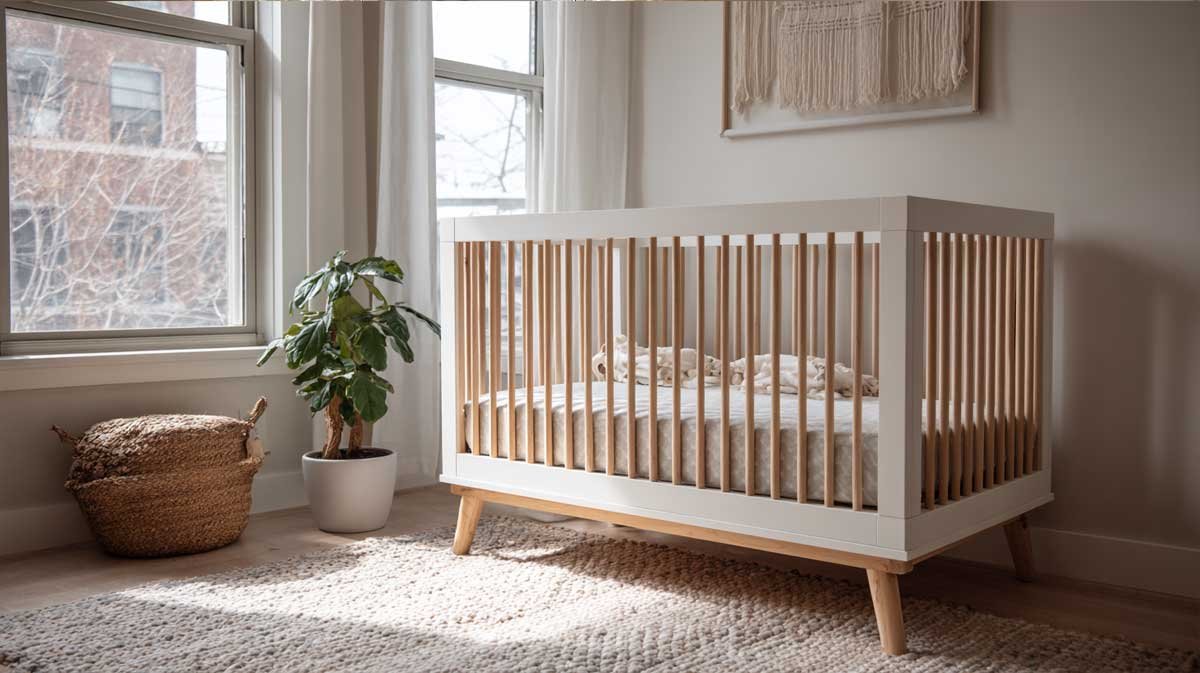
Choosing the best crib mattress for newborns can feel surprisingly overwhelming — especially when every brand promises safety, breathability, and “perfect sleep.” If you’re feeling unsure about what truly matters, that’s completely okay. Most parents face the same questions, and you’re definitely not alone.
The crib mattress you choose shapes your baby’s sleep environment from day one. A firm, flat, safe surface not only supports your newborn’s development but also aligns with the AAP’s Safe Sleep Guidelines, giving you peace of mind during those long nights. However, with so many options available in 2025 — foam, hybrid, breathable, organic, non-toxic — it helps to slow down, breathe, and approach this step gently.
In this guide, we’ll walk through how to choose the best crib mattresses for newborns and what truly matters for safe sleep. If you’d like a broader look at gear for your baby’s sleep space, feel free to visit our Baby Gear category anytime.
Let’s take this one small step at a time.
1. Why the Best Crib Mattresses for Newborns Matter for Safe Sleep
When comparing the best crib mattresses for newborns, firmness is one of the most important factors. Newborns spend many hours each day sleeping, which means their mattress plays a huge role in safety, comfort, and healthy development. That said, choosing the right one doesn’t have to feel complicated. Understanding firmness, breathability, and materials can help you make a confident decision — without getting lost in technical details.
The Importance of Firmness (AAP Standards)
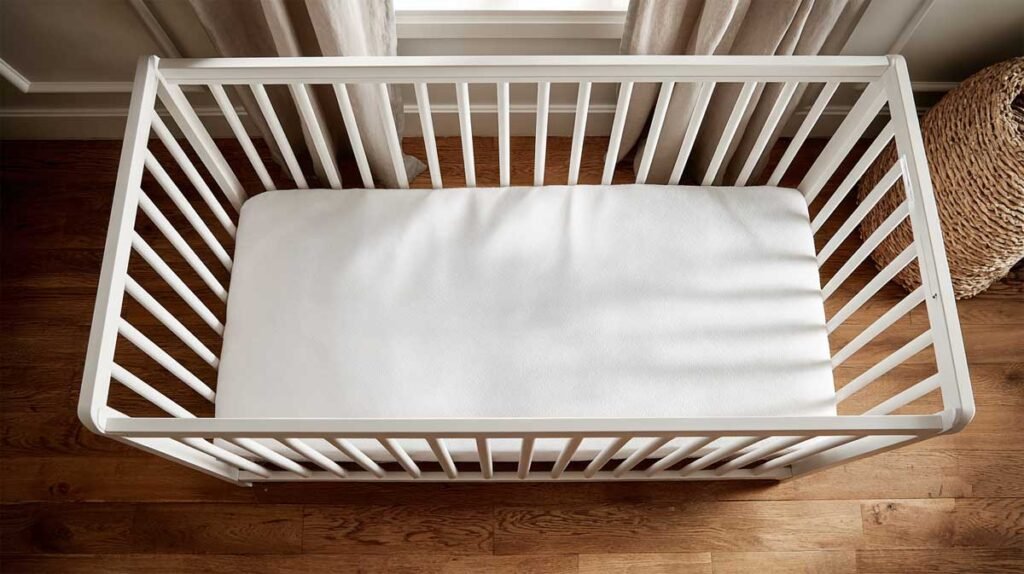
A firm, flat mattress is essential for newborn safety. According to the American Academy of Pediatrics (AAP), softness increases the risk of rebreathing and overheating. In other words, if a mattress feels “plush” to you, it may actually be unsafe for a newborn.
Parents often wonder whether a mattress that feels firm is uncomfortable for a baby. However, babies are used to firm surfaces from the womb, so firmness supports both safety and proper spine development.
If you’re still choosing your crib as well, you can explore our gentle guide here:
👉 Best Baby Cribs for Newborns
Breathability & Airflow
Breathability has become a major focus in 2025, especially for warm climates or smaller apartments where airflow matters. For example, mattresses with mesh cores or breathable fiber channels allow air to move more freely around your baby.
On the other hand, a traditional foam mattress may retain more heat, depending on its density and cover material.
Ultimately, breathability isn’t just about comfort — it helps reduce temperature fluctuations, creating a more consistent sleep environment.
Organic vs Standard Crib Mattresses for Newborns
Many parents wonder if organic crib mattresses are necessary. The truth is: not always.
However, if your baby has sensitive skin, or if you prefer products with fewer chemical emissions, an organic or GREENGUARD Gold–certified mattress can offer added reassurance.
Here’s a gentle breakdown:
- Organic mattresses use natural fibers (like cotton or wool) and avoid many synthetic chemicals.
- Standard mattresses can still be very safe if they comply with US safety standards and have low VOC emissions.
In addition, a GREENGUARD Gold label means the mattress has passed strict tests for indoor air quality — something many US families appreciate.
For more newborn sleep guidance aligned with AAP recommendations, you can also explore our Baby Sleep & Safety hub.
2. Types of Crib Mattresses for Newborns (Parent-Friendly Breakdown)
Crib mattresses come in a few main styles, each with its own strengths. Fortunately, you don’t need to memorize every technical feature — just understanding how each type works can help you choose what fits your home, your budget, and your baby’s needs.
Let’s explore the most common designs you’ll see in 2025.
Foam Crib Mattresses
Foam mattresses are lightweight, easy to lift during sheet changes, and often budget-friendly.
In addition, many foam models are GREENGUARD certified and designed with improved airflow channels.
Pros:
- lighter for quick bedding changes
- affordable options available
- firm support when properly made
Cons:
- can retain heat if not breathable
- quality varies widely
Innerspring Crib Mattresses
Innerspring mattresses look similar to adult mattresses but are designed with a firmer, safer newborn surface.
On the other hand, they tend to be heavier and less convenient to lift.
Pros:
- durable, long-lasting support
- excellent firmness
- great for families planning future siblings
Cons:
- heavier
- can feel less breathable depending on the cover material
Hybrid Crib Mattresses
Hybrid models blend foam + coils, aiming to provide structure, firmness, and breathability all at once.
For example, many popular 2025 models include a breathable core plus a reinforced perimeter that prevents edge sagging.
Ultimately, hybrids can be a great option for parents who want the benefits of both foam and innerspring.
Breathable Crib Mattresses & Airflow / Non-Toxic Mattresses
These mattresses focus on airflow and safe materials. Designs like Newton Baby use washable, fully breathable cores.
Meanwhile, non-toxic brands often avoid chemical flame retardants and synthetic adhesives.
These options can be especially appealing for parents sensitive to air quality or environmental factors.
3. Safety Standards You Should Know (Explained Simply)
Safety is the heart of newborn sleep. The good news is that you don’t need to understand every certification — just a few key points can guide you toward safer choices.
For the most up-to-date safe sleep recommendations, you can review the AAP Safe Sleep Guidelines on their official website:
AAP Safe Sleep Essentials
The American Academy of Pediatrics recommends:
- a firm, flat mattress
- a snug-fitting crib sheet
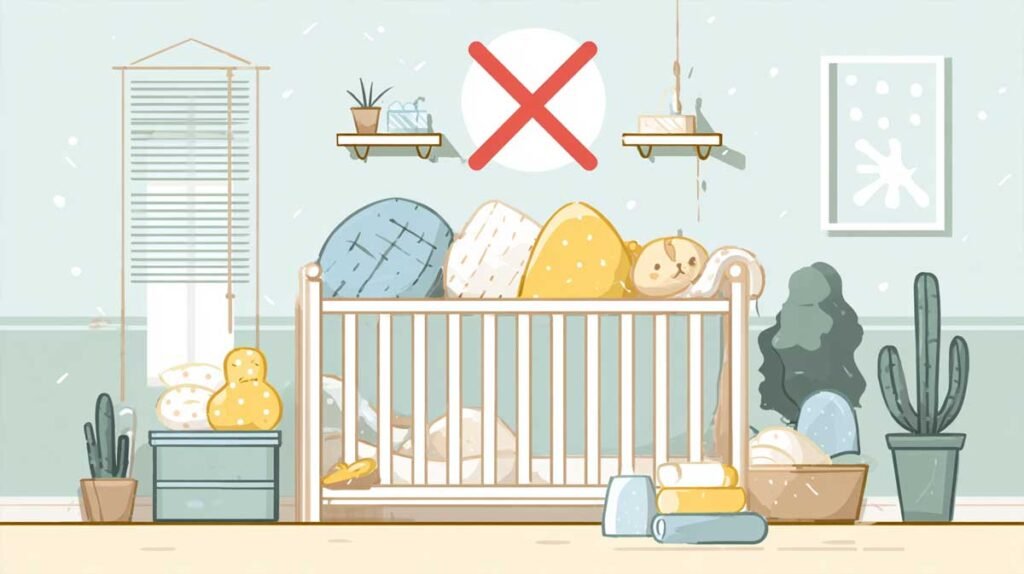
- no loose bedding or bumpers
- no pillows, positioners, or toys
That said, following these few rules creates the safest possible sleep environment — regardless of which mattress you choose.
CPSC & JPMA Safety Guidelines
The Consumer Product Safety Commission (CPSC) requires strict standards for crib mattress firmness, flammability, and fit.
JPMA certification adds another layer of reassurance through independent product testing.
In addition, checking that your mattress fits tightly inside your crib helps prevent unsafe gaps.
Common Safety Mistakes to Avoid
Even great mattresses can become unsafe if used incorrectly. Avoid:
- adding toppers or soft pads
- using oversized sheets
- reusing an old/damaged mattress
- choosing memory foam (too soft for newborns)
If you’re setting up your full newborn sleep environment, feel free to browse our gentle guides inside Baby Sleep & Safety anytime.
4. Best Crib Mattresses for Newborns – 2025 Reviews
Below, you’ll find a carefully curated list of the best crib mattresses for newborns in 2025. Each product was chosen with safety, breathability, firmness, and real-life parent experience in mind. That said, every family’s needs look a little different — so feel free to pick the one that aligns best with your home and routine.
(Note: Add Amazon affiliate buttons after each block.)
Newton Baby Original Crib Mattress (Breathable & Washable)
Overview:
The Newton Baby mattress remains a top choice for US parents thanks to its fully breathable core and washable design. In addition, it allows excellent airflow, which helps regulate temperature during sleep.
What We Like:
- 100% breathable design
- Washable inside and out
- GREENGUARD Gold certified
- Lightweight and easy to handle
What Could Be Better:
- Higher price point
- Not as firm as traditional foam, though still safe for newborns
Best For:
Parents who value breathability and easy cleaning.
Babyletto Pure Core Crib Mattress (Non-Toxic Choice)
Overview:
A beautifully made non-toxic mattress featuring eco-friendly materials and dual-sided support for baby and toddler years.
What We Like:
- GREENGUARD Gold certified
- Organic cotton cover
- Dual-firmness design
- Hypoallergenic materials
What Could Be Better:
- Slightly heavier than foam-only models
- Higher price bracket
Best For:
Families looking for a clean, chemical-conscious sleep surface.
Sealy Baby Firm Rest Crib Mattress (Budget-Friendly)
Overview:
If you’re looking for a dependable mattress at an affordable price, the Sealy Baby Firm Rest may be the perfect fit. For example, it offers firm support and solid durability without stretching your budget.
What We Like:
- Very firm and supportive
- Lightweight
- Great value
- Waterproof cover
What Could Be Better:
- Not as breathable as premium models
- Cover material can feel slightly warm
Best For:
Parents seeking a safe, firm, budget-conscious mattress.
Naturepedic Organic Crib Mattress (Premium Organic Option)
Overview:
Naturepedic offers one of the safest organic sleep surfaces on the market. Meanwhile, it avoids chemical flame retardants, adhesives, and polyurethane foam entirely.
What We Like:
- 100% certified organic materials
- Firm newborn side
- Extremely durable
- Excellent for sensitive skin
What Could Be Better:
- Expensive compared to other models
- Heavier to lift for sheet changes
Best For:
Parents prioritizing organic, chemical-free materials.
Graco Premium Foam Crib Mattress (Lightweight & Reliable)
Overview:
A modern foam mattress designed for easy setup, strong firmness, and convenient shipping.
What We Like:
- Lightweight
- Good firmness for newborns
- Affordable
- Breathable design for a foam mattress
What Could Be Better:
- Takes time to fully expand after unboxing
- Less durable long-term compared to hybrids
Best For:
Families who want a simple, safe mattress with great value.
5. How to Choose the Right Crib Mattress (Simple Parent Guide)
Choosing the right crib mattress doesn’t need to be complicated. Instead, it helps to focus on a few core things: safety, firmness, fit, and your home’s daily routines. Here’s a sweet, parent-friendly look at how to make the right choice with confidence.
Consider Your Crib First
Before picking a mattress, double-check your crib’s size and specifications.
Most US cribs use a standard size mattress (52” x 28”), while mini-cribs require smaller dimensions.
If you’re still choosing your crib, you can explore our newborn-safe guide here:
👉 Best Baby Cribs for Newborns
Think About Your Home’s Climate
If you live in a warm or humid area, breathable mattresses can help reduce heat buildup.
On the other hand, in cooler climates, a traditional foam mattress is perfectly comfortable and safe.
In addition, breathable models may offer more consistent airflow in smaller apartments.
Weight & Convenience
If you expect frequent sheet changes (most newborn parents do), a lightweight foam mattress can make your days easier.
Meanwhile, heavier organic or hybrid mattresses offer excellent durability — though they may require a bit more lifting.
Budget & What You Actually Need
It’s easy to feel pressured into buying the most expensive option.
However, what matters most for newborns is firmness and fit — both available even in budget-friendly models.
Still, premium mattresses add benefits like:
- organic materials
- enhanced breathability
- washable cores
- dual-sided toddler features
Choose based on what feels right for your family today.
6. Crib Mattress Accessories — What’s Safe & What’s Not
Accessories can make crib care easier, but some items often marketed to parents are not safe for newborn sleep. Fortunately, remembering just a few guidelines can help you create a calm, safe environment.
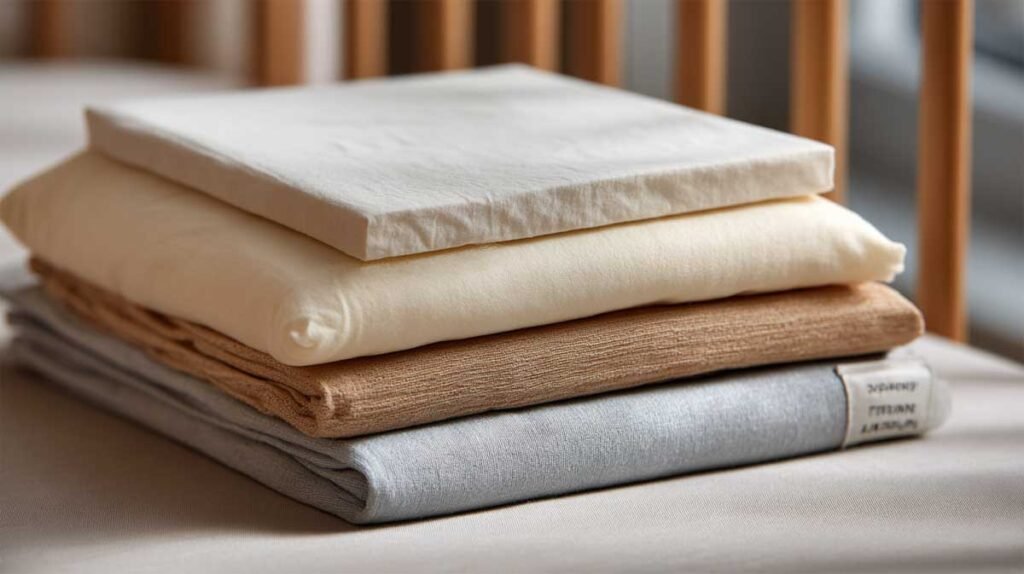
Fitted Sheets (A Must-Have)
A snug, secure fitted sheet is the only bedding needed for a newborn.
Make sure it matches your mattress size precisely.
Waterproof Pads (Use Carefully)
Thin, breathable waterproof pads are okay as long as they do not change the firmness of the mattress.
Avoid thick quilting or plush padding.
What You Should NOT Use in a Crib
The list is simple — and very important.
Do not use:
- crib bumpers
- pillows
- loose blankets
- quilts
- memory foam toppers
- sleep positioners
Ultimately, the safest sleep environment is a firm mattress + fitted sheet — nothing more.
7. How Long Does a Crib Mattress Last?
Crib mattresses are designed to be durable, but their lifespan depends on materials, usage, and overall care. That said, understanding when to keep using your mattress and when to replace it can help you maintain a safe sleep space for your baby.
When to Replace a Crib Mattress
You may need to replace a mattress if:
- it has visible sagging
- the surface feels soft or uneven
- the cover is torn or peeling
- it no longer fits snugly inside the crib
- it has been stored improperly (especially in damp areas)
Ultimately, a crib mattress should remain firm and supportive. Any sign of softness means it’s no longer ideal for newborn sleep.
Can You Use the Same Mattress for a Second Baby?
Yes — but with a few important conditions.
Before reusing a mattress, check:
- firmness (press down in several spots)
- cleanliness (no mold, stains, or odors)
- structural integrity (no dipping or sagging)
- tight crib fit (no gaps around edges)
If the mattress passes these checks, it may be safe to use again.
However, if there is any doubt, choosing a new one is always the gentler, safer option.
Are Used Mattresses Safe?
Used mattresses can sometimes pose safety risks if their history is unclear.
For example, prolonged moisture exposure or previous softening can make them unsafe for newborns.
If purchasing second-hand:
- confirm the model meets current safety standards
- inspect for internal damage
- check for any recall on CPSC.gov
In addition, always ensure the mattress fits tightly in your crib without gaps.
8. Final Thoughts — A Safe, Calm Beginning
Choosing the best crib mattress for your newborn isn’t about finding the most expensive option — it’s about finding one that feels safe, supportive, and right for your family. And if you’ve made it this far, you’re already taking thoughtful steps toward creating a peaceful sleep space for your little one.
These early months come with plenty of learning and adjusting, but a safe mattress can offer just a bit more confidence during the night. Remember: firmness, breathability, and a snug crib fit matter far more than extra features or trends.
Whenever you feel unsure, you can revisit our gentle guides inside
👉 Baby Sleep & Safety
or explore more essentials within
👉 Baby Gear.
You’re doing beautifully — and your baby’s safe, cozy sleep is just one supportive choice away. Choosing the best crib mattress for your newborn doesn’t have to be stressful — a few essentials can guide you safely
9. FAQ — Best Crib Mattresses for Newborns (2025)
(Parent-friendly answers + optimized for Google Featured Snippets)
Q. What is the safest crib mattress for newborns?
The safest mattress is one that is firm, flat, and fits snugly inside the crib.
Look for models that meet CPSC standards, offer good breathability, and avoid soft memory foam.
GREENGUARD Gold certification is an added bonus for low chemical emissions.
Q. Do newborns need a special crib mattress?
Yes. Newborns require a mattress that is extra firm, safe, and supportive.
Adult-style plush surfaces are not safe for infants.
In other words, if it feels soft to your hand, it’s not suitable for newborn sleep.
Q. Is a breathable crib mattress worth it?
Breathable mattresses can offer added temperature regulation and airflow.
However, breathability should not replace core safety rules — firmness always comes first.
For warm climates or small bedrooms, breathability can be especially helpful.
Q. Can I use a used crib mattress?
You can, but with caution.
Check for:
- sagging or softness
- mold or odor
- loose seams
- poor crib fit
- recalls on CPSC.gov
If anything feels “off,” choosing a new mattress is safer.
Q. Should I choose organic or standard materials?
Both can be safe.
Organic options avoid certain chemicals and can feel reassuring to parents with sensitive babies.
Standard mattresses can also be safe as long as they meet US safety standards and have low VOC emissions.
Q. How firm should a newborn mattress be?
A newborn mattress should be very firm — firmer than what most adults would choose for themselves.
Firmness reduces suffocation risk and supports healthy spinal development.
Q. What size mattress do I need for a standard crib?
Standard US crib mattresses measure 52” x 28”, and must fit tightly with no more than two fingers of space between mattress and crib frame.