



Updated — November 11, 2026: This article has been reviewed and updated for accuracy, clarity, and current dishwasher guidance before republication.
At first glance, a dishwasher seems pretty simple: you load dirty dishes, add detergent, press Start, and hope your coffee mugs come out looking less like a science experiment. But if you’ve ever wondered how does a dishwasher work, the answer is more interesting than “it sprays water and calls it a day.”
A dishwasher is actually a compact cleaning system. It uses hot water, water pressure, detergent chemistry, filtration, draining, rinsing, and drying—all in a carefully timed sequence. Before you start comparing features or choosing the right dishwasher for your kitchen, it helps to understand what’s really happening behind that closed door.
Let’s open the machine—figuratively, not mid-cycle—and walk through the process.
What Really Happens Inside a Dishwasher?
A dishwasher does not fill up like a bathtub. That’s one of the biggest misconceptions. Instead, it pulls in a controlled amount of water, usually into the bottom of the tub. Then a pump sends that water through spray arms, which blast hot water across your plates, bowls, glasses, and silverware.
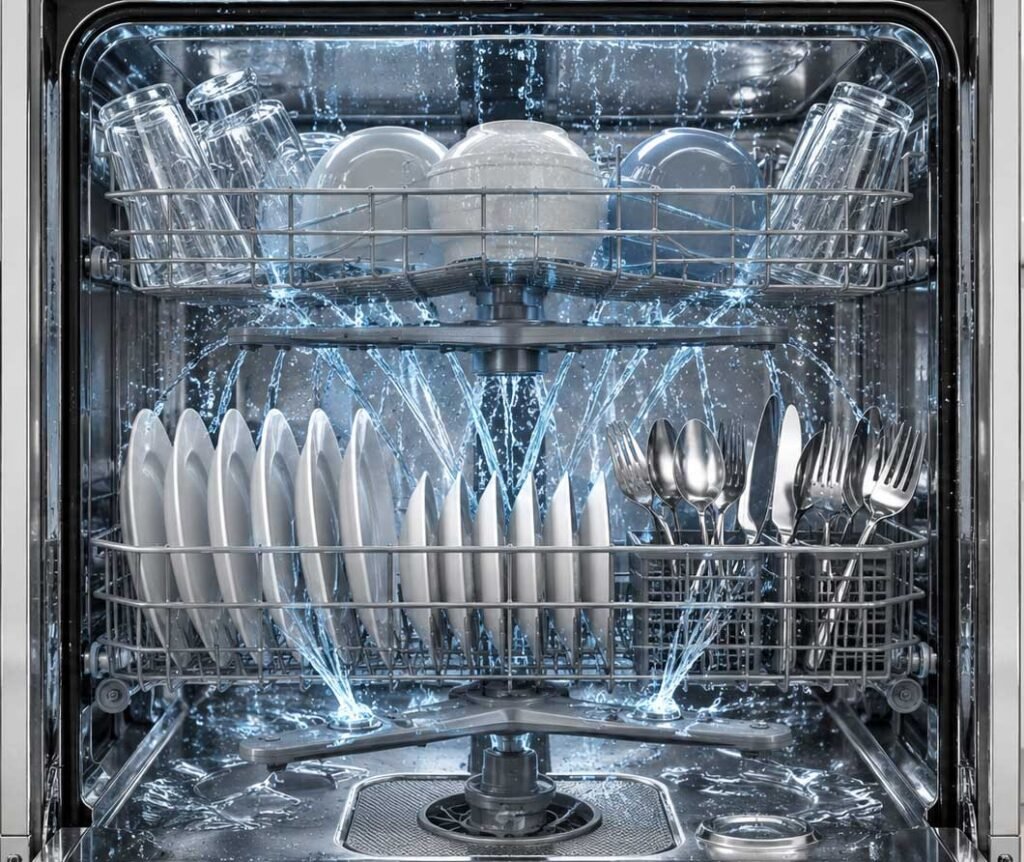
The process usually looks like this:
- The dishwasher fills with water.
- The water heats up.
- Detergent is released.
- Spray arms push water around the tub.
- Food particles are filtered out.
- Dirty water drains away.
- Clean water rinses the dishes.
- Heat, airflow, or condensation dries everything.
In other words, your dishwasher is less like a soaking bucket and more like a tiny automated car wash for plates.
Step-by-Step: How a Dishwasher Works
Every dishwasher model is a little different, but most machines follow the same basic cleaning process. Some have sensors, special zones, extra drying fans, or smart cycles, but the core idea is the same: water goes in, gets heated, gets sprayed, gets filtered, drains out, and repeats until your dishes are clean.
1. The Dishwasher Fills With Water
When you start a cycle, the dishwasher opens its water inlet valve. This allows water from your home’s supply line to enter the machine.
But here’s the important part: the dishwasher does not fill all the way up. It only takes in enough water to sit in the bottom basin. That water is then reused during parts of the wash cycle as the pump circulates it through the spray arms.
So if you ever open your dishwasher and expect to see dishes swimming around like pasta in a pot, don’t panic. A small amount of water at the bottom is normal. A full tub of water is not.
2. The Water Gets Heated
Hot water is one of the main reasons dishwashers clean so well. Warm water softens stuck-on food, loosens grease, and helps detergent activate properly.
Many dishwashers use hot water from your home’s plumbing and then boost the temperature inside the machine. Some models have a heating element at the bottom of the tub, while others use internal heaters built into the water circulation system.
This heating step matters more than people think. Greasy pans, oily plates, and cloudy glasses usually need more than pressure alone. Hot water gives the detergent a better chance to do its job.
Think of it like washing your hands after eating pizza. Cold water helps a little. Warm water with soap actually wins the fight.
3. Detergent Is Released at the Right Time
Once the dishwasher has filled and started circulating water, the detergent dispenser opens. This usually happens during the main wash portion of the cycle, not always right at the beginning.
Dishwasher detergent is designed to work with heat, water movement, and time. It may contain enzymes that break down food proteins and starches, plus cleaning agents that help lift grease and prevent food from sticking back onto dishes.
This is why using the right detergent matters. A weak detergent, too much detergent, or the wrong type can leave residue, spots, or half-clean plates. If you’re comparing pods, powders, gels, or eco-friendly options, check our guide on choosing the right dishwasher detergent.
One quick note: regular dish soap does not belong in a dishwasher. Unless your dream kitchen includes a bubble avalanche, keep hand soap far away from the detergent dispenser.
4. Spray Arms Push Water Around the Tub
Now the real cleaning begins.
The circulation pump pulls water from the bottom of the dishwasher and pushes it through the spray arms. These arms have small holes that spray water at different angles. The force of the water makes the arms spin, sending hot, soapy water across the dishes.
Most dishwashers have at least one lower spray arm. Many also have a middle spray arm under the upper rack, and some premium models include a third spray zone near the top.
The spray arms are the reason loading matters so much. If a tall pan, cutting board, or oversized bowl blocks the spray path, water can’t reach everything. The dishwasher may be working perfectly, but your dishes still come out dirty because the water never got to them.
A dishwasher doesn’t scrub with tiny invisible hands. It cleans by making sure hot water hits the right surfaces at the right pressure.
5. Food Particles Are Filtered Out
As water sprays around the tub, it knocks food particles off your dishes. Those particles need somewhere to go.
That’s where the dishwasher filter comes in.
Most modern dishwashers use a filter system at the bottom of the tub. It catches food debris, seeds, bits of pasta, coffee grounds, and the occasional mystery object that nobody in the house wants to claim.
Some older dishwashers used hard food disposers that chopped up debris. Many newer models use removable filters because they are quieter and more energy-efficient. The tradeoff is that you need to clean the filter regularly.
If your dishwasher smells bad, leaves grit on glasses, or doesn’t drain well, a dirty filter is one of the first things to check. Here’s a practical guide to cleaning your dishwasher filter.
Small maintenance habit, big difference. Your dishwasher can’t clean well if it’s basically washing dishes with soup water.
6. Dirty Water Drains Away
After the wash portion of the cycle, the drain pump removes dirty water from the dishwasher. It pushes the water through the drain hose and into your home’s plumbing system.
This step is simple when everything is working well. But if water remains pooled at the bottom after a cycle, something may be blocking the drain path.
Common causes include:
- a clogged filter
- a kinked drain hose
- food debris near the drain area
- a blocked garbage disposal connection
- a failing drain pump
A little water near the filter area can be normal in some models. A large puddle is not. If you see standing water and your dishes smell like yesterday’s dinner, the dishwasher is waving a small white flag.
7. The Dishwasher Rinses the Dishes
After draining the dirty wash water, the dishwasher brings in clean water for the rinse phase. This helps remove leftover detergent, loosened food particles, and residue from the main wash.
Some dishwashers rinse more than once, depending on the selected cycle. Heavy-duty cycles may use more rinsing, while quick cycles may use less.
This is also where rinse aid becomes important. Rinse aid helps water slide off dishes instead of clinging to them in droplets. That can reduce spots, improve drying, and help glassware look clearer.
If your dishes come out wet or your glasses look cloudy, rinse aid may be the boring little bottle your kitchen has been missing.
8. The Drying Cycle Finishes the Job
Once the final rinse drains away, the dishwasher starts drying.
Different dishwashers dry in different ways. Some use a heated dry cycle, where a heating element warms the air inside the tub. Others use condensation drying, where moisture collects on the cooler stainless steel walls and runs down into the drain area.
Some newer models use fan-assisted drying. A few premium dishwashers even pop the door open slightly at the end of the cycle to let steam escape.
The drying method can affect how wet your dishes are when the cycle ends. Plastic containers are especially difficult to dry because plastic does not hold heat as well as ceramic, glass, or metal.
So yes, your dishwasher may dry plates beautifully and still leave plastic lids looking like they just survived a rainstorm. Annoying? Absolutely. Normal? Also yes.
How Does a Dishwasher Clean Without Scrubbing?
A dishwasher cleans without scrubbing by combining five things: hot water, pressure, detergent, time, and proper loading.
The spray arms blast water across the dishes. The heat softens grease and food. The detergent breaks down residue. The cycle gives everything time to loosen. Then the filter and drain system remove the dirty water.
But there’s a catch: water has to reach the dirty surfaces.
That’s why loading technique matters. Plates should face the center. Bowls should be angled downward. Cups and glasses belong upside down. Large items should not block the spray arms.
For tougher messes, placement can make the difference between “perfectly clean” and “why is there still oatmeal welded to this bowl?” You can learn more in our guide on where to put the dirtiest dishes in a dishwasher.
What Parts Make a Dishwasher Work?
A dishwasher has several key parts working together. You don’t need to become an appliance technician, but knowing the main components helps when something goes wrong.
Main Dishwasher Parts Explained
Water inlet valve:
Controls when water enters the dishwasher.
Heating element or internal heater:
Helps heat water and may assist with drying, depending on the model.
Circulation pump:
Moves water through the spray arms during the wash and rinse cycles.
Spray arms:
Spin and spray water across the dishes.
Detergent dispenser:
Releases detergent during the correct part of the cycle.
Filter:
Catches food particles and prevents debris from recirculating onto dishes.
Drain pump:
Pushes dirty water out of the dishwasher.
Racks:
Hold dishes in the right position so water can reach them.
Door gasket:
Creates a watertight seal around the door.
Control board:
Acts like the dishwasher’s brain, managing timing, sensors, heating, filling, draining, and cycle settings.
Once you understand these parts, dishwasher problems start to feel less mysterious. A cleaning issue might come from blocked spray arms. A smell might come from the filter. Standing water may point to the drain system. It’s not magic—it’s plumbing, pressure, and timing.
Why Dishwasher Loading Matters
Loading a dishwasher is not just about fitting in as many dishes as possible. It’s about giving water a clear path.
If you stack bowls too closely, water bounces off the outside but never reaches the inside. If a baking sheet blocks the lower spray arm, the upper rack may barely get washed. If spoons nest together, they come out looking like they formed a tiny food-covered alliance.
Good loading helps the dishwasher work the way it was designed to work.
Here are a few simple rules:
- Face plates toward the center.
- Angle bowls downward.
- Place cups and glasses upside down.
- Keep tall items away from the spray arm path.
- Mix forks and spoons so they don’t nest together.
- Put heavily soiled items where spray pressure is strongest.
- Avoid overcrowding.
A dishwasher is efficient, but it is not psychic. It can only clean what the water can reach.
Common Reasons a Dishwasher Doesn’t Clean Well
If your dishwasher is running but the dishes are not coming out clean, the machine may not be the problem. Often, the issue is maintenance, loading, water temperature, or detergent.
Here are the most common causes.
The Filter Is Clogged
A dirty filter can cause grit, odor, poor drainage, and weak cleaning. If you haven’t cleaned it in a while, start there.
The Spray Arms Are Blocked
Food bits, mineral buildup, or small debris can clog the spray holes. Also, large items can physically stop the arms from spinning.
The Water Is Not Hot Enough
Dishwashers need hot water to break down grease and activate detergent. If your home’s hot water is slow to arrive, the machine may start with lukewarm water.
The Detergent Is Not Working Well
Old detergent, poor-quality detergent, or detergent that doesn’t match your water hardness can leave residue behind.
The Dishwasher Is Overloaded
More dishes does not always mean better efficiency. If water can’t circulate, cleaning performance drops fast.
Hard Water Is Leaving Mineral Deposits
Hard water can cause cloudy glasses, white film, and buildup inside the dishwasher. Rinse aid, dishwasher salt in compatible models, or a better detergent may help.
The Wrong Cycle Is Being Used
Quick wash cycles are convenient, but they are not designed for dried-on lasagna, greasy pans, or dishes that sat overnight.
In short, don’t ask the express cycle to do a heavy-duty cycle’s job. That’s like asking a bicycle to tow a truck.

Do Dishwashers Use a Lot of Water?
Modern dishwashers are usually more water-efficient than washing dishes by hand, especially when you run a full load.
Instead of constantly running water from the faucet, a dishwasher uses a controlled amount of water and recirculates it during the wash cycle. It then drains dirty water and brings in clean water for rinsing.
The exact amount depends on the model, cycle, soil level, and efficiency rating. Heavy cycles typically use more water than normal or eco cycles.
If you want a deeper breakdown, see our guide on how much water a dishwasher uses.
The practical takeaway is simple: run full loads, avoid unnecessary pre-rinsing, and use the right cycle. Your dishwasher was designed to save effort—and in many cases, water too.
How Long Does a Dishwasher Cycle Take?
A normal dishwasher cycle can take anywhere from about one hour to more than three hours, depending on the model and selected cycle.
Older dishwashers often finished faster because they used more water and energy. Many modern dishwashers take longer because they are designed to be more efficient. They use sensors, lower water amounts, longer soak times, and carefully controlled temperatures to clean dishes while reducing waste.
That longer cycle time can feel strange if you grew up with older machines. But a longer cycle does not always mean the dishwasher is struggling. Often, it means the machine is using less water and doing the job more carefully.
If you need dishes quickly, use a quick cycle for lightly soiled loads. For everyday mixed loads, normal cycle is usually the best balance. For greasy cookware or dried-on food, heavy cycle is your friend.
Quick Tips to Help Your Dishwasher Work Better
You don’t need to baby your dishwasher, but a few habits can make a big difference.
Scrape, don’t fully pre-rinse.
Remove large food scraps, but don’t wash every plate before loading. Detergent needs something to work on.
Clean the filter regularly.
If your dishwasher has a removable filter, check it often. This is one of the easiest ways to improve cleaning.
Don’t block the spray arms.
Before starting a cycle, spin the spray arms by hand to make sure they move freely.
Use rinse aid.
Especially if you notice spots, wet dishes, or cloudy glassware.
Load bowls at an angle.
Flat bowls can collect water. Angled bowls drain and clean better.
Run hot water at the sink first.
This can help your dishwasher start with hotter water, especially if your kitchen is far from the water heater.
Use the right cycle.
Quick wash is not a miracle worker. Heavy loads need a proper cycle.
Check for mineral buildup.
If you live in a hard water area, use products and settings that help control deposits.
Small habits make the dishwasher’s job easier. And when the dishwasher has an easier job, you get fewer “why is this fork still dirty?” moments.
Final Thoughts: Your Dishwasher Is Smarter Than It Looks
So, how does a dishwasher work?
It fills with a small amount of water, heats it, mixes it with detergent, sprays it through rotating arms, filters out food debris, drains the dirty water, rinses the dishes, and dries them using heat, airflow, or condensation.
That’s the simple version. The more useful version is this: your dishwasher is a timed cleaning system that depends on water pressure, heat, detergent, filtration, and smart loading.
Once you understand the process, you can get better results from the machine you already own. You’ll know why the filter matters, why loading affects cleaning, why rinse aid helps, and why quick cycles are not always the answer.
Your dishwasher may not look exciting from the outside, but inside, it’s doing a lot of work. Give it a clean filter, a clear spray path, and the right detergent—and it will usually return the favor with cleaner dishes and fewer kitchen arguments.
FAQs About How a Dishwasher Works
Does a dishwasher fill up with water?
No. A dishwasher usually fills only the bottom area with water. It then pumps that water through the spray arms to clean the dishes. If the entire tub is full of standing water, that may indicate a drainage problem.
How does a dishwasher spray water?
A circulation pump pushes water through the spray arms. The water exits through small holes, creating pressure that sprays the dishes and helps the arms spin.
Does a dishwasher heat its own water?
Many dishwashers can boost the water temperature during the cycle. They often use hot water from your home’s supply, then heat it further if needed for better cleaning and drying.
Why do dishwasher cycles take so long?
Modern dishwasher cycles often take longer because they are designed to save water and energy. Longer wash times, sensors, and controlled heating help clean dishes efficiently without using excessive water.
Does dishwasher detergent really matter?
Yes. Dishwasher detergent affects grease removal, food breakdown, spotting, and residue. The right detergent can make a noticeable difference, especially if you have hard water or heavily soiled dishes.
Why are my dishes still wet after the dishwasher finishes?
Plastic items, poor rinse aid use, crowded loading, or the dishwasher’s drying method can all leave dishes wet. Using rinse aid and unloading the bottom rack first can help reduce dripping.
Should I rinse dishes before putting them in the dishwasher?
You should scrape off large food scraps, but you usually do not need to fully pre-rinse dishes. In fact, detergent often works better when there is some food residue to break down.