



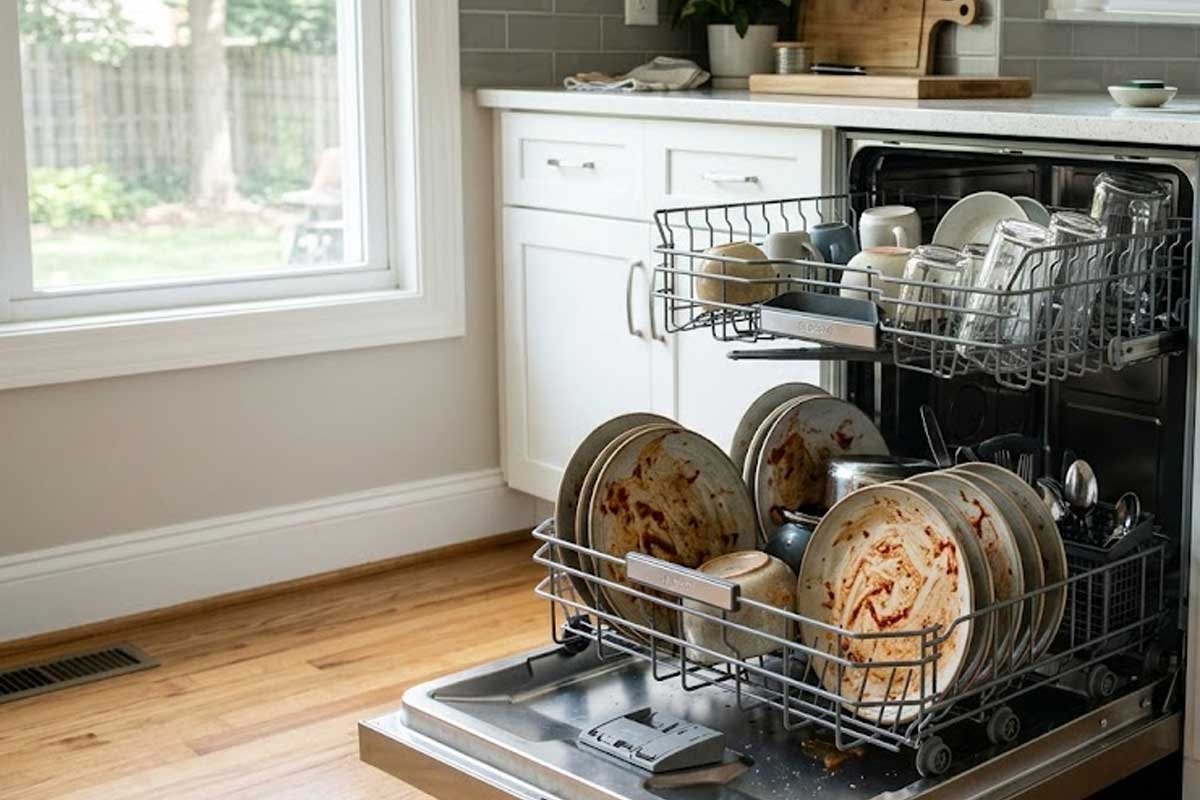
If you’ve ever opened your dishwasher and found one plate sparkling clean while another still had dried pasta sauce stuck to it, you’re not alone. Most people assume the detergent failed, the cycle was too short, or the dishwasher simply isn’t very good. In reality, the problem is often much simpler: the dishes were loaded in the wrong place.
Modern dishwashers are incredibly efficient machines, but they aren’t magic. Water doesn’t hit every part of the dishwasher with the same force. Some areas receive powerful streams of hot water from multiple directions, while others receive less coverage. Understanding these spray zones can dramatically improve cleaning performance without changing detergents, buying expensive rinse aids, or running longer cycles.
To understand why placement matters so much, it helps to know how dishwashers work behind the scenes—especially how spray arms, filters, and water circulation all work together.
In fact, learning where to put the dirtiest dishes in a dishwasher is one of the easiest ways to get better results immediately.
To understand why placement matters so much, it helps to first understand how a dishwasher actually cleans. If you’d like a deeper look at the mechanics behind spray arms, filters, and water circulation, check out our guide on how dishwashers work.
In this article, you’ll learn which areas of the dishwasher deliver the strongest cleaning power, where heavily soiled dishes should go, and which common loading mistakes prevent water from reaching the places that need it most.
How Dishwasher Spray Zones Actually Work
Most people picture a dishwasher as a box that fills with water and sprays everything equally. That’s not how it works.
Inside your dishwasher are one or more rotating spray arms that force water through dozens of small nozzles. As water exits these openings, the spray arms spin rapidly, creating a constantly changing pattern of hot water and detergent.
The result is a series of cleaning zones—areas that receive different amounts of pressure, coverage, and water contact.
Understanding these zones helps explain why some dishes come out spotless while others need a second trip through the machine.
The Role of the Lower Spray Arm
The lower spray arm does most of the heavy lifting.
Located beneath the bottom rack, it typically receives the highest water pressure in the entire dishwasher. Manufacturers know that the dirtiest items are usually loaded on the bottom rack, so they design this area to handle baked-on food, greasy cookware, and heavily soiled dinner plates.
Think about last night’s lasagna pan, the casserole dish from a family gathering, or plates covered in dried barbecue sauce. These are exactly the types of items the lower spray arm was designed to tackle.
This is why the bottom rack is usually the best place for the dirtiest dishes.
The Middle Spray Arm Explained
Many modern dishwashers include a second spray arm beneath the upper rack.
Its job is to clean cups, glasses, bowls, and smaller plates placed above. While it provides excellent coverage, the water pressure is often slightly lower than what you’ll find near the bottom spray arm.
That’s perfectly fine because cups and glasses usually don’t need the same aggressive cleaning power as a greasy baking dish.
Some premium models from Bosch, LG, Samsung, and KitchenAid use advanced multi-level wash systems that improve coverage throughout the machine, but even these systems still create stronger and weaker cleaning zones.
Upper Rack Cleaning Zones
The upper rack is designed for lighter items.
You’ll generally get the best results here with:
- Glasses
- Coffee mugs
- Small bowls
- Plastic containers
- Delicate dishware
While heavily soiled bowls can sometimes be cleaned on the top rack, they shouldn’t be your first choice if space is available below.
Many users unknowingly place dirty cereal bowls or soup bowls facing upward on the top rack. The result is predictable: water can’t reach the inside properly, and food residue remains.
Why Water Pressure Matters
Imagine trying to wash a muddy truck with a garden mister instead of a pressure washer.
Both use water, but one clearly has more cleaning power.
The same principle applies inside a dishwasher. Areas closer to primary spray arms receive stronger water impact and more detergent contact. These high-pressure zones remove stubborn food more effectively and reduce the chance of residue being left behind.
That’s why proper placement matters far more than most people realize.
The Best Place for the Dirtiest Plates and Bowls
If there’s one rule every dishwasher owner should remember, it’s this:
The dirtiest dishes belong on the bottom rack facing the center.
Why the center?
Because that’s where the strongest spray patterns typically converge.
The spray arms rotate outward, sending water upward and inward at varying angles. Plates positioned toward the center receive direct exposure from multiple directions during the wash cycle.
This increases the likelihood that dried food, grease, and sauces will be removed completely.
Why the Bottom Rack Gets the Strongest Cleaning Power
Manufacturers intentionally design the bottom rack to handle the toughest jobs.
The bottom area receives:
- Stronger water pressure
- More direct spray arm contact
- Better detergent circulation
- Longer water exposure
When you load heavily soiled dinner plates here, you’re using the dishwasher exactly as engineers intended.
Large dinner plates with dried food should always face inward toward the center spray zone.
How to Angle Plates for Maximum Water Coverage
The angle of a plate matters almost as much as its position.
Many people make the mistake of loading dishes perfectly vertical or tightly packed together.
Instead:
- Allow small gaps between plates
- Angle dirty surfaces toward the spray arm
- Avoid overlapping edges
- Keep larger items from blocking smaller ones
Water needs room to circulate.
A dishwasher isn’t a sink. It doesn’t scrub dishes—it relies entirely on water reaching every surface.
Common Mistakes That Block Spray Arms
One oversized cutting board can reduce cleaning performance for an entire load.
Common blockers include:
- Large baking sheets
- Cookie trays
- Tall platters
- Oversized mixing bowls
When these items prevent spray arms from rotating freely, dishes throughout the machine may come out dirty.
A quick check before starting the cycle can prevent an entire load from needing to be washed again.
| Dish Type | Recommended Rack | Cleaning Power Level |
|---|---|---|
| Dinner Plates | Bottom Rack | High |
| Pasta Bowls | Bottom Rack | High |
| Cereal Bowls | Top or Bottom Rack | Medium |
| Serving Bowls | Bottom Rack | High |
| Glasses | Top Rack | Medium |
| Coffee Mugs | Top Rack | Medium |
If heavily soiled dishes still come out with residue, the issue may also be cycle choice. Our guide to understanding dishwasher cycles explains when to use Normal, Heavy, Quick, and Eco settings.
Where Should Pots, Pans, and Baking Dishes Go?
Cookware presents a different challenge than ordinary dishes.
Pots and pans are often larger, heavier, and covered with baked-on food residue. They also take up more space, which means improper placement can block spray patterns for everything around them.
For best results, large cookware should almost always be placed on the bottom rack.
However, simply placing it there isn’t enough.
The cooking surface should face downward and slightly inward toward the strongest spray zones. This allows water to strike the dirtiest areas directly instead of bouncing off the outer surface.
Large roasting pans and casserole dishes should be positioned along the sides or back of the bottom rack whenever possible. This minimizes interference with spray arm rotation while still exposing the cookware to strong water pressure.
In some cases, extremely large cookware may create what technicians call a “water shadow”—an area where water flow is blocked from reaching nearby dishes.
Also, not every dirty item belongs in the machine. Before loading specialty cookware, check our guide on what not to put in a dishwasher to avoid damage.
When that happens, both the cookware and the surrounding dishes may clean poorly.
Understanding these water shadow areas is one of the easiest ways to improve dishwasher performance without changing anything else.
Which Areas of the Dishwasher Clean Best?
Not all parts of a dishwasher receive the same cleaning power. While modern machines are far more sophisticated than they were a decade ago, they still rely on spray arms, water pressure, and proper loading to do their job effectively.
Think of your dishwasher like a car wash. Some areas get hit directly by powerful jets, while others receive only indirect spray. Understanding these high-performance zones can help you place dishes where they’ll get the best results.
High-Pressure Cleaning Zones
The strongest cleaning zones are usually found:
- Near the center of the bottom rack
- Directly above the lower spray arm
- Areas exposed to multiple spray arms simultaneously
These locations are ideal for:
- Dried pasta sauce
- Greasy dinner plates
- Peanut butter residue
- Sticky baking dishes
- Heavy food buildup
When dishes are positioned correctly in these zones, water reaches them repeatedly throughout the cycle.
Medium-Cleaning Zones
The upper rack generally provides excellent cleaning performance, but it’s optimized for different items.
Best candidates include:
- Glassware
- Coffee mugs
- Small serving bowls
- Plastic food containers
- Everyday dishware
Most modern dishwashers clean these items extremely well when loaded correctly.
Areas to Avoid for Heavily Soiled Items
Some positions simply aren’t ideal for dirty cookware.
These often include:
- Extreme corners of the upper rack
- Areas blocked by tall dishes
- Locations behind oversized cookware
- Water shadow zones created by baking sheets
If you’ve ever wondered why one dish remains dirty while everything else looks perfect, placement is often the reason.
Why Some Dishes Stay Dirty Even in a Full Cycle
When dishes come out dirty, many people immediately blame the detergent.
In reality, detergent is often the last thing to blame.
Most cleaning problems are caused by loading mistakes, blocked spray patterns, or poor water circulation.
Overloading Problems
A dishwasher isn’t a storage container.
Every dish needs space around it for water to circulate.
When dishes are packed tightly together:
- Spray coverage decreases
- Water can’t reach food residue
- Detergent distribution becomes uneven
- Drying performance suffers
Many households unknowingly reduce cleaning performance by trying to fit just a few extra dishes into every load.
Ironically, running two properly loaded cycles often cleans better than one overloaded cycle.
Spray Arm Obstructions
One of the most common causes of poor cleaning is blocked spray arm movement.
Before starting a cycle, always check that:
- Spray arms rotate freely
- Large pans aren’t blocking movement
- Utensils haven’t fallen through racks
- Tall items aren’t interfering with rotation
This simple 10-second check can prevent an entire load from needing to be washed again.
Incorrect Rack Positioning
Even clean spray arms can’t compensate for poorly positioned dishes.
Common examples include:
- Plates facing outward
- Bowls nested together
- Large platters covering smaller items
- Cups positioned upside down but blocked by other dishes
The goal is simple: allow water to reach every surface.
Filter and Maintenance Issues
Sometimes the problem isn’t loading at all.
A dirty filter reduces water circulation and cleaning performance throughout the dishwasher.
Food debris trapped in filters can also create unpleasant odors and redeposit particles onto dishes.
If cleaning performance suddenly declines, it’s worth checking the filter before assuming something is broken.
For a complete walktIf cleaning performance suddenly drops, start with the basics. Our step-by-step guide on how to clean a dishwasher shows how to check filters, spray arms, seals, and hidden buildup.hrough, see our guide on How to Clean a Dishwasher: Filters, Spray Arms & Hidden Buildup.
The Most Common Dishwasher Loading Mistakes
Even experienced dishwasher owners make mistakes that reduce cleaning performance.
Fortunately, most are easy to fix.
Facing Plates the Wrong Direction
One of the biggest misconceptions is that plates should face outward.
In reality, dirty surfaces should generally face inward toward the center of the dishwasher where spray coverage is strongest.
This allows water and detergent to strike food residue directly.
Nesting Bowls Together
Bowls love to stack themselves together.
Unfortunately, water doesn’t love cleaning stacked bowls.
When bowls overlap:
- Water can’t reach interior surfaces
- Food particles remain trapped
- Drying performance decreases
A little spacing makes a huge difference.
Blocking the Detergent Dispenser
This mistake is surprisingly common.
Large pans, cutting boards, and baking sheets can prevent the detergent door from opening completely.
When that happens, cleaning performance drops dramatically regardless of detergent quality.
Mixing Large and Small Items Incorrectly
Large items should be placed strategically so they don’t shield smaller dishes from spray patterns.
Remember:
Water can’t clean what it can’t reach.
Do Different Dishwasher Brands Clean Differently?
The short answer is yes.
While the basic principles remain the same, manufacturers use different approaches to water distribution and spray arm design.
Bosch Dishwashers
Bosch models are known for efficient water usage and precise spray coverage.
Many Bosch dishwashers feature advanced filtration systems and multiple spray levels that provide excellent cleaning consistency throughout the machine.
Whirlpool and GE Designs
Whirlpool and GE often focus on strong lower-rack cleaning performance.
These models typically excel at handling heavily soiled cookware and family-sized loads.
LG and Samsung Multi-Level Wash Systems
Premium LG and Samsung dishwashers frequently include multiple spray arms and specialized wash zones.
These systems improve coverage and reduce the difference between upper and lower rack performance.
Even so, proper loading still matters.
No dishwasher can overcome poor placement.
| Brand | Spray Arm Design | Best Rack for Heavy Soil |
|---|---|---|
| Bosch | Multi-level Precision Spray | Bottom Rack |
| Whirlpool | High-pressure Lower Arm | Bottom Rack |
| GE | Deep Clean Wash System | Bottom Rack |
| LG | QuadWash Multi-Motion | Bottom Rack |
| Samsung | StormWash Multi-Jet | Bottom Rack |
Quick Dishwasher Loading Rules for Better Results
If you remember nothing else from this guide, remember these simple rules:
✔ Place the dirtiest dishes on the bottom rack.
✔ Face dirty surfaces toward the center.
✔ Don’t block spray arms.
✔ Leave space between dishes.
✔ Avoid nesting bowls together.
✔ Keep oversized cookware from creating water shadows.
✔ Check and clean filters regularly.
✔ Verify spray arms can rotate freely before every cycle.
These small adjustments often improve cleaning performance more than switching detergents or running longer cycles.
For general loading and safe-use guidance, you can also check the official ENERGY STAR dishwasher tips from the U.S. government.
Frequently Asked Questions
Should dirty dishes face the center of the dishwasher?
Yes. The strongest spray patterns typically originate near the center of the machine, making inward-facing dishes easier to clean.
Is the bottom rack always stronger?
In most dishwashers, yes. The bottom rack receives the highest water pressure and is designed for heavily soiled dishes.
Can heavily soiled bowls go on the top rack?
They can, but heavily soiled bowls generally clean better on the bottom rack where spray pressure is stronger.
Why are some dishes still dirty after a complete cycle?
Common causes include overloading, blocked spray arms, poor placement, dirty filters, or insufficient water circulation.
Does dishwasher brand affect cleaning zones?
Yes. Different manufacturers use different spray systems, but every dishwasher still has stronger and weaker cleaning zones.
How often should I clean dishwasher spray arms?
Inspect them every few months and clean them whenever you notice mineral buildup, food debris, or declining cleaning performance.
Final Thoughts
The secret to cleaner dishes isn’t always a stronger detergent or a longer cycle. More often than not, it’s understanding how your dishwasher actually works.
Once you know where the strongest spray zones are, loading becomes much easier. The dirtiest plates go where cleaning power is highest, delicate items stay protected, and water can reach every surface effectively.
The result?
Cleaner dishes, fewer rewashes, lower energy use, and a dishwasher that performs the way it was designed to.
And that’s a win for both your kitchen and your utility bill.
{ “@context”: “https://schema.org”, “@type”: “FAQPage”, “mainEntity”: [ { “@type”: “Question”, “name”: “Should dirty dishes face the center of the dishwasher?”, “acceptedAnswer”: { “@type”: “Answer”, “text”: “Yes. Dirty dishes should generally face the center of the dishwasher because the strongest spray patterns usually come from the rotating spray arms near the center and bottom of the machine.” } }, { “@type”: “Question”, “name”: “Is the bottom rack the strongest cleaning zone in a dishwasher?”, “acceptedAnswer”: { “@type”: “Answer”, “text”: “In most dishwashers, the bottom rack provides the strongest cleaning power. It receives direct spray from the lower spray arm and is designed for plates, pots, pans, and heavily soiled dishes.” } }, { “@type”: “Question”, “name”: “Can heavily soiled bowls go on the top rack?”, “acceptedAnswer”: { “@type”: “Answer”, “text”: “Heavily soiled bowls can go on the top rack, but they usually clean better on the bottom rack if there is space. Bowls should be angled downward and spaced apart so water can reach the inside surfaces.” } }, { “@type”: “Question”, “name”: “Why are some dishes still dirty after a complete dishwasher cycle?”, “acceptedAnswer”: { “@type”: “Answer”, “text”: “Dishes may stay dirty after a full cycle because of overloading, blocked spray arms, poor rack positioning, dirty filters, hard water buildup, or detergent that cannot reach every surface.” } }, { “@type”: “Question”, “name”: “Does dishwasher brand affect cleaning zones?”, “acceptedAnswer”: { “@type”: “Answer”, “text”: “Yes. Dishwasher brands use different spray arm designs and wash systems, but all dishwashers still have stronger and weaker cleaning zones. Proper loading remains important regardless of brand.” } }, { “@type”: “Question”, “name”: “How often should I clean dishwasher spray arms?”, “acceptedAnswer”: { “@type”: “Answer”, “text”: “Dishwasher spray arms should be inspected every few months and cleaned whenever you notice mineral buildup, food debris, poor spray coverage, or declining cleaning performance.” } } ] }