




Every dishwasher detergent promises spotless dishes—but not all of them are equally safe for your home or the environment. The best eco-friendly dishwasher detergents clean just as effectively as many traditional formulas while avoiding unnecessary phosphates, chlorine bleach, and other harsh chemicals. If you’re looking for a cleaner kitchen and a smaller environmental footprint, here’s what actually matters before you buy.
If you’re still comparing detergent types, check out our complete guide to the best dishwasher detergents for hard water to see how eco-friendly formulas compare with traditional options.
That’s where eco-friendly dishwasher detergents come in.
In 2026, green detergents are no longer weak, overpriced alternatives. Many modern formulas clean just as well as traditional brands—without harsh chemicals, artificial fragrances, or ingredients that linger on your dishes and in your home. They’re safer for kids, pets, septic systems, and the environment, all while getting the job done.
In this guide, we’ll break down what truly makes a dishwasher detergent eco-friendly, which claims actually matter, and which products stand out this year for performance, safety, and value—so you can choose a detergent that’s good for your dishes and your conscience.
What Makes a Dishwasher Detergent Eco-Friendly?
Not every detergent with a green label deserves your trust. Some brands rely more on marketing than meaningful formulation changes. Here’s what actually separates a genuinely eco-friendly dishwasher detergent from a “greenwashed” one.

A truly eco-friendly detergent isn’t defined by a green label alone. Independent certifications, biodegradable ingredients, concentrated formulas, and recyclable packaging provide far stronger evidence than marketing claims. Looking beyond the front of the box can help you avoid products that simply appear environmentally friendly without delivering meaningful benefits.
If You Care Dishwasher Tablets 40 Count – Powerful, Plant Based, Concentrated, Biodegradable, Natural Dish Cleaner Detergent, Dishwashing Soap Tabs 👉 Check Price
Plant-Based & Biodegradable Ingredients
At the core of any eco-friendly detergent are plant-based cleaning agents. These ingredients are typically derived from coconut, corn, or other renewable sources instead of petroleum-based chemicals.
Why this matters:
- They break down faster in water systems
- They’re less likely to leave chemical residue on dishes
- They’re safer for septic tanks and municipal wastewater treatment
For example, many modern formulas replace petroleum-derived surfactants with coconut- or corn-based alternatives. While the cleaning performance can be very similar, these ingredients generally break down faster once they enter wastewater systems.
In real-world use, biodegradable detergents also tend to be gentler on glassware and long-term dishwasher components—something many homeowners overlook.
No Phosphates, Chlorine, or Synthetic Fragrances
Traditional dishwasher detergents often rely on phosphates and chlorine bleach to boost cleaning power. While effective, these chemicals contribute to water pollution and can irritate sensitive skin or airways.
Eco-friendly formulas intentionally avoid:
- Phosphates (linked to algae blooms and water damage)
- Chlorine bleach (harsh fumes, skin irritation)
- Artificial dyes and fragrances (common allergy triggers)
Instead, they use oxygen-based cleaners and mild enzymes to break down food residue naturally—without the chemical smell that hits you when you open the dishwasher door.
Cruelty-Free & Eco Certifications (EPA, USDA, Safer Choice)
Certifications aren’t just badges—they’re shortcuts to trust.
Look for labels like:
- EPA Safer Choice – verifies safer chemical ingredients
- USDA BioPreferred – confirms renewable, bio-based content
- Cruelty-Free – no animal testing involved
While a product doesn’t need every certification to be effective, these marks help filter out detergents that only claim to be eco-friendly without real oversight.
Sustainable & Plastic-Reduced Packaging
The detergent itself isn’t the whole story. Packaging matters too.
Many top eco dishwasher detergents now use:
- Cardboard or paper-based boxes
- Plastic-free or compostable pods
- Refillable or concentrated formats
It’s a small change, but over a year of dishwashing, it can significantly reduce household plastic waste—especially for families running the dishwasher daily.
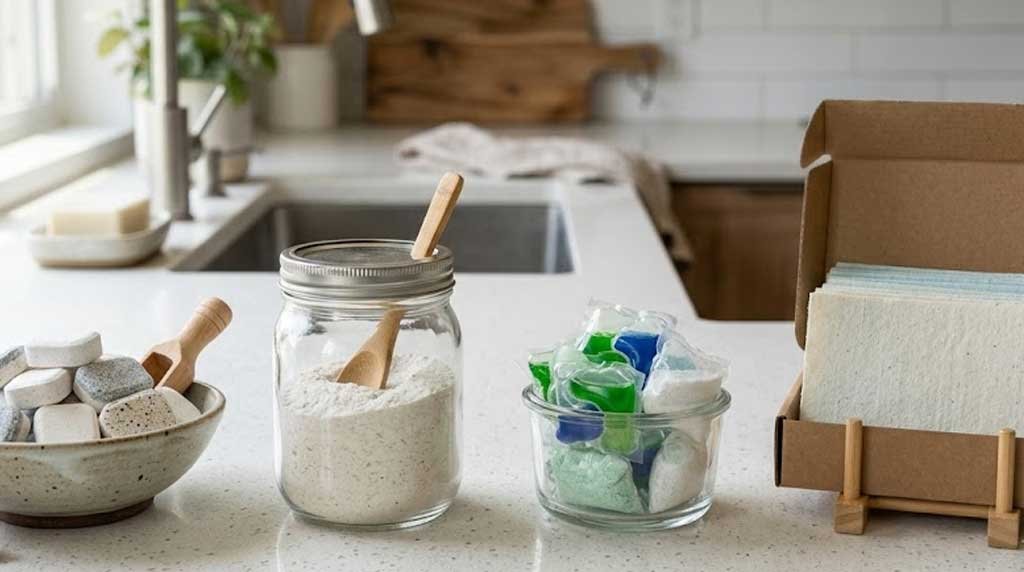
Best Eco-Friendly Dishwasher Detergents in 2026 (Quick Picks)
Eco-friendly doesn’t mean one-size-fits-all. Some detergents shine in hard water, others focus on zero-waste packaging, and a few balance performance with budget surprisingly well.
Below, we’ve grouped the best eco-friendly dishwasher detergents of 2026 by real-life use cases—so you can quickly find what works best for your kitchen, not just what looks good on paper.
Best Overall Eco-Friendly Dishwasher Detergent
This category goes to the detergent that strikes the best balance between:
- Strong everyday cleaning power
- Clean ingredient list
- Reliable performance across different water conditions
Our top overall pick handles greasy pans, dried-on food, and glassware without leaving residue—making it a safe “set it and forget it” option for most households.
Our Pick: Cascade Free & Clear ActionPacs
Best for: Most households
Why we like it
Cascade Free & Clear ActionPacs consistently deliver excellent cleaning performance without chlorine bleach, phosphates, dyes, or heavy fragrances. They handle greasy dinner plates, baked-on casserole dishes, and everyday family loads while remaining gentle enough for households looking to reduce unnecessary chemical exposure.
Pros
✔ Excellent cleaning performance
✔ Fragrance-free
✔ Widely available
✔ Works well in most water conditions
✔ Easy single-dose pods
Cons
✘ More expensive than powder detergents
✘ Individual pod packaging creates more waste than bulk powder
Best Eco Dishwasher Detergent for Hard Water
Hard water can be brutal on eco detergents—but some formulas are clearly better equipped.
The best options here use:
- Enzyme-rich blends
- Mineral-fighting agents that don’t rely on phosphates
If your dishes often come out cloudy or chalky, this category matters more than you think.
For even better results, pair eco detergents with the right dishwasher rinse aid, especially if you live in a hard water area.
Many homeowners overlook dishwasher salt, but it plays a major role in reducing mineral buildup. Learn more about choosing the right dishwasher salt.
Our Pick: Finish Quantum Ultimate
Best for: Homes with hard water
Why we like it
Hard water is one of the biggest challenges for eco-friendly detergents. Finish Quantum Ultimate contains powerful enzymes and mineral-fighting ingredients that help reduce cloudy glassware and stubborn residue without relying on phosphates.
Pros
✔ Excellent against mineral deposits
✔ Outstanding glass protection
✔ Very effective on baked-on food
✔ Works in very hard water
Cons
✘ Premium price
✘ Not fully fragrance-free
Best Plastic-Free Dishwasher Pods
For households aiming to reduce plastic waste entirely, plastic-free pods are a standout choice.
These detergents:
- Dissolve fully in standard cycles
- Use compostable or paper-based wrappers
- Still deliver solid cleaning performance
They’re ideal for eco-conscious users who want minimal compromise.
Our Pick: Blueland Dishwasher Tablets
Best for: Zero-waste households
Why we like it
Blueland focuses on eliminating unnecessary plastic packaging while maintaining solid cleaning performance. The tablets come in recyclable paper-based packaging and are free from plastic film wrappers commonly found on traditional pods.
Pros
✔ Plastic-free packaging
✔ EPA Safer Choice Certified
✔ Plant-based ingredients
✔ Low-waste shipping
Cons
✘ Slightly less effective on heavily baked-on food
Best Budget Eco-Friendly Dishwasher Detergent
Going green doesn’t have to mean paying premium prices.
Budget-friendly eco detergents focus on:
- Powder or concentrated formulas
- Fewer “extras,” more core cleaning performance
They’re perfect for families running frequent loads or anyone trying to balance sustainability with cost per wash.
Our Pick: Seventh Generation Dishwasher Powder
Best for: Families on a budget
Why we like it
If you’re running multiple dishwasher loads every week, Seventh Generation Powder offers one of the lowest costs per wash while still using biodegradable ingredients and avoiding chlorine bleach.
Pros
✔ Low cost per load
✔ Adjustable dosage
✔ Minimal packaging
✔ Excellent value
Cons
✘ Powder can clump in humid environments
Best for Sensitive Skin & Allergies
If someone in your home reacts to fragrances or chemical residues, this category is critical.
These detergents are typically:
- Fragrance-free
- Dye-free
- Dermatologist-tested or hypoallergenic
They’re especially popular with parents washing baby bottles, kids’ dishes, or pet bowls.
Our Pick: Ecover Automatic Dishwasher Tablets
Best for: Sensitive households
Why we like it
Ecover has built a strong reputation for using biodegradable ingredients and avoiding unnecessary dyes and heavy perfumes. They’re an excellent option for families washing baby bottles, children’s dishes, and pet bowls.
Pros
✔ Fragrance-free options
✔ Plant-based ingredients
✔ Biodegradable formula
✔ Excellent for sensitive users
Cons
✘ Less effective on extremely greasy cookware
Compare the Best Eco-Friendly Dishwasher Detergents at a Glance
Not every eco-friendly dishwasher detergent is designed for the same type of household. Some excel in hard water, others focus on sensitive skin, while a few stand out for their plastic-free packaging or overall value. The comparison below highlights our top picks side by side, making it easier to find the formula that best fits your dishwasher, your water conditions, and your daily routine.
| Product | Best For | Type | Fragrance-Free | Plastic-Free Packaging | Overall Rating |
|---|---|---|---|---|---|
| Cascade Free & Clear ActionPacs | Best Overall | Pods | ✅ | ❌ | ⭐ 4.9/5 |
| Finish Quantum Ultimate | Hard Water | Pods | ❌ | ❌ | ⭐ 4.8/5 |
| Blueland Dishwasher Tablets | Plastic-Free | Tablets | ✅ | ✅ | ⭐ 4.8/5 |
| Seventh Generation Powder | Budget | Powder | ✅ | Partial | ⭐ 4.7/5 |
| Ecover Dishwasher Tablets | Sensitive Skin | Tablets | ✅ | Partial | ⭐ 4.7/5 |
Do Eco-Friendly Dishwasher Detergents Really Clean Well?
Short answer? Yes—if you choose the right one.
Long answer? Eco-friendly detergents clean differently than traditional chemical-heavy formulas, and understanding that difference sets realistic expectations.
How Eco Detergents Compare to Traditional Detergents
Eco-friendly dishwasher detergents rely more on enzymes and oxygen-based cleaners, rather than aggressive chemicals.
| Traditional | Eco-Friendly |
|---|---|
| Chlorine bleach | Plant-based cleaning agents |
| Phosphates | Phosphate-free |
| Plastic-heavy packaging | Recyclable packaging |
| Strong fragrances | Mild or fragrance-free |
| Higher aquatic impact | Lower environmental impact |
What this means in practice:
- They work best with normal to lightly baked-on food
- They benefit from proper loading and water temperature
- They’re gentler on dishes and internal dishwasher parts
In everyday use, most modern eco detergents perform surprisingly close to premium conventional brands, especially on mixed household loads. That’s because modern dishwashers rely on a combination of enzymes, hot water, spray arms, and carefully designed wash cycles to remove food residue efficiently. If you’d like to understand why detergent performance varies from one machine to another, our guide on how a dishwasher works breaks down the entire cleaning process in simple terms.
Grease, Dried Food & Stain Removal (Realistic Expectations)
Eco detergents excel at protein- and starch-based residues, thanks to enzyme action. However, extremely burnt or baked-on grease may still need:
- A quick rinse
- Or a heavier cycle (Normal / Heavy)
Strengths:
- Everyday plates, bowls, cutlery
- Light grease and food residue
- Routine family loads
Limitations (honest take):
- Thick, carbonized grease
- Skillets left un-rinsed for days
That said, most households find the trade-off well worth it—especially when cleaner ingredients, reduced chemical exposure, and a smaller environmental footprint are part of the equation. If you’d like to learn how safer household products are evaluated, the U.S. EPA’s Safer Choice Program explains the standards products must meet before earning its trusted certification.
Glassware, Residue & Long-Term Results
One underrated advantage of eco-friendly detergents is how they treat glassware over time.
Users often notice:
- Less clouding on glasses
- Reduced chemical film
- Fewer strong odors when opening the dishwasher
This makes eco detergents especially appealing for:
- Wine glasses
- Baby bottles
- Daily-use drinkware
Are Eco-Friendly Dishwasher Detergents Safe for Septic Systems?
If you’re on a septic system—or live in a rural or suburban U.S. home—this question is critical.
Why Biodegradable Detergents Matter for Septic Systems
Traditional detergents can disrupt the bacterial balance inside septic tanks. Eco-friendly detergents are designed to break down more naturally, helping systems function properly over time.
Key benefits:
- Faster biodegradation
- Reduced chemical buildup
- Lower risk of system imbalance
Most septic-safe detergents explicitly state this on the label—but ingredient transparency still matters.
Best Ingredients for Septic-Friendly Dishwasher Detergents
When septic safety is a priority, look for detergents with:
- Enzymes (protease, amylase)
- Oxygen-based cleaners
- Plant-derived surfactants
Avoid detergents containing:
- Phosphates
- Chlorine bleach
- Antibacterial additives
These harsher ingredients may clean aggressively—but at a long-term cost to septic health.
If your home relies on a septic system, choosing biodegradable, phosphate-free dishwasher detergents is generally the safest approach. They help reduce unnecessary chemical loading while supporting the natural treatment process inside the system. The U.S. Environmental Protection Agency also provides practical septic system maintenance recommendations to help homeowners keep their systems operating efficiently for years to come.
Eco Detergents for Rural & Off-Grid Homes
Eco-friendly dishwasher detergents are especially popular in:
- Rural homes
- Cabins
- Off-grid or low-impact households
Because they’re less chemically aggressive, they pair well with:
- Septic tanks
- Greywater systems
- Environmentally sensitive areas
TL;DR – Quick Takeaways
If you use your dishwasher several times a week, switching to an eco-friendly detergent is one of the easiest ways to reduce household chemical exposure without sacrificing cleaning performance. The biggest improvements usually come from pairing a quality detergent with proper loading techniques and rinse aid.
- Modern eco dishwasher detergents clean well for everyday use
- They are safer for glassware, air quality, and skin
- Septic systems benefit from biodegradable, enzyme-based formulas
- Best results come from pairing detergent choice with proper dishwasher use
Eco-Friendly Dishwasher Pods vs Powder vs Gel
One of the biggest mistakes buyers make is assuming all eco detergents work the same way. The format matters more than most people think, especially when it comes to cleaning performance, waste, and cost per wash.
Dishwasher Pods – Convenience First (With a Trade-Off)
Eco-friendly pods are the most popular option in the U.S., mainly because they’re easy and mess-free.
Pros:
- Pre-measured (no overdosing)
- Consistent results load after load
- Widely available in eco formulations
Cons:
- Less control over dosage
- Often more expensive per wash
- Some pods still use plastic-based films
Pods are best for busy households that value convenience over flexibility. But convenience is only part of the story. Modern dishwashers include features such as soil sensors, adjustable wash temperatures, and specialized cleaning cycles that can influence how well different detergent types perform. If you’re not familiar with these functions, our guide to common dishwasher features you should know explains how they affect everyday cleaning results.
Eco Dishwasher Powder – Best Control & Best Value
Powder is often overlooked—but it’s actually the most flexible and cost-effective eco option.
Why powder stands out:
- Adjustable dosage (especially helpful in hard water)
- Usually plastic-free packaging
- Lower cost per wash
For eco-conscious buyers who want maximum control, powder detergents often deliver the best long-term value.
💡 Alex-style note: If you like dialing things in instead of “set and forget,” powder is hard to beat.
Eco Dishwasher Gel – Why It’s Less Common
Gel detergents are becoming rare in the eco category, and for good reason.
Limitations:
- Shorter shelf life
- Less effective enzyme stability
- Often weaker on baked-on food
While gels can work for light loads, most eco brands prioritize pods and powders for better overall performance.
Common Ingredients to Avoid in Dishwasher Detergents (Red Flags)
Eco-friendly labels don’t always tell the full story. Some detergents look green on the outside but still include ingredients worth avoiding.
Phosphates – Effective but Environmentally Harmful
Phosphates improve cleaning, but they’re linked to:
- Water pollution
- Algae overgrowth in lakes and rivers
That’s why many U.S. states restrict or discourage their use—and why true eco detergents avoid them entirely.
Chlorine Bleach – Harsh & Unnecessary
Chlorine bleach boosts stain removal but comes with downsides:
- Strong fumes
- Skin and respiratory irritation
- Faster wear on dishwasher components
Modern eco detergents use oxygen-based alternatives instead, which are far gentler and still effective.
Artificial Fragrances & Dyes
These ingredients don’t improve cleaning—only scent and appearance.
Potential issues:
- Skin irritation
- Allergy triggers
- Residue left on dishes
Ingredient transparency is a good sign that a manufacturer stands behind its product. If labels are vague or incomplete, it’s worth being cautious. And remember, detergent isn’t the only thing that matters—using the wrong items or cleaning products can also affect your dishwasher’s performance. Our guide to what not to put in a dishwasher explains which everyday mistakes can shorten the life of your appliance.
Palm Oil (Non-Sustainable Sources)
Palm oil itself isn’t always bad—but unsustainably sourced palm oil contributes to deforestation.
Look for:
- RSPO-certified palm oil
- Or palm-oil-free formulations
Brands that disclose sourcing transparently tend to be more trustworthy overall.
Quick Red Flag Checklist
Avoid dishwasher detergents that contain:
- ❌ Phosphates
- ❌ Chlorine bleach
- ❌ Synthetic fragrances or dyes
- ❌ Vague “proprietary blends” with no ingredient clarity
How to Get the Best Results with Eco-Friendly Dishwasher Detergents
Eco-friendly detergents can deliver excellent results—but they’re a bit less forgiving than chemical-heavy options. The good news? A few small adjustments make a big difference.
Proper Loading & Dishwasher Settings Matter More Than You Think
Because eco detergents rely heavily on enzymes, water contact and circulation are crucial.
Best practices:
Even the best detergent struggles if water can’t reach every surface. Leaving enough space between dishes is essential, but so is having a dishwasher that’s properly sized for your household. If you’re considering an upgrade, our guide to dishwasher sizes and dimensions will help you understand capacity, rack layouts, and which size fits your kitchen best.
Water Temperature & Cycle Selection
Eco detergents typically work best at 120–140°F, which most modern dishwashers handle automatically.
For best results:
- Use Normal or Eco cycles for everyday loads
- Switch to Heavy cycle for greasy cookware
- Avoid ultra-short “quick wash” cycles for tough food residue
💡 Alex‘s note: Eco detergents aren’t lazy—but rushing them usually backfires.
Pairing Eco Detergents with the Right Rinse Aid
Rinse aid isn’t optional when using eco detergents—especially in hard water areas.
Benefits include:
- Less spotting on glassware
- Faster drying
- Reduced mineral buildup
One mistake many homeowners make is blaming the detergent when dishes don’t come out perfectly clean or dry. In reality, eco-friendly detergents often perform even better when used with a rinse aid, especially in hard-water areas. If you’re not sure which one to choose, our guide to the right rinse aid for your dishwasher covers everything you need to know. Bosch also has an excellent explanation of how rinse aids improve dishwasher performance if you’d like to understand the science behind it.
Hard Water Tips for Eco-Friendly Detergents
Hard water is the #1 reason users think eco detergents “don’t work.”
Simple fixes:
- Slightly increase powder dosage (if using powder)
- Always use rinse aid
- Clean dishwasher filter monthly
Choosing an eco-friendly detergent is a great first step, but using water efficiently matters just as much. If you’re interested in reducing your household’s environmental footprint, our guide on how much water a dishwasher uses compares dishwasher water consumption with hand washing and explains where the biggest savings come from.
Are Eco-Friendly Dishwasher Detergents Worth the Price?
At first glance, eco detergents often look more expensive. But the real question isn’t price per box—it’s cost per wash and long-term value.
Cost Per Load: The Real Comparison
When broken down per cycle, many eco detergents are surprisingly competitive.
Typical ranges (US market):
- Eco pods: slightly higher per load
- Eco powder: often the cheapest long-term option
- Premium chemical detergents: similar or higher cost
Powder-based eco detergents frequently win on pure value, especially for families running the dishwasher daily.
Health & Home Environment Benefits
This is where eco detergents quietly pull ahead.
Long-term advantages:
- Less chemical residue on dishes
- Reduced indoor air irritation
- Better for sensitive skin and allergies
For households with kids, pets, or family members with respiratory sensitivities, these benefits can make a noticeable difference over time. And if you’re still wondering whether switching to a dishwasher is the healthier and more efficient choice overall, our guide on whether a dishwasher is worth it explores the long-term savings, convenience, and hygiene benefits in more detail.

Environmental Impact: Small Daily Choices Add Up
While one household switching detergents won’t transform the environment overnight, the cumulative effect is significant. Millions of dishwasher cycles run every day across the U.S. Even small reductions in phosphates, plastic packaging, and persistent chemicals can make wastewater treatment more effective over time. Choosing concentrated formulas also reduces transportation emissions because less water is shipped with every package.
Eco detergents typically offer:
- Lower aquatic toxicity
- Faster biodegradation
- Reduced plastic waste
Verdict on Value (Quick Take)
Eco-friendly dishwasher detergents are worth it if:
- You run the dishwasher frequently
- You care about long-term health exposure
- You want septic- and eco-safe solutions
They may cost a bit more upfront—but often balance out over time.
TL;DR – Snippet-Ready Summary
- Eco detergents need proper loading and cycle selection
- Rinse aid dramatically improves results
- Powder formats offer the best value
- Long-term health and environmental benefits justify the switch
Who Should Use Eco-Friendly Dishwasher Detergents?
Eco-friendly dishwasher detergents aren’t just for “green” households. In 2026, they make sense for a much wider group of users than most people realize.
Families with Kids & Babies
If you’re washing:
- baby bottles
- sippy cups
- kids’ plates and utensils
…eco detergents are a smart choice.
They leave less chemical residue on dishes and avoid artificial fragrances that can irritate sensitive skin or airways.
People with Sensitive Skin, Allergies, or Asthma
Fragrance-free and dye-free eco detergents are often recommended for households dealing with:
- skin irritation
- allergies
- respiratory sensitivity
Many users don’t realize that dishwasher fumes and residue can affect indoor air quality—especially in smaller kitchens or apartments.
Homes with Septic Systems
Eco-friendly detergents are especially well-suited for:
- rural homes
- septic tanks
- off-grid or low-impact living
Their biodegradable formulas are less disruptive to septic bacteria and wastewater systems.
Sustainability-Focused & Low-Waste Households
If reducing environmental impact matters to you, eco detergents offer:
- plastic-free or reduced packaging
- renewable ingredients
- lower aquatic toxicity
Small daily choices—like dishwasher detergent—add up over time.
Final Verdict – Best Eco-Friendly Dishwasher Detergents in 2026
Eco-friendly dishwasher detergents have come a long way. In 2026, they’re no longer a compromise—they’re a viable, smart alternative to traditional chemical-heavy brands.
The Big Takeaway
- Modern eco detergents clean well for everyday use
- They’re safer for families, pets, and septic systems
- Performance improves dramatically with proper loading and rinse aid
- Powder formats offer the best control and value
If you’re willing to make small adjustments—like choosing the right cycle or adding rinse aid—eco detergents deliver clean dishes without the chemical downside.
Best Choice by Category (Quick Recap)
- ✅ Best Overall: Balanced performance + clean ingredients
- ✅ Best for Hard Water: Enzyme-rich, mineral-fighting formulas
- ✅ Best Plastic-Free Option: Compostable or paper-wrapped pods
- ✅ Best Budget Pick: Concentrated eco powder
- ✅ Best for Sensitive Skin: Fragrance-free, hypoallergenic detergents
(Product-specific affiliate picks fit naturally here.)
TL;DR – Featured Snippet Version
- Eco-friendly dishwasher detergents are effective and safer
- They use biodegradable, plant-based ingredients
- Best results come with proper loading and rinse aid
- Ideal for families, septic systems, and eco-conscious homes
Common Mistakes When Using Eco Dishwasher Detergents
- Using too much detergent
- Ignoring rinse aid
- Skipping dishwasher salt
- Running eco detergent on a quick cycle
- Overloading the dishwasher
- Storing detergent in humid cabinets
Looking for more practical dishwasher advice? Browse our complete collection of dishwasher maintenance and buying guides for expert tips on cleaning, loading, troubleshooting, and choosing the right appliance.
FAQ – Eco-Friendly Dishwasher Detergents
Are eco-friendly dishwasher detergents safe for baby bottles?
Yes. Most eco detergents are free from harsh chemicals, dyes, and synthetic fragrances, making them a safer option for baby items.
Do eco dishwasher detergents work in hard water?
They do—but hard water changes the equation. Minerals such as calcium and magnesium can reduce cleaning performance, especially if you’re using the wrong detergent or skipping rinse aid. The good news is that several eco-friendly formulas are specifically designed for these conditions. If hard water is affecting your results, take a look at our roundup of the Best Dishwasher Detergents for Hard Water , where we compare the top-performing options for mineral-rich water.
Can eco-friendly detergents damage dishwashers?
No. In fact, their gentler formulas may reduce long-term wear on seals, spray arms, and internal components.
Are plant-based dishwasher detergents really non-toxic?
While no detergent is 100% harmless, plant-based and Safer Choice–certified formulas are significantly less toxic than traditional options.
Do eco dishwasher pods dissolve completely?
Most modern eco pods dissolve fully in standard wash cycles. For best results, avoid quick or cold-only cycles.
Final Thoughts
The best eco-friendly dishwasher detergents prove that you don’t have to choose between powerful cleaning and responsible ingredients. Whether your priority is protecting your family’s health, reducing plastic waste, or simply avoiding harsh chemicals, today’s formulas offer more effective and sustainable options than ever before. Focus on biodegradable ingredients, trusted certifications, and a formula that matches your dishwasher and local water conditions. A small change in the detergent you use can make a noticeable difference—for both your dishes and the environment.
Ready to choose the right eco-friendly detergent? Compare our top-rated picks and check the latest prices to find the best option for your dishwasher.