



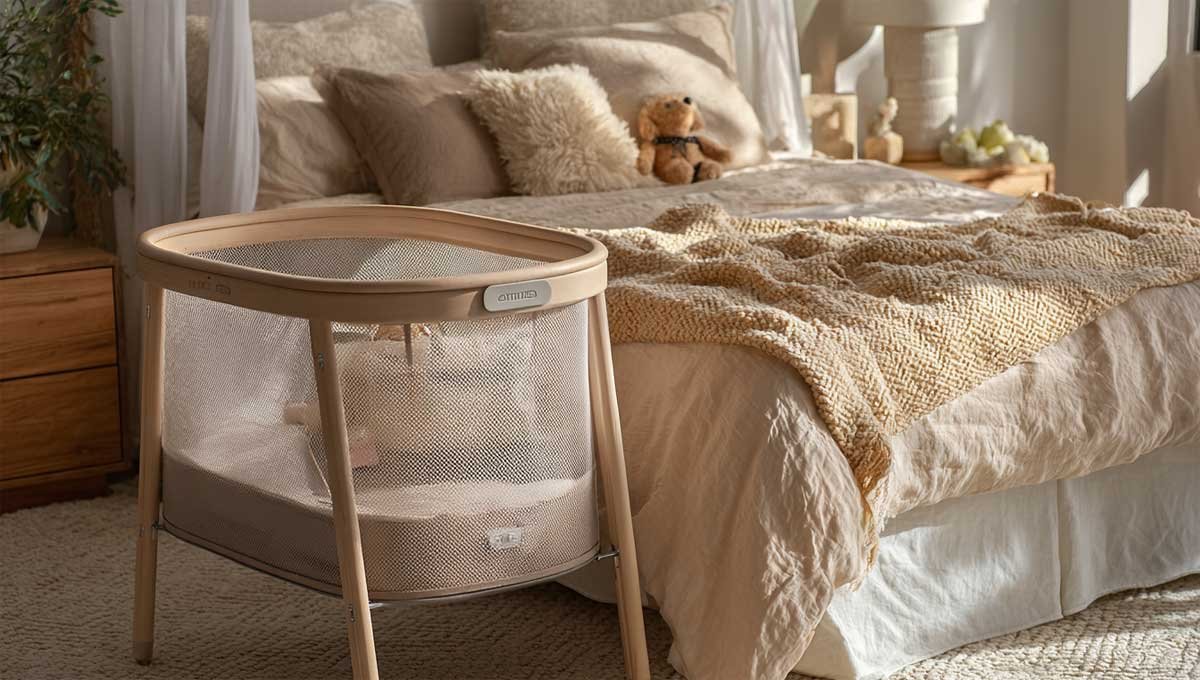
Choosing a bassinet is one of those early decisions that can make your first weeks with your baby feel gentler and a little more manageable. And if you’re feeling unsure about where to start, that’s completely okay — most new parents feel the same way. This guide brings together the best bassinets for newborns in 2025, offering warm guidance, safe sleep information, and practical insights to help you choose with confidence.
A bassinet can make nighttime care easier, support your recovery after birth, and keep your little one close during those tender early weeks. However, not all bassinets are designed the same, and understanding what truly matters — especially when it comes to safety — can bring clarity and peace of mind.
Everything here is based on AAP (American Academy of Pediatrics) sleep guidelines, CPSC safety standards, and parent-friendly considerations that reflect real life in US homes. And if you ever want to explore more baby gear essentials, you can find a calm overview inside our Baby Gear category.
Let’s walk through this together — gently, clearly, and one step at a time. This guide for the best bassinets for newborns in 2025 is designed to help you feel confident, supported, and informed.
1. Why a Bassinet Can Make the First Weeks Easier for New Parents
Many of the best bassinets for newborns are designed specifically to support parents during nighttime feedings and early recovery. Bringing your baby home is a beautiful moment, but it also comes with new routines, nighttime feedings, and lots of learning. This is where a bassinet can truly help. It keeps your newborn close, reduces the need to walk across the room for nighttime care, and creates a cozy, secure transition during those early days.
Benefits of the Best Bassinets for Newborns
A bassinet offers something uniquely comforting: closeness. It gives your baby a snug, calming sleep space while allowing you to respond quickly during the night. In addition, bassinets are lightweight and easy to move, which means you can bring your baby into any room without disturbing their sleep.
Parents often appreciate that bassinets:
- make nighttime breastfeeding or bottle-feeding easier
- help with C-section recovery by reducing movement
- fit well in small apartments
- allow you to keep your baby within arm’s reach
This is exactly why the best bassinets for newborns focus on breathability, closeness, and ease of use.
As a result, your nighttime routine becomes smoother and less stressful.
Bassinet vs Crib — Understanding the Difference
Both are safe options when used correctly, but they serve different purposes. On one hand, a crib offers long-term use and a larger sleep space. On the other hand, a bassinet provides closeness, mobility, and a gentler transition for newborns during the first months.
If you want a deeper comparison, you can also explore our guide to cribs here:
👉 Best Baby Cribs for Newborns
When It’s Time to Transition Out of a Bassinet
Most bassinets are suitable only until your baby starts rolling or reaches the weight limit set by the manufacturer. That said, you’ll know it’s time to transition when your baby becomes more active, pushes up, or looks like they’re ready for more space.
2. Safety Guidelines for Bassinets (AAP + CPSC)
When choosing the best bassinets for newborns, safety standards matter more than any extra features. The good news is that understanding the essentials doesn’t need to feel overwhelming. Here are the key points recommended by the American Academy of Pediatrics (AAP) and the Consumer Product Safety Commission (CPSC) — explained in a simple, parent-friendly way.
For parents who want to read the full official US recommendations, the American Academy of Pediatrics (AAP) provides updated safe sleep guidance here.
What Makes the Best Bassinets for Newborns Safe?
A safe bassinet always has:
- a firm, flat mattress
- tight-fitting sheets
- breathable sides (mesh is ideal)
- a stable, sturdy base
- no extra bedding, pillows, or toys
Even though bassinets come in many styles, these core features matter more than anything else. Ultimately, a simple, uncluttered sleep space is the safest choice.
Certifications & Labels to Look For
Most of the best bassinets for newborns include CPSC compliance and breathable mesh walls as core design elements.
When choosing a bassinet in the US, look for:
- CPSC compliance → ensures federal safety standards
- JPMA certification → trusted baby gear testing
- GREENGUARD Gold → optional, but great for low chemical emissions
These labels help reassure you that your baby’s sleep environment was designed with safety in mind.
Common Safety Mistakes to Avoid
Even with a great bassinet, a few small missteps can reduce safety. For example, avoid:
- inclined or rocking sleep surfaces
- adding blankets or sleep positioners
- using loose sheets
- ignoring weight/age limits
If you want a broader look at newborn sleep safety, you can visit our Baby Sleep & Safety category for gentle, AAP-aligned advice.
You can also check the latest product safety updates directly from the Consumer Product Safety Commission (CPSC).
3. Types of Bassinets (Which One Fits Your Home and Routine?)
Not all bassinets are created for the same purpose — and that’s actually a good thing. Because every home and every parent’s routine looks a little different, understanding the types of bassinets available can help you choose one that truly feels right for your family.
That said, let’s take a gentle look at the most common styles and how they might fit your lifestyle.
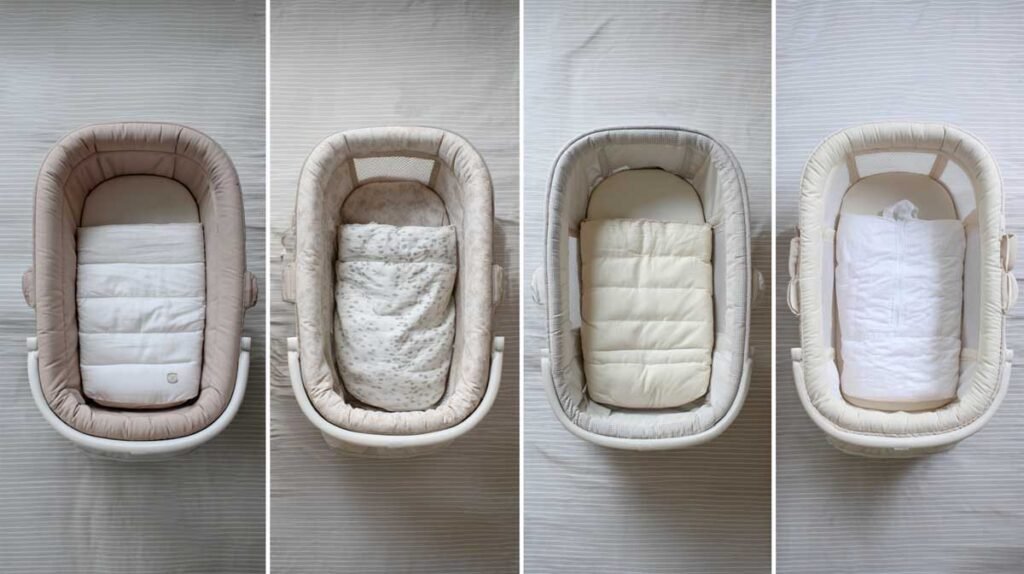
Bedside Bassinets (Close and Convenient for Nighttime Care)
Bedside bassinets are designed to sit right next to your bed, allowing you to reach your baby quickly during night feedings or fussier moments. On the one hand, this closeness can feel comforting and reassuring. On the other hand, it’s important to follow AAP guidelines and make sure the sleep surface remains firm and flat — even if the bassinet has adjustable height settings.
Parents recovering from C-sections often find bedside bassinets especially helpful since lifting and bending become easier when baby is right beside you.
Portable & Travel Bassinets (Lightweight and Apartment-Friendly)
If you live in a smaller home or enjoy flexibility throughout the day, portable bassinets can be wonderful. They’re lightweight, easy to carry from room to room, and perfect for naps while you stay close by. For example, you might keep your baby in the living room during the afternoon, then move the bassinet into your bedroom at night — without waking them.
Portable bassinets are also helpful for travel, visiting grandparents, or navigating busier households.
Freestanding Bassinets (Sturdy and Versatile)
Freestanding bassinets are classic — stable, secure, and beautifully simple. They take up a bit more space but often offer the most durability. In addition, many freestanding designs include breathable mesh, stable legs, and neutral aesthetics that blend into any nursery environment.
These are wonderful for parents who want consistency and sturdiness over portability.
Smart Bassinets (Motion, Sound & Technology)
Smart bassinets have become popular in recent years, thanks to features like gentle rocking, sound detection, and automatic soothing. However, the AAP recommends that all newborns sleep on a flat, firm surface — so any motion or automation should be used only during awake, supervised soothing, never during sleep.
If you’re considering a smart bassinet, think of it as a helpful tool, not a replacement for safe sleep guidelines.
4. Best Bassinets for Newborns – 2025 Reviews
(Product blocks — each with overview, pros/cons, best for, CTA)
Below are parent-friendly, safety-focused bassinets that stand out in 2025. Each one is reviewed with clarity, honesty, and gentle guidance — because your peace of mind matters just as much as your baby’s comfort.
HALO BassiNest Swivel Sleeper (2025 Model)
Overview:
A favorite among US parents, this bassinet swivels 360°, making nighttime access incredibly easy — especially for breastfeeding or postpartum recovery.
What We Like:
- Smooth swivel for bedside access
- Breathable mesh walls
- Adjustable height
- Very stable base
What Could Be Better:
- Heavier than portable models
- Not ideal for very small bedrooms
Best For:
Parents who want closeness and easy access during night feedings.
CTA:
Check Price on Amazon
Mika Micky Bedside Sleeper
Overview:
A budget-friendly, parent-loved bedside bassinet that attaches securely to most bed frames.
What We Like:
- Excellent value
- Quick setup
- Mesh sides for airflow
- Great for small spaces
What Could Be Better:
- Less padding on the mattress
- Wheels can feel stiff on carpet
Best For:
Families looking for a simple, affordable bedside option.
CTA:
Check Price on Amazon
BabyBjörn Cradle
Overview:
Beautifully minimal and lightly rocking, this bassinet offers gentle motion without electronics.
What We Like:
- Elegant Scandinavian design
- Natural rocking movement
- Ultra-breathable materials
- Lightweight and easy to move
What Could Be Better:
- Higher price point
- Not as spacious as other models
Best For:
Parents who want simplicity and soft, natural soothing.
CTA:
Check Price on Amazon
Fisher-Price Soothing Motions Bassinet
Overview:
A feature-rich bassinet with gentle sway, soothing music, and soft lights — ideal for awake soothing.
What We Like:
- Multiple soothing modes
- Great value
- Storage shelf
- Breathable mesh design
What Could Be Better:
- Electronic features should not be used for sleep
- Assembly takes a bit longer
Best For:
Families wanting an affordable, multifunctional soothing station.
CTA:
Check Price on Amazon
Graco Dream Suite Bassinet
Overview:
A smart 2-in-1 design that works as a bassinet and portable changing station.
What We Like:
- Dual functionality
- Lockable wheels
- Easy to clean
- Secure, sturdy frame
What Could Be Better:
- Heavier than single-purpose bassinets
- Limited color options
Best For:
Parents wanting both a bassinet and changing area in one unit.
CTA:
Check Price on Amazon
5. How to Choose the Right Bassinet (Simple Parent Guide)
Choosing a bassinet doesn’t need to feel overwhelming. Instead, think of it as understanding what will make your daily routine calmer and more comfortable.
Let’s walk through a few gentle, parent-friendly steps.
Consider Your Space First
Start by looking at your bedroom layout.
For example, if your room is small or you live in an apartment, a compact bedside bassinet may fit more naturally.
Meanwhile, if you have more open space, a freestanding model may feel more stable and comfortable.
Think About Your Nighttime Routine
If you plan on breastfeeding or pumping during the night, choose a bassinet that offers easy access, adjustable height, or swivel movement.
Parents recovering from a C-section often prefer bassinets that stay level with the bed to minimize lifting.
That said, simplicity often works best — choose the design that supports your rhythm, not someone else’s.
Mobility vs Stability — What Matters Most to You?
Ask yourself whether you prefer:
- a lightweight bassinet you can move from room to room
or - a sturdy, stationary model that stays in one place
Both are wonderful choices — it simply depends on your lifestyle.
Materials & Breathability (Non-Toxic Considerations)
Newborns benefit from breathable fabrics and low-emission materials.
GREENGUARD Gold–certified materials can provide added reassurance for sensitive babies.
In addition, mesh sides help maintain air circulation and visibility during sleep.
6. Bassinet Accessories You May (or May Not) Need
As you start preparing your baby’s sleep space, you’ll likely come across many bassinet accessories — some useful, others not truly necessary. However, the good news is that you really don’t need much to create a safe, comfortable environment for your newborn.
Below are the accessories that can genuinely help, along with a few you can skip without worry.
Fitted Sheets (A Must-Have)
A well-fitting sheet is essential. It keeps the mattress clean and makes washing easier — especially during those early weeks when diapers may leak or spit-ups happen more often.
In addition, fitted sheets made specifically for your bassinet model ensure a snug, safe fit that follows AAP sleep guidelines.
Waterproof Mattress Protectors (Helpful but Optional)
Waterproof pads can be practical, especially for nighttime changes.
However, choose thin, breathable protectors that do not affect the firmness of the mattress. Anything too plush or padded is not recommended for newborn sleep.
Portable Sound Machines (Useful During Awake Soothing)
While sound machines can help create a calming routine, they should be used thoughtfully.
For example, white noise can gently support naps or bedtime routines, but volume should stay low and the device placed at a safe distance.
That said, sound machines are not required for every baby — some sleep beautifully without them.
What You Don’t Need in a Bassinet
To keep things simple, avoid:
- blankets
- pillows
- bumpers
- loveys
- positioners
- thick mattress pads
Ultimately, your newborn sleeps safest with a clean, empty bassinet and a fitted sheet — nothing else.
7. Budget Tips — How to Save Without Sacrificing Safety
Preparing for a newborn can feel expensive, and it’s normal to look for ways to save.
The good news is that you can absolutely stay within your budget while choosing safe, high-quality bassinet options.
Here’s how to approach it gently and smartly.
When to Invest a Little More
Some bassinet features genuinely make a difference in safety and comfort.
For example, it can be worth investing in:
- sturdy frame and base
- breathable mesh sides
- adjustable height (for bedside models)
- high-quality materials
These are long-lasting features that support both safety and ease of use.
Where You Can Safely Save Money
On the other hand, you don’t need to splurge on:
- fancy electronics
- smart or automated rocking features
- premium fabrics
- brand-name-only accessories
In fact, many affordable bassinets perform just as well as higher-priced models when it comes to safety and practicality.
Is It Safe to Buy a Used Bassinet?
Buying used baby gear can be a helpful way to save — however, some safety checks are essential.
Before using a second-hand bassinet, always:
- check for recalls (via CPSC.gov)
- inspect for loose parts or damage
- confirm it meets current US safety standards
- ensure mattress fits tightly
- avoid models older than 5–7 years
As a result, you can stay budget-friendly without compromising your baby’s safety.
8. Final Thoughts — A Calmer Start for Your Family
Choosing a bassinet may feel like a small step, but it often brings a deep sense of comfort during the early days of parenthood. It gives your newborn a cozy place to rest, supports your nighttime routine, and helps you feel close during those precious first weeks.
That said, no single product defines your success as a parent. What matters most is creating a loving, responsive environment — and you’re already doing that by seeking information and preparing with care.
When questions come up along the way, you can always explore more gentle guidance inside our Baby Sleep & Safety category. And if you’re building your baby gear list step by step, the full Baby Gear guide is always here to help.
You’re doing beautifully — truly.
Let’s keep making things simple, safe, and calm one small choice at a time.
FAQ: Best Bassinets for Newborns – 2025 (Parent-Friendly Answers)
Q. Is a bassinet safe for overnight sleep?
Yes — a bassinet is safe for overnight sleep as long as it meets current AAP and CPSC guidelines. This means using a firm, flat mattress, fitted sheet, and keeping the sleep space free from blankets, pillows, toys, and bumpers.
However, motion, rocking, and inclined bassinets should only be used for supervised awake time, not sleep.
In other words — a simple, firm, and uncluttered bassinet is the safest option.
Q. How long can a baby sleep in a bassinet?
Most newborns can use a bassinet until about 3–5 months, depending on the model’s weight limit.
However, your baby should transition earlier if they:
- begin rolling
- push up
- outgrow the weight/height recommendations
Once movement increases, it’s time for a crib. If you want help transitioning, you can gently explore our Baby Sleep & Safety section.
Q. Do I need both a crib and a bassinet?
Not necessarily.
On one hand, many families appreciate having both — cribs are long-term, and bassinets help during the early newborn phase.
On the other hand, if your home is small or you prefer simplicity, starting directly with a crib is perfectly fine too.
Your routine, space, and comfort matter more than the number of items you buy.
Q. What is the safest type of bassinet for newborns?
The safest bassinets share a few core features:
- flat, firm sleep surface
- breathable mesh sides
- stable frame
- no motion during sleep
- US safety certification (CPSC, JPMA)
Smart or rocking bassinets can be helpful for soothing, but they are not recommended for unsupervised sleep.
Q. Can newborns sleep in portable or travel bassinets?
Yes — but with a few conditions. Portable bassinets can be safe if they:
- have a firm mattress
- include breathable mesh
- sit on a stable, flat surface
- comply with US safety standards
However, avoid letting babies sleep in soft, foldable travel beds or any product that resembles a lounger, pillow, or nest. These are for awake time only.
Q. What should I look for when choosing a newborn bassinet?
A gentle rule to follow is:
safe, simple, breathable, and easy to use.
Most parents find it helpful to look for:
- breathable mesh walls
- adjustable height (for bedside use)
- sturdy base
- certification labels
- mattress firmness
And remember — a newborn’s needs are simple. You don’t need bells and whistles to have a safe sleep space.
Q. Can I use extra padding, blankets, or a swaddle inside a bassinet?
No padding, blankets, bumpers, or pillows should ever be added to a bassinet.
However, a properly fitted swaddle (or a wearable blanket after swaddling ends) is safe when used correctly and follows AAP guidelines.
If you’re unsure about safe sleep basics, the Baby Sleep & Safety section offers gentle, simple explanations aligned with US recommendations.