



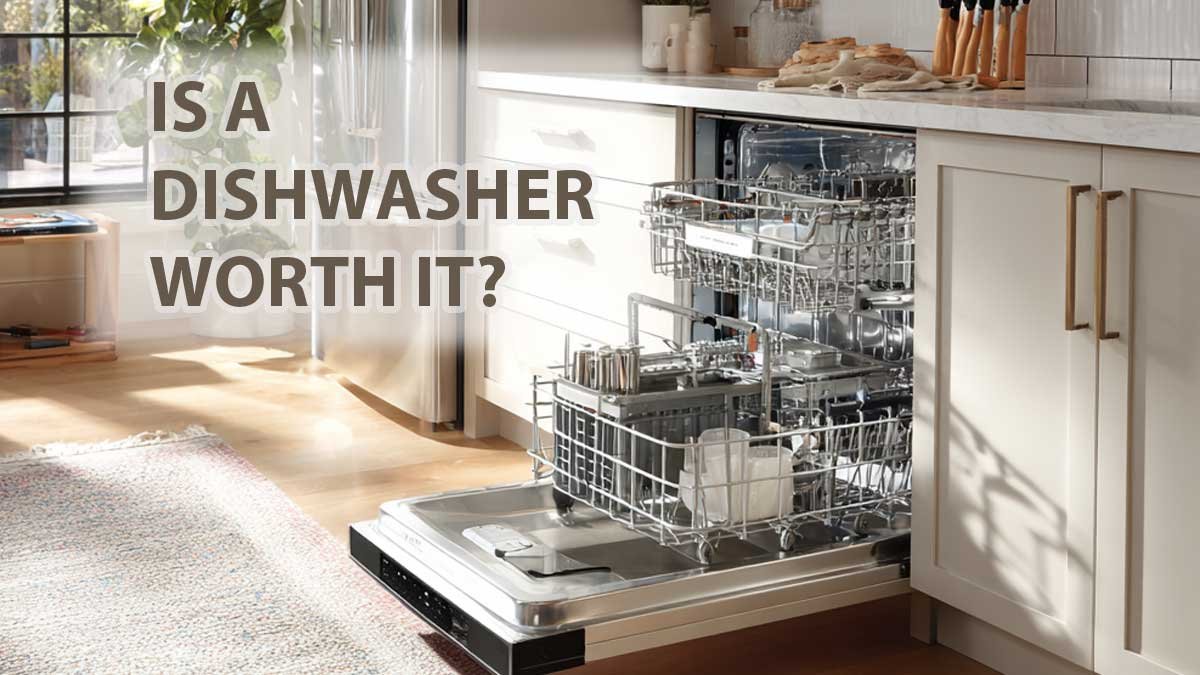
For many U.S. households, the decision to buy a dishwasher isn’t as obvious as it used to be. Rising utility bills, smaller kitchens, changing lifestyles, and the growing cost of appliances have turned what was once a standard purchase into a real question: is a dishwasher actually worth it?
At first glance, the answer seems simple. Dishwashers save time, reduce daily chores, and feel like a basic convenience in modern homes. However, when you look closer, the decision becomes more nuanced. Upfront costs, installation requirements, energy use, and even household size all play a role in whether a dishwasher delivers real value—or just adds another expense.
In practice, “worth it” doesn’t mean the same thing for everyone. A busy family of four will experience the benefits very differently than a single person living in a small apartment. Likewise, a homeowner planning to stay put for years faces a different calculation than a renter with limited space and flexibility.
What’s more, many assumptions about dishwashers are outdated. Modern models use far less water and electricity than older units, and in many cases, they outperform hand washing in both efficiency and sanitation. Because of this, the real question isn’t whether dishwashers are good or bad—but when they make sense, and when they don’t.
This guide breaks down the real pros and cons of owning a dishwasher in the U.S., looking at time savings, costs, efficiency, and everyday practicality. By the end, you’ll be able to decide with confidence whether a dishwasher is a smart investment for your household—not someone else’s.
A big part of that decision comes down to efficiency, which we break down in detail in this dishwasher vs hand washing comparison.
What Does “Worth It” Actually Mean for U.S. Households?
Before weighing pros and cons, it’s important to define what “worth it” really means in a U.S. household context. Too often, the decision is reduced to price alone, when in reality, value comes from a combination of time, convenience, efficiency, and long-term impact.
Time savings vs. daily lifestyle
Time is the most overlooked factor in this decision. For households that cook frequently, dishwashing isn’t a once-a-day task—it’s a repeated chore that quietly consumes hours every week.
In practice, a dishwasher doesn’t just save the time spent scrubbing plates. It also reduces:
- time spent clearing the sink
- mental load from unfinished chores
- interruptions during evenings or weekends
For families, this adds up quickly. For individuals who cook rarely, the time savings may be minimal. This is why lifestyle—not just household size—matters so much when evaluating value.
Convenience vs. upfront cost
Dishwashers come with a clear upfront cost: the appliance itself, plus potential installation. On the surface, this can make hand washing seem like the cheaper option.
However, convenience has value—especially over time. A dishwasher offers:
- predictable cleanup routines
- the ability to wash dishes overnight
- less reliance on immediate cleanup after meals
For many U.S. households, especially those balancing work, family, and limited free time, this convenience becomes a meaningful quality-of-life improvement rather than a luxury.
Long-term value vs. short-term expense
Looking only at the purchase price misses the bigger picture. Dishwashers are long-term appliances, often lasting 10 years or more when properly maintained.
Over that lifespan, value is influenced by:
- water and energy efficiency
- durability and repair frequency
- how often the dishwasher is actually used
In other words, a dishwasher that seems expensive upfront may prove cost-effective over time—while a cheaper model that’s rarely used may not deliver much value at all.
Ultimately, for U.S. households, “worth it” means aligning the appliance with real habits, not idealized ones. When the dishwasher matches how a household actually lives, the value becomes clear. When it doesn’t, even the best model can feel unnecessary.
Pros of Owning a Dishwasher
When a dishwasher makes sense for a household, the benefits compound over time. What starts as a simple convenience often turns into measurable savings—in time, water, and daily effort.
Saves time every single week
Time savings are the most immediate and noticeable advantage. Hand washing may feel quick in the moment, but over the course of a week, it adds up.
In practice, a dishwasher:
- consolidates cleanup into one predictable step
- allows dishes to be washed while you do something else
- eliminates repeated trips to the sink throughout the day
For families or frequent cooks, this can reclaim several hours each week. Even for smaller households, the ability to load dishes and walk away—especially after dinner—has real value that’s easy to underestimate.
Over months and years, that reclaimed time often becomes the strongest reason people say they’d never go back to hand washing alone.
Uses less water than most people think
One of the most persistent myths about dishwashers is that they waste water. That used to be true decades ago. It’s no longer the case.
For a deeper look at real numbers and cycle averages, this guide explains exactly how much water a dishwasher uses in typical U.S. households.
Modern dishwashers sold in the U.S. are designed under strict efficiency standards. As a result, they typically use far less water per cycle than washing dishes by hand under a running faucet. This is especially true when washing larger loads.
In real-world use:
- a full dishwasher load can use just a few gallons of water
- hand washing often exceeds that without people realizing it
- efficiency improves as load size increases
For households in water-conscious states or areas with rising utility costs, this efficiency can translate into long-term savings—not just environmental benefits.
Energy consumption also matters, especially with rising utility costs, which is why we analyzed how energy-efficient dishwashers are in 2026.
Better sanitation and hygiene
Dishwashers don’t just clean—they sanitize.
Most dishwashers operate at water temperatures far higher than what hands can safely tolerate. This higher heat, combined with detergent and extended wash cycles, helps remove bacteria and food residue more effectively than typical hand washing.
This matters most for:
- households with children
- people with allergies or sensitivities
- anyone concerned about food safety
In short, a dishwasher provides a level of consistency and hygiene that’s difficult to match at the sink, especially during quick, everyday washes.
Consistent cleaning results
Hand washing quality varies. Some days dishes get extra attention; other days they’re rushed. Dishwashers, by contrast, deliver consistent results when loaded and used correctly.
Modern models adjust:
- water pressure
- spray patterns
- cycle length
to handle mixed loads more effectively. Over time, this consistency reduces rewashing, spotting, and leftover residue—small frustrations that quietly add up.
Increases home value and buyer expectations
In the U.S. market, dishwashers are often considered a baseline feature rather than a luxury—especially in homes and long-term rentals.
For homeowners, a dishwasher can:
- increase perceived kitchen value
- meet buyer expectations
- make a home more competitive in resale
Even compact or efficient models can improve how a kitchen is viewed, particularly when paired with modern cabinetry and appliances.
While this benefit may not matter to everyone, it becomes important for those thinking long-term about their property.
Cons of Owning a Dishwasher
While dishwashers offer real advantages, they’re not the right solution for every household. Understanding the downsides—clearly and without exaggeration—is essential for making a smart decision.
Purchase and installation costs
The most obvious downside is cost. Even budget dishwashers require an upfront investment, and installation can add to the total—especially if plumbing or electrical work is needed.
In the U.S., typical expenses may include:
- the dishwasher itself
- installation or hookup fees
- additional parts or accessories
For households on a tight budget, this upfront cost can outweigh the convenience benefits—at least in the short term.
Ongoing maintenance and potential repairs
Dishwashers are mechanical appliances, which means they require maintenance over time. Filters need cleaning, seals can wear out, and components may eventually fail.
While modern dishwashers are generally reliable, repairs can be costly if:
- the unit is out of warranty
- replacement parts are expensive
- service calls are frequent
For some households, especially those that rarely cook, the maintenance tradeoff may not feel worthwhile.
Space limitations in smaller kitchens
Not every kitchen is designed with a dishwasher in mind. In apartments, condos, or older homes, space can be a real constraint.
For renters and apartment dwellers who can’t make permanent changes, there are dishwasher options designed specifically for that situation, covered in our guide to dishwashers for renters.
Common challenges include:
- lack of cabinet space
- awkward layouts
- limited clearance
Even compact or countertop models require room, and in very small kitchens, the tradeoff may not make sense.
Not ideal for every lifestyle
Dishwashers provide the most value when they’re used regularly. For people who:
- eat out often
- cook infrequently
- live alone and generate few dishes
hand washing may already be efficient enough. In these cases, a dishwasher can feel underused—turning a convenience into an unnecessary appliance.
Dishwasher vs Hand Washing — Cost Breakdown
This is where many assumptions fall apart. On the surface, hand washing feels cheaper and simpler. There’s no appliance to buy, no installation, and no repairs to worry about. However, when you look at actual usage over time, the comparison becomes more nuanced.
Water usage comparison
Water is often the biggest surprise in this debate.
Modern dishwashers sold in the U.S. are engineered to minimize water use per cycle. A full load typically uses far less water than most people expect—especially compared to washing dishes by hand with the tap running.
In real-world conditions:
- hand washing often uses water continuously
- people rarely measure or limit flow
- larger loads significantly increase water use
By contrast, a dishwasher uses a fixed amount of water, regardless of how long the cycle runs. This consistency is what makes it more efficient for households that generate multiple dishes per meal.
For families or frequent cooks, this difference alone can justify the appliance over time.
Electricity usage
Dishwashers do use electricity—mainly to heat water and run pumps. However, modern models are designed to balance performance with efficiency.
Several factors influence electricity use:
- cycle selection (eco vs heavy)
- drying method
- water heating source
When compared to hand washing, electricity use often replaces energy that would otherwise be used to heat water at the sink. In many cases, the total energy impact is similar—or even lower—depending on habits.
The key takeaway is that electricity use isn’t automatically higher with a dishwasher; it depends on how both methods are used.
Detergent and consumable costs
Hand washing relies on dish soap, sponges, and hot water. Dishwashers rely on detergent, rinse aid, and occasional cleaner.
Detergent choice plays a role here as well, and this dishwasher detergent comparison breaks down pods, powder, and liquid options.
While dishwasher detergents may seem more expensive per unit, they’re:
- highly concentrated
- used in controlled amounts
- designed to work efficiently per cycle
Over time, consumable costs between the two methods are often closer than people expect, especially when rewashing and extra rinsing are factored in.
Annual cost estimates for U.S. households
When you add everything together—water, energy, and detergents—the annual cost difference between dishwasher use and hand washing is often modest.
For households that:
- cook regularly
- wash full loads
- use efficient cycles
dishwashers frequently come out ahead or break even. For those with minimal dish use, hand washing may still be cheaper.
The takeaway isn’t that one method always wins—but that usage patterns determine the real cost.
When a Dishwasher Is Absolutely Worth It
For many U.S. households, the value of a dishwasher isn’t theoretical—it’s obvious once daily routines are considered. In the following scenarios, the benefits consistently outweigh the downsides.
Families and multi-person households
If more than two people live in the home, dish volume increases fast. Multiple meals, snacks, cups, and cookware quickly turn dishwashing into a daily time sink.
For households that regularly fill the dishwasher, these picks for the best dishwashers for large families focus on capacity, durability, and efficiency.
In these households, a dishwasher:
- handles larger loads efficiently
- reduces cleanup frequency
- prevents dishes from piling up
Over time, the time and water savings compound, making a dishwasher not just convenient, but practical.
Households that cook at home frequently
Cooking at home—especially from scratch—creates more dishes than eating out. Pots, pans, cutting boards, and prep tools all add to the workload.
For frequent cooks, a dishwasher:
- streamlines cleanup after every meal
- allows batching dishes into one cycle
- supports consistent kitchen routines
In this case, the appliance supports a lifestyle choice rather than adding unnecessary complexity.
Homes with hygiene or allergy concerns
Higher wash temperatures and extended cycles give dishwashers an edge when sanitation matters. This is especially relevant for:
- households with young children
- people with compromised immune systems
- allergy-sensitive environments
The consistency of dishwasher sanitation often exceeds what’s realistic at the sink, making it a clear win for these use cases.
Water-conscious regions and rising utility costs
In many parts of the U.S., water rates are rising, and conservation matters. Efficient dishwashers are designed to minimize water use without sacrificing performance.
For households in water-restricted or high-cost regions, this efficiency can translate into long-term savings that hand washing struggles to match.
When a Dishwasher Might NOT Be Worth It
Just as important as knowing when a dishwasher makes sense is recognizing when it doesn’t. In some situations, the drawbacks can outweigh the benefits.
Single occupants or minimal dish use
If you live alone, cook infrequently, or rely heavily on takeout, dish volume may be too low to justify an appliance.
In these cases:
- hand washing is already quick
- full dishwasher loads are rare
- cycles may run partially filled
Here, convenience gains are limited, and the appliance may feel underused.
Very small kitchens or limited space
Space matters. In compact kitchens, every cabinet counts.
In these situations, compact alternatives may make more sense, including countertop dishwashers designed for limited space.
If installing a dishwasher means:
- sacrificing essential storage
- creating awkward layouts
- blocking workflow
the tradeoff may not be worth it. Even compact models require room, and forcing an installation can reduce overall kitchen usability.
Short-term living situations
For renters or people planning to move soon, a dishwasher’s long-term value may never be realized.
When relocation is likely:
- installation costs may not be recovered
- compatibility with future homes is uncertain
- landlord restrictions may apply
In these cases, temporary or portable solutions—or hand washing—can be more practical.
Is a Dishwasher Worth It Financially in the Long Run?
Financially, the dishwasher decision is rarely about immediate savings. Instead, it’s about value over time.
Break-even timeline
Most dishwashers begin to justify their cost over several years of consistent use. Factors that influence the break-even point include:
- frequency of use
- efficiency of the model
- local utility rates
Households that use a dishwasher regularly tend to reach that break-even point faster.
Efficiency-focused models
Energy-efficient and water-saving models reduce ongoing costs and extend long-term value. Over a decade of use, small efficiency gains can add up—especially in higher-cost regions.
Choosing the right model matters here, and our guide to the best energy-efficient dishwashers highlights options that minimize long-term operating costs.
Repair vs. replace logic
Like any appliance, dishwashers won’t last forever. Understanding when to repair versus replace helps maximize value and avoid throwing good money after bad.
When maintenance is reasonable and performance remains strong, a dishwasher continues to deliver value well beyond its purchase price.
FAQ: Is a Dishwasher Worth It?
1) Is a dishwasher worth it for a single person?
It can be, but it depends on how you live. If you cook often and hate daily cleanup, a dishwasher adds real convenience. If you eat out frequently and generate few dishes, hand washing may be faster and cheaper.
2) Do dishwashers really save water compared to hand washing?
In many U.S. households, yes—especially when people wash dishes under a running faucet. Modern dishwashers use a controlled amount of water per cycle, which often beats typical hand-washing habits for full loads.
3) Is it cheaper to wash dishes by hand?
Short-term, yes, because there’s no appliance to buy or install. Long-term, the cost difference depends on your water rates, hot water usage, and how often you run the dishwasher. For frequent cooks and families, dishwashers often break even or come out ahead over time.
4) How long does a dishwasher usually last?
A well-maintained dishwasher commonly lasts around a decade, sometimes longer. Regular filter cleaning, proper loading, and using the right detergent help extend its lifespan.
5) Are dishwashers expensive to run every month?
For most households, operating costs are relatively modest—especially with energy-efficient models and eco cycles. Heated drying and frequent heavy cycles can raise costs, so settings matter.
6) When is a dishwasher NOT worth it?
A dishwasher may not be worth it if you have very limited kitchen space, rarely cook, or are in a short-term rental where installation costs won’t pay off.
Final Verdict — Is a Dishwasher Worth It for You?
There’s no universal answer—but there is a clear framework.
A dishwasher is worth it if:
- you generate enough dishes to use it regularly
- you value time savings and consistency
- your kitchen and budget support the installation
It may not be worth it if:
- dish volume is minimal
- space is extremely limited
- your living situation is temporary
Ultimately, the right decision depends on how closely the appliance fits your actual habits—not idealized ones. When the match is right, a dishwasher becomes one of the most quietly valuable tools in a U.S. kitchen.
If you’ve decided a dishwasher makes sense for your home, our Best Dishwashers for 2026 buying guide helps you compare the top models for different needs and budgets.