



Most people assume that a dishwasher cleans itself. After all, it runs hot water, detergent, and rinse cycles on a regular basis. In reality, that assumption is the reason many dishwashers slowly lose performance over time.
Food particles, grease, mineral buildup, and detergent residue accumulate in places you don’t normally see—filters, spray arms, seals, and drain areas. Left unchecked, this buildup affects cleaning results, causes odors, and can shorten the lifespan of the appliance.
The good news is that you don’t need to deep-clean your dishwasher every week. You just need to clean the right parts, at the right intervals. This guide breaks down exactly how often a dishwasher should be cleaned, and how to maintain your dishwasher with minimal effort.
Short Answer: How Often Should I Clean a Dishwasher?
Most dishwashers should be lightly cleaned every month and deep-cleaned every 3–6 months.
High-use households or homes with hard water may need more frequent maintenance.
That’s the simple rule. The rest of this guide explains how to adjust that schedule based on real-world conditions.
Why Dishwashers Need Regular Cleaning
Even though dishwashers are designed to handle food waste, they are not disposal systems. Small particles escape the filter, grease coats interior surfaces, and minerals from hard water slowly build up inside the machine.
Over time, this leads to:
- Cloudy or spotted dishes
- Persistent odors after cycles
- Poor drying performance
- Longer cycle times
- Increased wear on internal components
Regular cleaning doesn’t just improve results—it helps your dishwasher run closer to its original efficiency for years.
Monthly Dishwasher Cleaning (Basic Maintenance)
For most households, once a month is the ideal interval for basic cleaning. This level of maintenance focuses on prevention rather than fixing problems.
What monthly cleaning should include:
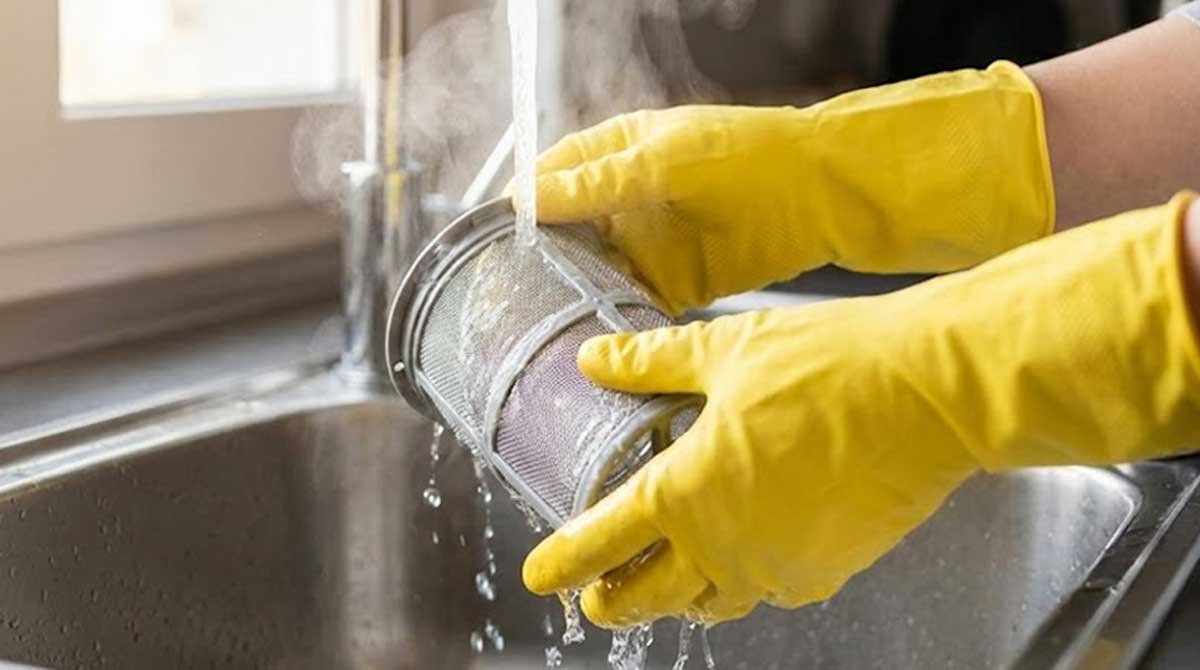
- Rinsing or cleaning the dishwasher filter
- Wiping down door seals and edges
- Checking spray arms for visible debris
- Running a cleaning cycle with a dishwasher-safe cleaner
This routine takes about 10–15 minutes of hands-on time and prevents most odor and residue issues before they start.
If your dishwasher runs daily or handles heavily soiled loads, monthly cleaning becomes even more important.
Deep Cleaning: Every 3–6 Months
A deeper cleaning is necessary two to four times per year, depending on usage and water conditions.
Deep cleaning typically includes:
- Removing and thoroughly washing the filter
- Inspecting spray arms and unclogging holes
- Cleaning the drain area
- Descaling mineral buildup
- Cleaning interior walls and racks
Homes with soft water and light usage may only need deep cleaning twice a year. Homes with hard water, large families, or frequent cycles should aim closer to every three months.
Deep cleaning restores performance rather than just maintaining it. Learn more about which dishwasher salt to use based on your water hardness.
How Usage Affects Cleaning Frequency
Not all dishwashers experience the same workload. Usage patterns matter more than the calendar.
You may need to clean more often if:
- You run the dishwasher daily
- You load heavily soiled cookware
- You rarely pre-rinse dishes
- You use short or eco cycles frequently
Learn how different dishwasher cycles affect performance and residue as effectively. Over time, buildup becomes more likely.
On the other hand, households that run fewer cycles per week and avoid heavy grease loads can often extend cleaning intervals safely.
The Role of Water Quality
Water quality plays a major role in how often a dishwasher needs cleaning.
Hard water households:
- Mineral deposits form faster
- White residue and spots are more common
- Descaling is needed more frequently
If you live in a hard water area, monthly maintenance and quarterly deep cleaning are strongly recommended. Using dishwasher salt or the right rinse aid may reduce buildup, but it doesn’t eliminate the need for cleaning.
Soft water households typically experience slower buildup, but detergent residue can still accumulate over time.
Signs Your Dishwasher Needs Cleaning Sooner
Sometimes your dishwasher tells you it needs attention before the schedule does.
Watch for these warning signs:
- Dishes come out with a film or residue
- A sour or musty smell remains after cycles
- Food particles appear on clean dishes
- Water pools at the bottom of the tub
- Drying performance worsens
If any of these appear, it’s best to clean the dishwasher immediately rather than waiting for the next scheduled interval.
Does Running a Cleaning Cycle Replace Manual Cleaning?
No. Cleaning cycles are helpful, but they don’t replace manual maintenance.
Dishwasher cleaners work best as preventive tools, according to Energy Star guidelines, regular maintenance improves both efficiency and longevity.
. They dissolve grease and mineral buildup inside the tub, but they don’t always reach filters, seals, or clogged spray arms effectively.
Think of cleaning cycles as part of your monthly routine—not a substitute for physical inspection and cleaning.
Can Over-Cleaning Harm a Dishwasher?
Over-cleaning is rarely a problem, but improper cleaning can be.
Avoid:
- Abrasive pads on interior surfaces
- Harsh chemicals not designed for dishwashers
- Mixing cleaning products
- Removing parts too frequently without need
Gentle, consistent maintenance is safer than aggressive cleaning done too often.
A Practical Cleaning Schedule (Simple Version)
For most households, this schedule works well:
- Weekly: Quick visual check, wipe visible debris
- Monthly: Clean filter, wipe seals, run cleaning cycle
- Every 3–6 months: Deep clean and descale
This approach balances performance, time investment, and appliance longevity.
FAQ Section – How Often Should I Clean a Dishwasher?
❓ How often should I clean my dishwasher?
You should perform basic cleaning once a month and deep cleaning every 3 to 6 months. Homes with hard water or heavy use may require more frequent maintenance.
❓ What happens if I don’t clean my dishwasher regularly?
Neglecting dishwasher cleaning can lead to cloudy dishes, bad smells, longer cycle times, and reduced cleaning performance.
❓ Do I need to use special dishwasher cleaner?
Yes. Use dishwasher-safe cleaning tablets or liquids once a month. They help remove grease and limescale from hard-to-reach areas.
❓ Does hard water affect my dishwasher cleaning schedule?
Absolutely. Hard water causes faster mineral buildup. If you live in a hard water area, clean your dishwasher more frequently and use dishwasher salt and rinse aid.
❓ Can I just run a cleaning cycle instead of cleaning manually?
No. Cleaning cycles are helpful, but they don’t replace manual filter cleaning or descaling. Manual cleaning is still required for optimal performance.
❓ What are signs that my dishwasher needs cleaning?
Common signs include white residue on dishes, foul smells after cycles, poor drying, and visible food particles on clean plates.
❓ Can over-cleaning damage a dishwasher?
Not usually, but using abrasive pads or harsh chemicals can cause wear. Stick to gentle, dishwasher-approved cleaners and cloths.
❓ What parts of the dishwasher should I clean?
Focus on the filter, spray arms, drain area, seals, and the interior tub. These are the most common places where buildup collects.
Final Takeaway
A dishwasher doesn’t need constant attention—but it does need regular, intentional care. Monthly maintenance prevents buildup, while periodic deep cleaning restores performance and reduces long-term wear.
If your dishwasher is already showing signs of reduced performance, cleaning more often is usually the first and simplest fix. In many cases, and may even delay when you should replace your dishwasher.
Clean it on a schedule, pay attention to warning signs, and your dishwasher will reward you with better results—and fewer surprises.