



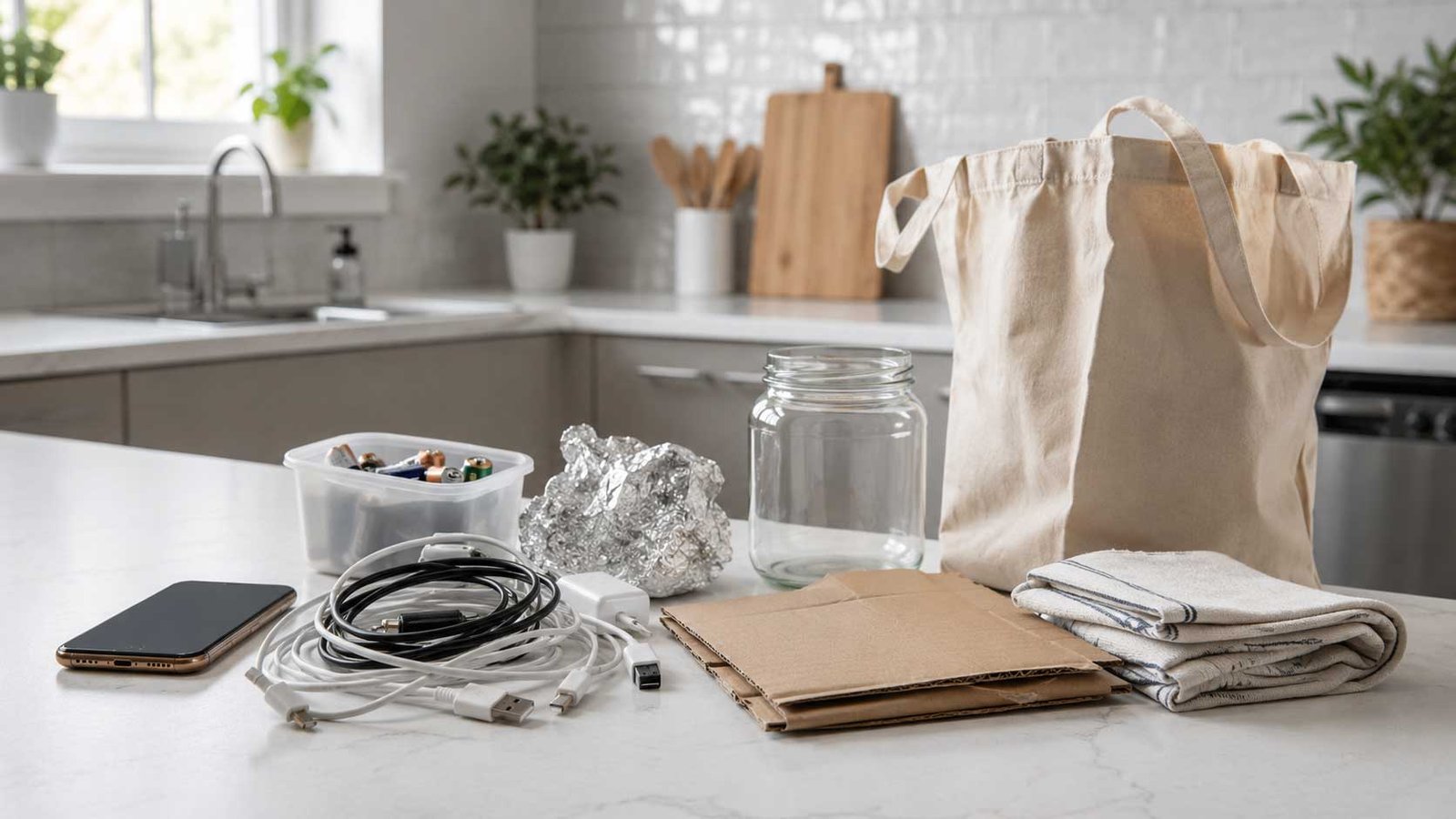
Most of us already know the basics: cardboard boxes, glass bottles, aluminum cans, and maybe a stack of newspapers if you still get those. But when you start looking around your kitchen, garage, bathroom, and that mysterious drawer full of cables, you’ll find a lot more surprising things you can recycle at home than you might expect.
The tricky part is that not everything belongs in your curbside recycling bin. Some items need a store drop-off, a local recycling center, or a special collection program. That sounds annoying, but in real life, it is usually a lot easier than it feels once you know what goes where.
If you are trying to make your home a little less wasteful without turning your life into a full-time sorting project, this guide is a good place to start. For more simple ideas, you may also want to read our guide on simple ways to reduce household waste.
Why Recycling at Home Is More Than Bottles and Paper
Recycling at home is not just about being “green.” It is also about keeping useful materials out of the trash and avoiding problems caused by items that do not belong in regular garbage.
Old electronics can contain reusable metals. Batteries can be a fire risk if handled poorly. Plastic bags can jam sorting equipment. Textiles can often be reused, donated, or processed instead of going straight to a landfill.
In other words, your home probably has more recyclable material than you think.
The key is not to recycle blindly. “Wish-cycling” — tossing something into the recycling bin and hoping for the best — can actually make things worse. A better approach is simple: know the common items, check your local rules, and use the right drop-off option when needed.
Let’s start with the things most people overlook.
1. Old Electronics and Small Gadgets
That old phone in your drawer? The broken headphones in your desk? The tablet you replaced three years ago but never actually got rid of? Those are all part of a growing pile of household e-waste.
Small electronics are one of the most surprising things you can recycle at home because many people do not think of them as recyclable at all. They feel like “tech trash.” But inside many devices are metals, plastics, circuit boards, and sometimes batteries that should be handled separately.
Common recyclable electronics may include:
- Old cell phones
- Tablets and laptops
- Computer keyboards and mice
- Chargers and cables
- Headphones and earbuds
- Small kitchen gadgets
- Game controllers
- Routers and modems
Here is the important part: most electronics should not go into your curbside recycling bin. They usually need to be taken to an e-waste collection site, a retailer recycling program, or a local municipal drop-off event.
Before recycling a device, always remove personal data. For phones, tablets, laptops, and computers, do a proper factory reset and remove accounts, passwords, memory cards, and SIM cards.
Alex’s note: if it once stored your photos, passwords, files, or messages, treat it like a tiny safe before you recycle it. Wipe it first, recycle it second.
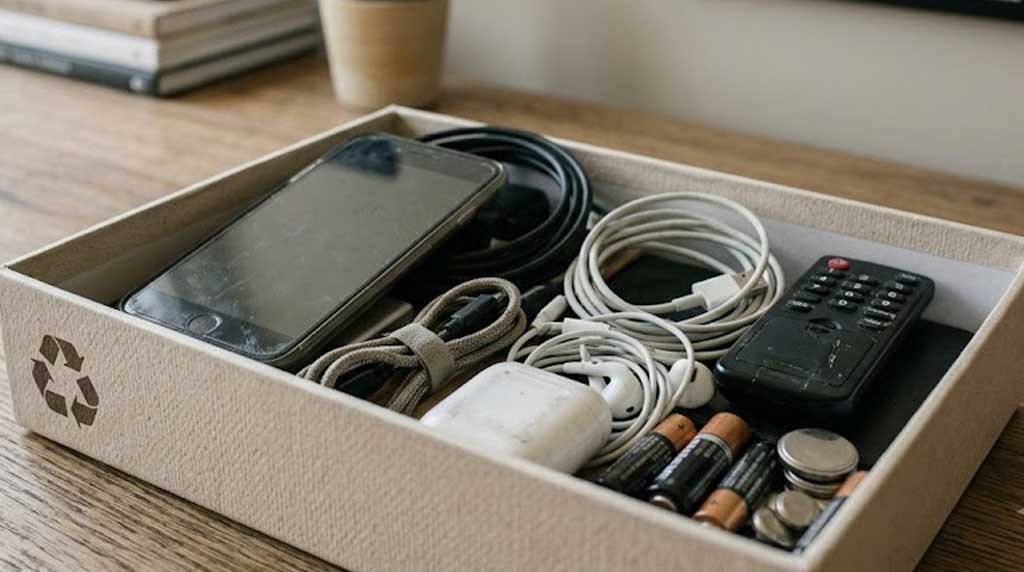
A good habit is to keep a small “electronics recycling box” in a closet or garage. Toss old cables, dead chargers, broken earbuds, and outdated gadgets into it. Then, once or twice a year, take the whole box to a proper drop-off location.
That is much easier than making a special trip every time one USB cable dies a mysterious death.
2. Batteries
Batteries are small, easy to ignore, and often handled the wrong way. That is exactly why they deserve a spot near the top of this list.
Many household batteries can be recycled, but you need to be careful with the type. Some batteries are safer than others. Rechargeable batteries and lithium-ion batteries, especially, should be handled with extra care because they can create fire risks if damaged or tossed into the wrong waste stream.
Common household batteries include:
- AA and AAA batteries
- 9V batteries
- Button cell batteries
- Rechargeable batteries
- Lithium-ion batteries
- Laptop batteries
- Tool batteries
- Camera batteries
You will find batteries in more places than you think: remote controls, wireless mice, flashlights, toys, smart home devices, cordless tools, electric toothbrushes, old phones, and portable speakers.
The safest rule is simple: do not assume batteries belong in the trash or curbside recycling. Check your local recycling program or use a recognized battery drop-off location.
For lithium-ion batteries, it is also smart to tape the terminals or place each battery in a separate bag before drop-off. That helps reduce the chance of contact between terminals, especially if you are storing several used batteries together.
A practical setup for home: keep a small battery organizer or container in a dry place, away from heat. Label it “used batteries” so nobody accidentally mixes them with fresh ones.
And no, the junk drawer does not count as a battery management system. It is where batteries go to lose their identity.
3. Ink Cartridges and Toner Cartridges
If you have a home printer, you probably know the pain: the printer sits quietly for months, then suddenly demands new ink like it is negotiating a ransom.
The good news is that used ink cartridges and toner cartridges are often recyclable. Many office supply stores, printer brands, and mail-back programs accept them. Some programs may even offer small rewards, discounts, or store credit.
Items that may be accepted include:
- Inkjet cartridges
- Laser toner cartridges
- Printer drums
- Some printer maintenance parts
- Packaging from replacement cartridges
Cartridges are worth recycling because they contain plastic, metal, and leftover ink or toner. Throwing them in the trash is easy, but it is not the best option if a recycling program is available.
Before you recycle them, place used cartridges in a plastic bag or the packaging from the new cartridge. This helps prevent ink or toner dust from making a mess in your drawer, car, or office bag.
If you print often, create a simple system: when you replace a cartridge, put the empty one straight into a small return box. Once the box is full, drop them off or mail them back.
This is one of those recycling habits that takes almost no effort once the setup is there.
Affiliate-friendly product idea: this section can naturally link to a home office storage box, printer paper organizer, or printer maintenance guide. Keep it helpful, not pushy.
4. Old Toothbrushes and Toothpaste Tubes
Bathroom waste is easy to overlook because most of it is small. A toothbrush here, a toothpaste tube there, a floss container every few months. It does not feel like much.
But across a household, it adds up.
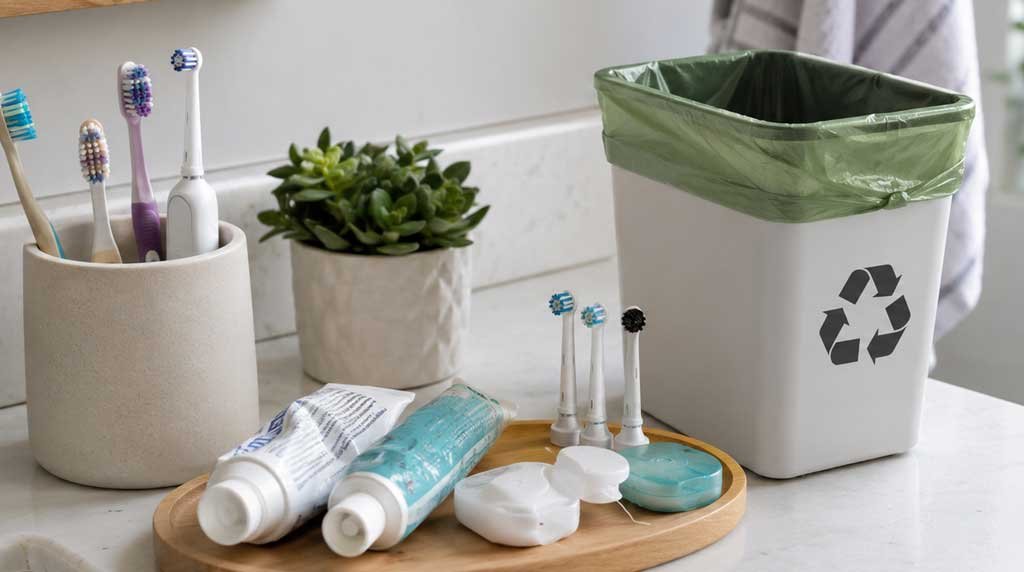
Old toothbrushes, toothpaste tubes, floss containers, and electric toothbrush heads are among the more surprising things you can recycle at home. The catch is that they usually do not belong in regular curbside recycling because they are often made from mixed materials.
Items to look for include:
- Plastic toothbrushes
- Electric toothbrush heads
- Toothpaste tubes
- Floss containers
- Mouthwash caps
- Some oral care packaging
Some brands and specialty recycling programs accept oral care products through take-back systems. These programs can change over time, so it is worth checking the product packaging or the manufacturer’s website.
If you cannot recycle an old toothbrush right away, reuse it first. Old toothbrushes are great for cleaning:
- Tile grout
- Faucet edges
- Sneaker soles
- Small appliance parts
- Window tracks
- Around sink drains
Just make sure it gets retired from dental duty first. Nobody needs a “multi-purpose” toothbrush in the wrong direction.
For a more sustainable swap, some people choose bamboo toothbrushes or replaceable-head toothbrushes. Still, do not assume “eco-looking” automatically means recyclable or compostable in your area. Always check the actual disposal instructions.
5. Light Bulbs
Light bulbs are a perfect example of why recycling can be confusing. Some bulbs can be recycled. Some should be handled carefully. Some may not be accepted by your local program at all.
The main types you may have at home include:
- LED bulbs
- CFL bulbs
- Incandescent bulbs
- Halogen bulbs
- Fluorescent tubes
CFL bulbs and fluorescent tubes need special attention because they can contain small amounts of mercury. They should not be treated like ordinary household trash if your area offers a proper recycling or hazardous waste collection option.
LED bulbs are different. They do not contain mercury, but they still include electronic components and materials that may be recyclable through certain programs.
The safest approach is to separate bulbs by type and check local guidance before disposal. Many hardware stores and municipal waste programs offer bulb recycling options, especially for CFLs and fluorescent tubes.
Here is a simple home habit: keep old bulbs in the packaging from the replacement bulb. That protects them from breaking while you figure out where to take them.
Also, do not crush bulbs to “save space.” That is one of those ideas that sounds practical for about two seconds and then becomes a cleanup problem.
If you are replacing bulbs around the house, this is also a good time to switch to quality LEDs. They last longer, use less energy, and reduce how often you have to deal with bulb disposal in the first place.
6. Plastic Bags and Film Packaging
Plastic bags are everywhere: grocery bags, bread bags, produce bags, shipping air pillows, the plastic wrap around paper towels, and the thin film around bottled water packs.
Many people assume these can go into the recycling bin because they are plastic. In most cases, they should not.
Soft plastic bags and film packaging can get tangled in recycling equipment. That is why many curbside programs do not accept them. However, some clean and dry plastic film items may be accepted through store drop-off programs.
Examples may include:
- Grocery bags
- Bread bags
- Produce bags
- Dry cleaning bags
- Plastic shipping mailers
- Air pillows from packages
- Plastic wrap from paper towels or toilet paper packs
The basic rule is: clean, dry, and stretchy plastic film may have a drop-off option. Dirty or food-covered plastic should not be recycled.
Before dropping off plastic bags, remove receipts, crumbs, labels when possible, and anything that is not plastic film. If a bag is wet, greasy, or full of food residue, it belongs in the trash unless your local program says otherwise.
A better long-term habit is to reduce the number of bags coming into your home. Reusable shopping bags, reusable produce bags, and better pantry storage can cut down the pile quickly.
Still, let’s be honest: plastic bags sneak into every home. The goal is not perfection. The goal is to stop stuffing them under the sink until they form a second household.
7. Old Clothes and Textiles
Old clothes are one of the easiest things to throw away — and one of the most useful things to rethink.
A shirt with a small stain may still be wearable. A towel with a frayed edge may become a cleaning rag. A torn sheet may be useful for painting, garage work, pet bedding, or packing fragile items.
Textiles that may be reused or recycled include:
- T-shirts
- Jeans
- Towels
- Sheets
- Curtains
- Shoes
- Bags
- Blankets
- Fabric scraps
The first option should usually be reuse or donation, but only if the item is still in usable condition. Donation is not a magic trash can. If something is wet, moldy, heavily stained, or contaminated, it should not be donated.
For items that are too worn to wear, look for textile recycling programs in your area. Some retailers, local charities, and community recycling centers accept worn textiles, depending on condition and location.
At home, you can also repurpose textiles before recycling them. Old cotton shirts make excellent cleaning cloths. Old towels are useful for car washing, garage spills, pet cleanup, and protecting floors during small DIY projects.
Alex’s note: the best cleaning rag is usually a T-shirt you were never going to wear again. It has already failed as fashion. Let it succeed as a tool.
A small textile sorting system can help:
- Donate: clean, wearable items
- Reuse: old towels, T-shirts, and sheets
- Recycle: worn-out textiles accepted by local programs
- Trash: contaminated, moldy, or unsafe items
This keeps your closet cleaner and makes your recycling habits more realistic. Because if the system is too complicated, it will not survive laundry day.
8. Wine Corks
Wine corks are one of those tiny household items that feel too small to matter. You open the bottle, toss the cork, and never think about it again.
But natural cork is actually a useful material. It is lightweight, durable, and made from the bark of cork oak trees. That means it can often be reused, repurposed, or recycled through specialty cork recycling programs.
You may be able to recycle or reuse:
- Natural wine corks
- Cork board scraps
- Cork coasters
- Cork craft materials
- Some cork packaging
The important detail is the difference between natural cork and synthetic cork. Natural cork is plant-based. Synthetic corks are usually made from plastic-like materials, and they may not be accepted by the same programs.
If you enjoy simple DIY projects, corks can also be reused around the home. They can become plant markers, drawer spacers, craft pieces, or small protective pads for furniture and cabinet doors.
A small jar on a kitchen shelf is enough to collect corks over time. Once it is full, you can check for a local cork recycling program or reuse them for home projects.
Alex’s note: if your “cork collection” is starting to look like evidence from a very relaxed weekend, it may be time to recycle a few.
9. Aluminum Foil and Aluminum Trays
Aluminum cans are easy. Most people know they can be recФдycled. Aluminum foil and disposable aluminum trays are where things get confusing.
The good news: aluminum foil and trays may be recyclable if they are clean enough. The bad news: greasy, food-covered foil is usually a problem.
Common aluminum kitchen items include:
- Aluminum foil
- Disposable baking trays
- Pie plates
- Takeout trays
- Grill liners
- Foil food containers
Before recycling aluminum foil or trays, remove as much food residue as possible. They do not need to look brand new, but they should not be covered in sauce, grease, cheese, or burnt food.
For foil, it is also better to collect pieces and form them into a larger ball. Very small pieces of foil can be difficult for recycling systems to sort properly.
Before you toss greasy foil or food-covered trays into the recycling bin, it is worth knowing what belongs in the kitchen cleanup zone and what does not. You can also check our guide on why my dishwasher doesn’t clean well for more common kitchen mistakes.
A simple kitchen rule works well: if it is clean and mostly aluminum, check if your local program accepts it. If it is greasy, wet, or full of food, it probably belongs in the trash.
This is also a good moment to reduce waste before it happens. Reusable baking mats, glass food containers, and quality sheet pans can cut down on disposable foil use over time.
You do not need to eliminate foil from your kitchen completely. Just avoid turning every leftover slice of pizza into a shiny little recycling problem.
10. Old Pots, Pans, and Metal Cookware
Old cookware is not the first thing most people think of when they hear “recycling.” But many pots, pans, baking sheets, and metal kitchen tools contain recyclable metal.
This can include:
- Stainless steel pots
- Aluminum pans
- Cast iron cookware
- Metal baking sheets
- Metal mixing bowls
- Old utensils
- Damaged roasting pans
However, cookware usually does not belong in your regular curbside recycling bin. Many curbside programs are designed for common household packaging, not large or mixed-material kitchen items.
The better option is often a scrap metal recycler, local recycling center, or municipal drop-off program. Some donation centers may also accept cookware if it is still usable.
Before recycling cookware, check for non-metal parts. Plastic handles, silicone grips, glass lids, and nonstick coatings can affect how the item should be handled.
If the pan still works, donation is usually better than recycling. But if the coating is peeling, the bottom is warped, or the handle is loose, recycling may be the smarter choice.
One practical tip: when replacing cookware, buy fewer but better pieces. A durable stainless steel pan or cast iron skillet can last for years, sometimes decades. Cheap cookware that fails quickly is not really cheap if you keep replacing it.
Alex’s note: if your frying pan rocks on the stovetop like a wobbly restaurant table, it has probably earned retirement.
What You Should Not Put in Your Recycling Bin
Here is where recycling gets a little less exciting but much more important.
Not every recyclable-looking item belongs in your recycling bin. Some items can contaminate the load, damage sorting equipment, or create safety problems for workers.
Avoid putting these items in your regular recycling bin unless your local program clearly accepts them:
- Food-covered containers
- Greasy pizza boxes
- Plastic bags and film packaging
- Batteries
- Electronics
- Light bulbs
- Medical waste
- Hoses, cords, and wires
- Broken glass
- Plastic utensils
- Foam packaging
- Hazardous household chemicals
This is where “wish-cycling” causes trouble. If you toss something in the bin just because you hope it can be recycled, it may do more harm than good.
A better habit is to pause for five seconds and ask:
“Is this clean, accepted locally, and safe for the bin?”
If the answer is no, look for a special drop-off option or dispose of it properly.
How to Recycle These Items the Right Way
Recycling at home does not need to become complicated. You just need a simple system that fits real life.
For the most reliable starting point, check the EPA guide to recycling common household items, then compare it with your local city or county recycling rules.
Check Your Local Recycling Rules
Recycling rules vary by city, county, and state. Something accepted in one area may not be accepted in another.
Before you recycle unusual items, check your local waste management website. Look for guidance on batteries, electronics, light bulbs, plastic film, textiles, and scrap metal.
Keep Items Clean and Dry
Food residue is one of the biggest problems in household recycling.
You do not need to scrub every container like it is going into a museum display. But you should empty bottles, rinse containers when needed, and keep paper and cardboard dry.
Clean enough is the goal. Perfect is not required.
Use Drop-Off Locations for Special Items
Some items should go to drop-off locations instead of your curbside bin.
This includes:
- Batteries
- Electronics
- Light bulbs
- Plastic bags and film
- Ink cartridges
- Textiles
- Scrap metal
A good home setup is to create a small “special recycling” box in a closet, laundry room, garage, or pantry. When it fills up, take everything to the correct drop-off location.
That way, recycling does not become ten separate errands.
Donate Before You Recycle
If something still works, donation may be the better choice.
This is especially true for:
- Clothing
- Small appliances
- Cookware
- Electronics
- Tools
- Home goods
Recycling is useful, but reuse usually keeps the product in service longer. If someone else can use it, let it have a second life before it becomes raw material.
Do Not Mix Problem Items Into the Bin
Batteries, cords, plastic bags, and electronics are common recycling mistakes. They may seem harmless, but they can cause real problems in sorting facilities.
When in doubt, keep them separate and check first.
That one small habit can make your recycling much cleaner.
Quick Home Recycling Checklist
Use this quick checklist as a simple starting point.
| Item | Can You Recycle It? | Best Option |
|---|---|---|
| Old electronics | Yes | E-waste center or retailer program |
| Batteries | Yes, but not curbside in many cases | Battery drop-off location |
| Ink cartridges | Yes | Office supply store or mail-back program |
| Toothbrushes | Sometimes | Specialty recycling or reuse for cleaning |
| Light bulbs | Depends on type | Hardware store or local collection program |
| Plastic bags | Sometimes | Store drop-off, not curbside |
| Old clothes | Yes | Donate, reuse, or textile recycling |
| Wine corks | Sometimes | Cork recycling program or reuse |
| Aluminum foil | Sometimes | Recycle only if clean and accepted locally |
| Old cookware | Often | Scrap metal recycler or donation |
This list is not meant to replace your local recycling rules, but it gives you a better way to think about household waste.
The main idea is simple: regular bin for accepted everyday recyclables, special drop-off for tricky items, donation for anything still useful.
Final Thoughts
Recycling at home is not just about bottles, cans, and cardboard. Some of the most surprising things you can recycle at home are already sitting in drawers, closets, cabinets, and garage bins.
Old electronics, batteries, ink cartridges, toothbrushes, light bulbs, plastic bags, textiles, corks, foil, and cookware all deserve a second look before they go in the trash.
The goal is not to become perfect overnight. The goal is to build a home system that is easy enough to actually use.
Start with one small box for special recyclables. Add a bag for textile donations. Keep batteries separate. Learn what your local program accepts.
That is how recycling becomes a habit instead of another chore.
And honestly, if you can rescue a dead charger, a worn-out towel, and a mystery pan from the trash in the same week, your junk drawer is already having a better environmental record than most garages.
FAQ About Things You Can Recycle at Home
What are some surprising things you can recycle at home?
Some surprising things you can recycle at home include old electronics, batteries, ink cartridges, toothbrushes, light bulbs, plastic bags, old clothes, wine corks, aluminum foil, and metal cookware. Many of these items need special drop-off programs instead of regular curbside recycling.
Can I recycle batteries in my regular recycling bin?
Usually, no. Many batteries should not go in regular recycling bins, especially lithium-ion and rechargeable batteries. Use a battery drop-off program or local hazardous waste collection option instead.
Can plastic bags go in the recycling bin?
In most areas, plastic bags should not go in curbside recycling bins. They can get tangled in sorting equipment. Clean and dry plastic bags may be accepted through store drop-off programs.
Can old clothes be recycled?
Yes, old clothes and textiles can often be donated, reused, or recycled through textile recycling programs. Clothes that are still wearable should usually be donated first. Worn towels and T-shirts can also be reused as cleaning rags.
Can aluminum foil be recycled?
Aluminum foil may be recyclable if it is clean and accepted by your local recycling program. Food-covered or greasy foil usually should not go in the recycling bin.
What should I do with old pots and pans?
If old pots and pans are still usable, consider donating them. If they are damaged, check with a local scrap metal recycler or recycling center. Most cookware should not go into standard curbside recycling bins.
Why is wish-cycling bad?
Wish-cycling means putting something in the recycling bin because you hope it is recyclable. This can contaminate recyclable materials, slow down sorting, damage equipment, or send more material to the landfill.
What is the easiest way to start recycling better at home?
Start by separating special items like batteries, electronics, light bulbs, plastic bags, and textiles from your regular recycling. Keep a small box or bag for these items and take them to the proper drop-off location when it fills up.