



Why Convection Confuses So Many Buyers
What is a convection oven? It sounds like a simple question—until you start shopping for one.
Some models advertise “true convection.” Others say “fan convection.” Some promise faster cooking and better browning. Others barely explain what the feature actually does. And somewhere between product pages and appliance showrooms, it becomes hard to tell whether convection is essential… or just another marketing upgrade.
Here’s the reality: convection isn’t a gimmick. But it’s also not magic.
At its core, convection changes how heat moves inside your oven. Instead of hot air sitting unevenly around your food, it circulates. That simple shift affects browning, cooking speed, crispness, and multi-rack performance. If you’ve ever baked cookies that browned unevenly or roasted vegetables that steamed instead of crisped, airflow is usually the reason.
In this guide, we’ll break convection down in plain English—how it works, how it compares to a regular oven, when to use it, and when not to. We’ll also connect it to broader buying decisions, like which models make our list of the best kitchen ovens, and how convection fits into modern appliance design.
By the end, you won’t just know what convection is—you’ll know whether it’s worth paying for in your kitchen.
Let’s start with the fundamentals.
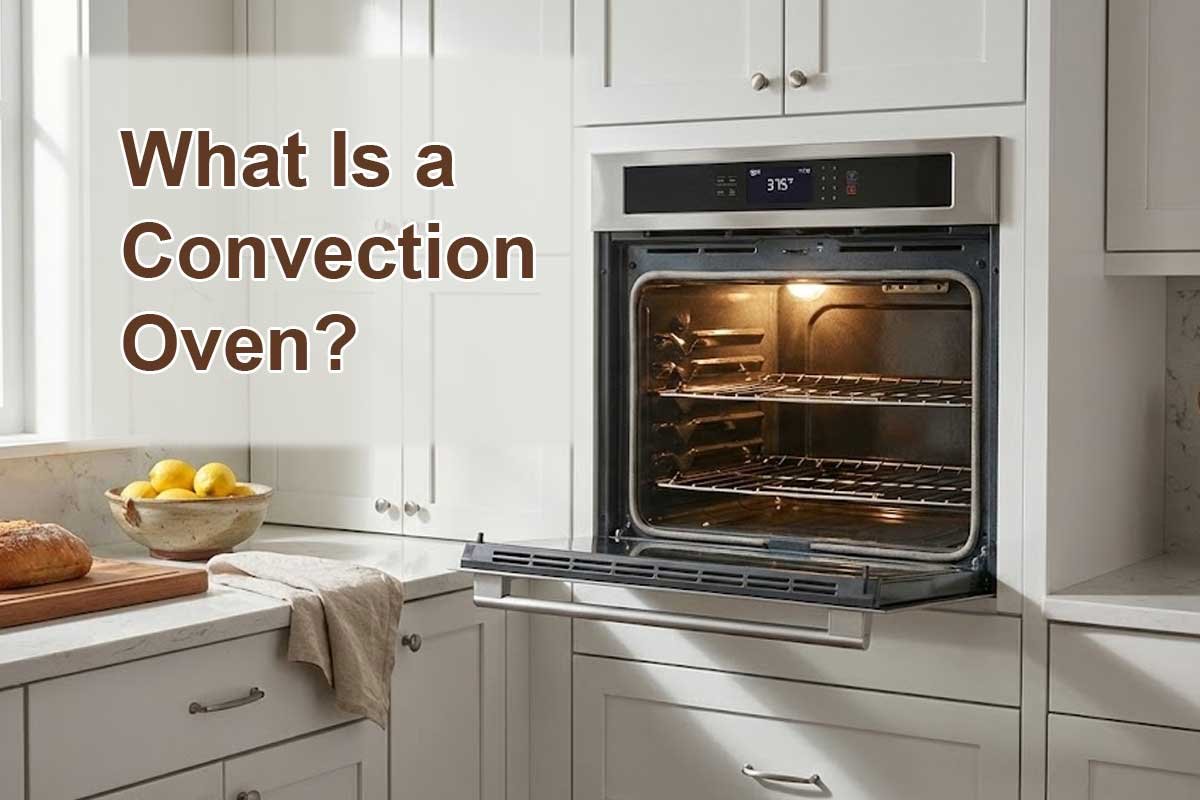
What Is a Convection Oven?
A convection oven is simply a conventional oven with a built-in fan that circulates hot air throughout the cooking cavity.
That’s it.
The difference isn’t the heat source. It’s how that heat moves.
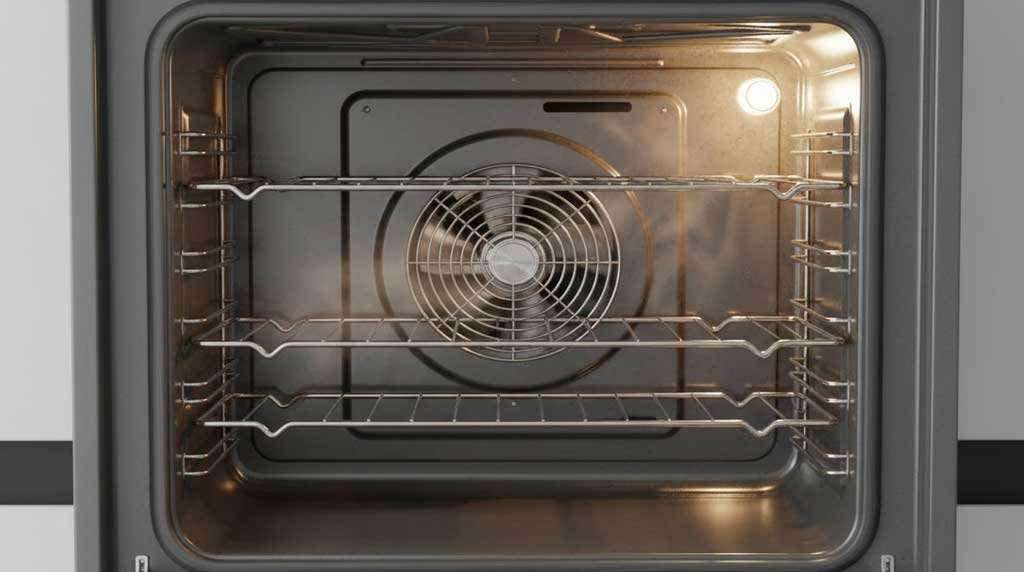
In a traditional oven, heating elements (electric coils or a gas burner) generate heat that rises naturally. Because hot air rises and cool air sinks, this creates temperature variations inside the oven. The top rack may cook faster than the bottom. One corner may brown more quickly than another. This is why recipes often recommend rotating pans halfway through baking.
A convection oven adds a fan—usually mounted on the back wall—to move hot air continuously around the food. Instead of relying on passive heat movement, the oven actively circulates air. This helps:
- Reduce hot and cold spots
- Brown food more evenly
- Improve crisping
- Speed up cooking slightly
Think of it like the difference between standing in still air versus standing in front of a warm fan. Moving air transfers heat more efficiently.
Most modern ovens allow you to toggle convection on or off. That means you’re not locked into one mode—you can switch between traditional baking and convection depending on the recipe.
It’s also important to understand that not all convection systems are identical. Some use only a fan to circulate heat from the existing elements. Others—often called “true convection”—add an additional heating element around the fan itself. We’ll break down that difference in detail shortly.
If you’re exploring broader feature comparisons, our full guide to oven features explained shows how convection fits among other must-have upgrades.
For now, the key takeaway is simple:
Convection isn’t a different kind of oven. It’s a smarter way of moving heat.
How Does a Convection Oven Work?
Now that we’ve answered what is a convection oven, let’s look at what’s actually happening behind the scenes.
A convection oven doesn’t replace traditional heating elements—it enhances them.
Inside every standard oven, you’ll find:
- A bake element at the bottom
- A broil element at the top
- A temperature sensor that monitors internal heat
- A control board that cycles heating elements on and off
If you want a deeper breakdown of those components, our guide on how an oven works explains the fundamentals in more detail. Convection builds on that same system.
Step 1: Heat Is Generated Normally
When you set the oven to 375°F, the heating elements activate just like they would in a conventional oven. Heat begins to rise and fill the cavity.
Without convection, that heat naturally stratifies—warmer air rises toward the top, cooler air settles below. Over time, the control board regulates temperature by turning elements on and off.
But heat distribution is still passive.
Step 2: The Fan Activates
When convection mode is turned on, a fan mounted at the back of the oven begins circulating air continuously.
Instead of letting hot air sit in place, the fan pushes it around the cavity. That movement:
- Breaks up hot and cold pockets
- Keeps temperature more consistent
- Improves surface browning
- Speeds up heat transfer
This constant circulation is why convection cooking often finishes 20–25% faster than traditional baking.
It’s not about higher heat. It’s about more efficient heat movement.
Step 3: True Convection (The Upgrade)
Some ovens go a step further.
In addition to the fan, they include a third heating element positioned around the fan itself. This setup is often called “true convection” or “European convection.”
Here’s the difference:
- Fan-only convection moves heat generated by the top and bottom elements.
- True convection generates heat directly behind the fan, then distributes it evenly across the cavity.
True convection typically offers:
- Better multi-rack baking
- More even browning
- More consistent results for pastries
For frequent bakers, that extra element can make a measurable difference.
Step 4: Automatic Temperature Adjustments
Many modern convection ovens automatically adjust temperature when convection mode is selected.
For example:
- You set 375°F
- The oven may internally reduce to 350°F
- Airflow compensates for the lower temperature
Because moving air transfers heat more efficiently, recipes often require lowering the temperature by about 25°F when using convection.
Some ovens do this automatically. Others require manual adjustment.
Why Airflow Changes Everything
Heat doesn’t cook food—heat transfer does.
In a still-air environment, heat transfer is slower and less uniform. In a moving-air environment, heat transfer becomes more efficient and consistent.
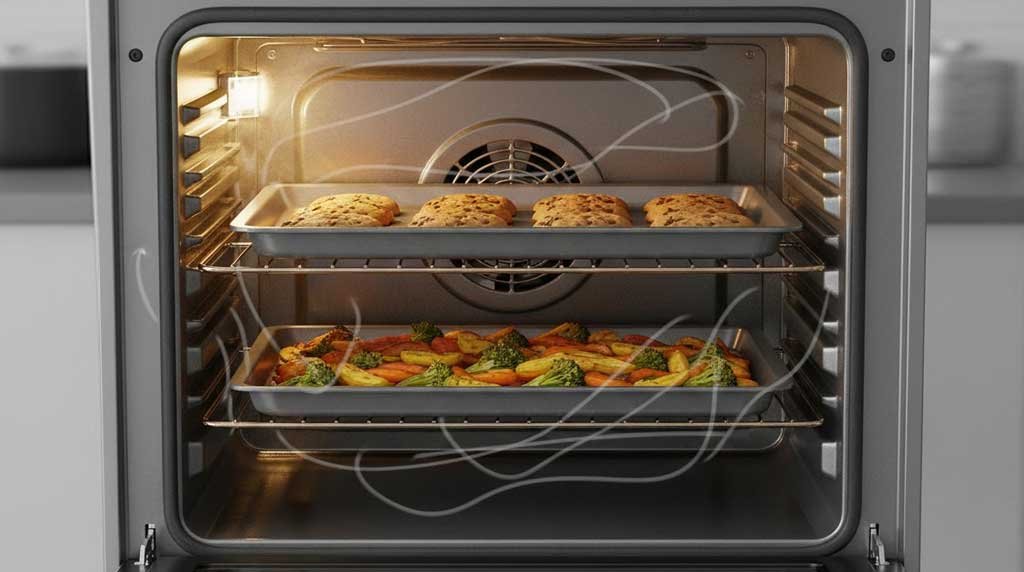
This is also why convection roasting produces better caramelization and crispness. Surface moisture evaporates faster when warm air moves across it.
If you’re comparing overall performance differences across appliance types, understanding airflow also helps clarify differences discussed in gas vs electric ovens, since fuel type affects baseline heat behavior.
The Practical Impact
Here’s what convection changes in real kitchens:
- Cookies brown evenly without rotating pans
- Vegetables roast instead of steam
- Meats crisp on the outside while staying juicy inside
- Multiple racks cook more evenly
The fan is a small addition—but it fundamentally changes how heat behaves.
Next, let’s compare convection directly to a regular oven so you can see exactly where the difference shows up in everyday cooking.
Convection Oven vs Regular Oven – What’s the Real Difference?
Now that you understand what is a convection oven and how it works, the natural next question is simple:
Is it actually better than a regular oven?
The short answer: sometimes yes, sometimes no.
The real difference comes down to airflow and how heat interacts with your food.
Heat Distribution
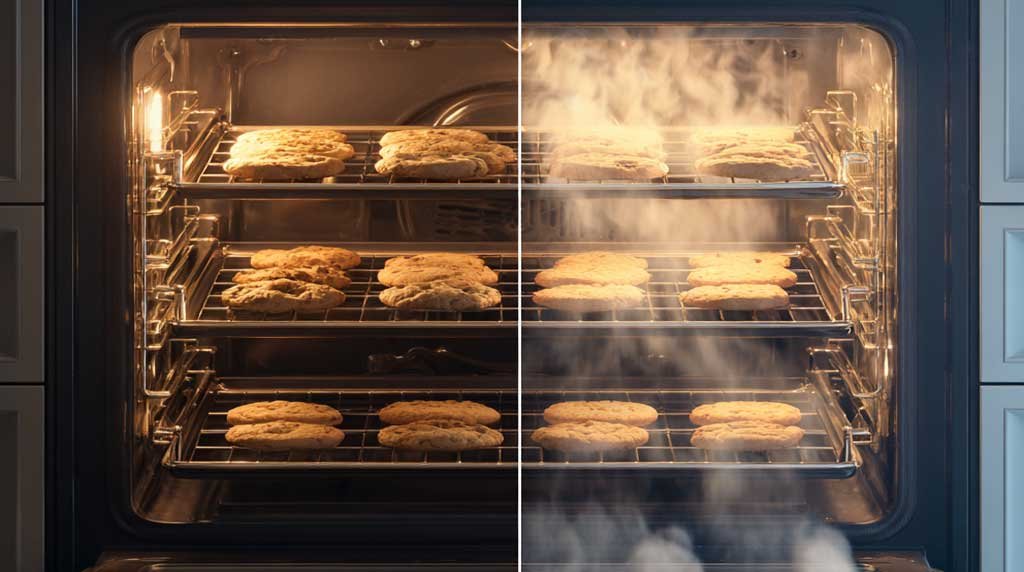
In a regular (conventional) oven, heat rises and settles unevenly. The top rack may run hotter than the bottom. The back corners may brown faster than the center. That’s why many recipes recommend rotating pans halfway through baking.
In a convection oven, circulating air reduces these temperature pockets. Heat becomes more evenly distributed throughout the cavity. The result:
- More consistent browning
- Fewer hot spots
- Less need to rotate trays
If you bake cookies on multiple racks, the difference is noticeable.
Cooking Speed
Because moving air transfers heat more efficiently, convection ovens typically cook food about 20–25% faster than conventional ovens.
That doesn’t mean blasting food with higher temperatures. It means the heat reaches the food more effectively.
Most recipes suggest:
- Reducing temperature by 25°F
or - Shortening cooking time by 10–20%
Some modern ovens automatically adjust when convection mode is activated.
Browning & Crisping
This is where convection really shines.
Air movement helps evaporate surface moisture more quickly. That creates better caramelization and crisping.
In practical terms:
- Roasted vegetables brown instead of steam
- Chicken skin crisps more evenly
- Frozen foods cook with less sogginess
- Cookies develop better edge texture
If you like golden finishes, convection is your friend.
Multi-Rack Cooking
Regular ovens struggle with multiple trays because heat doesn’t circulate evenly. Upper racks may cook faster than lower racks.
Convection ovens are designed for multi-rack use. The fan keeps air moving around all trays, improving consistency.
This is especially useful during holidays or meal prep sessions.
Energy Efficiency
Because convection cooks faster and at slightly lower temperatures, it can reduce total cooking time—and therefore energy use.
However, fuel type still matters. Gas and electric ovens distribute heat differently at baseline. If you’re weighing fuel choices, our guide on gas vs electric ovens explains how those differences interact with convection systems.
Noise & Learning Curve
There are minor trade-offs.
Convection ovens:
- Produce light fan noise
- May require slight recipe adjustments
- Can over-brown delicate baked goods if not monitored
Cakes, soufflés, and custards sometimes perform better in conventional mode because strong airflow can disturb structure.
The Side-by-Side Summary
Regular Oven
✔ Simple
✔ Works well for delicate baking
✖ Less even heat
✖ Slower cooking
Convection Oven
✔ Faster cooking
✔ Even browning
✔ Better multi-rack performance
✖ Slight learning curve
✖ Light fan noise
So Is Convection Always Better?
Not always—but for most households, it’s more versatile.
The real advantage is flexibility. Since most modern ovens allow you to turn convection on or off, you’re not losing traditional functionality—you’re gaining an additional tool.
Up next, let’s get practical: when should you actually use convection mode—and when should you leave it off?
When Should You Use Convection Mode?
Now that we’ve covered what is a convection oven and how it compares to a regular oven, let’s get practical.
Because here’s the truth: convection isn’t something you leave on all the time. It’s a tool. And like any tool, it works best in specific situations.
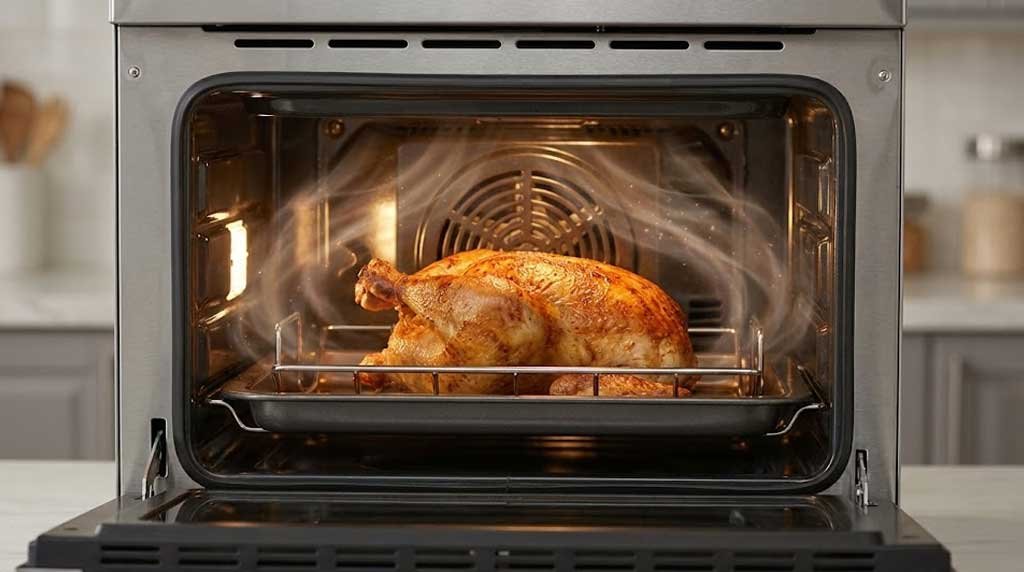
1. Roasting Meats
Convection mode is excellent for roasting.
Why? Because moving air helps evaporate surface moisture quickly. That creates better browning and crispier exterior texture.
Use convection when roasting:
- Whole chicken or turkey
- Pork loin
- Beef roast
- Lamb
You’ll often get:
- Crispier skin
- More even browning
- Slightly shorter cooking time
For large holiday meals, convection also helps maintain even heat across multiple racks.
2. Roasting Vegetables
If your vegetables sometimes turn out soft instead of caramelized, convection can fix that.
Air circulation removes moisture more efficiently, helping vegetables roast rather than steam.
Use convection for:
- Potatoes
- Brussels sprouts
- Broccoli
- Root vegetables
The result is better browning and crisp edges.
3. Multi-Rack Baking
This is one of convection’s biggest advantages.
When baking:
- Multiple trays of cookies
- Two pans of brownies
- Sheet pan meals
Convection improves heat distribution across racks. You’ll rotate pans less frequently—and sometimes not at all.
This is where true convection systems (fan + rear element) perform especially well.
4. Frozen Foods
Convection works extremely well for:
- Frozen fries
- Pizza
- Breaded chicken
- Frozen appetizers
The circulating air helps crisp surfaces evenly without needing to raise temperature excessively.
This is why many ovens now include built-in air fry modes—they rely on the same airflow principle.
5. Reheating Leftovers
Reheating leftovers with convection can help prevent sogginess, especially for foods like pizza or roasted vegetables.
However, for soups, casseroles, or delicate reheats, regular bake mode may be better.
When NOT to Use Convection
Convection isn’t ideal for everything.
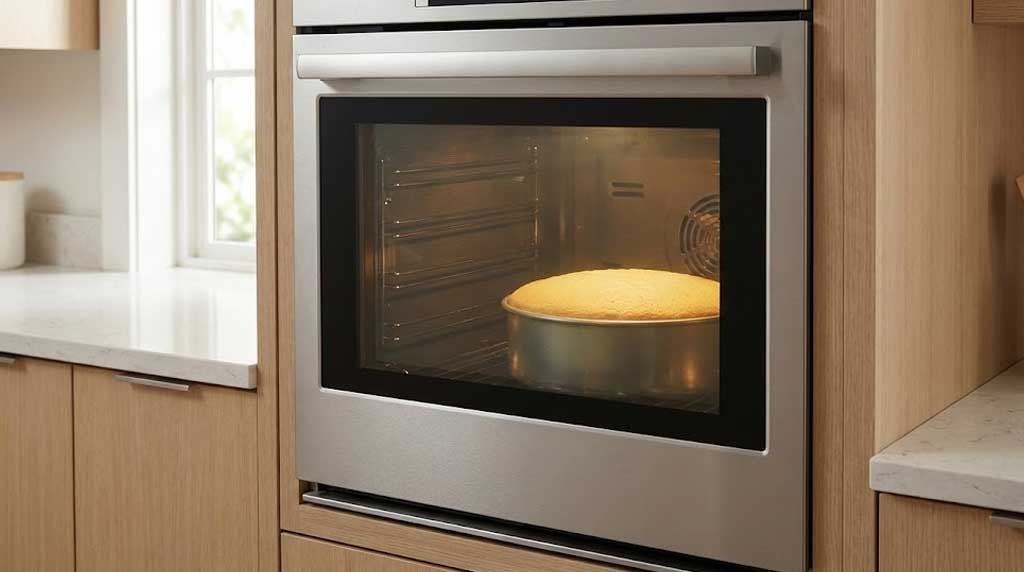
Avoid convection when baking:
- Cakes
- Soufflés
- Quick breads
- Custards
- Cheesecakes
Why?
Because strong airflow can:
- Disrupt rising
- Dry out batter surfaces too quickly
- Cause uneven dome formation
For delicate baked goods, conventional heat is often more forgiving.
The Practical Rule
Use convection when:
✔ You want browning
✔ You’re cooking multiple trays
✔ You’re roasting
✔ You want faster cooking
Turn it off when:
✖ Structure matters more than crispness
✖ The recipe specifically warns against airflow
The beauty of modern ovens is flexibility. Most models allow you to switch between modes instantly—so you’re never locked into one method.
Up next, we’ll break down the difference between true convection and standard convection, because not all convection systems are built the same.
True Convection vs Standard Convection – What’s the Real Difference?
By now, you understand what is a convection oven and when to use it. But if you’ve been browsing product listings, you’ve probably seen another term appear:
True convection.
It sounds like a marketing upgrade. Sometimes it is. Sometimes it isn’t. Let’s break it down clearly.
Standard (Fan-Only) Convection
In a standard convection oven, the system includes:
- Top heating element
- Bottom heating element
- A fan mounted on the back wall
When convection mode is activated, the fan circulates air generated by the existing top and bottom elements.
This improves airflow and reduces hot spots compared to a traditional oven. For most households, this level of convection performs very well.
It’s especially effective for:
- Roasting vegetables
- Cooking frozen foods
- Basic multi-rack baking
For many buyers, standard convection is more than sufficient.
True Convection (European Convection)
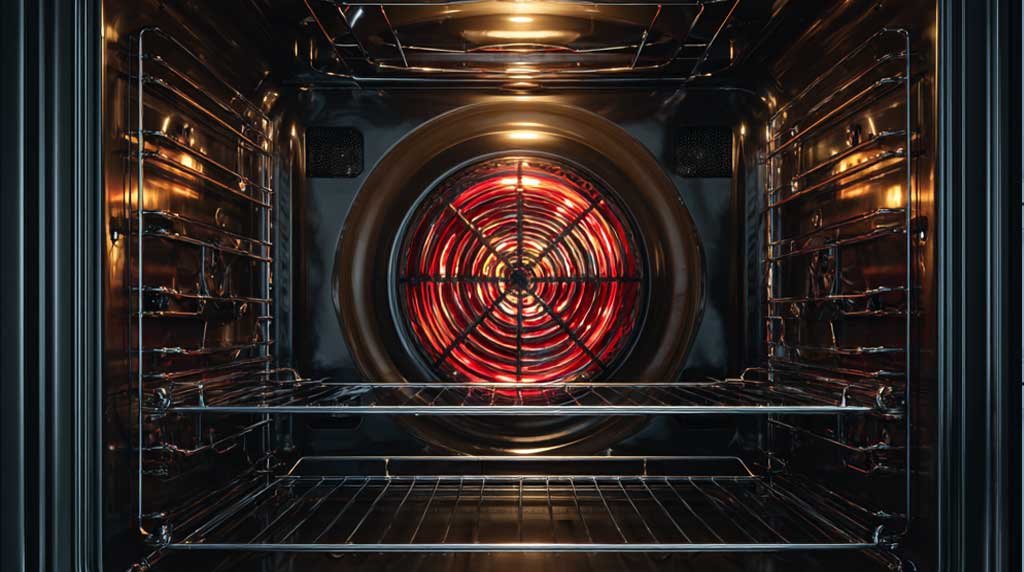
True convection adds one more component:
- A third heating element positioned around the fan at the back of the oven.
Instead of simply circulating heat from the top and bottom elements, true convection generates heat directly behind the fan and distributes it evenly across the cavity.
The result is:
- More uniform heat distribution
- Stronger multi-rack performance
- Better consistency for delicate baked goods
- More predictable temperature control
This is especially valuable for:
- Frequent bakers
- Bread enthusiasts
- Holiday cooking
- Large batch baking
If you’re exploring deeper feature comparisons, our full guide on oven features explained shows how true convection fits into the broader performance category.
Is True Convection Noticeably Better?
For casual cooking? The difference may be subtle.
For heavy baking? It’s measurable.
True convection tends to:
- Minimize edge over-browning
- Improve evenness across multiple trays
- Maintain stable cavity temperature
However, it usually comes at a higher price point.
Marketing vs Reality
Some manufacturers use proprietary names for their convection systems. These may sound advanced but often fall into one of two categories:
- Fan-only convection
- True convection (fan + rear element)
Always check whether the oven includes a rear heating element. That’s the defining feature—not the branding.
Which Should You Choose?
Choose standard convection if:
- You cook casually
- You roast more than you bake
- Budget matters
Choose true convection if:
- You bake frequently
- You cook on multiple racks often
- You want maximum consistency
Either way, convection is a meaningful upgrade over traditional still-air ovens.
Is a Convection Oven Worth It?
At this point, you understand what is a convection oven, how it works, and how it compares to a regular oven. Now let’s answer the real-world question:
Is it worth paying for?
The answer depends less on the technology—and more on how you cook.
For Frequent Bakers
If you bake cookies, pastries, or bread regularly, convection is absolutely worth it.
Why?
Because consistent airflow:
- Reduces hot spots
- Improves edge browning
- Allows multi-rack baking
- Produces more even results
If baking is a weekly activity in your home, especially batch baking, convection isn’t a luxury—it’s a performance upgrade.
True convection systems (with rear heating element) are especially beneficial here.
For Large Families & Holiday Hosts
If you cook for 4+ people regularly or host during holidays, convection becomes extremely useful.
Multi-rack cooking improves:
- Efficiency
- Timing
- Heat consistency
Roasting large meats, baking side dishes simultaneously, and reheating multiple trays becomes easier and more predictable.
In many cases, convection models are also found in higher-end builds included in our recommendations for the best kitchen ovens, simply because performance matters at that level.
For Weeknight Cooks
If you mostly cook:
- Frozen foods
- Sheet pan dinners
- Roasted vegetables
- Simple meals
Convection improves crispness and speeds things up slightly. It’s convenient—but not mandatory.
You’ll appreciate it. You may not rely on it daily.
For Budget Buyers
If you’re choosing between:
- A basic oven without convection
vs - A mid-range oven with convection
The convection model usually offers better long-term value.
However, if your budget forces a choice between:
- Poor build quality + convection
vs - Better build quality without convection
Choose build quality first.
Durability and temperature accuracy matter more than airflow alone.
For Remodel Projects
In new kitchen installations, convection is nearly standard in mid- and upper-tier models. If you’re upgrading cabinetry or selecting from different configurations, convection should be strongly considered.
If you’re comparing layouts, our breakdown of kitchen oven types explained can help determine which structure best supports convection performance.
When It May Not Be Worth It
Convection may not justify extra cost if:
- You rarely cook
- You mostly reheat
- You prefer traditional baking methods
- You’re replacing an oven for light use only
In those cases, a reliable conventional oven will serve you well.
The Balanced Verdict
For most U.S. households, convection is worth it.
Not because it’s revolutionary—but because it’s practical.
It improves everyday results without requiring major learning curves. And since most modern ovens allow you to turn convection off, you’re not giving anything up—you’re adding flexibility.
Up next, let’s summarize everything with a clear pros and cons breakdown.
Pros and Cons of Convection Ovens
By now, you clearly understand what is a convection oven and how it works. But before making a final decision, it helps to step back and look at the full picture—advantages and trade-offs included.
Here’s the honest breakdown.
✅ Pros of a Convection Oven
1. More Even Cooking
Air circulation reduces hot and cold spots inside the oven. That means fewer rotated pans, fewer over-browned edges, and more consistent results—especially on multiple racks.
2. Faster Cooking Times
Because moving air transfers heat more efficiently, convection often reduces cooking time by 10–25%. For busy weeknights, that small difference adds up.
3. Better Browning & Crisping
Roasted vegetables caramelize better. Chicken skin crisps more evenly. Frozen foods cook with improved texture. Surface moisture evaporates faster under airflow.
4. Stronger Multi-Rack Performance
Convection excels when baking cookies on two trays or roasting multiple dishes simultaneously. The fan helps distribute heat more evenly across racks.
5. Greater Versatility
Since most convection ovens allow you to turn the fan off, you’re not locked into one mode. You get both traditional and enhanced airflow cooking in one appliance.
❌ Cons of a Convection Oven
1. Slight Learning Curve
Recipes may require adjusting temperature (usually -25°F) or cooking time. Some ovens automate this adjustment, but not all do.
2. Not Ideal for Delicate Baking
Cakes, soufflés, custards, and quick breads may rise unevenly or dry out under strong airflow. In these cases, standard bake mode works better.
3. Slightly Higher Cost
Convection models often cost more than basic conventional ovens—especially true convection systems.
4. Light Fan Noise
The internal fan produces a quiet hum. Most users stop noticing it quickly, but it’s there.
The Honest Take
For most households, the advantages outweigh the drawbacks.
The key is understanding when to use convection—and when not to.
Now let’s address a few common misconceptions that still confuse buyers.
Common Convection Oven Myths
Myth 1: Convection dries out food
Not necessarily. Proper temperature adjustment prevents overcooking. In fact, convection can help seal moisture inside meats while crisping the exterior.
Myth 2: Convection burns everything
Only if you don’t adjust time or temperature. Lowering temperature slightly solves most issues.
Myth 3: Convection is only for professional chefs
Modern convection systems are designed for home use. They’re intuitive and easy to toggle on or off.
Myth 4: Convection replaces all other oven modes
It doesn’t. It adds flexibility—but traditional bake mode is still useful for delicate recipes.
FAQ – What Is a Convection Oven?
Do you have to adjust temperature for convection?
Usually, yes. A common rule is to reduce the temperature by about 25°F or shorten cook time by 10–20%. Many modern ovens adjust automatically when convection is selected, but some require manual changes.
Does convection cook faster than a regular oven?
Yes. Convection often cooks 10–25% faster because moving hot air transfers heat more efficiently to food. The biggest difference shows up with roasting and multi-rack baking.
Is convection better for baking?
For cookies, pastries, and multi-rack baking, convection is often better because it browns more evenly. For delicate items like cakes, soufflés, and custards, traditional bake mode may produce better rise and texture.
What is true convection?
True convection (also called European convection) uses a fan plus an additional heating element near the fan. This creates more consistent heat flow and better multi-rack performance than fan-only convection.
Are convection ovens more expensive?
They can be slightly more expensive than basic conventional ovens, especially true convection models. However, many mid-range ovens now include convection as a standard feature.
Can you turn convection off?
Yes. Most convection ovens let you switch between convection and traditional bake mode depending on the recipe.
Final Thoughts – Should You Choose Convection?
If you value:
- Even browning
- Faster cook times
- Better multi-rack performance
- Crisp texture
Then yes—convection is worth it.
If you cook lightly and rarely bake, a standard oven will still do the job.
But for most modern kitchens, convection isn’t a gimmick anymore. It’s become the practical standard.