



Why Oven Features Matter More Than Brand
Oven features explained in plain English—that’s what most buyers actually need before spending $800, $1,500, or even $3,000 on a new appliance. Because here’s the truth: most people don’t regret the brand they choose. They regret paying for features they never use—or skipping the ones that would have made everyday cooking easier.
Modern ovens are packed with technology. Convection systems, air fry modes, steam cooking, Wi-Fi connectivity, precision temperature probes, hidden bake elements, soft-close doors—the list keeps growing. Some of these genuinely improve cooking results. Others are mostly marketing.
If you’ve already looked through our guide to the best kitchen ovens, you’ve probably noticed how feature-heavy today’s models are. The real question isn’t “Which oven is best?” It’s “Which features are worth paying for?”
This guide breaks down oven features by category: cooking performance, cleaning convenience, smart controls, safety systems, and specialty modes. We’ll explain what each feature actually does, who benefits from it, and when it’s just extra cost.
Because when you understand the features, the buying decision becomes simple.
Let’s start with the features that truly affect how your food turns out.
Core Cooking Features – The Ones That Actually Change Results
If you ignore everything else, focus on this section. These are the features that directly affect heat distribution, consistency, and overall cooking performance.
Convection (Standard vs True Convection)
Convection is no longer a luxury—it’s close to a baseline requirement in modern ovens.
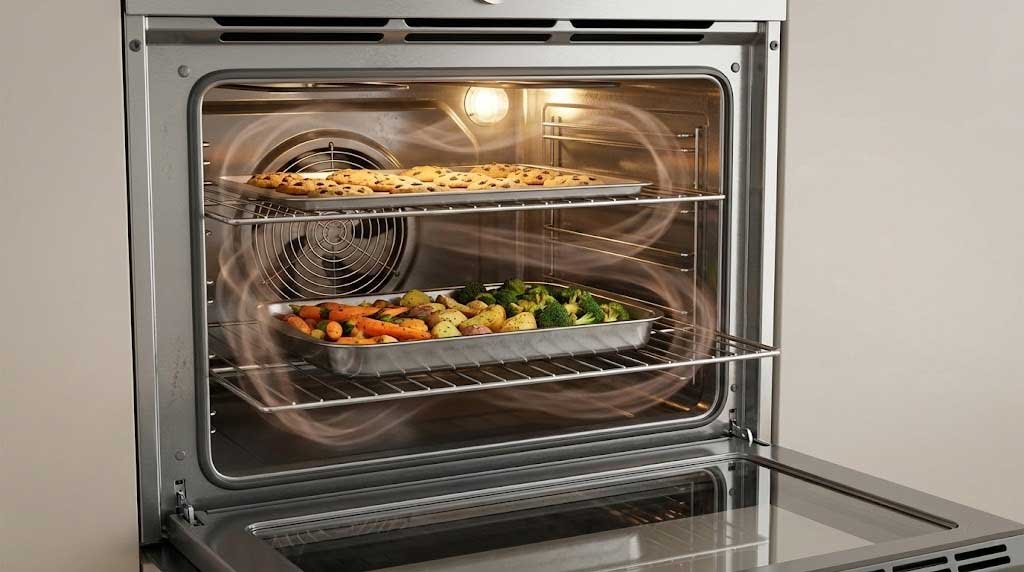
A convection oven uses a fan to circulate hot air throughout the cavity. This reduces hot spots and allows food to cook more evenly. Cookies brown more consistently. Roasted vegetables crisp instead of steam. Multi-rack baking becomes realistic instead of risky.
There are two main types:
Standard Convection
A fan circulates air, but the primary heating elements remain at the top and bottom.
True (European) Convection
A dedicated heating element surrounds the fan at the back of the oven, delivering more consistent heat flow.
If you’re not fully clear on how airflow changes cooking performance, our breakdown of what a convection oven is explains the mechanics in more detail.
Is convection worth it?
For most households—yes. Especially if you bake frequently or cook multiple dishes at once.
Temperature Precision & Sensors
Not all ovens maintain temperature equally.
Behind the scenes, modern ovens use temperature sensors (thermistors) that communicate with a control board to regulate heat cycles. Higher-quality ovens hold temperatures more tightly, sometimes within 5–10 degrees of the set point. Lower-end models may fluctuate more widely.
If you’ve ever followed a recipe perfectly and still ended up with uneven results, temperature accuracy might have been the issue.
Understanding how an oven works helps clarify why sensor quality and calibration matter more than flashy features.
Look for:
- Digital temperature display
- Preheat indicator accuracy
- Calibration adjustment settings
Multi-Rack Cooking Performance
Some ovens advertise “multi-rack capability,” but the difference is in airflow design and element placement.
True convection systems perform best here. Without strong airflow, upper racks may cook faster than lower racks, forcing you to rotate pans halfway through.
If you regularly bake cookies, roast multiple trays, or meal prep in batches, multi-rack performance becomes critical.
Preheat Speed
Preheat time varies by:
- Fuel type
- Cavity size
- Heating element strength
Gas ovens typically preheat faster due to direct flame heating. Electric ovens may take slightly longer but often provide more stable internal heat once ready. If you’re still weighing fuel differences, review gas vs electric ovens to see how performance trade-offs compare.
In reality, preheat speed matters most for busy weeknights—not for slow weekend cooking.
Broil Performance
Broiling is often overlooked, but it determines how well your oven can:
- Finish casseroles
- Crisp cheese
- Sear meats
- Brown baked dishes
Look for:
- High-wattage broil elements
- Even top heat distribution
- Adjustable broil intensity
A weak broiler limits versatility.
What Truly Matters in Core Cooking
If you only prioritize three performance features, make them:
- Convection (preferably true convection)
- Reliable temperature accuracy
- Strong, adjustable broil performance
Everything else is secondary.
The rest of the features we’ll discuss improve convenience—but these determine whether your food comes out better or just “fine.”
Cleaning Features – Convenience vs Real Utility
Let’s be honest: cleaning is one of the least glamorous parts of owning an oven. And yet, it’s where many buyers either overspend—or underestimate long-term value.
When reviewing oven features explained, cleaning systems deserve real attention. Not because they make food taste better, but because they affect maintenance effort, appliance lifespan, and even safety.
High-Heat Self-Clean (Pyrolytic Cleaning)
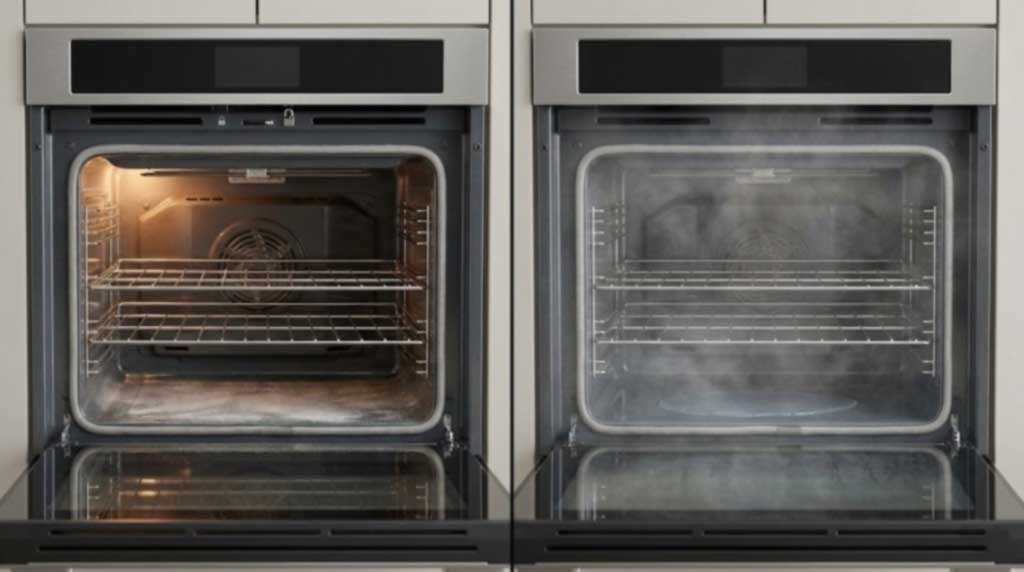
This is the traditional self-clean method. The oven locks its door and heats to extremely high temperatures (often above 800°F), turning food residue into ash that you wipe away after the cycle finishes.
Pros:
- Deep, thorough cleaning
- Minimal manual scrubbing
- Effective for heavy buildup
Cons:
- Long cycle times (3–5 hours)
- Strong odors during cleaning
- Significant heat output
- Potential stress on internal components
While effective, high-heat cycles place stress on electronic control boards and internal wiring. Using it occasionally is fine. Using it constantly may shorten lifespan.
Steam Clean
Steam cleaning is a newer, gentler option. You pour water into the oven cavity, activate a low-temperature cleaning cycle, and the steam loosens food residue.
Pros:
- Faster cycle (20–45 minutes)
- Less heat stress
- Minimal odor
Cons:
- Not as powerful for heavy grease
- May require light manual wiping afterward
For households that clean regularly, steam clean is often sufficient. For neglected ovens, high-heat self-clean may still be necessary.
Hidden Bake Elements
Traditional ovens have exposed heating elements at the bottom, making cleaning around them awkward. Newer models hide the lower bake element beneath a protective panel.
This simple design change:
- Makes wiping easier
- Reduces food trapping
- Improves long-term maintenance
It’s not flashy—but it’s genuinely useful.
Easy-Clean Enamel Interiors
Interior coatings vary widely. Higher-end ovens often use smoother enamel finishes that resist staining and make residue easier to remove.
This isn’t something most buyers compare—but it makes a noticeable difference over time.
Removable & Glide Racks
Cleaning becomes much easier when racks:
- Slide out smoothly
- Fully detach without force
- Include dishwasher-safe options
Premium glide racks are especially helpful when lifting heavy dishes. They’re technically a convenience feature—but they also reduce spills and accidents.
The Cleaning Feature Reality Check
Here’s the practical takeaway:
If you cook frequently and clean regularly, steam clean + hidden bake element is often enough.
If you cook heavily (roasting meats, high splatter), having both steam clean and high-heat self-clean provides flexibility.
And remember: cleaning features don’t replace good habits. Wiping spills early extends appliance life more than any advanced cleaning cycle.
Up next, we’ll cover features that sound impressive—but don’t always change how your food cooks.
Smart & Connectivity Features – Worth It or Marketing?
Smart technology has found its way into nearly every appliance category—and ovens are no exception. But when we talk about oven features explained, smart features are where the gap between marketing and real-world usefulness becomes obvious.
Some smart capabilities genuinely add convenience. Others look impressive on a spec sheet but rarely change daily cooking.
Let’s separate the two.
Wi-Fi Connectivity & Mobile Apps
Many modern ovens now connect to your home Wi-Fi network and sync with a smartphone app. This allows you to:
- Monitor preheat status
- Adjust temperature remotely
- Receive notifications when cooking is finished
- Start or stop certain functions
In theory, this sounds ideal. In practice, most people use it for one thing: checking preheat status while in another room.
Remote start features are often restricted for safety reasons, especially in gas models. That means you typically still need to press a physical button before leaving the house.
Convenient? Yes. Essential? No.
Voice Assistant Compatibility
Some ovens integrate with voice systems like Alexa or Google Assistant. You can say things like:
“Set oven to 375 degrees.”
“Turn off oven in 10 minutes.”
It works—but realistically, most users revert to manual controls after the novelty fades.
Voice control is helpful if your hands are full or messy while cooking. Beyond that, it’s a minor convenience.
Remote Preheat & Monitoring
Remote preheat is one of the more practical smart features—especially for busy households. Starting preheat from another room saves a few minutes and reduces back-and-forth movement.
Still, this feature doesn’t improve cooking performance. It improves convenience.
If performance is your priority, understanding how an oven works—especially temperature regulation and heating element cycles—matters far more than remote activation.
Safety Lock & Monitoring Alerts
Smart ovens often include:
- Automatic shut-off timers
- Child safety locks
- Residual heat alerts
- Notifications if the oven is left on
These features provide peace of mind, especially in homes with children. While not glamorous, they’re more meaningful than app integration alone.
Touchscreens & Digital Interfaces
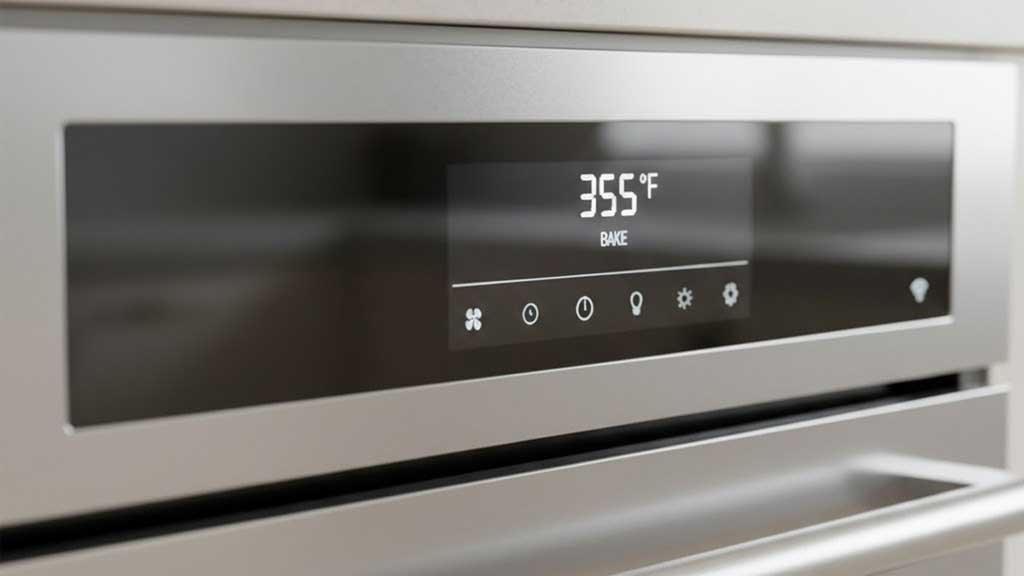
Large touchscreen displays look premium. They often include guided cooking presets, visual menus, and recipe integration.
However:
- They increase repair complexity
- They raise replacement cost
- They don’t necessarily improve heat performance
A simple, reliable digital interface often outlasts flashy screens.
The Smart Feature Verdict
Ask yourself:
- Will I realistically use app control weekly?
- Do I need voice integration?
- Is convenience worth higher repair cost?
Smart features add comfort—not cooking quality.
If your budget is limited, invest first in:
- Convection
- Temperature accuracy
- Interior build quality
Everything else is secondary.
Specialty Cooking Modes – Air Fry, Steam, Proof & More
Once core performance and cleaning features are covered, manufacturers begin adding specialty modes. These are the features that often sell ovens on showroom floors. Some are genuinely useful. Others depend entirely on how you cook.
When reviewing oven features explained, specialty modes fall into the “nice-to-have” category—unless they match your cooking habits.
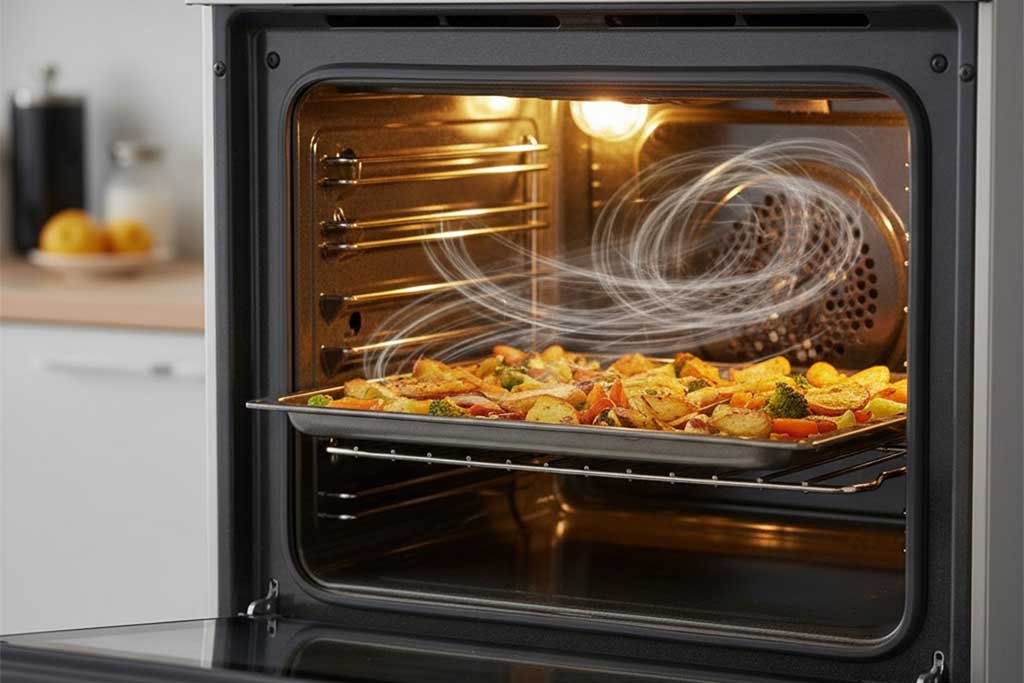
Air Fry Mode
Air fry mode has exploded in popularity. Technically, it’s a variation of convection cooking with stronger airflow and higher fan speed to create crispier surfaces.
In practical terms, built-in air fry:
- Cooks frozen foods evenly
- Crisps vegetables well
- Reduces the need for a countertop air fryer
However, it usually doesn’t replace a dedicated air fryer for small, ultra-crispy batches. Built-in oven cavities are larger, which slightly reduces concentrated airflow intensity.
If you already plan to buy a convection oven, air fry mode is a welcome bonus. It’s not worth upgrading solely for that feature.
Steam Cooking / Steam Assist
Steam ovens inject moisture into the cavity during cooking. This improves:
- Bread crust texture
- Roasting moisture retention
- Reheating leftovers without drying out
Steam assist is especially valuable for frequent bakers. It creates better oven spring in bread and improves consistency.
Full steam ovens are more expensive and typically found in higher-end built-in models. For occasional cooks, this may be excessive. For enthusiasts, it’s transformative.
Proofing Mode
Proof mode maintains a low, steady temperature ideal for rising dough. If you bake bread regularly, this removes guesswork from fermentation.
For most households, this feature is convenient but not essential.
Dehydrate Mode
Dehydrate mode uses low heat and airflow to dry fruits, vegetables, or herbs over extended periods.
It’s useful if you:
- Make homemade jerky
- Preserve produce
- Prepare dried snacks
If you don’t regularly dehydrate food, this feature will likely go unused.
Sabbath Mode
Sabbath mode allows ovens to operate without triggering digital displays or automated shut-offs, complying with specific religious requirements.
This feature is essential for some households and irrelevant for others. It’s a good example of how feature value depends entirely on user need.
Slow Cook Mode
Some ovens include a slow-cook setting, mimicking a countertop slow cooker. It can be helpful, but it doesn’t fully replace a dedicated slow cooker for long, unattended cooking.
Specialty Feature Reality Check
Before paying extra for specialty modes, ask:
- Will I use this monthly?
- Does it replace another appliance?
- Is it solving a real cooking need?
Most households benefit from convection and accurate temperature control far more than niche modes.
Up next, we’ll look at capacity and structural features—because interior space and rack design often matter more than people expect.
Size & Capacity Features – What Actually Affects Usable Space
When people compare ovens, they often focus on exterior width—usually 30 inches in most U.S. kitchens. But when it comes to oven features explained, interior capacity and rack configuration matter far more than the outside dimensions.
Two ovens can be the same width and perform very differently simply because of internal design.
Interior Capacity (Cubic Feet)
Oven capacity is measured in cubic feet. A standard 30-inch oven typically ranges between 4.5 and 6.0 cubic feet.
Here’s what that means in practice:
- Around 4.5–5.0 cu. ft. → Suitable for everyday cooking, small families
- 5.3–5.8 cu. ft. → Ideal for larger meals and batch baking
- 6.0+ cu. ft. → Best for large roasts, multiple trays, or entertaining
But bigger isn’t always better.
A larger cavity:
- Takes longer to preheat
- Uses more energy when lightly loaded
- May have uneven airflow if not designed well
Before choosing based purely on size, confirm how that capacity fits your layout using our full breakdown of oven sizes and dimensions.
Rack Configuration & Flexibility
Adjustable rack positions significantly affect usability.
Look for:
- Multiple rack levels
- Evenly spaced guides
- Sturdy rack construction
The more flexibility you have, the easier it is to cook multiple dishes at once.
Glide & Ball-Bearing Racks
Premium ovens often include glide racks mounted on ball-bearing rollers. These allow racks to slide out smoothly—even when holding heavy dishes.
This isn’t just luxury. It improves:
- Safety
- Spill prevention
- Access when checking food
For frequent cooks, this feature adds real daily value.
Double Oven Capacity Differences
In double ovens, upper cavities are often smaller than lower cavities. The upper oven is ideal for smaller meals, quick baking, or reheating.
However, some double oven models split capacity unevenly. Always check cubic footage for both cavities—not just the total number.
If you’re comparing configurations, our full guide on kitchen oven types explained breaks down how structure impacts usable space.
Door Design & Interior Lighting
Small details make a difference:
- Wide viewing windows reduce door opening
- Bright interior LED lighting improves visibility
- Multi-pane glass improves insulation
Better insulation improves efficiency and temperature stability—especially in larger ovens.
Capacity Reality Check
Ask yourself:
- Do I regularly cook for 6+ people?
- Do I bake multiple trays at once?
- Do I host holiday meals often?
If not, a mid-size cavity with strong convection may outperform a massive interior you rarely use.
Up next, we’ll cover safety and long-term durability features—often overlooked but critical for long-term ownership.
Safety Features – What Protects Your Home & Family
When discussing oven features explained, safety rarely gets the spotlight—but it should. Modern ovens generate extremely high temperatures, and while performance features improve cooking results, safety systems protect your home, your family, and the appliance itself.
Many of these features operate quietly in the background. You won’t think about them—until you need them.
Automatic Shut-Off
One of the most valuable safety features is automatic shut-off. After a set period of inactivity, the oven powers down automatically.
This protects against:
- Forgetting to turn the oven off
- Leaving home accidentally while cooking
- Overnight safety risks
For busy households, this is not a luxury—it’s peace of mind.
Child Lock Controls
Digital control panels often include child lock settings. These prevent accidental activation of cooking cycles or temperature changes.
If you have children at home, this feature is essential. It prevents:
- Curious hands from starting the oven
- Mid-cycle temperature adjustments
- Accidental door unlocking during high-heat cycles
Cool-Touch Door Technology
Modern ovens use multi-layer glass panels in the door. These reduce external surface temperature even when the oven is running at high heat.
Cool-touch doors:
- Lower burn risk
- Improve insulation
- Reduce heat escaping into the kitchen
This is especially important in homes with pets or children.
Residual Heat Indicators
Some ovens display a residual heat warning after being turned off. This alerts users that the interior is still hot.
It’s a simple feature—but one that prevents accidental burns.
Gas Safety Systems
In gas ovens, flame failure detection automatically shuts off gas flow if the flame extinguishes unexpectedly. This prevents dangerous gas buildup.
If you’re comparing fuel options, our guide on gas vs electric ovens explains safety trade-offs between the two systems.
Door Locking During Self-Clean
High-heat self-clean cycles automatically lock the oven door to prevent opening during extreme temperatures.
While it may feel inconvenient, this is a critical safety mechanism.
The Safety Feature Priority List
If safety matters most, prioritize:
- Automatic shut-off
- Cool-touch door insulation
- Child lock control
- Reliable gas flame detection (for gas models)
These features don’t improve flavor—but they dramatically improve peace of mind.
Next, we’ll look at energy efficiency and long-term performance indicators—features that affect cost of ownership over time.
Energy Efficiency & Performance Indicators – What Affects Long-Term Cost
When comparing oven features, efficiency rarely gets attention—yet it directly impacts energy bills and long-term reliability.
Insulation Quality
Higher-end ovens use thicker insulation and better internal sealing. This improves:
- Heat retention
- Cooking consistency
- Energy efficiency
- Reduced strain on heating elements
Better insulation also reduces heat leaking into your kitchen—especially important during summer months.
Temperature Stability
An oven that holds temperature accurately wastes less energy cycling excessively.
Precision sensors and quality control boards regulate heat more efficiently. If you’re curious about the mechanics behind this, see how an oven works for a deeper explanation of internal components.
ENERGY STAR Considerations
Unlike refrigerators, most ovens are not ENERGY STAR certified. However, electric ovens with efficient insulation and convection systems often perform more efficiently in real-world cooking scenarios.
Gas ovens may be less expensive to operate in some regions—but performance differences vary by local utility rates.
Convection & Efficiency
Convection cooking can reduce cooking time by 20–25%. Shorter cooking cycles translate to lower energy usage.
If you’re evaluating performance trade-offs, understanding what a convection oven is can clarify whether that feature improves efficiency for your cooking style.
Build Quality & Longevity
Durability matters more than small efficiency differences.
Look for:
- Solid door hinges
- Quality control panels
- Strong rack support systems
- Reliable heating elements
An oven that lasts 15 years is more cost-efficient than one that requires major repairs in year five.
The Efficiency Bottom Line
If you want to reduce long-term cost:
- Choose good insulation
- Prioritize convection
- Ensure accurate temperature control
- Avoid overcomplicated electronics
Efficiency isn’t flashy—but it quietly saves money over time.
Marketing Features You Probably Don’t Need
This is the part most buying guides skip.
When it comes to oven features explained, not every feature deserves your money. Manufacturers compete aggressively in the appliance market, and that often leads to feature inflation—adding capabilities that look impressive but don’t meaningfully improve daily cooking.
Let’s look at the most common examples.
Oversized Touchscreens
Large, tablet-style touchscreens look premium. They display recipes, guided cooking prompts, and colorful menus.
But in real-world use:
- Most people rely on a few core functions (Bake, Broil, Convection).
- Complex screens increase repair costs.
- Electronics are often the first component to fail.
A clear, durable digital control panel usually outlasts a flashy touchscreen. Function beats aesthetics.
App-Heavy Smart Ecosystems
Some ovens integrate deeply with brand-specific apps, cloud services, and remote monitoring systems.
While convenient in theory, ask yourself:
- Will you really adjust temperature from your phone regularly?
- Will you troubleshoot via an app?
- Do you need recipe syncing on your oven door?
For most households, Wi-Fi is a convenience—not a necessity. It does not improve heat performance or cooking results.
Over-Specialized Preset Modes
Some models include dozens of cooking presets:
- Pizza mode
- Cookie mode
- Casserole mode
- Frozen snack mode
- Gourmet roast mode
In reality, these are often slight temperature adjustments you could manually set.
Strong temperature accuracy and convection performance matter far more than preset labeling.
Decorative Lighting & Cosmetic Extras
Interior LED color accents, animated displays, or decorative control backlighting look attractive in showrooms—but don’t affect cooking.
They add cost. They don’t add performance.
Brand-Exclusive Buzzwords
Manufacturers often brand convection systems or cleaning cycles with proprietary names. These sound innovative but frequently represent minor variations of standard features.
Before paying extra for a branded feature, check whether it’s simply:
- Standard convection
- Standard steam cleaning
- Standard sensor regulation
Substance over branding always wins.
The Smarter Spending Strategy
If your budget is fixed, prioritize:
✔ Convection (preferably true convection)
✔ Accurate temperature control
✔ Strong broil performance
✔ Durable rack system
✔ Quality insulation
Then consider convenience upgrades.
Everything else is optional.
Oven Features Buying Checklist
Before purchasing, use this simplified checklist:
Must-Have Features (For Most Homes)
- Convection system
- Reliable digital temperature control
- Hidden bake element
- Multi-layer insulated door
- Adjustable rack positions
Nice-to-Have Features
- Glide racks
- Steam clean
- Air fry mode
- Proofing mode
- Wi-Fi monitoring
Skip-If-Budget-Is-Tight
- Oversized touchscreen panels
- Excessive preset modes
- Brand-exclusive cosmetic upgrades
- Decorative lighting
FAQ – Oven Features Explained
What are the most important oven features?
The most important oven features are convection cooking, accurate temperature control, and strong insulation. Convection improves heat distribution and cooking consistency. Reliable temperature sensors prevent undercooked or overcooked meals. Good insulation improves efficiency and heat retention. Everything else—like smart apps or preset modes—is secondary.
Is convection really necessary in an oven?
For most households, yes. Convection reduces hot spots, improves multi-rack baking, and shortens cook times by up to 20–25%. If you bake frequently or cook multiple dishes at once, convection makes a noticeable difference. If you mostly reheat or cook simple meals, it’s helpful but not essential.
Are smart ovens worth it?
Smart ovens add convenience but don’t improve cooking performance. Features like remote monitoring and voice control can be useful, but they aren’t necessary for most households. If your budget is limited, prioritize convection and temperature accuracy over Wi-Fi connectivity.
Is self-cleaning mode safe to use?
Yes, self-cleaning is safe when used properly. High-heat self-clean cycles lock the oven door and burn residue into ash. However, frequent use can put stress on internal electronics. Steam cleaning is a gentler alternative for regular maintenance.
Do air fry ovens replace countertop air fryers?
Not entirely. Built-in air fry modes use convection airflow to crisp food, but they don’t always match the concentrated airflow of small countertop air fryers. For most households, oven air fry is convenient but not a complete replacement.
Which oven features improve lifespan?
Features that improve durability include:
- Strong insulation
- Reliable control boards
- Hidden bake elements
- Durable rack systems
High build quality and moderate self-clean use also extend oven lifespan.
The Bottom Line
An oven packed with features isn’t automatically better. The right oven is the one whose features match how you cook—not how a marketing brochure reads.
If you want to see how these features compare across real models, explore our curated list of the best kitchen ovens to see how performance and practicality align.