




Best energy-efficient dishwashers have become a serious priority as utility bills in the U.S. aren’t getting cheaper. Water rates continue to rise, electricity costs fluctuate by state, and energy efficiency has moved from a “nice bonus” to a real purchasing factor. As a result, more homeowners are asking a very specific question: which dishwashers actually save the most water and electricity over time?
If you’re comparing appliance efficiency to everyday habits, this dishwasher vs hand washing comparison helps put real water and energy savings into perspective.
This is where energy-efficient dishwashers come in.
In practice, modern dishwashers are no longer judged solely by cleaning power. Today, efficiency is defined by how little water they use, how effectively they heat it, and how consistently they clean without waste. And while many models claim to be “eco-friendly,” the real savings come from a much smaller group of machines that combine smart sensors, optimized cycles, and strict efficiency standards.
More importantly, energy efficiency doesn’t just reduce environmental impact—it directly affects your monthly utility bills. Over the lifespan of a dishwasher, the difference between an average model and a truly energy-efficient one can add up to hundreds of dollars.
In this guide, we break down what actually makes a dishwasher energy-efficient, how to spot meaningful efficiency features, and which models deliver the best long-term value for U.S. households.
What Makes a Dishwasher Energy-Efficient?
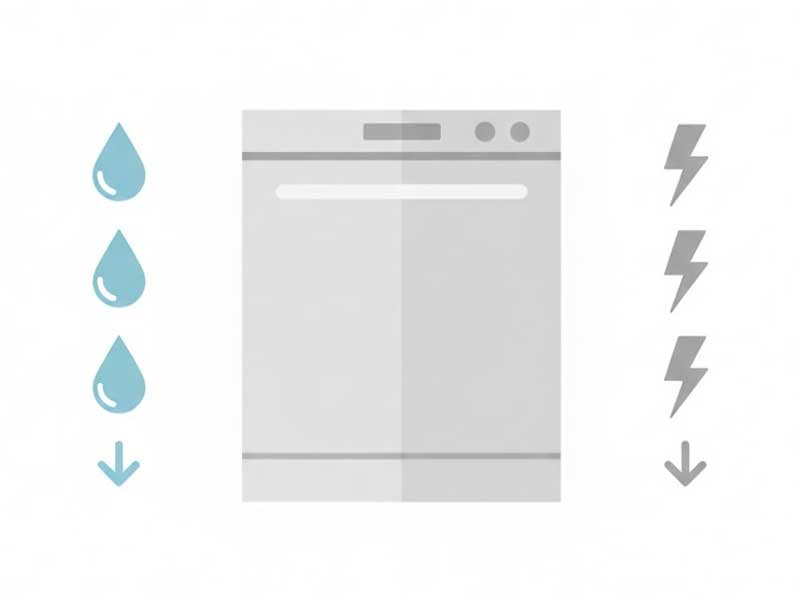
Many of these efficiency gains come from modern dishwasher features such as soil sensors, eco cycles, and optimized spray systems that automatically adjust water pressure and cycle length based on how dirty the load actually is. Instead of relying on fixed programs, these technologies allow the dishwasher to use only the resources it truly needs, reducing waste with every wash.
Energy efficiency in dishwashers isn’t determined by a single feature or setting. Instead, it’s the result of how water use, energy consumption, and cycle design work together as a complete system. When these elements are properly balanced, the dishwasher can deliver strong cleaning performance while keeping utility costs low.
Understanding this interaction is the key to choosing a model that saves money without sacrificing performance. According to efficiency benchmarks outlined by the U.S. Environmental Protection Agency’s ENERGY STAR program, dishwashers that combine smart sensors with efficient water heating consistently outperform basic models in both energy and water savings over time.
ENERGY STAR certification explained
The most reliable starting point is ENERGY STAR certification. Dishwashers that earn this label meet strict federal standards for both water and energy use. However, not all ENERGY STAR models perform the same in real-world conditions.
ENERGY STAR certification sets a baseline, not a guarantee of maximum savings. In other words, it filters out inefficient models—but the most efficient dishwashers go well beyond the minimum requirements.
Water usage vs electricity usage — why both matter
Many buyers focus only on electricity consumption. However, water heating is where most energy is actually used. The less water a dishwasher consumes, the less energy it needs to heat it.
Modern energy-efficient dishwashers typically use 3 to 5 gallons per cycle, reusing filtered water instead of constantly draining and refilling. As a result, they dramatically reduce both water waste and heating demand.
This is also why energy efficiency and water efficiency are inseparable. A dishwasher that saves water almost always saves energy as well.
Eco cycles, sensors, and smart efficiency
The most energy-efficient dishwashers rely on:
- soil sensors that adjust cycle length automatically
- eco cycles that lower peak temperatures while extending wash time
- targeted spray zones that avoid unnecessary water use
In practice, these features allow the dishwasher to clean effectively without overusing resources. Instead of relying on brute force—hotter water and longer cycles—efficient models clean intelligently.
As a result, energy-efficient dishwashers deliver consistent results while keeping consumption predictable and low.

Best Energy-Efficient Dishwashers — Top Picks
Once you understand what actually makes a dishwasher energy-efficient, the next step is choosing models that deliver those savings consistently in real homes—not just on paper.
The dishwashers below stand out because they combine low water usage, efficient heating, smart sensors, and reliable cleaning performance. More importantly, they do this without forcing you into longer cycles or weaker results.
If energy efficiency is only one part of your decision, this complete list of the best dishwashers for 2026 compares performance, features, and value across categories.
What we looked at when selecting these models
Before listing specific picks, it’s important to explain the criteria. Every dishwasher included here was evaluated based on:
- Annual energy consumption (kWh/year)
- Average water usage per cycle
- ENERGY STAR performance margins (not just minimum compliance)
- Real-world cleaning consistency
- Noise levels, because quieter machines often rely on better insulation and more efficient motors
As a result, these picks represent dishwashers that save energy not just occasionally, but every single time they run.
Best overall energy-efficient dishwasher
This category favors balance. The best overall model isn’t necessarily the cheapest or the most advanced—it’s the one that delivers the highest efficiency without forcing compromises.
Top performers in this group typically:
- use under 4 gallons of water per cycle
- operate in the mid-40 dBA range
- include auto or eco cycles that adjust based on soil level
In practice, these dishwashers deliver consistent cleaning while keeping both water and electricity usage well below national averages.
Best energy-efficient dishwasher for families
For larger households, efficiency needs to scale. Running multiple loads per day can erase savings quickly if the dishwasher isn’t optimized.
Energy-efficient family models stand out by:
- maintaining low water use even on heavier cycles
- adjusting automatically to mixed loads
- handling larger capacities without longer runtimes
As a result, families benefit from predictable monthly savings rather than fluctuating utility bills.

Best quiet and energy-efficient dishwasher
Noise and efficiency often go hand in hand. Dishwashers that operate quietly usually feature:
- better insulation
- more efficient motors
- improved water circulation
Because of this, many of the quietest dishwashers on the market are also among the most energy-efficient. For open-plan kitchens, this combination matters more than ever.
How Much Money Can an Energy-Efficient Dishwasher Save?
Energy efficiency sounds good in theory, but most buyers want a clearer answer: how much money does it actually save?
These long-term savings become even clearer when you look at how energy-efficient dishwashers perform in real U.S. households.
While exact numbers vary by state and utility rates, the overall pattern is consistent across the U.S.
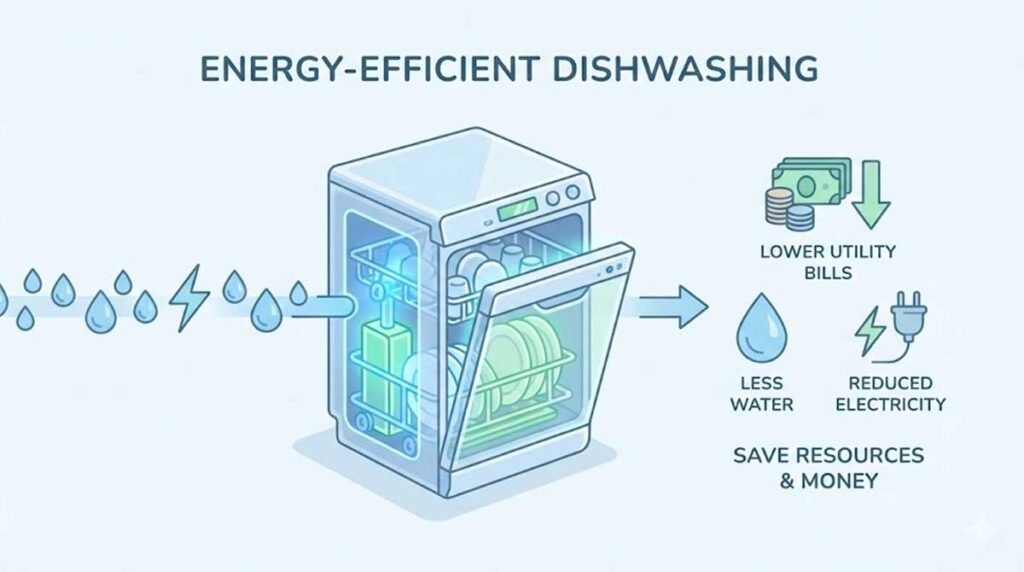
Monthly savings — what to realistically expect
A modern energy-efficient dishwasher typically adds only a few dollars per month to combined water and electricity costs—even when used daily. Compared to older or less efficient models, that difference can be noticeable almost immediately.
More importantly, these savings are stable. Because water usage and heating are controlled precisely, monthly costs remain predictable rather than spiking unexpectedly.
Long-term savings over the lifespan of the dishwasher
Dishwashers are long-term appliances. Over 8–10 years of use, even small efficiency gains compound.
In practice, switching from an older, inefficient dishwasher to a modern energy-efficient model can:
- reduce water usage by thousands of gallons per year
- lower annual energy consumption significantly
- offset part of the higher upfront purchase price
As a result, energy-efficient dishwashers often cost less to own over time, even if their initial price is higher.
ENERGY STAR vs Non-Certified Dishwashers
At this point, many buyers ask a logical follow-up question: Is ENERGY STAR certification actually worth paying attention to, or is it just a label?
The short answer is yes—but with context.
ENERGY STAR certification sets a minimum efficiency threshold for dishwashers sold in the U.S. Certified models are required to use less water and less energy than standard federal limits. However, that certification alone doesn’t guarantee maximum savings.
In practice, ENERGY STAR works best as a filter, not a final decision tool.
What ENERGY STAR certification really guarantees
ENERGY STAR dishwashers are tested under standardized conditions. This ensures:
- reduced annual energy consumption
- lower water use per cycle
- baseline performance consistency
As a result, certified models are almost always more efficient than older or non-certified alternatives.
Where ENERGY STAR falls short
What ENERGY STAR doesn’t tell you is how much better one certified model is compared to another. Two dishwashers can carry the same label while delivering noticeably different real-world efficiency.
Some models barely meet the minimum requirements. Others exceed them by a wide margin through smarter sensors, improved insulation, and more advanced cycle control.
Because of this, the most energy-efficient dishwashers aren’t just ENERGY STAR certified—they outperform the standard by a meaningful amount.
How to Choose the Right Energy-Efficient Dishwasher for Your Home
Energy efficiency only delivers real savings when it matches how your household actually uses the dishwasher. Choosing the “most efficient” model on paper doesn’t help if it doesn’t fit your habits.
The goal is alignment.
Match efficiency to household size
Smaller households benefit most from:
- low water usage on light loads
- eco and auto cycles
- flexible rack systems
Larger households, on the other hand, should prioritize:
- consistent efficiency on heavy cycles
- larger capacity without increased water use
- sensors that adapt to mixed loads
As a result, the right dishwasher saves money not because it’s efficient once—but because it stays efficient every day.
Look beyond headline numbers
Efficiency specs matter, but so does how often you’ll actually use them. If eco cycles are buried in menus or deliver weak cleaning, they won’t be used consistently.
In practice, the best energy-efficient dishwashers make efficient operation the default—not an extra step.
Noise, drying, and efficiency are connected
Quiet dishwashers often signal better insulation and more refined motors, which also improves energy retention. Similarly, efficient drying systems reduce the need for reheating or extended cycles.
Because of this, features like low noise ratings and advanced drying methods often correlate with better overall efficiency.
FAQ: Energy-Efficient Dishwashers
Are energy-efficient dishwashers really worth the higher price?
In most cases, yes. Energy-efficient dishwashers use less water and electricity every time they run, which reduces monthly utility costs. Over the lifespan of the appliance, these savings often offset the higher upfront price.
How much electricity does an ENERGY STAR dishwasher use?
Most ENERGY STAR–certified dishwashers use roughly 1.2–1.5 kWh per cycle, depending on the program. Eco and auto cycles usually consume even less by optimizing water temperature and cycle length.
Do eco cycles actually save energy or just take longer?
Eco cycles save energy by lowering peak water temperatures and using efficient spray patterns. While they may run longer, they typically use less electricity and water overall compared to standard cycles.
Can an energy-efficient dishwasher really lower my utility bills?
Yes. For households that run the dishwasher regularly, energy-efficient models provide consistent savings on both water and electricity, especially compared to older or non-certified dishwashers.
Final Verdict — Are Energy-Efficient Dishwashers Worth It?
For most U.S. households, the answer is clear.
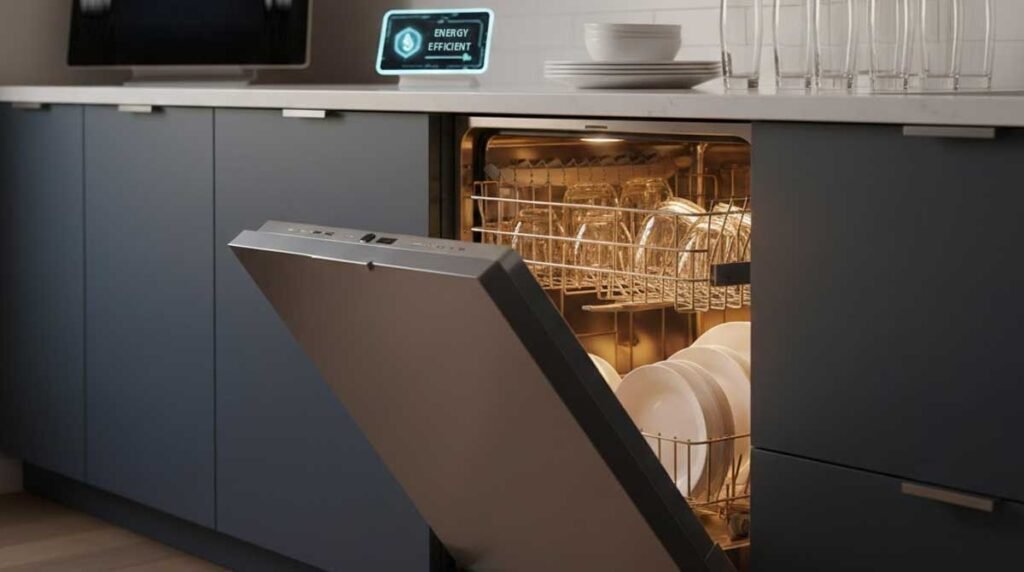
A truly energy-efficient dishwasher uses less water, less electricity, and delivers more consistent results than standard models. While the upfront cost can be higher, the long-term savings—in both utility bills and performance reliability—often outweigh that difference.
More importantly, efficiency today is no longer about compromise. Modern energy-efficient dishwashers clean just as well, run quietly, and integrate seamlessly into everyday routines.
In short, if you’re replacing an older dishwasher or shopping with long-term costs in mind, choosing an energy-efficient model isn’t just an environmental decision—it’s a practical one.
For a complete breakdown of sizes, features, and long-term ownership costs, see our best dishwasher buying guide before making a final decision.