



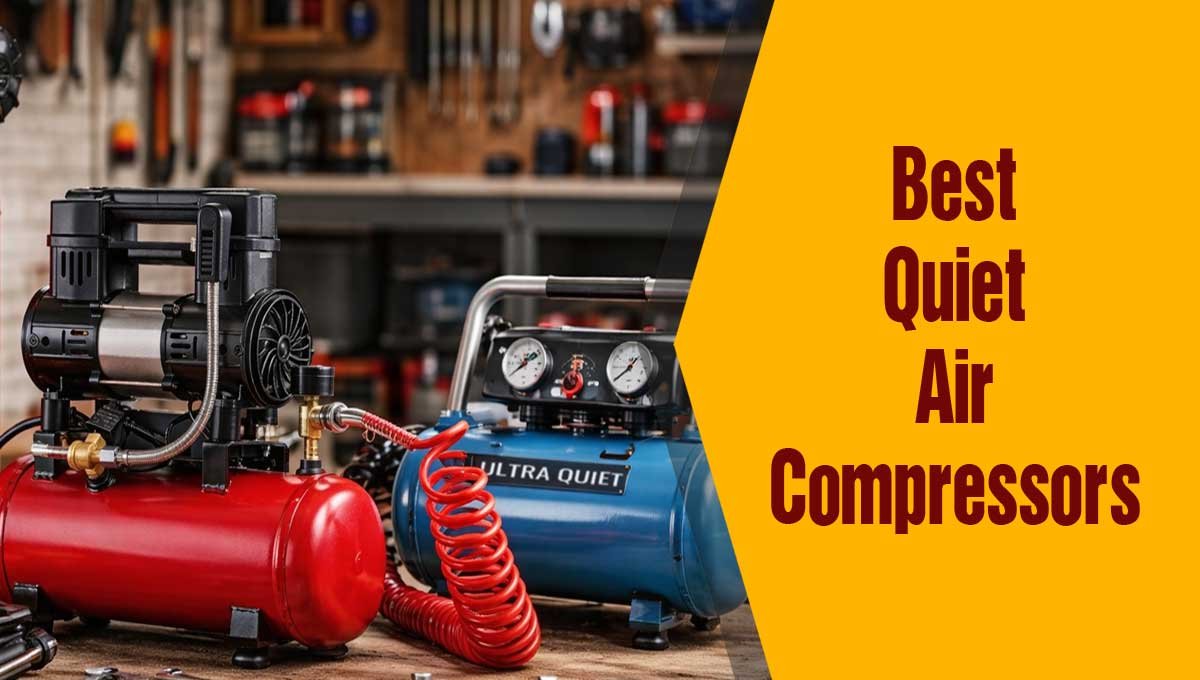
Noise is one of those things most buyers underestimate — until the compressor is sitting in their garage, rattling walls and killing any motivation to keep working. If you’re using an air compressor indoors or in an attached garage, noise quickly becomes a deal-breaker, not a minor inconvenience.
Over the years, we’ve seen many powerful compressors get sidelined simply because they were too loud to live with. That’s exactly why we put together this research-backed guide. Below, you’ll learn what “quiet” actually means in real-world terms, which compressors genuinely deliver lower noise, and which models make sense for indoor and residential garage use — without sacrificing usability.
Quiet operation is important, but it should never come at the expense of choosing the wrong type of compressor altogether — which is why understanding the difference between electric vs gas air compressors matters even more for indoor use.
What Is Considered “Quiet” for an Air Compressor
When manufacturers say a compressor is “quiet,” that label can mean very different things. To make sense of it, you need to look at decibel ratings (dBA) — and more importantly, how those numbers feel during actual use.
Typical Noise Ranges (Real-World Perspective)
- Under ~65 dBA
Considered genuinely quiet. You can hold a conversation nearby, and the compressor won’t dominate the space. - 65–75 dBA
Manageable for garages, especially for short sessions. You’ll notice it, but it won’t feel overwhelming. - Above 80 dBA
Loud. These units often limit when and how long you’re willing to work, particularly indoors.
In practical terms, a quieter compressor doesn’t just protect your ears — it reduces fatigue and frustration. That’s why many homeowners are now willing to trade a bit of raw power for better noise control, especially in residential settings.
If you’re still deciding what specs matter most overall, it helps to step back and look at the full picture in our air compressor buying guide, where airflow, tank size, and noise are all weighed together.
Best Quiet Air Compressors — Reviews
Below are three standout quiet air compressors that consistently perform well for indoor and garage use. These picks focus on low noise output, dependable performance, and realistic use cases — not inflated marketing claims.
Quiet Air Compressor #1: Low-Noise Electric Garage Compressor
Overview
This model is a favorite among homeowners who want reliable air power without turning the garage into an echo chamber. It’s designed specifically with noise reduction in mind, making it well-suited for attached garages.
What We Like
- Noticeably quieter operation than traditional piston compressors
- Smooth motor cycling reduces sudden noise spikes
- Compact footprint for easy garage placement
What Could Be Better
- Not ideal for continuous high-demand air tools
- Slightly higher price than entry-level models
Best For
Home garages, light automotive work, and general DIY tasks where noise matters.
👉 Check Price on Amazon
Quiet Air Compressor #2: Oil-Free Silent Compressor for Indoor Use
Overview
Oil-free compressors are often louder, but this one is an exception. Its design prioritizes reduced vibration and controlled motor speed, making it one of the quieter oil-free options available.
What We Like
- Very low maintenance (no oil changes)
- Clean operation for indoor environments
- Quick recovery time for its size
What Could Be Better
- Limited tank capacity for longer sessions
- Best suited for intermittent rather than continuous use
Best For
Indoor workshops, apartments, and users who value simplicity and quiet operation.
👉 Check Price on Amazon
Quiet Air Compressor #3: Ultra-Quiet Vertical Garage Compressor
Overview
This vertical-style compressor balances a larger tank with noise-conscious design. It’s a solid option if you want fewer refill cycles without the typical noise penalty.
What We Like
- Stable airflow with reduced cycling noise
- Space-saving vertical design
- Durable build quality
What Could Be Better
- Heavier than portable units
- Requires dedicated floor space
Best For
Attached garages and users who work in longer, steady sessions but still want a quieter environment.
👉 Check Price on Amazon
Oil-Free vs Oil-Lubricated Compressors and Noise
When comparing quiet models, many buyers overlook how lubrication affects noise, durability, and maintenance — topics we break down in more detail when comparing electric vs gas air compressors and their long-term trade-offs
Noise differences often come down to how the compressor is lubricated.
- Oil-free compressors tend to be lighter and easier to maintain, but many run at higher RPMs, which can increase noise.
- Oil-lubricated compressors usually run smoother and quieter, especially during longer cycles, but they require basic maintenance.
If you’re comparing different compressor types in general, the trade-offs become even clearer when you look at electric vs gas air compressors, where noise and indoor suitability diverge dramatically.
For indoor and garage use, oil-lubricated electric compressors often deliver the best balance of quiet operation and durability — provided you’re comfortable with minimal maintenance.
Who Should Prioritize Quiet Air Compressors
Quiet compressors aren’t for everyone — but for some users, they make all the difference.
You should strongly prioritize low-noise models if you:
- Live in an apartment or townhome
- Work in an attached garage
- Share space with family members
- Prefer longer, less disruptive work sessions
In these scenarios, quieter operation isn’t a luxury — it’s what allows you to actually use the tool when you need it.
If you’re not sure whether a quiet model is the right fit for your space and usage habits, walking through a step-by-step approach in our how to choose an air compressor guide can help narrow things down quickly.
Conclusion
A quiet air compressor won’t magically make projects faster — but it will make them far more enjoyable. For indoor and garage use, reduced noise often means longer work sessions, fewer interruptions, and less frustration overall.
We built this guide to help you avoid overpowered, overly loud machines that don’t fit residential spaces. Choose a compressor that balances airflow, tank size, and noise, and you’ll end up with a tool you’re genuinely happy to use — not one you work around.
If quiet operation is only one part of your decision, you can compare noise alongside power, tank size, and real-world use cases in our complete air compressor buying guide, which ties everything together in one place.
FAQ – Best Quiet Air Compressors
What dBA rating should I look for in a quiet air compressor?
For indoor or garage use, compressors under about 70 dBA are much easier to live with and won’t dominate the space.
Are oil-free compressors quieter than oil-lubricated ones?
Not always. Some oil-lubricated compressors actually run quieter due to smoother operation, especially during longer cycles.
Can I use a quiet air compressor inside the house?
Electric quiet compressors can be used indoors for light tasks, but ventilation and space considerations still matter.
Do quiet compressors sacrifice power?
Some do, but many modern quiet compressors deliver enough airflow for common DIY and garage tasks without excessive noise.
For larger spaces or detached garages where noise is less critical, you may also want to explore our picks for the best air compressors for home garages to see how power and capacity compare.