



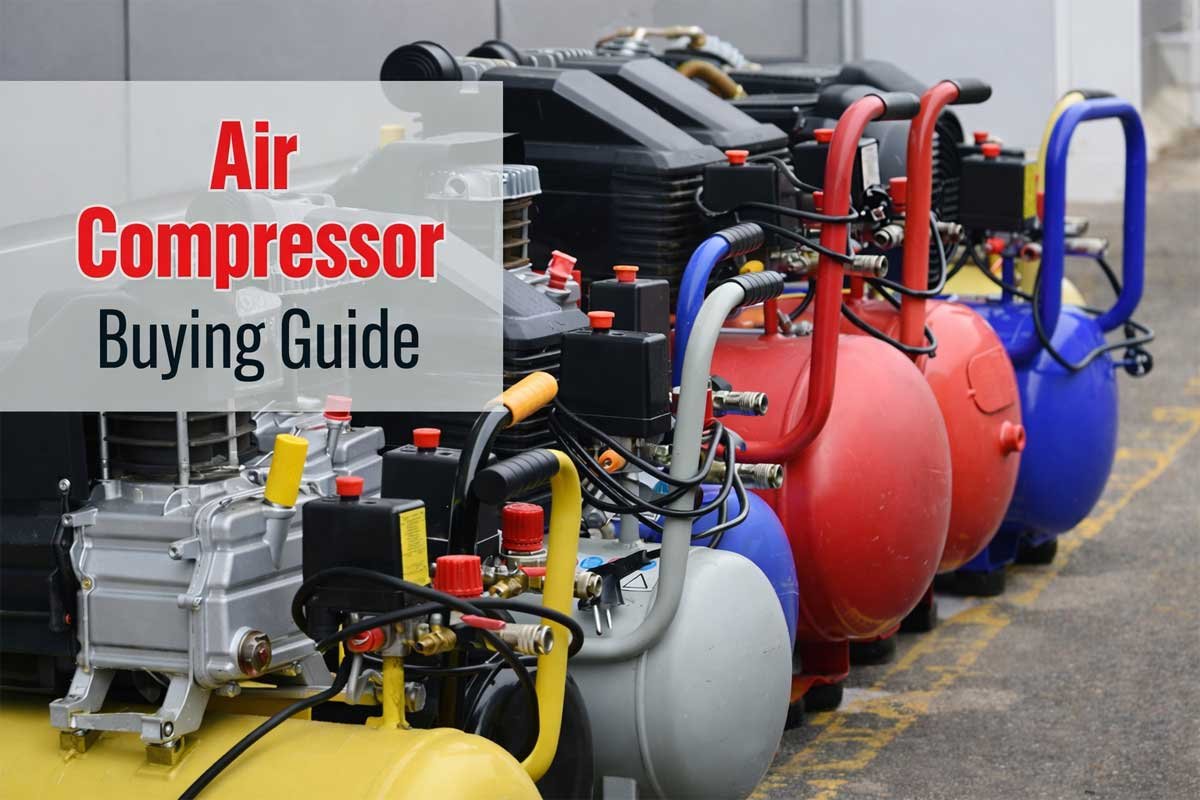
Choosing the right air compressor isn’t just about picking the biggest tank or the highest horsepower on the shelf. It’s about matching the machine to how you actually work — whether that’s tackling weekend DIY projects in your garage, running air tools for home renovations, or handling demanding jobs that require steady, reliable air.
Updated 07 January 2026
Over the years, I’ve seen plenty of buyers overspend on power they never use — or worse, buy a compressor that can’t keep up once real work begins. The good news is that once you understand a few core basics — how compressors work, the different types available, and when electric or gas makes more sense — the decision becomes far less complicated.
This air compressor buying guide breaks everything down in practical, real-world terms. By the end, you’ll know exactly what to look for, what to ignore, and how to choose a compressor that fits your workspace, budget, and long-term needs — without guesswork.
If you’re completely new to air compressors and want a simpler, step-by-step starting point, our beginner-friendly guide on how to choose an air compressor walks through the basics without overwhelming technical details.
What Is an Air Compressor and How Does It Work?
An air compressor is essentially a power tool that converts electricity or fuel into stored air pressure — and that pressure becomes the muscle behind dozens of tools and tasks. If you’ve ever used a nail gun, impact wrench, or spray gun, you’ve already seen how compressed air can do heavy lifting with surprising efficiency.
At its core, an air compressor pulls in ambient air, compresses it, and stores it inside a tank under pressure. When you connect a tool, that stored air is released in a controlled way to power whatever you’re working on — from inflating tires to framing walls.
Basic Components Explained (Motor, Tank, Regulator)
Here’s the simple breakdown I use when explaining compressors to first-time buyers:
- Motor – This is what drives the compression process. Electric motors are common in home garages, while gas engines are used for remote or heavy-duty work.
- Tank – Stores compressed air so your tools get a steady supply instead of short bursts.
- Pressure Regulator – Controls how much air pressure (PSI) is delivered to your tool, protecting both the tool and your work.
- Pump – The part that actually compresses the air.
👉 Think of it like this: the motor fills the tank, and the regulator decides how fast that stored energy is released. Once you understand that relationship, choosing the right compressor becomes much easier.
Types of Air Compressors Explained
Not all air compressors are built the same — and choosing the wrong type can mean wasted money, excess noise, or constant downtime. Below are the three most common compressor types you’ll see on the US market, explained in real-world terms.
Reciprocating (Piston) Air Compressors
Reciprocating compressors are the most common option for home garages and DIY users. They work much like a car engine: pistons move back and forth inside cylinders, pulling air in and pushing it into the tank.
Why people choose them:
- Affordable and widely available
- Easy to maintain
- Plenty of power for nail guns, impact tools, and tire inflation
Trade-offs:
- Louder than other types
- Generate more heat
- Not ideal for nonstop use
💡 From experience, this is the right choice if you’re working in a garage on weekends or tackling home projects that come in short bursts rather than all-day sessions.
Rotary Screw Air Compressors
Rotary screw compressors are built for continuous operation. Instead of pistons, they use two interlocking screws that compress air smoothly and efficiently inside a sealed chamber.
Why professionals use them:
- Designed for long, uninterrupted runtimes
- Much quieter under load
- Lower wear due to fewer moving parts
Trade-offs:
- Higher upfront cost
- Overkill for most home users
These are common in auto shops, manufacturing environments, and commercial workshops — places where stopping to “let the compressor catch up” simply isn’t an option.
Scroll Air Compressors
Scroll compressors use two spiral-shaped scrolls to compress air quietly and without oil. One scroll stays fixed, while the other moves in a tight circular motion.
Where they shine:
- Extremely quiet operation
- Oil-free, clean air output
- Minimal vibration
Best for:
- Medical and dental offices
- Electronics and lab environments
- Indoor spaces where noise matters
For most homeowners, scroll compressors are rare and expensive — but they’re worth mentioning because they set the standard for quiet, clean air.
Electric vs Gas Air Compressors — Which One Should You Choose?
This is one of the most common decision points — and the right answer depends less on power and more on where and how you plan to work.
Electric Air Compressors (Best for Home & Indoor Use)
This is one of the most common decision points for buyers — and the right answer usually depends less on raw power and far more on where and how you plan to work. For the vast majority of homeowners and DIY users, electric air compressors remain the most practical and user-friendly option.
Electric compressors dominate the home market for good reason. They’re clean, straightforward to operate, and well suited for garages, basements, and workshops with reliable electrical access. If your projects stay within a residential setting, this type of compressor tends to deliver the best balance of convenience, performance, and comfort.
Why electric air compressors make sense for most users:
- No exhaust fumes or fuel storage concerns
- Noticeably lower noise levels compared to gas models
- Simple plug-and-play setup with minimal learning curve
- Safe and practical for indoor or attached-garage use
Because they don’t rely on combustion engines, electric compressors are easier to live with day to day. You’re far more likely to use them regularly — especially for shorter sessions or quick tasks — without worrying about ventilation, smell, or excessive startup hassle.
Limitations to keep in mind:
- Performance depends on reliable power availability
- Extension cord length and circuit amperage can affect output
- Less suitable for remote locations without electricity
👉 If your work takes place in a residential garage or indoor workshop, an electric compressor is almost always the smarter and simpler choice. And if you’re still weighing the pros and cons between power sources, this is where a deeper comparison helps — see our full breakdown in Electric vs Gas Air Compressors — Which One Should You Choose?, where we walk through real-world use cases side by side.
Gas-Powered Air Compressors (Best for Remote & Heavy-Duty Jobs)
Gas compressors are all about independence. They don’t need an outlet, and they’re built to deliver high air output in places where electricity isn’t reliable — or doesn’t exist.
Why choose gas:
- Excellent for outdoor job sites
- High power output
- No dependency on electrical supply
Trade-offs:
- Loud operation
- Exhaust fumes
- Requires ventilation and regular engine maintenance
From hands-on experience, gas-powered units make sense for contractors, rural properties, or construction work — but they’re rarely the right tool for an attached garage or indoor space.
Quick Expert Take
If you’re choosing between electric and gas, start with this question:
“Will I ever need to run this compressor where electricity isn’t available?”
If the answer is no — go electric and don’t look back.
Understanding Air Compressor Power: CFM, PSI & Tank Size
This is the section that saves you money — and frustration.
Most people shop for an air compressor like they’re buying a lawn mower: bigger number equals better tool. That’s how you end up with a “powerful” compressor that still struggles to run your impact wrench… or a giant tank that’s loud, heavy, and totally unnecessary for what you actually do.
So before you start comparing brands, prices, and extra features, it’s worth slowing down and focusing on the three specifications that actually determine how an air compressor will perform in real-world use: CFM, PSI, and tank size. These numbers tell you far more about day-to-day usability than horsepower or marketing claims ever will.
If you’re not fully clear on how they work together, take a moment to review our in-depth guide on air compressor CFM, PSI, and tank size explained — once these fundamentals click, the rest of the buying decision becomes far more straightforward, logical, and confidence-driven.
What Is CFM and Why It Matters Most
CFM (cubic feet per minute) tells you how much air the compressor can deliver. In real-world terms, it’s the difference between:
- a compressor that keeps your tool running smoothly, and
- one that forces you to stop every 20 seconds while the tank refills.
If there’s one spec I always prioritize, it’s CFM — because most air tools don’t fail due to lack of pressure. They fail because the compressor can’t keep feeding air at the rate the tool needs.
That said, CFM numbers can be confusing because they’re often listed at different pressures. The common rating you’ll see is:
- CFM @ 90 PSI (for many general air tools)
- sometimes CFM @ 40 PSI (more relevant for lighter-duty tools and inflators)
Here’s the practical buying rule:
Match your compressor’s CFM @ 90 PSI to your most demanding tool — and give yourself a little cushion.
In everyday garage use, that “most demanding tool” is often a spray gun, a sander, or an impact tool you use repeatedly. Meanwhile, a brad nailer barely sips air.
Quick real-world examples (typical use cases):
- Tire inflation & blow gun: low CFM needs
- Brad nailer / finish nailer: low-to-moderate CFM
- Impact wrench (light automotive use): moderate CFM
- HVLP spraying & sanding: higher CFM, steady demand
When choosing an air compressor, one of the most practical ways to avoid underpowering your setup is to match the compressor’s airflow to the tools you actually plan to use. Below is a quick reference table showing typical air requirements for common air tools, based on real-world usage rather than marketing specs.
| Air Tool | Typical CFM @ 90 PSI |
|---|---|
| Brad nailer | ~0.3 CFM |
| Finish nailer | ~2.0–2.5 CFM |
| Framing nailer | ~2.0–2.5 CFM |
| Impact wrench (3/8″) | ~3–5 CFM |
| Impact wrench (1/2″) | ~5–8 CFM |
| HVLP spray gun | ~6–12 CFM |
| Orbital or dual-action sander | ~6–9 CFM |
| Air ratchet | ~4–6 CFM |
How to use this table:
Identify the most air-hungry tool you plan to run, then choose a compressor that can comfortably meet or slightly exceed that CFM rating at 90 PSI. This buffer helps prevent constant cycling, pressure drops, and long-term strain on the compressor.
So if you’re mainly doing inflating and occasional nailing, you don’t need to chase high CFM. On the other hand, if you plan to spray paint cabinets or run air sanders, CFM becomes the make-or-break spec.
Pro tip (that buyers miss):
If a tool lists a CFM requirement, treat that number like a minimum baseline — not the sweet spot. In practice, a compressor that meets the exact minimum often feels “barely adequate,” especially as the unit ages or you work in longer bursts.
PSI Explained (Do You Really Need High Pressure?)
PSI (pounds per square inch) is the pressure level of the air. It matters — but not in the way most people assume.
Most home and garage air tools run comfortably around:
- 90 PSI for typical tools (nailers, general air tools)
- some tools may use higher PSI, but it’s less common for homeowners
So when you see a compressor advertising 150 PSI, 175 PSI, or even more, it doesn’t automatically mean you’re getting a better unit for your needs.
Instead, think of PSI like this:
- PSI helps determine how much “push” is available
- CFM determines how long you can keep pushing
In other words: pressure is the peak, but airflow is the endurance.
That being said, higher max PSI can still be useful — not because your tool needs 175 PSI, but because a higher-pressure tank can store more usable air. This can reduce how often the compressor cycles on and off, which is a nice quality-of-life improvement, especially in a home garage.
So what should you aim for?
- For most DIY and garage owners: a compressor rated 135–175 PSI is plenty
- If you’re only inflating tires and running nailers: you can often go smaller and still be happy
At this point, you might be thinking: “Okay, so PSI isn’t the main thing — then why do brands brag about it?”
Because PSI is a big, simple number — and it sells. But for real-world performance, it’s rarely the limiting factor.
Tank Size — How Much Air Reserve Is Enough?
Tank size is measured in gallons, and it tells you how much compressed air is stored in reserve. The tank doesn’t create power by itself — it just gives you breathing room between motor cycles.
The tank size you need depends on how you work:
- Short bursts (nail gun, inflator) → small tank is fine
- Continuous demand (spray painting, sanding) → bigger tank helps a lot
- On-and-off garage tasks → mid-size tanks feel the most flexible
Here’s the most useful way to think about it:
- Small tanks (1–6 gallons):
Great for portability and quick jobs. Perfect for topping off tires, blowing dust off tools, or occasional trim work.
However, they refill frequently and can feel annoying if you step into longer sessions. - Mid-size tanks (8–20 gallons):
This is the sweet spot for many homeowners. You get a noticeable reserve, fewer refill cycles, and decent portability if the unit has wheels.
If you do a mix of nailing, light auto work, and general garage projects, this category tends to “fit” best. - Large tanks (30–60+ gallons):
This is where compressors start to behave like shop equipment. Great for frequent use and tasks that need steady air.
That said, they’re heavier, take up space, and often make sense only if you’re committed to using air tools regularly.
Now, here’s the part most guides don’t say plainly:
A bigger tank can make a weak compressor feel better for a while — but it doesn’t fix low CFM.
So if you’re buying for high-demand tools, don’t let a big tank distract you. You want sufficient airflow first, then tank reserve second.
Duty Cycle Explained: Intermittent vs Continuous Use
Another often-overlooked factor when buying an air compressor is duty cycle — how long the compressor can safely run within a given time period.
Most home and DIY air compressors are designed for intermittent use, meaning they expect pauses between cycles. This works perfectly for nailers, inflators, and general garage tasks where air demand comes in short bursts.
Problems start when intermittent-duty compressors are pushed into continuous-use scenarios, such as extended sanding or spray painting sessions. In these cases, the motor runs longer, heat builds up faster, and wear accelerates.
In simple terms:
- Short bursts of air → almost any home compressor is fine
- Long, continuous airflow → higher CFM and stronger duty cycle matter
If you plan to use air tools for extended periods, choosing a compressor with higher airflow capacity — and allowing it regular cool-down periods — will significantly extend its lifespan.
Putting It Together: The Practical “Match Your Tool” Method
At this stage, the buying decision gets easier if you go from “specs” to “tasks.”
Ask yourself:
- What’s the most demanding tool I plan to run?
- Will I run it occasionally or for long sessions?
- Do I need portability or will it live in one spot?
Then use this simple logic:
- Occasional use + short bursts → prioritize convenience and portability
- Frequent use + longer sessions → prioritize CFM stability and tank reserve
- Indoor garage → noise and cycling frequency matter more than you think
If you’re still unsure, don’t overcomplicate it. Choose a compressor that covers your most demanding realistic task — not the “maybe someday” project you might never do.
And speaking of real-world use, the next step is where this becomes very personal: your workspace. Because what works in a detached garage is very different from what works in an attached garage — or a small home workshop where noise and storage are daily realities.
Choosing the Right Air Compressor for Your Garage or Workshop
This is where specs turn into real-life decisions.
I’ve seen plenty of compressors look perfect on paper — only to become a constant annoyance once they’re actually in the garage. Too loud, too bulky, or simply not suited to how the space is used. The goal here isn’t to buy the “best” compressor overall, but the one that fits your workspace, your habits, and your tolerance for noise and clutter.
Let’s break this down by the way most people actually use their garages and workshops.
Small Garage & DIY Projects
If your garage doubles as storage, a parking spot, and a weekend workspace, space efficiency matters more than raw power.
In these setups, most users:
- inflate tires
- run brad or finish nailers
- use a blow gun for cleaning
- occasionally power light automotive tools
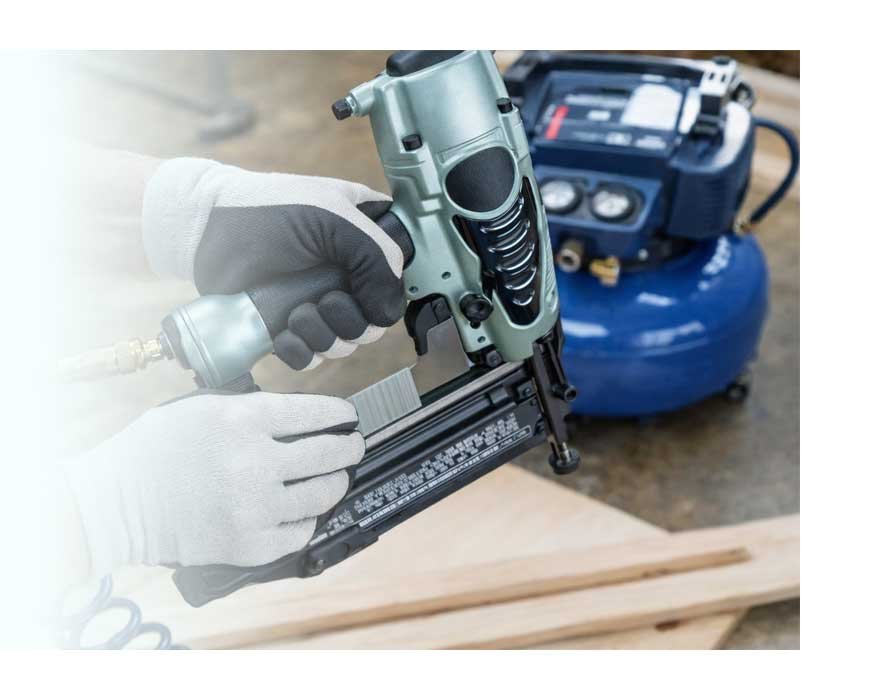
For this kind of use, a compact electric air compressor with a smaller or mid-size tank usually makes the most sense. You want something that’s easy to roll out, quick to set up, and simple to store when you’re done.
What to prioritize here:
- Moderate CFM that comfortably handles nailers and inflators
- Reasonable noise levels for an attached garage
- Vertical or compact footprint
- Minimal setup time
From experience, this is also where buyers tend to overspend. You don’t need a massive tank or industrial output for weekend projects. Spending a bit extra on quieter operation and better build quality often pays off more than chasing specs you’ll never fully use.
👉 If this sounds like your situation, it’s worth checking best air compressors for home garage use, where models are chosen specifically for this balance of power, size, and convenience.
Home Workshops & Frequent Use
Once your garage turns into a real workshop — woodworking, car maintenance, or frequent DIY — your expectations change. You’re no longer okay with waiting for the compressor to catch up or constantly hearing it cycle on and off.
In these spaces, you’re more likely to:
- use impact wrenches more often
- run air ratchets or grinders
- spray finishes or paint
- work in longer, uninterrupted sessions
This is where CFM stability and tank reserve start to matter more than portability. A mid-to-large electric compressor with a larger tank can dramatically improve workflow by reducing interruptions and noise cycling.
What to prioritize here:
- Higher CFM at 90 PSI
- Larger tank to smooth out demand
- Durable motor designed for repeated use
- Wheels and handles rather than ultra-light portability
At this level, the compressor stops feeling like a tool you fight with — and starts feeling like part of the shop. You’ll notice fewer pauses, smoother tool operation, and less mental friction while working.
👉 This is also the category where comparing models side by side really helps, especially when looking at tank size versus noise output, not just advertised power.
Professional or Continuous Use
If you rely on air tools to make money — or you’re running long sessions day after day — the priorities shift again.
Here, compressors are expected to:
- run for extended periods
- maintain consistent airflow
- handle demanding tools without strain
In these cases, entry-level home compressors quickly show their limits. Motors overheat, recovery times slow down, and wear becomes noticeable.
What matters most at this level:
- Consistent CFM under load
- Heavy-duty components built for longevity
- Reduced vibration and heat buildup
- Easy access for maintenance
This is also where gas-powered units or high-end electric compressors start to make sense, depending on location and power availability. While the upfront cost is higher, downtime and frustration cost far more in the long run.
For most homeowners, this category is aspirational rather than practical — but it’s important to recognize where the line is, so you don’t expect a weekend compressor to behave like shop equipment.
A Quick Reality Check Before You Buy
Before moving on, ask yourself one honest question:
“How often will I really use this compressor once the excitement wears off?”
If the answer is “a few times a month,” prioritize convenience and noise.
If it’s “every weekend,” prioritize airflow and durability.
If it’s “almost daily,” prioritize long-term reliability over price.
Once you’re clear on that, the final factors become much easier to evaluate — especially the ones people tend to underestimate, like noise levels, portability, and storage.
Noise Levels, Portability & Storage Considerations
This is the part many buyers underestimate — and later regret.
On paper, most air compressors look similar. In real life, noise, mobility, and storage are what determine whether you enjoy using the tool or avoid turning it on. Especially in an attached garage or residential area, these factors matter just as much as power.
How Loud Is Too Loud for Home Use?
Air compressor noise is measured in decibels (dBA). The lower the number, the quieter the machine — but the difference between numbers is bigger than it looks.
Here’s a practical way to think about it:
- Below ~65 dBA → noticeably quiet, conversation-friendly
- 65–75 dBA → manageable for short sessions
- Above 80 dBA → loud enough to be disruptive indoors
Most traditional piston compressors fall on the louder end of the spectrum. That doesn’t mean they’re unusable — but it does mean you’ll think twice before firing one up late in the evening or early morning.
From hands-on use, quieter compressors don’t just protect your ears — they reduce mental fatigue. When the compressor cycles less aggressively and doesn’t dominate the space, you work longer and more comfortably.
If noise is a major concern — especially in an attached garage or shared living space — choosing a quieter model can make a significant difference in how often and comfortably you use your compressor. We’ve broken down the best options in our guide to quiet air compressors for indoor and garage use, focusing on low dBA levels without sacrificing real-world performance.
Buying insight:
If you have an attached garage, nearby neighbors, or family inside the house, paying extra for a quieter unit is rarely wasted money.
Portability: Wheels, Handles & Real-World Movement
Portability isn’t just about weight — it’s about how easily the compressor fits into your routine.
Ask yourself:
- Will this live in one corner permanently?
- Do I need to roll it outside?
- Will I lift it into a truck or move it between jobs?
Common portability setups:
- Small pancake or hot-dog compressors: easy to carry, quick to deploy
- Mid-size wheeled units: roll well but need floor space
- Large vertical tanks: stationary, powerful, but not mobile-friendly
In real garages, wheels and balance matter more than advertised weight. A slightly heavier compressor with good wheels often feels easier to move than a lighter unit with an awkward handle.
If you plan to move the compressor frequently — between garage, driveway, or different job locations — this becomes a major decision point, not a minor detail.
Storage: Where Will It Actually Live?
Storage is the silent dealbreaker.
Before buying, physically picture where the compressor will sit when not in use:
- Against a wall?
- Under a workbench?
- Next to shelving or a vehicle?
Vertical tanks save floor space but are taller. Horizontal tanks take up more footprint but slide under benches more easily.
Smart storage tip:
Measure the space first. Compressors rarely look as compact in real life as they do in product photos.
If storage is tight, choosing a slightly smaller, quieter compressor that fits cleanly into your space often leads to more actual use — which is the whole point of owning one.
Maintenance, Lifespan & Long-Term Ownership Costs
An air compressor isn’t a “set it and forget it” tool — but it doesn’t need to be high-maintenance either. Understanding what’s required upfront helps you avoid premature failures and unexpected costs.
Basic Maintenance You Should Never Skip
Most air compressor issues don’t come from bad design — they come from neglect.
Here’s the short checklist I recommend to every owner:
- Drain moisture from the tank regularly
Condensation builds up naturally. Left unchecked, it leads to rust and internal damage. - Inspect hoses and fittings
Small leaks reduce efficiency and force the motor to work harder. - Keep vents and intakes clean
Dust buildup causes overheating and shortens motor life. - Check fasteners and vibration points
Compressors vibrate — loose bolts happen over time.
None of this is complicated, but skipping it quietly shortens the life of the machine.
Oil-Free vs Oil-Lubricated Compressors
This is another long-term decision that affects maintenance and durability.
Oil-free compressors:
- Lower maintenance
- Cleaner operation
- Typically lighter and more portable
Trade-off:
They often run louder and may wear faster under heavy use.
Oil-lubricated compressors:
- Quieter operation
- Better suited for frequent or longer sessions
- Longer lifespan when maintained properly
Trade-off:
They require periodic oil checks and changes.
From experience, oil-free models are great for casual users who want simplicity. If you use air tools regularly or for longer stretches, oil-lubricated units usually feel smoother and last longer.
What Ownership Really Costs Over Time
Beyond the purchase price, factor in:
- Electricity or fuel usage
- Replacement hoses and fittings
- Occasional maintenance parts
- Space and noise compromises
A slightly more expensive compressor that runs efficiently, quietly, and reliably often ends up costing less in frustration and replacement down the road.
Smart buying mindset:
Don’t just ask, “Can this compressor do the job?”
Ask, “Will I still be happy using it two years from now?”
Safety & Indoor Use: What You Should Always Keep in Mind
While air compressors are generally safe when used correctly, a few basic precautions make a big difference — especially in home garages and indoor spaces.
- Noise protection matters: Even moderately loud compressors can cause fatigue or hearing strain over time. Ear protection is a smart choice for longer work sessions.
- Ventilation is essential: Electric compressors are suitable for indoor use, but the workspace should still be well-ventilated to manage heat and airflow.
- Drain moisture regularly: Moisture buildup inside the tank can lead to internal corrosion and reduced performance if ignored.
- Respect pressure limits: Always use tools and hoses rated for the compressor’s maximum pressure to avoid unnecessary risk.
These aren’t complicated steps, but following them consistently helps ensure safe operation, better performance, and longer equipment life.
Common Air Compressor Buying Mistakes (And How to Avoid Them)
One of the main reasons we put this guide together is simple: most air compressor regrets are completely avoidable. After reviewing dozens of models, specs, and real user scenarios, the same mistakes come up again and again — especially among first-time buyers.
Our goal here isn’t to criticize anyone’s choice. It’s to help you sidestep the traps before your money is already spent.
Mistake #1: Buying Based on Horsepower Alone
Horsepower looks impressive on the box, but it’s one of the least reliable indicators of real-world performance.
What actually happens:
- Buyers chase high HP numbers
- The compressor still struggles under load
- Tools stall because airflow (CFM) is insufficient
How to avoid it:
Always prioritize CFM at 90 PSI over horsepower. If airflow is right, horsepower becomes far less important.
Mistake #2: Underestimating Noise (Especially for Home Garages)
On paper, noise feels like a minor inconvenience. In practice, it’s often the reason compressors sit unused.
We’ve seen this repeatedly:
- Loud compressor
- Short work sessions
- Avoided evening or weekend use
How to avoid it:
If your garage is attached to your home or you live close to neighbors, treat noise level as a core buying factor, not an afterthought.
Mistake #3: Buying for “Future Projects” That Never Happen
It’s tempting to buy “just in case” — but oversized compressors often become bulky, loud space-eaters that don’t match actual usage.
How to avoid it:
Buy for the most demanding task you realistically do today, not the hypothetical project you might tackle years from now.
Mistake #4: Ignoring Space and Storage Reality
Many buyers measure specs — but not their garage.
The result?
- No clean storage spot
- Awkward placement
- Constant moving around
How to avoid it:
Measure first. Choose a compressor that fits your space comfortably, not one you constantly work around.
Bottom Line on Mistakes
Every mistake above comes from the same place: buying based on numbers instead of how the compressor will actually be used.
That’s exactly why this research exists — to replace guesswork with clarity.
Many first-time buyers run into the same issues simply because they focus on the wrong specs or overlook how the compressor will actually be used. To help you avoid those pitfalls, we’ve outlined the most common air compressor buying mistakes and how to sidestep them before you commit.
When a Portable Air Compressor Makes More Sense
Not every workspace needs a stationary, high-capacity compressor. In fact, for many homeowners and DIY users, portability is the feature that gets used the most.
A portable air compressor makes sense if:
- You move between garage, driveway, and backyard
- You store tools away after each session
- You value quick setup and minimal hassle
These units shine in flexibility, not brute force.
Where Portable Compressors Excel
From our analysis and real-world testing scenarios, portable compressors are ideal for:
- Tire inflation and maintenance
- Trim and finish nailing
- Light automotive tasks
- Occasional DIY projects
They’re easy to grab, fast to pressurize, and simple to store — which often means they get used more frequently than larger units.
Where They Fall Short
Portables aren’t designed for:
- Long spray painting sessions
- Continuous sanding or grinding
- High-demand air tools running nonstop
That doesn’t make them a bad choice — just the right choice for the right workload.
If convenience, storage, and flexibility rank high for you, a portable compressor is often the smarter and more enjoyable option.
👉 This is exactly why we’ve broken out a dedicated comparison of best portable air compressors for DIY use, so you can see which models balance power and portability best.
Final Thoughts — Choosing the Best Air Compressor for Your Needs
If there’s one takeaway from this guide, it’s this:
Choosing the right air compressor isn’t about buying the biggest or most powerful model — it’s about buying the one that fits how you actually work.
We built this buying guide with a single purpose: to help you make a confident, informed decision without marketing noise or unnecessary complexity. Every section — from airflow and tank size to noise and storage — exists because those details genuinely affect ownership satisfaction.
Once you understand:
- what tools you’ll run
- how often you’ll use them
- where the compressor will live
…the right choice usually becomes obvious.
A well-matched air compressor saves time, reduces frustration, and makes projects smoother from start to finish. And when the tool works with you instead of against you, that’s when it truly earns its place in your garage or workshop.
If you’re ready to narrow things down further, the next step is simple:
👉 compare models designed specifically for your type of use, whether that’s a home garage, portable DIY setup, or frequent workshop work.
That’s exactly what we’re here to help with.
Air Compressor Buying Guide FAQs
Q1: What size air compressor do I need for home use?
For most home garages and DIY projects, a compressor with moderate CFM and a mid-size tank offers the best balance of power, noise, and convenience. Focus on matching the compressor to your most demanding tool rather than buying oversized equipment.
Q2: Is a bigger air compressor always better?
Not necessarily. Bigger tanks and higher specs can add noise, cost, and storage issues without improving performance for light or occasional tasks. The best compressor is the one that fits how often and how long you actually work.
Q3: Can I use an air compressor indoors or in an attached garage?
Yes — electric air compressors are designed for indoor and garage use. Gas-powered compressors should only be used outdoors or in well-ventilated areas due to exhaust fumes and noise.
Q4: What’s more important: CFM or PSI?
For most users, CFM matters more. PSI determines pressure, but airflow (CFM) determines whether your tools run smoothly without constant pauses.
Q5: How loud is too loud for a home garage?
For comfortable indoor or residential use, compressors under roughly 70 dBA are far easier to live with. Louder models can still work but may limit when and how often you use them.
Q6: Are oil-free air compressors reliable long-term?
Oil-free compressors are reliable for light to moderate use and require less maintenance. For frequent or extended use, oil-lubricated models often last longer and run quieter.
Q7: Is a portable air compressor powerful enough for DIY projects?
For many DIY tasks — tire inflation, trim work, light automotive use — portable compressors are more than sufficient. Continuous air-demand tools may require larger, stationary units.