



A medical thermometer is one of those household tools you don’t think about often—until you truly need it. Whether it’s a late-night fever, a sick child, or simply monitoring your own health, having a reliable medical thermometer for home use removes uncertainty at the moments that matter most.
In 2026, home thermometers are faster, safer, and more accurate than ever. From traditional digital models to no-touch infrared options, today’s devices are designed for real family use—not clinical complexity. The challenge isn’t finding a thermometer, but choosing one you can trust for consistent, accurate readings across different ages and situations.
In this guide, we focus on accuracy, safety, and real-world usability, helping you choose a thermometer that fits seamlessly into everyday home care.
Quick Picks — Best Medical Thermometers for Home Use (2026)
If you want a quick answer, these are our top-performing medical thermometers for home use, selected for reliability, ease of use, and long-term trust.
Best Overall Medical Thermometer
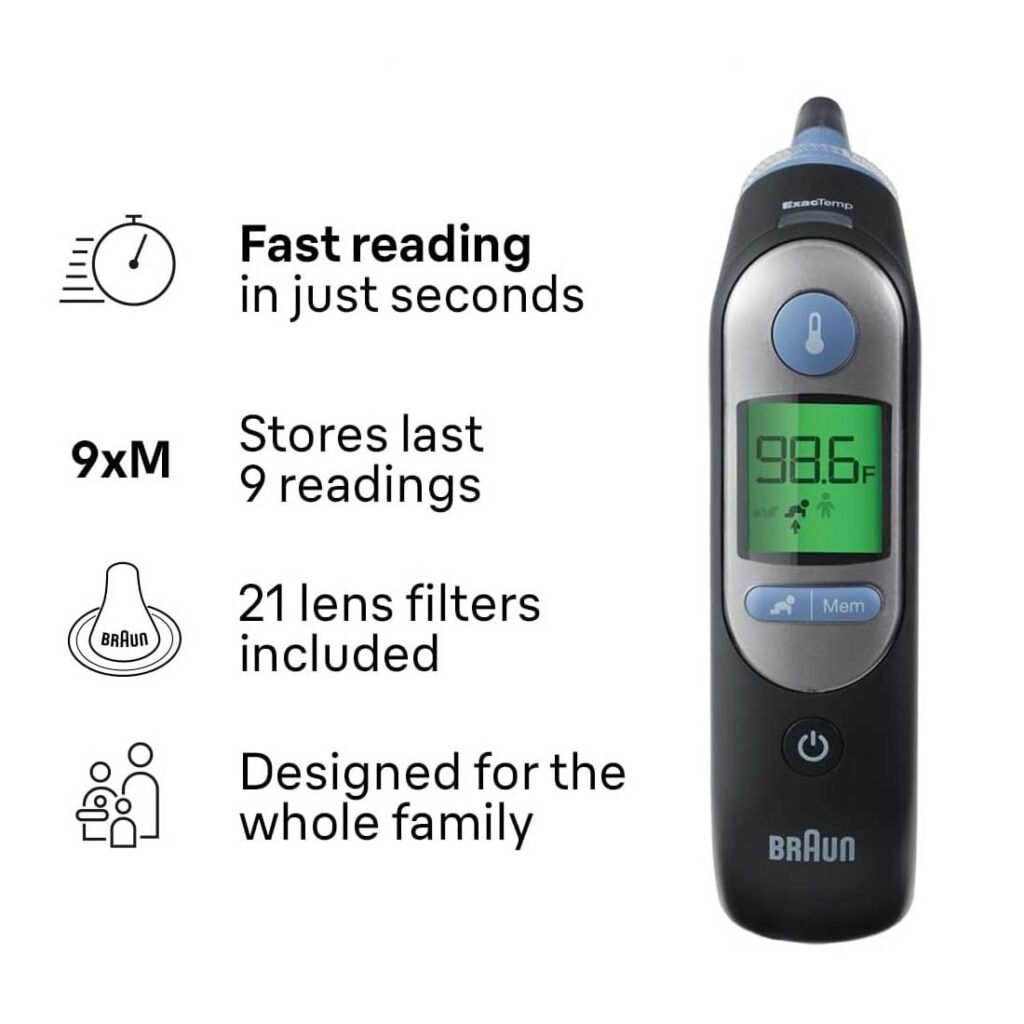
Braun ThermoScan 7 Digital Ear Thermometer
A long-standing favorite in U.S. households and medical offices alike, the ThermoScan 7 delivers fast and consistent ear temperature readings.
Why it stands out:
- clinically trusted brand
- quick readings in seconds
- age-adjusted fever guidance
Best for:
Families who want a dependable, all-around thermometer they can use confidently.
Best No-Touch Medical Thermometer
Braun No Touch + Forehead Thermometer
Designed for hygiene and convenience, this model allows contact-free readings without disturbing a sleeping child.
Why it stands out:
- no physical contact required
- quiet, fast operation
- easy-to-read display
Best for:
Parents who need stress-free temperature checks, especially at night.
Best Budget Medical Thermometer
iProven Oral & Rectal Thermometer
A simple, highly practical thermometer that focuses on accuracy rather than extras.
Why it stands out:
- affordable and reliable
- suitable for babies and adults
- rectal accuracy option for infants
Best for:
Families looking for maximum accuracy on a budget.
Best Smart Medical Thermometer
Kinsa Smart Digital Thermometer
This smart thermometer pairs with an app to track temperature history and trends over time.
Why it stands out:
- app-based temperature tracking
- useful for families with multiple users
- data-driven health insights
Best for:
Parents who value record-keeping and health monitoring over time.
How We Chose the Best Medical Thermometers (Our 2026 Methodology)
Not all thermometers are created equal. For this 2026 update, we evaluated each model using criteria that reflect real home use, not just manufacturer claims.
Accuracy & Consistency
Accuracy is the foundation of any medical thermometer. We prioritized models with a proven track record of consistent readings across repeated measurements.
Safety & Age Appropriateness
Different ages require different measurement methods. We considered how safely and effectively each thermometer works for babies, children, and adults.
Ease of Use
In real life, thermometers are often used when someone is tired, stressed, or unwell. Simple controls, clear displays, and fast readings mattered more than advanced features.
Hygiene & Cleaning
No-touch and easy-to-clean designs scored higher, especially for family environments where thermometers are shared.
Real-World Family Use
Finally, we looked at long-term user feedback to understand how these thermometers perform after months—or years—of everyday use.
Best Medical Thermometers for Home Use — In-Depth Reviews (2026)
Below are detailed, real-world reviews of the best medical thermometers for home use, selected for accuracy, safety, and everyday practicality in U.S. households.
Braun ThermoScan 7 Digital Ear Thermometer — Best Overall
The Braun ThermoScan 7 is one of the most trusted medical thermometers in American homes—and for good reason. It delivers fast, consistent ear readings with features designed to reduce user error.
What We Like
- Clinically trusted brand with long-term reliability
- Quick readings (seconds), ideal for restless children
- Age-adjusted fever guidance helps interpret results
What Could Be Better
- Requires disposable probe covers
- Ear placement takes a bit of practice for best accuracy
Accuracy & Safety Notes
Ear thermometers can be highly accurate when positioned correctly. The ThermoScan 7’s design helps guide proper placement, which improves consistency across readings.
Best For
Families who want a dependable, all-around thermometer for kids and adults.
Braun No Touch + Forehead Thermometer — Best No-Touch Option
This model is designed for moments when contact isn’t ideal—like checking a sleeping child or minimizing germ transfer during illness.
What We Like
- Contact-free readings improve hygiene
- Quiet operation, great for nighttime use
- Simple, intuitive display
What Could Be Better
- Forehead readings can vary with sweat or room temperature
- Best results require following distance guidelines closely
Accuracy & Safety Notes
No-touch thermometers are slightly more sensitive to environment, but when used correctly, they provide reliable trend monitoring—especially useful for frequent checks.
Best For
Parents who want stress-free temperature checks, especially at night.
iProven Oral & Rectal Thermometer — Best Budget & Baby-Safe Pick
For families who prioritize accuracy above all else—especially with infants—this simple digital thermometer remains a solid choice.
What We Like
- Very affordable and widely used
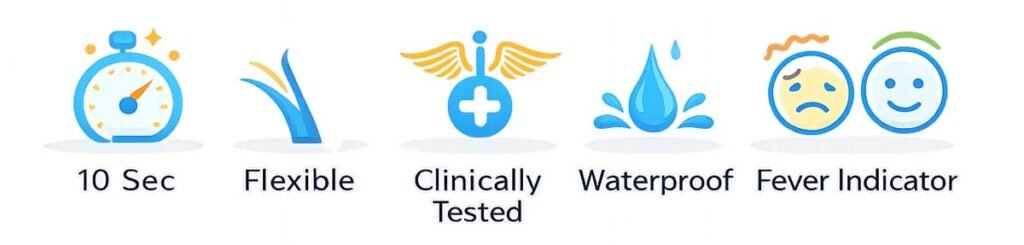
- Suitable for oral, rectal, and underarm readings
- Rectal option offers high accuracy for babies
What Could Be Better
- Slower than infrared models
- No advanced features or memory
Accuracy & Safety Notes
Rectal temperature measurement is often considered the most accurate method for infants under three. This thermometer supports that method safely when used as directed.
Best For
Families looking for maximum accuracy on a budget, especially with infants.
Kinsa Smart Digital Thermometer — Best Smart Thermometer for Families
Kinsa adds a data-driven layer to basic temperature measurement, helping families track health trends over time.
What We Like
- App-based temperature history
- Supports multiple family profiles
- Helpful for spotting patterns during illness
What Could Be Better
- Requires smartphone and app setup
- Less appealing for users who prefer simple tools
Accuracy & Safety Notes
The thermometer itself is accurate for oral readings; the added value comes from consistent tracking and long-term insight rather than faster measurements.
Best For
Parents who value record-keeping, trends, and shared family health data.
How to Choose Between These Thermometers
- If you want clinical trust and speed, Braun ThermoScan 7 is the safest bet.
- If hygiene and nighttime checks matter most, Braun No Touch is ideal.
- If budget and infant accuracy are your priority, iProven delivers strong value.
- If you prefer health tracking over time, Kinsa adds meaningful insight.
There’s no single “perfect” thermometer—only the one that best fits how your family actually uses it.
Types of Medical Thermometers Explained (What They’re Best For)
Medical thermometers all do the same job—measure body temperature—but how they do it changes accuracy, speed, and the best use case. Choosing the right type isn’t about “best overall,” it’s about matching the method to your situation: baby vs adult, quick checks vs high accuracy, home use vs travel.
1) Digital Oral Thermometers
How it works: measures temperature with a contact sensor under the tongue.
Typical use: adults and older kids who can keep the thermometer in place.
Pros
- Usually accurate when used correctly
- Affordable, easy to find
- Good for everyday home monitoring
Cons
- Requires cooperation (hard for young children)
- Eating/drinking recently can affect readings
- Slower than infrared options
Best for:
Adults and kids old enough to follow instructions—especially if you want a simple, reliable baseline.
Pro tip (real-world):
Avoid measuring right after hot/cold drinks or vigorous activity. Waiting 10–15 minutes improves consistency.
2) Digital Rectal Thermometers
How it works: measures internal temperature via rectal reading.
Typical use: infants and toddlers when accuracy matters most.
Pros
- Often considered the most accurate method for babies
- Less influenced by mouth breathing, room temperature, or movement
- Useful when you need clear “yes/no” fever confirmation
Cons
- Not everyone is comfortable using it
- Must be cleaned carefully
- Requires calm handling and proper technique
Best for:
Babies and toddlers, especially when you need the most dependable reading.
Safety notes
- Use a thermometer intended for rectal use
- Use a small amount of lubricant
- Never force it; insert gently and only as directed
- Clean thoroughly after use
3) Digital Axillary (Underarm) Thermometers
How it works: measures temperature under the arm (armpit).
Typical use: quick screening, especially if the child won’t tolerate other methods.
Pros
- Comfortable and non-invasive
- Good for frequent checks
- Useful as a quick “is something going on?” test
Cons
- Less accurate than oral/rectal
- Easier to get inconsistent results (positioning matters a lot)
Best for:
A quick screen—then confirm with oral/ear/rectal if fever is suspected.
Pro tip:
Keep the arm pressed snugly against the body for the full reading time. Small gaps lead to low readings.
4) Ear (Tympanic) Thermometers
How it works: uses infrared to measure heat from the eardrum area.
Typical use: fast readings for kids and adults.
Pros
- Very fast (seconds)
- Great for kids who won’t sit still
- Often reliable when positioned correctly
Cons
- Placement angle matters (common source of error)
- Earwax, small ear canals, or ear infections can affect results
- Not ideal for newborns unless the device is specifically designed and you’re confident in technique
Best for:
Busy families who want speed and a solid balance of accuracy and convenience.
Pro tip:
If a reading seems “off,” take a second reading in the same ear (or the other ear). Consistency is a good sign you placed it correctly.
5) Forehead / Temporal Artery Thermometers
How it works: measures infrared heat across the forehead/temporal area.
Typical use: quick checks, especially when someone is sleeping.
Pros
- Fast and easy
- Great for nighttime monitoring
- Comfortable and non-invasive
Cons
- Sweat, hair, hats, or room temperature can skew readings
- Technique matters (distance, scanning path)
- May vary more than oral/rectal in some households
Best for:
Frequent checks and trend monitoring—especially for kids.
Pro tip:
Use it the same way each time (same spot, same distance). Consistent technique matters more than chasing a “perfect” number.
6) No-Touch (Non-Contact) Forehead Thermometers
How it works: reads infrared heat from a short distance.
Typical use: hygiene-focused families; quick checks when sick.
Pros
- No contact = more hygienic
- Great for shared family use
- Useful for quick screening
Cons
- More sensitive to environment and technique
- Requires correct distance and alignment
- Can be less consistent if used casually
Best for:
Nighttime checks, hygiene-conscious families, and frequent screenings.
Pro tip:
Follow the distance guide exactly. Being even an inch off can change readings.
7) Smart Thermometers
How it works: usually a digital thermometer paired with an app for tracking.
Typical use: families who want trends, logs, and easier sharing.
Pros
- Tracks temperature history (useful for recurring fevers)
- Great for multiple kids/profiles
- Helps reduce “guesswork” over time
Cons
- App setup required
- Adds complexity if you just want quick readings
Best for:
Parents who want a record of readings over days—especially helpful when talking to pediatricians.
Choosing the Right Thermometer for Your Family (Babies, Kids, Adults, Seniors)
The “best” thermometer depends on who you’re measuring, how often, and how confident you want to be in the number. Here’s a practical decision guide.
For Babies (0–12 months)
Goal: maximum accuracy + safety.
Best options:
- Rectal digital thermometer (highest confidence)
- Forehead / no-touch (useful for quick checks and overnight monitoring)
Why this matters:
With infants, you want fewer false alarms and fewer missed fevers. If you need a definitive number, rectal readings are often the most reliable.
Home workflow (real-life)
- Use forehead/no-touch for quick screening at night
- If fever is suspected or symptoms worsen, confirm with rectal reading (as appropriate)
- Track time + symptoms (not just the number)
For Toddlers & Young Kids (1–5 years)
Goal: fast readings + low stress + reasonable accuracy.
Best options:
- Ear thermometer (fast, practical)
- Forehead/no-touch (easy, quick)
- Oral (only if child cooperates reliably)
Why:
Kids in this age range are often restless. A method you can use consistently matters more than the most “perfect” method on paper.
Pro parent tip:
Pick one method and stick with it during the same illness. Switching methods can create confusing “differences” that are mostly technique-related.
For Older Kids (6+) and Adults
Goal: consistent baseline + easy use.
Best options:
- Oral digital thermometer (simple, reliable)
- Ear thermometer (fast, good for families)
- Smart digital (if you want tracking)
Why:
Oral thermometers provide stable readings when used correctly. Ear thermometers are great for fast checks.
For Seniors
Goal: readability + ease of use + repeatability.
Best options:
- Large-display oral digital thermometer
- Ear thermometer (easy and fast)
- Forehead (helpful if oral is difficult)
Why:
Comfort and ease matter. A thermometer that’s easy to read and operate reduces user error.
One Thermometer for Everyone?
You can use one thermometer for the whole family—especially an ear thermometer or a reliable digital oral thermometer. But many households prefer a simple two-tool setup:
✅ One fast thermometer (ear or no-touch) for quick checks
✅ One high-accuracy digital thermometer (oral/rectal) for confirmation
This combination keeps things practical while still giving you confidence when it matters.
Safety & Accuracy Tips for Using Medical Thermometers at Home
Even the best medical thermometer can give misleading results if it’s used incorrectly. These practical tips help reduce common errors and keep readings consistent—especially during stressful moments.
Use the Same Method Consistently
Switching between methods (ear, forehead, oral) during the same illness can create confusion. Each method measures temperature slightly differently. For tracking trends, stick to one method until symptoms resolve.
Follow Placement and Distance Guidelines
Infrared and ear thermometers are highly sensitive to technique. Incorrect angle, distance, or positioning is one of the most common causes of inaccurate readings. When in doubt, take a second reading the same way and compare.
Mind Environmental Factors
Forehead and no-touch thermometers can be affected by:
- sweat or damp skin
- hats, hair, or headbands
- recent exposure to cold or heat
Wait a few minutes after coming indoors or removing headwear before measuring.
Clean After Every Use
Especially when thermometers are shared among family members:
- wipe probes with alcohol (as recommended by the manufacturer)
- use disposable probe covers when required
- store in a clean, dry place
Good hygiene protects accuracy and reduces cross-contamination.
Know When to Recheck
If a reading doesn’t match how someone looks or feels, recheck using the same method—or confirm with a secondary method for clarity.
When to Seek Medical Advice
This guide supports home monitoring, not diagnosis. If fever is persistent, unusually high, or accompanied by concerning symptoms, contact a healthcare professional.
FAQs — Medical Thermometers for Home Use (2026)
Which medical thermometer is the most accurate?
Rectal digital thermometers are often considered the most accurate for infants. For older children and adults, properly used ear and oral thermometers provide reliable results.
Are no-touch thermometers accurate enough for home use?
Yes, when used correctly. They’re especially useful for frequent checks and nighttime monitoring, though they may be more sensitive to environment and technique.
Can one thermometer be used for the whole family?
Yes. Many families successfully use one high-quality ear or digital thermometer. Some prefer a two-device setup: one for quick checks and one for confirmation.
How often should I replace a medical thermometer?
Quality digital thermometers can last several years. Replace if readings become inconsistent, the display fails, or the device no longer calibrates properly.
Is it safe to use ear thermometers on babies?
Ear thermometers are generally better suited for older babies and children. For newborns and young infants, rectal or forehead methods are usually preferred for accuracy and safety.
Why do different thermometers give different readings?
Different measurement sites naturally produce slightly different temperatures. Consistency of method matters more than comparing numbers across methods.
Final Thoughts — Choosing a Medical Thermometer You Can Trust
A medical thermometer is a small tool that plays a big role in everyday home care. When someone you love isn’t feeling well, having a thermometer you trust helps replace uncertainty with clarity.
The best medical thermometers for home use are the ones that fit your family’s routine—easy to use, accurate enough for confident decisions, and reliable when you need them most. Whether you prefer a fast ear thermometer, a gentle no-touch option, or a data-tracking smart model, consistency and proper use matter just as much as the device itself.
Choose a thermometer that feels practical, not complicated. When the moment comes, you’ll be glad it’s there—quietly doing its job.