



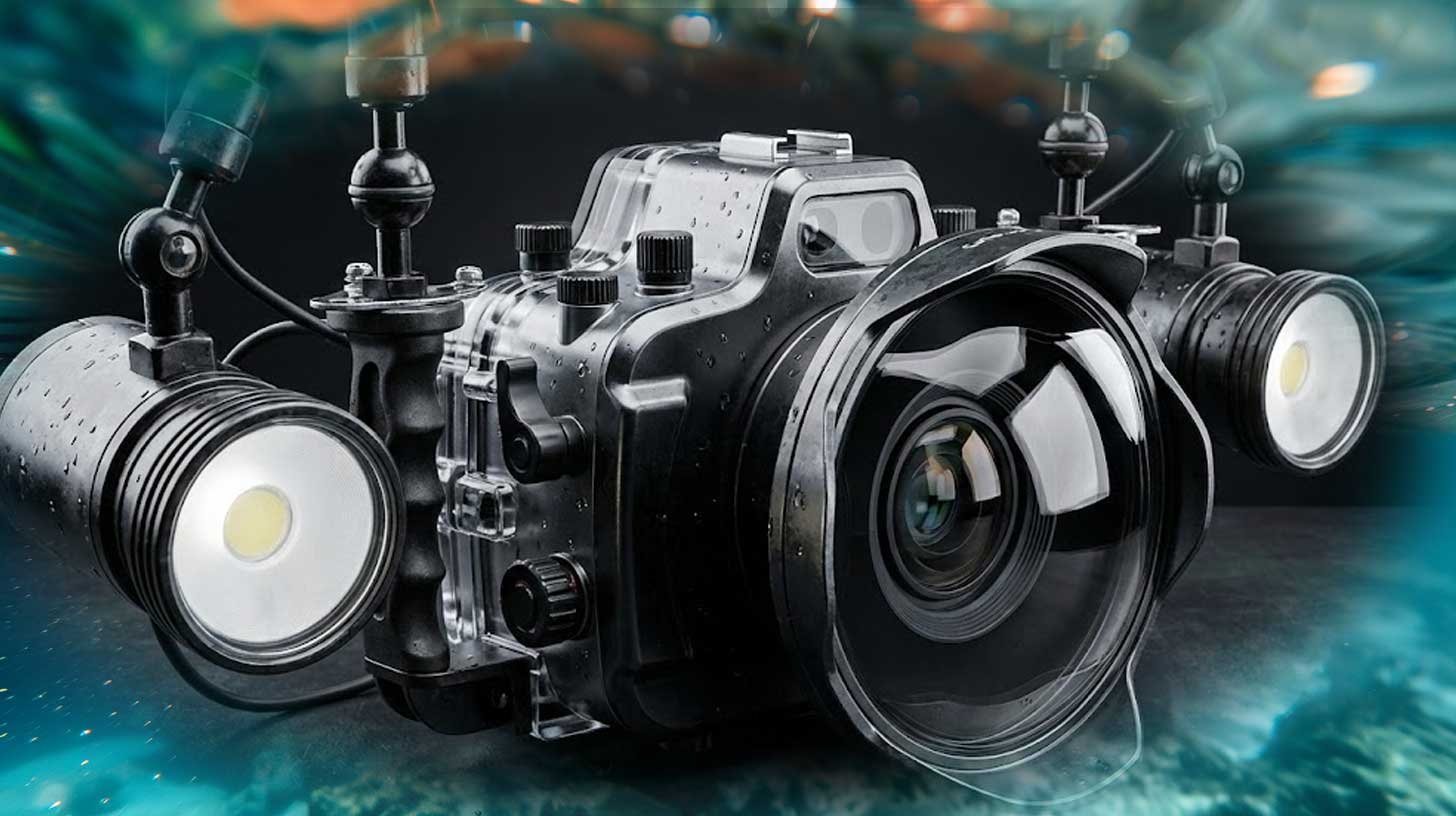
When people buy an underwater camera, the next question almost always comes too late: which accessories do I actually need?
After years of real-world use, one pattern is consistent—most users either underbuy and struggle with poor image quality, or overbuy accessories that never leave the bag. The goal of this guide is simple: separate what genuinely improves underwater results from what’s optional—or completely unnecessary.
This article is designed to sit between a buying guide and a product list. If you’re still choosing a camera, start with our Best Underwater Cameras for 2026. If you already have one, this breakdown will help you build an accessory setup that actually matches how you shoot underwater.
Accessories That Are Truly Essential Underwater
These are the accessories that consistently make the difference between usable footage and disappointing results. Regardless of camera type, most underwater setups rely on at least one of these.
Underwater Housing (When Required)
If your camera isn’t designed for depth on its own, a housing isn’t optional—it’s foundational.
In real use, housings do more than increase depth rating. They:
- provide reliable physical controls underwater
- protect seals from repeated saltwater exposure
- improve handling and grip during dives
Compact cameras and mirrorless systems require housings for scuba diving. Even action cameras benefit from housings when used repeatedly in saltwater.
🔗 If you’re unsure how to choose one, our underwater camera buying guide explains materials, depth ratings, and common failure points in detail.
Underwater Lights (The Biggest Quality Upgrade)
Lighting is the most misunderstood underwater accessory—and often the most important.
Water absorbs light rapidly, especially red tones. Even at shallow depths, footage loses contrast and color. From real dives, adding lights improves results more than upgrading the camera itself.
Underwater lights help by:
- restoring natural color
- improving subject separation
- reducing noise in low-light conditions
This applies whether you shoot video or stills. For users serious about image quality, lights are not optional.
🔗 For trusted specs and safety standards, see NOAA’s overview on light absorption in water (external educational reference).
Accessories That Improve Quality (But Aren’t Mandatory)
Underwater Camera Accessories – Quick Comparison
| Accessory | What It Improves | Who Needs It | Real-World Value |
|---|---|---|---|
| Underwater Housing | Depth safety, controls | Scuba divers, compact/mirrorless users | Essential if camera isn’t waterproof |
| Underwater Video Light (1x) | Color, clarity | Snorkeling, casual diving | High – biggest quality boost |
| Dual Video Lights (2x) | Even lighting | Serious hobbyists | Medium–High (upgrade later) |
| Tray / Dual Handles | Stability | Video shooters | Medium (comfort + control) |
| Color Filter | Color balance | Shallow, clear water | Low–Medium (situational) |
| Wrist Lanyard / Tether | Safety | Everyone | Very High (cheap insurance) |
| Accessory Bundles | Convenience | Beginners (tempting) | Low (often unused items) |
Takeaway: Start with housing (if needed) + one light + lanyard. Everything else is optional and should be added based on how often you shoot.
These accessories don’t determine success—but they significantly improve comfort, consistency, and results once you start shooting more often.
Stability Trays & Dual Handles
Underwater movement exaggerates camera shake. Trays and dual-handle rigs:
- stabilize footage
- reduce arm fatigue
- improve control during longer dives
They’re especially useful for compact cameras and lighting setups.
Color Correction Filters (Situational)
Filters can help in shallow, clear water with strong sunlight. In practice, their usefulness is limited:
- they work best above ~30 ft
- they’re less effective in murky or low-light conditions
- lights usually outperform filters
Filters are helpful—but only in the right environment.
Lanyards & Tethers (Cheap Insurance)
Dropped cameras happen. A simple wrist lanyard prevents expensive mistakes and lets you relax while shooting.
This is one of the lowest-cost, highest-value accessories you can add.
🔎 Where this article fits in the cluster
- Links up to Best Underwater Cameras for 2026
- Supports Underwater Camera Accessories Guide
- Pre-qualifies users before Best Underwater Camera Accessories
Accessories Most People Can Skip
Not every accessory improves results. In fact, some are purchased once and never used again. Based on real-world dives and trips, these are the items most users can safely skip—at least at the beginning.
Oversized Lighting Rigs (Too Early)
Large, powerful light systems look impressive, but they’re often overkill for beginners.
Common issues:
- bulky setups that slow you down
- complex mounting and buoyancy problems
- higher cost with diminishing returns
If you’re still learning framing and stability, start smaller. Upgrade later if your shooting demands it.
Multiple Filters for Every Condition
Buying a full filter kit sounds smart—until you realize most filters get used once or twice.
In practice:
- conditions change quickly underwater
- lights replace filters in most scenarios
- switching filters mid-dive is inconvenient
One situational filter can be useful. A full kit usually isn’t.
“All-in-One” Accessory Bundles
Bundles promise convenience but often include:
- low-quality mounts
- lights with poor color accuracy
- accessories you’ll never attach
It’s better to buy fewer, higher-quality pieces individually—especially for housings and lights.
How to Build an Accessory Setup by Use Case
The smartest way to choose accessories is to build around how you actually shoot, not what looks complete on paper.
Snorkeling & Casual Swimming
Keep it simple.
Recommended setup:
- camera with built-in waterproofing
- wrist lanyard
- optional small video light (for shade or late afternoon)
Anything more tends to slow you down and reduce how often you use the camera.
🔗 If you’re still deciding on a camera, start with Best Underwater Cameras for Snorkeling.
Recreational Scuba Diving
This is where accessories start to matter more.
Recommended setup:
- camera + housing
- single or dual video lights
- tray or dual-handle rig
- lanyard or tether
This setup balances image quality and manageability without becoming overwhelming.
🔗 Pair this with guidance from Best Underwater Cameras for Scuba Diving to avoid mismatched gear.
Travel & Adventure Use
Portability is the priority.
Recommended setup:
- compact camera or action camera
- small foldable tray
- lightweight lights
- minimal accessories
If setup takes too long, it won’t get used. Travel gear should stay friction-free.
Common Accessory Mistakes (Based on Real Use)
These mistakes show up again and again—and they’re easy to avoid once you know what to watch for.
Buying Accessories Before Learning the Camera
Accessories don’t fix unfamiliarity. Many users buy lights before mastering exposure, framing, and stabilization—then blame the gear for poor results.
Learn the camera first. Add accessories second.
Ignoring Buoyancy
Underwater, weight matters differently.
Poorly balanced setups:
- tire your arms
- cause shaky footage
- make dives less enjoyable
Neutral buoyancy arms and proper balance improve results more than extra features.
Skipping Safety for Convenience
Dropped cameras, lost housings, flooded gear—most of these happen because safety accessories were skipped.
A $10 lanyard can save a $1,000 camera.
TL;DR: Underwater Camera Accessories Checklist
- Essential: housing (if required), underwater lights, lanyard
- Nice to have: tray/handles, small filters (situational)
- Skip for now: oversized rigs, full filter kits, cheap bundles
- Rule of thumb: buy fewer accessories, upgrade as your shooting improves
Conclusion
Underwater camera accessories should solve real problems—not create new ones. The most effective setups are built gradually, based on actual shooting conditions and experience.
Start with what’s essential. Learn how your camera behaves underwater. Then add accessories that clearly improve your results. This approach saves money, reduces frustration, and leads to better images far faster than buying everything at once.
If you want to see vetted options and current picks, continue to our Best Underwater Camera Accessories page. And if you’re still deciding on a camera, revisit the Best Underwater Cameras for 2026 to make sure your accessory choices align with your gear.
Frequently Asked Questions About Underwater Camera Accessories
What underwater camera accessories are absolutely necessary?
At minimum, most users need a reliable housing (if the camera isn’t waterproof), a wrist lanyard or tether, and underwater lights for better color and clarity. These accessories solve the most common underwater shooting problems.
Do I really need underwater lights for photography or video?
In most cases, yes. Water absorbs light quickly, even at shallow depths. From real-world use, adding lights often improves image quality more than upgrading the camera itself.
Are underwater filters better than lights?
Filters can help in shallow, clear water with strong sunlight, but they are situational. Underwater lights are more versatile and deliver more consistent results across different depths and conditions.
Can beginners skip accessories and still get good results?
Beginners can start with minimal gear, but skipping essential accessories like housings or lanyards increases the risk of damage or poor image quality. Starting simple is fine—skipping essentials is not.
Are accessory bundles worth buying?
Most all-in-one bundles include accessories that are rarely used or lower in quality. Buying fewer, higher-quality accessories individually usually leads to better long-term results.
How many lights do I need for underwater photography?
One light is often enough for beginners and casual shooters. Dual-light setups improve balance and coverage but add cost and complexity. Most users upgrade to dual lights later, not immediately.
What’s the most common accessory mistake?
Buying too many accessories before learning the camera. From experience, mastering the camera first leads to smarter accessory choices and better results.