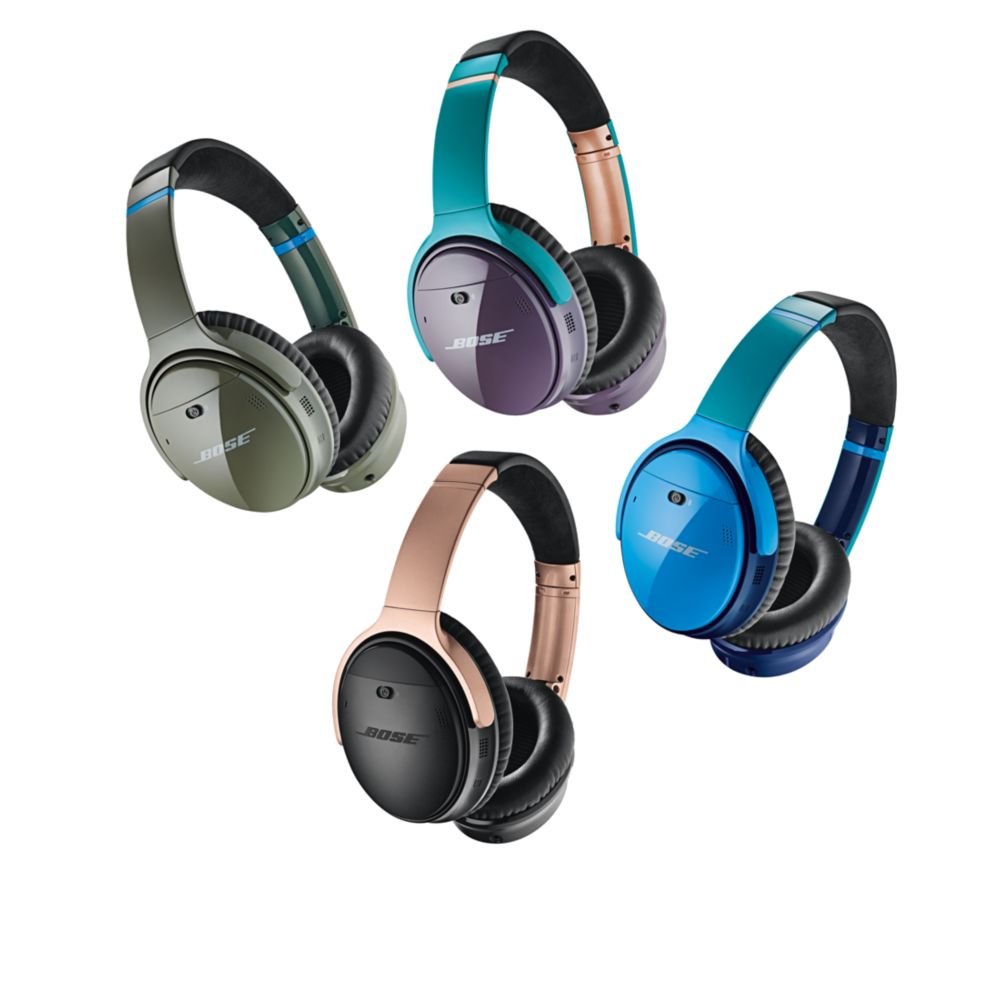




If you’re looking for the best wireless headphones for iPhone, you’re not just buying sound — you’re buying silence, focus, comfort, and reliability.
And here’s the reality: not all Bluetooth headphones are optimized for iPhone.
Some models sound incredible on Android but lose detail over AAC. Others promise “industry-leading” noise canceling but fall apart on airplanes. And some are simply overpriced for what they deliver.
In this 2026 guide, we’ve analyzed the top over-ear wireless headphones specifically through the lens of iPhone users — Bluetooth performance, AAC support, noise-canceling strength, call clarity, comfort for long flights, and long-term durability.
If you:
- Travel frequently
- Work in noisy environments
- Take calls on the go
- Or simply want immersive sound without distraction
This guide will help you choose with confidence.
Let’s start with the model that delivers the most balanced performance across the board.
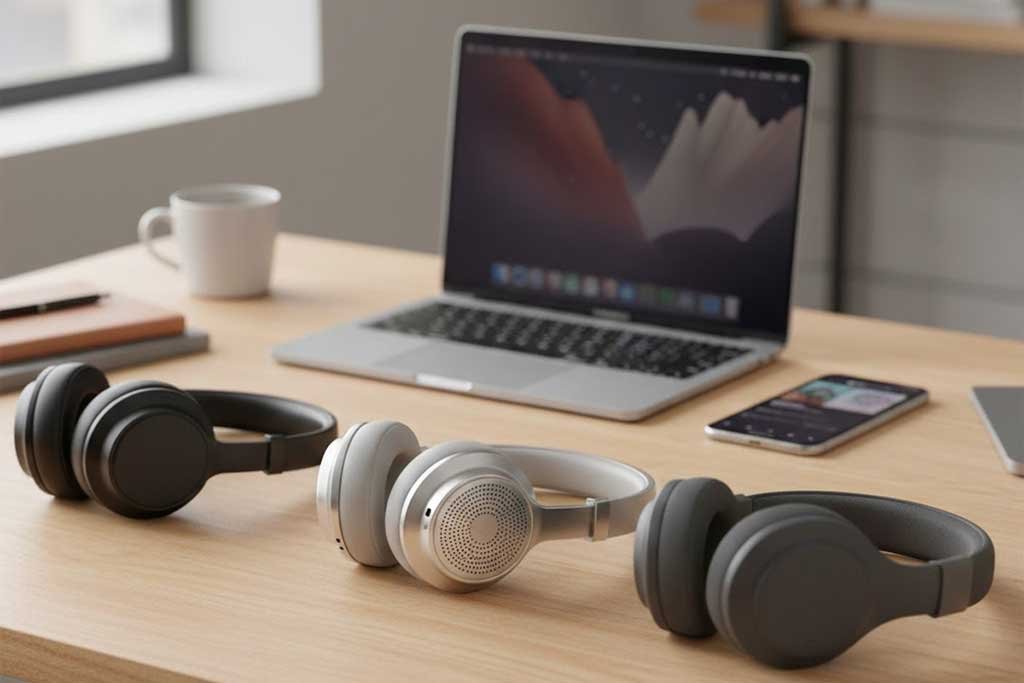
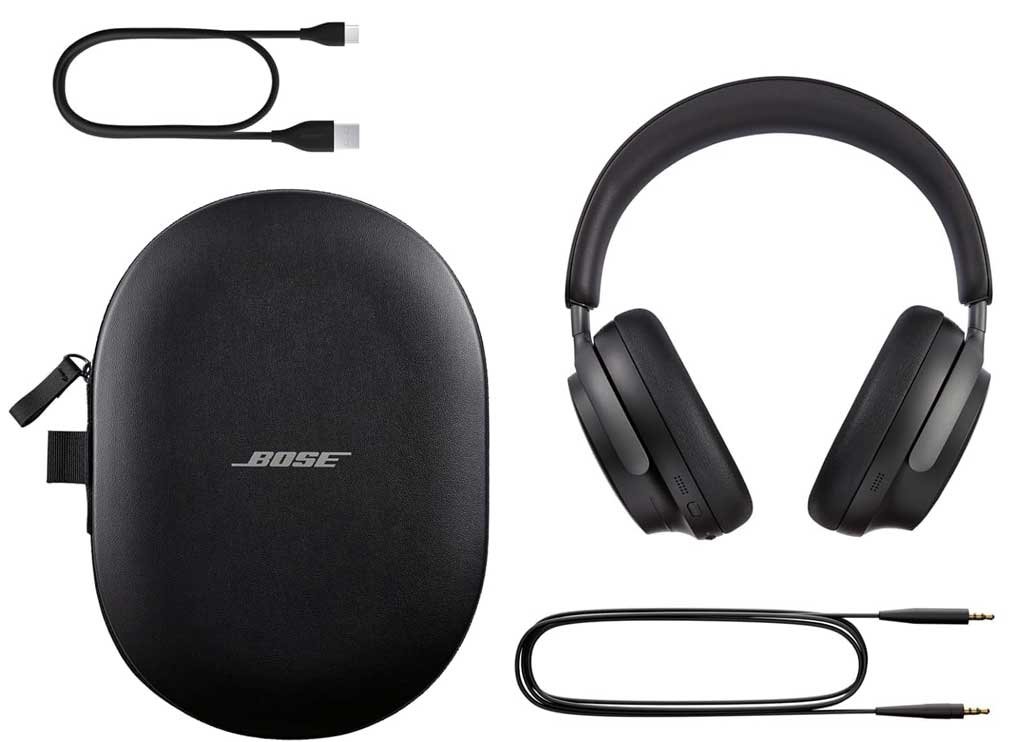
Bose QuietComfort Ultra
Best Overall Wireless Headphones for iPhone
If you want the safest high-end choice for iPhone in 2026, this is it.
The Bose QuietComfort Ultra doesn’t try to win with hype — it wins with consistency. In real-world conditions — airplanes, coffee shops, city commutes — it delivers some of the most reliable active noise canceling currently available.
And for iPhone users specifically, that matters.
🎧 Why It Works So Well with iPhone
Apple devices prioritize the AAC Bluetooth codec. Some brands optimize heavily for LDAC or aptX, which iPhones don’t use.
Bose has tuned the QC Ultra to perform exceptionally over AAC. The result?
- Clean mids
- Tight, controlled bass
- Clear vocals
- No harsh highs
It doesn’t artificially boost bass to impress you in the first five minutes. It’s tuned for long listening sessions.
🔇 Noise Canceling: Where It Dominates
This is where the QuietComfort Ultra separates itself.
On airplanes, it eliminates:
- Low-frequency engine hum
- HVAC background noise
- Office chatter
It doesn’t just “reduce” noise — it creates a pressure-controlled quiet environment. If you travel regularly, this alone justifies the price.
☎ Call Quality & Multi-Device Use
The microphone system performs consistently in windy or busy environments. For business calls on the go, it’s dependable.
It also connects to multiple devices at once — meaning:
- iPhone + MacBook
- iPhone + iPad
Switching is seamless.
Comfort for Long Flights
Bose still leads in comfort.
The clamp force is light.
The ear cups are deep.
The weight distribution is balanced.
You can wear these on a 6-hour flight without pressure fatigue — something many competitors still struggle with.
Battery Life
Up to ~24 hours with ANC on.
Not the longest in this list — but enough for:
- International flights
- Multiple workdays
- Extended travel
Fast charging gives several hours from a short top-up.
✔ Pros
- Industry-leading noise canceling
- Excellent AAC performance for iPhone
- Extremely comfortable
- Reliable call clarity
- Premium build quality
✘ Cons
- Expensive
- Battery life not class-leading
- No dramatic “fun” sound tuning (it’s more balanced than bass-heavy)
Who Should Buy It?
Buy the Bose QuietComfort Ultra if:
- You fly regularly
- You prioritize silence over flashy sound
- You want the most reliable all-around experience
- You don’t want to gamble on experimental features
If you’re an iPhone user who wants one pair of headphones that simply works everywhere — this is the safest premium pick in 2026.
Sony WH-1000XM5
Best Sound Quality Wireless Headphones for iPhone
If the Bose QuietComfort Ultra is the safe executive choice, the Sony WH-1000XM5 is the enthusiast’s pick.
It doesn’t just block noise — it delivers texture, depth, and energy in your music.
And yes, it works extremely well with iPhone — even without LDAC.
🎶 Sound Performance on iPhone (AAC Reality Check)
Let’s address the common misconception:
“Sony is better on Android because of LDAC.”
Technically true.
Practically? Not a deal-breaker.
Even over AAC (which iPhone uses), the WH-1000XM5 still delivers:
- Fuller low-end response
- Wider perceived soundstage
- More dynamic bass
- Crisp, detailed treble
Compared to Bose, Sony sounds more alive.
More musical.
More engaging.
If you care about sound first — this matters.
🔇 Noise Canceling: Slightly Different Philosophy
Sony’s ANC is extremely powerful — often slightly stronger in mid-range frequencies than Bose.
Where it excels:
- Coffee shops
- Public transport
- Office environments
- HVAC noise
Where Bose still edges it out:
- Long-haul airplane engine drone
It’s close — but Bose feels more “pressure-controlled.”
Sony feels more “aggressively filtered.”
📱 Smart Features & App Customization
This is where Sony clearly wins.
The Sony Headphones Connect app gives you:
- Custom EQ controls
- Adaptive Sound Control
- Speak-to-Chat
- Ambient mode adjustments
If you like tuning your sound profile — Sony gives you control.
Bose keeps it simple.
Sony gives you options.
☎ Call Quality
This generation improved dramatically over the XM4.
The microphone system handles wind better.
Voice isolation is cleaner.
For iPhone calls and Zoom meetings, it’s now fully competitive.
🧳 Comfort & Build
The XM5 is lighter than previous Sony generations.
Clamping force is moderate.
Ear cups are spacious.
However:
It doesn’t fold like the XM4.
Travelers may prefer Bose’s more compact case.
Still — for daily commuting and office use, comfort is excellent.
🔋 Battery Life
Up to ~30 hours with ANC on.
This is longer than Bose.
If battery endurance matters to you — Sony wins here.
Fast charging gives several hours from a short charge.
✔ Pros
- Best sound quality in this list
- Deep, energetic bass
- Excellent customizable EQ
- Strong ANC performance
- Long battery life
✘ Cons
- Doesn’t fold (less travel-friendly)
- ANC slightly less refined on airplanes vs Bose
- More feature-heavy (not everyone wants complexity)
🎯 Who Should Buy It?
Buy the Sony WH-1000XM5 if:
- Sound quality is your #1 priority
- You like adjusting EQ settings
- You want strong ANC + musicality
- You prefer dynamic, energetic sound over neutral tuning
If Bose is the executive traveler,
Sony is the audiophile commuter.
Apple AirPods Max
Best Wireless Headphones for the Apple Ecosystem
If you live inside the Apple ecosystem, nothing integrates more seamlessly than the AirPods Max.
Not Bose.
Not Sony.
Nothing.
But seamless doesn’t automatically mean smartest buy — so let’s break it down objectively.
The Apple Advantage (Why It Feels Different)
The moment you open the case near your iPhone, they connect instantly.
No pairing menus.
No app downloads.
No codec discussions.
Switching between:
- iPhone
- MacBook
- iPad
…happens automatically.
For Apple users, that frictionless experience is hard to overstate.
🎧 Sound Performance on iPhone
Over AAC, the AirPods Max deliver:
- Extremely clean mids
- Tight, controlled bass
- Excellent vocal clarity
- Wide spatial presentation
They don’t exaggerate bass like Beats.
They don’t feel as “fun” as Sony.
They feel… refined.
Add Apple’s Spatial Audio with head tracking — and for movies or Apple Music Dolby Atmos content, the immersion is genuinely impressive.
🔇 Noise Canceling
ANC is excellent. On par with Sony. Slightly below Bose for long-haul flights.
Where it shines:
- Office noise
- Urban environments
- Mixed-frequency chatter
Transparency mode is arguably the best in the industry. It sounds natural — not artificial.
Build Quality
This is where they stand out.
- Aluminum ear cups
- Stainless steel headband
- Premium materials throughout
They feel like a $500 product.
But…
They are heavy.
Significantly heavier than Bose or Sony.
Long sessions can create neck fatigue for some users.
🔋 Battery Life
Around 20 hours with ANC on.
Lowest among the top-tier options here.
No physical power button — they rely on smart case sleep mode.
✔ Pros
- Best Apple ecosystem integration
- Excellent Spatial Audio
- Premium materials
- Top-tier transparency mode
- Seamless device switching
✘ Cons
- Expensive
- Heavy
- Battery life below competitors
- Smart case design is awkward
🎯 Who Should Buy It?
Buy AirPods Max if:
- You own multiple Apple devices
- You care about seamless switching
- You use Apple Music Spatial Audio
- You prioritize ecosystem over raw battery life
If you want pure sound-to-price performance?
Sony or Bose may be better value.
If you want Apple-native perfection?
This is it.
Beats Studio Pro
Best Bass-Focused Wireless Headphones for iPhone
If you want energy. Punch. Impact.
The Beats Studio Pro is tuned for excitement, not neutrality.
Sound Profile
Expect:
- Strong low-end emphasis
- Forward, energetic bass
- Clear but slightly colored mids
These are not studio-neutral headphones.
They’re built for:
- Hip-hop
- Pop
- EDM
- Gym playlists
For many iPhone users, that’s exactly the point.
iPhone Compatibility
Since Apple owns Beats, integration is excellent:
- One-touch pairing
- Seamless switching
- Good AAC tuning
They now also support USB-C audio — rare in this category.
🔇 Noise Canceling
Good. Not class-leading.
They reduce ambient noise effectively but don’t match Bose in airplane scenarios.
Comfort
Lighter than AirPods Max.
Moderate clamp force.
Portable and foldable.
Better travel design than Sony XM5.
🔋 Battery
Up to ~24 hours with ANC.
Solid but not category-leading.
✔ Pros
- Punchy, energetic sound
- Strong bass performance
- Seamless Apple pairing
- Foldable design
- More affordable than AirPods Max
✘ Cons
- ANC below Bose/Sony
- Sound not neutral
- Build not as premium as Apple
🎯 Who Should Buy It?
Buy Beats Studio Pro if:
- You love bass-forward sound
- You work out frequently
- You want Apple compatibility without AirPods Max pricing
- You prefer excitement over balance
Bose QuietComfort 45
Best Wireless Headphones for Travel
If you fly often and care more about silence than sound excitement, the Bose QuietComfort 45 remains one of the smartest travel-focused buys in 2026.
It doesn’t try to compete with Sony on customization.
It doesn’t compete with AirPods Max on ecosystem.
It competes on one thing:
Consistency in noisy environments.
🔇 Noise Canceling on Airplanes
This is where the QC 45 earns its spot.
Low-frequency cabin noise — engine rumble, air pressure hum — gets suppressed extremely effectively.
Compared to Sony:
- Sony feels stronger in mixed environments
- Bose feels calmer and more stable on flights
If you travel internationally, that difference matters after 5–6 hours.
🎧 Sound Profile
Balanced and clean.
- Controlled bass
- Clear mids
- Smooth highs
Less dynamic than Sony.
Less detailed than Momentum 4.
But fatigue-free for long listening sessions.
🧳 Travel-Friendly Design
Unlike Sony XM5:
✔ Foldable
✔ Compact hard case
✔ Lightweight
For frequent travelers, the folding mechanism alone can be decisive.
🔋 Battery Life
Up to ~24 hours with ANC.
Enough for long-haul flights.
✔ Pros
- Excellent airplane noise canceling
- Extremely comfortable
- Foldable design
- Reliable performance
- Trusted Bose durability
✘ Cons
- Sound less exciting than Sony
- Fewer app features
- Older design compared to Ultra model
🎯 Who Should Buy It?
Buy the QC 45 if:
- You travel often
- Comfort is non-negotiable
- You want dependable ANC
- You prefer simple, proven design
If you want better sound — choose Sony.
If you want best-in-class ANC — choose QC Ultra.
If you want reliable travel performance at a slightly lower price — QC 45 is the sweet spot.
🧳 Sony WH-CH720N
Best Mid-Range Wireless Headphones for iPhone
If you want Sony’s sound character and ANC performance without flagship pricing, the WH-CH720N is the most balanced mid-tier option.
Sound Performance
Surprisingly strong for the price.
- Warm bass
- Clear vocals
- Slightly less detail than XM5
Over AAC (iPhone), it still sounds engaging.
You won’t get flagship depth — but you’ll get enjoyable everyday performance.
🔇 Noise Canceling
Solid for commuting.
Handles:
- Traffic noise
- Office chatter
- Train environments
Not strong enough for serious international flights.
But for daily urban life? Very capable.
Comfort & Weight
Very lightweight.
Low clamp force.
Excellent for long listening sessions at home or work.
🔋 Battery
Up to ~35 hours without ANC.
Around 25+ with ANC.
Impressive for the category.
✔ Pros
- Excellent value
- Good battery life
- Comfortable and lightweight
- Sony sound tuning
- Affordable
✘ Cons
- Plastic build
- ANC not premium-tier
- Soundstage narrower than XM5
🎯 Who Should Buy It?
Buy the WH-CH720N if:
- You want mid-range pricing
- You commute daily
- You don’t need elite ANC
- You want balanced performance
For many users, this is the rational choice.
Anker Soundcore Space Q45
Best Budget Noise-Canceling Headphones for iPhone
If you want strong ANC under flagship pricing, the Soundcore Space Q45 overdelivers for the cost.
🔇 Noise Canceling
Shockingly good for the price.
It won’t beat Bose — but it competes closer than expected.
Handles:
- Bus noise
- Office environments
- Gym background noise
🎧 Sound
Bass-forward out of the box.
But here’s the key advantage:
The app allows deep EQ customization.
For budget buyers, that flexibility is rare.
🔋 Battery
Up to ~50 hours (ANC off).
Around 30+ with ANC.
Category-leading endurance.
✔ Pros
- Strong ANC for the price
- Massive battery life
- Customizable EQ
- Excellent value
✘ Cons
- Build feels less premium
- Not as refined as Sony or Bose
- Larger ear cups
🎯 Who Should Buy It?
Buy the Q45 if:
- Budget matters
- You want serious battery life
- You want strong ANC without flagship cost
For under-premium pricing, this is one of the smartest picks.
🎧 Sennheiser Momentum 4
Longest Battery Life & Audiophile Sound
If you care about pure sound quality and endurance, the Momentum 4 deserves attention.
Sound Quality
Arguably the most detailed sound signature in this list.
- Deep, controlled bass
- Rich mids
- Clear treble
- Wide soundstage
Over AAC, it still sounds refined.
For music-focused listeners, it competes directly with Sony.
🔋 Battery Life
Up to ~60 hours.
Yes — 60.
This is class-leading.
For travelers who hate charging — this matters.
🔇 Noise Canceling
Very good.
Not quite Bose-level for airplanes.
But competitive with Sony in mixed environments.
✔ Pros
- Best battery life
- Excellent sound detail
- Comfortable
- Clean modern design
✘ Cons
- App less intuitive
- ANC slightly below Bose
- Price still premium
🎯 Who Should Buy It?
Buy Momentum 4 if:
- Sound quality is your priority
- You want maximum battery life
- You don’t want to charge constantly
- You prefer audiophile tuning
Buying Guide: How to Choose the Right Wireless Headphones for iPhone in 2026
Buying wireless headphones for iPhone isn’t complicated.
But choosing the right pair is.
Most buyers focus on brand names and price.
Experienced buyers focus on compatibility, tuning philosophy, noise profile, and real-world use case.
Here’s what actually matters.
🎧 1. Bluetooth Codecs: Why AAC Matters for iPhone
This is where many comparisons go wrong.
iPhones do not support LDAC.
They do not support aptX.
They prioritize AAC.
That means:
If a headphone is heavily optimized for LDAC (common with Sony on Android), you won’t experience that codec advantage on iPhone.
Does that mean Sony sounds bad on iPhone?
No.
It means:
- The headphone must be well-tuned for AAC performance.
- You should not pay extra for Android-exclusive codec features if you only use Apple devices.
Brands that consistently perform well over AAC:
- Bose
- Apple
- Beats
- Sennheiser
- Sony (recent generations)
If you’re an iPhone user, codec marketing should not influence your decision as much as tuning quality.
🔇 2. Active Noise Canceling (ANC): Not All Silence Is Equal
ANC performance varies dramatically depending on environment.
There are three main types of noise:
- Low-frequency continuous noise (airplanes, engines)
- Mid-frequency mixed noise (office chatter, cafés)
- Sudden transient noise (doors, dishes, traffic spikes)
Here’s how brands typically perform:
- Bose: strongest for low-frequency airplane noise
- Sony: slightly better in mixed mid-frequency environments
- Apple: very balanced overall
- Budget brands: good reduction, less refinement
If you travel internationally, Bose’s low-frequency cancellation makes a noticeable difference over long flights.
If you work in cafés or urban environments, Sony’s adaptive filtering can feel more aggressive and effective.
Noise canceling isn’t about total silence.
It’s about reducing fatigue.
The longer you wear headphones, the more refined ANC matters.
3. Over-Ear vs On-Ear vs In-Ear
For immersive sound and long sessions, over-ear remains the gold standard.
Why?
- Better passive isolation
- Larger drivers
- More natural soundstage
- Reduced ear fatigue
On-ear headphones press directly on your ears.
They’re lighter, but less comfortable for 4+ hour use.
In-ear (AirPods Pro, etc.) are convenient — but they cannot match over-ear depth and comfort for extended listening.
If you:
- Fly frequently
- Work remotely
- Edit audio or video
- Listen for hours daily
Over-ear is the superior format.
🔋 4. Battery Life: Marketing vs Reality
Manufacturers advertise:
“30 hours.”
“40 hours.”
“60 hours.”
But that number depends on:
- ANC on/off
- Volume level
- Codec
- Call usage
Real-world rule:
- 20–24 hours = sufficient for most users
- 30+ hours = excellent
- 50+ hours = rarely necessary
The difference between 24 and 30 hours is rarely lifestyle-changing.
However:
If you travel often and dislike charging frequently, Sennheiser’s 60-hour battery is legitimately useful.
Otherwise, prioritize comfort and sound before battery claims.
5. Comfort: The Most Underrated Factor
Sound differences become subtle after 10 minutes.
Comfort differences become brutal after 2 hours.
Look at:
- Clamp force
- Weight distribution
- Ear cup depth
- Padding material
- Heat buildup
Bose leads in long-session comfort.
Sony is close.
AirPods Max feels premium but heavier.
If you work 6–8 hour days wearing headphones, comfort should rank above small sound differences.
6. Call Quality & Microphones
If you take calls regularly, microphone performance matters.
Strong mic systems include:
- Multiple beamforming microphones
- Wind noise suppression
- AI voice isolation
Sony improved dramatically with XM5.
Bose remains consistent.
Apple excels in voice clarity.
Budget models may struggle in windy conditions.
If your headphones double as work tools, don’t ignore this factor.
7. Sound Tuning Philosophy: Balanced vs Energetic
Different brands tune differently.
Bose: neutral, clean, fatigue-free
Sony: dynamic, slightly bass-forward
Beats: energetic, punchy
Sennheiser: detailed, audiophile leaning
Apple: refined, spatial-focused
There is no universal “best sound.”
There is only:
Best for your preference.
If you listen to:
- Classical, jazz, vocals → balanced or detailed tuning
- EDM, hip-hop → energetic bass
- Mixed playlists → balanced tuning
Sound preference is personal. Comfort and ANC are objective.
8. Apple Ecosystem Integration
If you own:
- iPhone
- MacBook
- iPad
- Apple Watch
Apple-native headphones offer seamless switching.
However:
Seamless switching is convenience — not sound quality.
Ask yourself:
Do you value integration over price-to-performance?
If yes → AirPods Max
If not → Sony or Bose may offer better value.
9. Price vs Performance Reality
Above $400:
You’re paying for refinement, materials, and ecosystem.
Between $250–$350:
You get 85–90% of flagship performance.
Under $200:
You sacrifice refinement but not usability.
For many buyers, the mid-range category delivers the smartest return on investment.
🎯 Final Buying Framework
Ask yourself four questions:
- Do I travel frequently? → Prioritize Bose ANC.
- Do I care most about musical detail? → Choose Sony or Sennheiser.
- Am I deep in the Apple ecosystem? → Consider AirPods Max.
- Is budget a constraint? → Look at mid-range or Soundcore.
Choosing becomes simple when you identify your primary use case.
Bottom Line
The best wireless headphones for iPhone are not the most expensive.
They’re the ones aligned with:
- Your listening habits
- Your environment
- Your comfort needs
- Your device ecosystem
Get that alignment right — and you won’t think about upgrading for years.
❓ Frequently Asked Questions
What are the best wireless headphones for iPhone in 2026?
The best overall wireless headphones for iPhone in 2026 are the Bose QuietComfort Ultra, thanks to their exceptional noise canceling, strong AAC performance, and long-session comfort.
If sound quality is your top priority, the Sony WH-1000XM5 offers a more dynamic and customizable listening experience.
For Apple ecosystem users who value seamless device switching, the AirPods Max remains the most integrated option.
Do Sony headphones work well with iPhone?
Yes, modern Sony headphones work very well with iPhone.
Although iPhones do not support Sony’s LDAC codec, the WH-1000XM5 and WH-1000XM4 are well optimized for AAC, which is Apple’s preferred Bluetooth codec.
You won’t lose significant sound quality by using Sony headphones with iPhone. The difference between AAC and LDAC in real-world mobile listening is minimal for most users.
Is active noise canceling worth it?
If you travel frequently, work in noisy environments, or commute daily — absolutely.
Active Noise Canceling (ANC):
- Reduces listening fatigue
- Improves focus
- Allows lower listening volumes
- Protects hearing over time
If you mostly listen at home in quiet environments, ANC becomes less critical. But for frequent travelers or office workers, it’s one of the most valuable features available.
Are AirPods Max worth the price?
AirPods Max are worth the price if:
- You own multiple Apple devices
- You value automatic switching
- You use Spatial Audio regularly
- You prioritize premium materials
However, purely in terms of sound-per-dollar, Sony WH-1000XM5 and Bose QC Ultra often offer better value.
You’re paying for ecosystem integration and build quality — not just sound.
Which wireless headphones have the longest battery life?
The Sennheiser Momentum 4 currently offers the longest battery life in this category, reaching up to 60 hours on a single charge.
For most users, 24–30 hours is already more than sufficient. Extended battery life becomes most useful for long-haul travelers or users who dislike frequent charging.
Are expensive wireless headphones really better?
Generally, yes — but only to a point.
Above $300, you gain:
- Better noise canceling
- Higher build quality
- More refined tuning
- Improved microphones
However, mid-range models now deliver roughly 85–90% of flagship performance at a lower price.
The key is choosing based on use case — not price alone.
🏆 Final Verdict: Which One Should You Buy?
If you want the safest premium choice with the best all-around performance:
👉 Bose QuietComfort Ultra
If you care most about musical detail and customizable sound:
👉 Sony WH-1000XM5
If you live inside the Apple ecosystem and want seamless integration:
👉 AirPods Max
If you travel frequently and prioritize comfort:
👉 Bose QC 45
If you want the best value mid-range option:
👉 Sony WH-CH720N
If you’re budget-focused but still want strong ANC:
👉 Soundcore Space Q45
If battery life and audiophile tuning matter most:
👉 Sennheiser Momentum 4
The Simple Rule
There is no universal “best” wireless headphone.
There is only:
The best for your environment.
The best for your listening habits.
The best for your device ecosystem.
Choose based on how you actually use your headphones — not marketing headlines.
Do that, and you won’t regret your decision.