



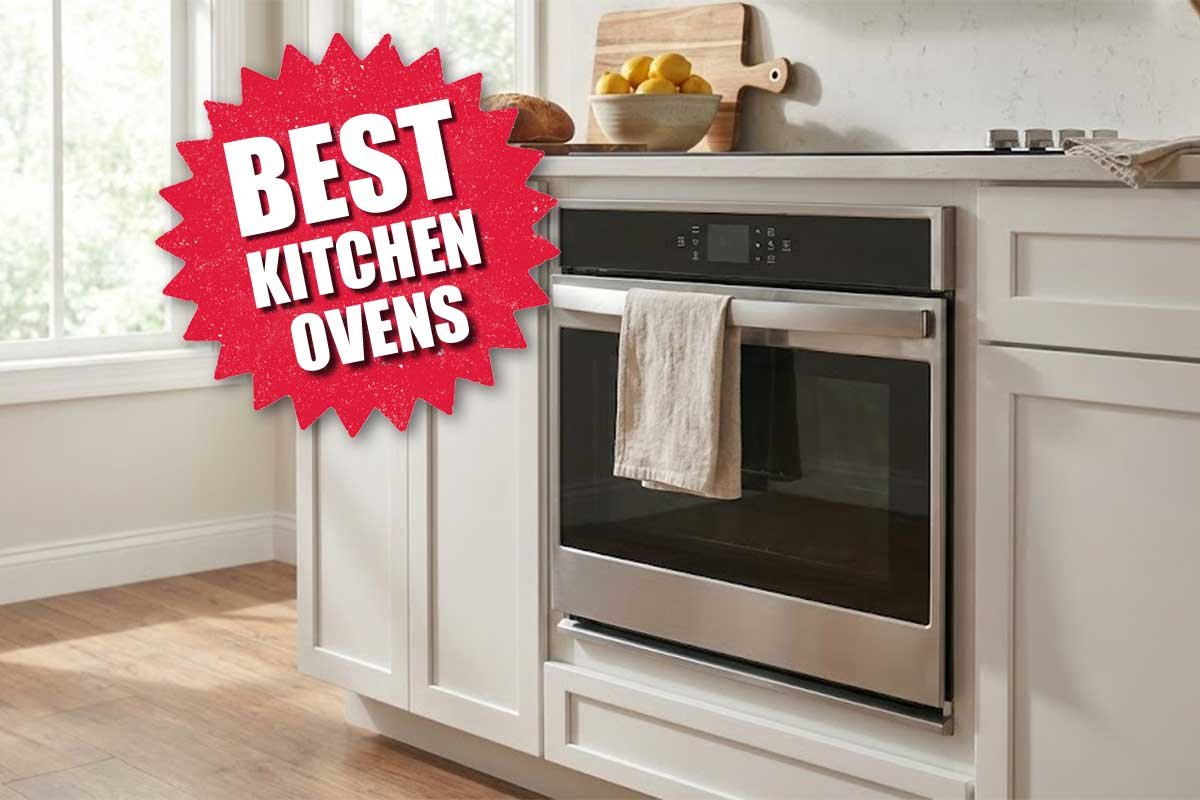
Choosing the best kitchen ovens in 2026 is no longer a simple decision—and that’s actually a good thing. Today’s ovens are smarter, more efficient, and far more specialized than they were even a decade ago. The challenge isn’t finding a “good” oven anymore. It’s finding the right one for how you cook, how your kitchen is built, and how much control you want over your food.
Some homeowners swear by gas for its instant heat and familiar feel. Others prefer electric ovens for their even baking and easier installation. Convection has gone from a luxury feature to a near-standard option, while air fry modes, self-cleaning systems, and smart controls are changing what people expect from a modern kitchen oven. Add in different sizes, wall vs freestanding designs, and wide price ranges—and it’s easy to feel overwhelmed.
That’s exactly why this guide exists.
In this Best Kitchen Ovens for 2026 buying guide, we break everything down in plain English. You’ll find top oven picks for different needs and budgets, clear explanations of gas vs electric ovens, a simple breakdown of convection cooking, standard oven sizes for U.S. kitchens, and the features that actually matter in everyday use. We’ll also explain how ovens work behind the scenes, so you understand what you’re paying for—and what you’re not.
If you want to choose confidently and avoid expensive mistakes, you’re in the right place.
Our Top Picks – Best Kitchen Ovens for 2026
Rather than chasing a single “best overall” oven, we tested and compared top-performing models across the categories that actually matter in real kitchens. Different homes cook differently—and the best kitchen oven for you depends on layout, fuel type, and how you use it day to day. Below are our top picks for 2026, broken down by use case, with clear reasons why each category stands out.
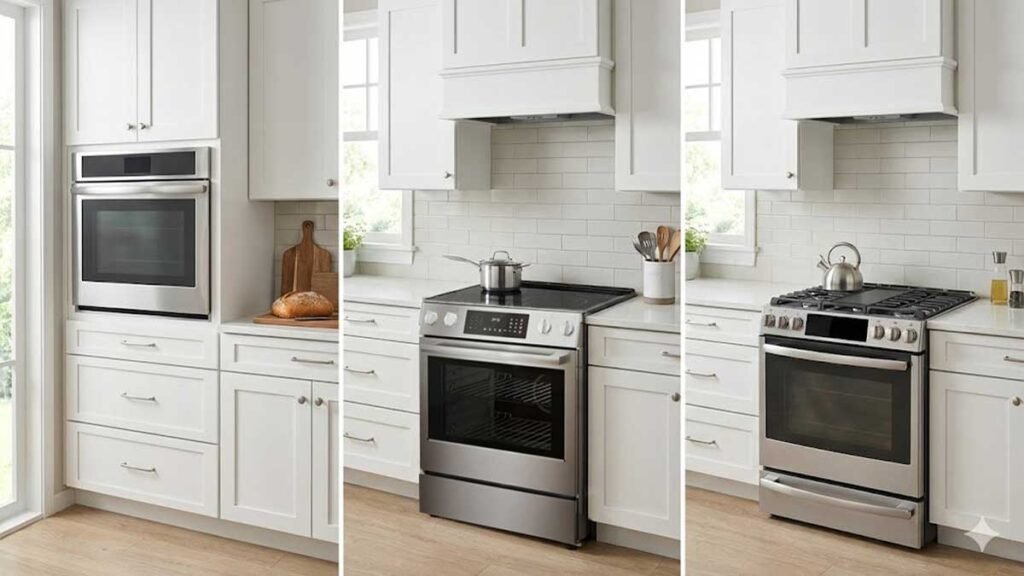
Best Overall Kitchen Oven
Why it wins: balanced performance, reliability, and everyday usability
The best overall kitchen ovens for 2026 deliver consistent temperature control, reliable convection baking, and intuitive controls without forcing you into a learning curve. These models heat evenly, recover temperature quickly after opening the door, and perform just as well for weeknight dinners as they do for holiday meals.
They typically feature:
- True convection (fan + heating element)
- Accurate digital temperature sensors
- Smooth preheat and stable heat retention
- Simple, readable controls (no overcomplicated apps required)
Most homeowners will find the best balance here—especially if you want dependable results without paying for niche features you’ll rarely use.
Best Electric Oven
Best for: baking, roasting, and consistent results
Electric ovens remain the top choice for people who bake often. They maintain steadier temperatures than gas models and distribute heat more evenly, especially in convection mode. In 2026, electric ovens also tend to offer the widest range of features and price points.
Why electric ovens shine:
- Excellent temperature precision
- More even browning and baking
- Easier installation in most U.S. homes
- Typically quieter operation
Brands like GE and Whirlpool continue to lead this category with reliable, user-friendly designs that work well for most households.
Best Gas Oven
Best for: cooks who prefer instant heat and traditional cooking feel
Gas ovens are still popular in many U.S. kitchens, especially where a gas line is already installed. They heat up quickly and are often paired with gas ranges, making them a familiar choice for experienced home cooks.
Strengths of gas ovens:
- Faster preheating
- Moist cooking environment (helpful for roasts)
- Often lower operating costs in gas-friendly regions
That said, gas ovens may cook slightly less evenly than electric models, which is why convection becomes especially important here. Many of the best gas ovens in 2026 combine gas heat with electric convection elements for improved performance.
For larger households or serious home cooks who want more flexibility, double gas ovens offer the advantage of cooking multiple dishes at different temperatures. Our in-depth guide to the best double gas ovens in 2026 breaks down which models deliver the strongest performance and the most precise cooking control.
Best Convection Oven
Best for: even cooking, multi-rack baking, and faster results
Convection is no longer a premium add-on—it’s a must-have. The best convection ovens circulate hot air evenly throughout the cavity, reducing hot spots and shortening cook times.
Choose a convection oven if you:
- Bake cookies or pastries on multiple racks
- Roast meats and vegetables regularly
- Want faster, more predictable results
Premium convection systems (often called “true” or “European convection”) include a dedicated heating element around the fan, which makes a noticeable difference in consistency. Bosch continues to stand out here, especially in wall oven designs.
Best Wall Oven
Best for: modern kitchens and ergonomic cooking
Wall ovens are ideal if you want your oven at eye level or are separating cooking appliances for a cleaner kitchen layout. They’re especially popular in remodels and custom kitchens.
Why choose a wall oven:
- Easier access (no bending)
- Cleaner, built-in appearance
- Available in single or double configurations
In 2026, wall ovens also tend to get new features first—better displays, improved convection, and smarter safety controls. Samsung remains strong in this category with sleek designs and intuitive interfaces.
Best Oven for Small Kitchens or Apartments
Best for: limited space without sacrificing performance
Not every kitchen can fit a full-size range or double wall oven. Fortunately, compact and slim-fit ovens have improved dramatically. These models focus on efficient interior space, faster preheat, and simplified controls.
Look for:
- 24-inch or slim-profile designs
- Strong insulation to retain heat
- Efficient convection to maximize usable space
For apartments and condos, electric compact ovens are often the easiest to install and the most flexible.
Best Budget Kitchen Oven
Best for: value-focused buyers who still want reliability
A lower price doesn’t have to mean poor performance. The best budget ovens in 2026 focus on the essentials: stable temperatures, basic convection, and solid build quality.
What to expect:
- Fewer smart features
- Simple control panels
- Proven heating systems
These ovens are ideal for rental properties, first-time homeowners, or anyone who wants dependable cooking without paying for extras they won’t use.
How to Use These Picks
Each category above reflects a different cooking style and kitchen setup. As you move through this guide, we’ll break down gas vs electric ovens, explain convection cooking, cover standard oven sizes, and walk through the features that actually matter—so you can match one of these top picks to your home with confidence.
Gas vs Electric Ovens – Which One Is Better?
This is one of the first questions most buyers ask—and for good reason. The choice between gas and electric ovens affects how your food cooks, how much installation costs, and how your kitchen functions day to day. There’s no universal winner here, but there is a better choice depending on how you cook and what your home supports.
If you’re still deciding between a freestanding gas stove and a built-in gas oven, the choice isn’t just about fuel—it’s also about kitchen layout, installation, and long-term flexibility. This comparison of gas stoves vs built-in gas ovens explains which option makes more sense for different types of kitchens.
Gas ovens heat using a live flame, which means they warm up quickly and respond fast when you change temperatures. Many experienced cooks like that immediate feedback—it feels intuitive and familiar. Gas ovens also tend to create a slightly more humid cooking environment, which can be helpful when roasting meats that you don’t want to dry out.
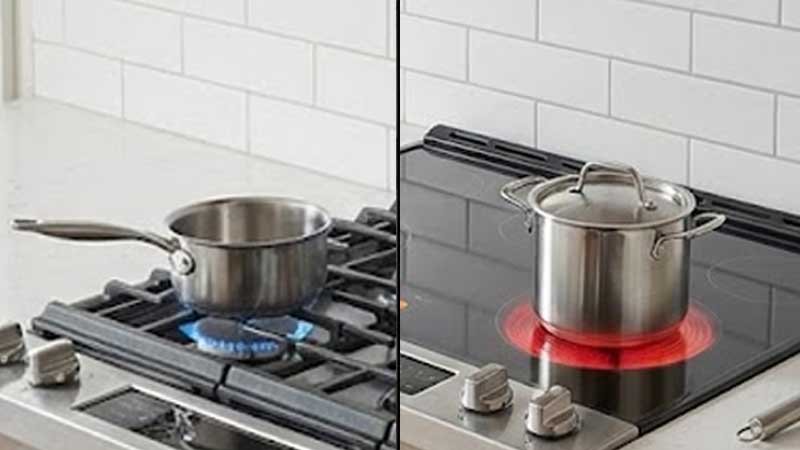
That said, gas ovens usually struggle a bit with temperature consistency. The flame cycles on and off, which can create small hot and cool zones inside the oven. This isn’t a deal-breaker, but it does mean that baking—especially pastries or bread—can be less predictable unless the oven includes a good convection system.
Electric ovens, on the other hand, are all about stability. Heating elements cycle more evenly, which helps maintain a consistent temperature throughout the cavity. That’s why electric ovens are generally preferred for baking, desserts, and multi-rack cooking. If you’ve ever wondered why cookies brown more evenly in some ovens than others, this is often the reason.
From an installation standpoint, electric ovens are usually simpler. Most U.S. homes already support electric connections, while gas ovens require an existing gas line or professional installation. Maintenance can also be easier with electric models, since there are fewer components related to ignition and gas flow.
When it comes to operating costs, the difference depends heavily on local utility rates. In areas where natural gas is inexpensive, gas ovens can cost less to run. In other regions, modern electric ovens—especially energy-efficient ones—can be just as economical.
Bottom line:
- Choose gas if you value fast preheating, already have a gas line, and prefer traditional cooking control.
- Choose electric if you bake often, want even results, and prefer simpler installation and maintenance.
For most households today, electric ovens edge ahead in overall consistency—but gas still has a loyal following for good reasons.
What Is a Convection Oven and Is It Worth It?
A convection oven is an oven that uses a fan—sometimes paired with an additional heating element—to circulate hot air evenly around the food. Instead of heat rising and sitting at the top of the oven, convection keeps temperatures more uniform throughout the entire cavity.
In practical terms, that means faster cooking and more even results.
With convection turned on, food typically cooks 20–25% faster and at slightly lower temperatures. Cookies brown more evenly across multiple racks. Roasted vegetables caramelize instead of steaming. Meats cook more consistently from edge to center.
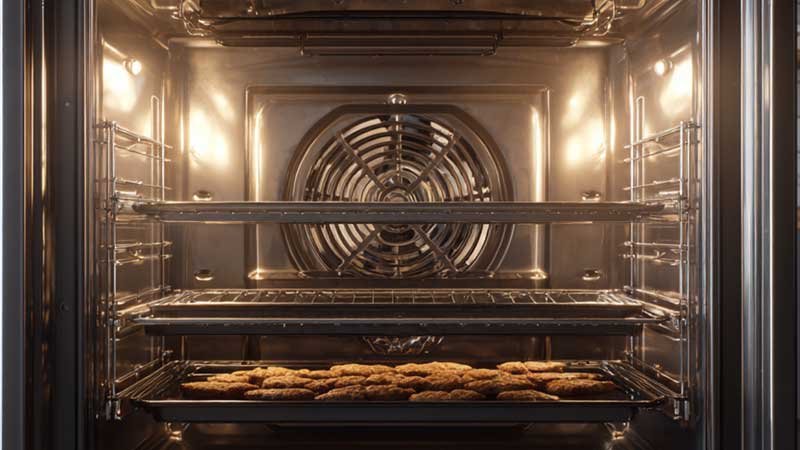
There are two main types of convection systems. Basic convection uses a fan to move hot air around. True (or European) convection adds a dedicated heating element around the fan, which delivers the most consistent results—especially when baking or cooking on multiple racks.
Is it worth it? For most people, yes.
Convection is especially useful if you:
- Bake frequently
- Cook large meals or multiple dishes at once
- Want faster cook times without sacrificing quality
The only real downside is that convection requires small adjustments. Recipes may need slightly lower temperatures or shorter cook times. Fortunately, many modern ovens handle this automatically.
In 2026, convection is less of a premium feature and more of a baseline expectation. If you’re buying a new kitchen oven today, choosing a model without convection usually means giving something up—not saving money.
Oven Sizes & Dimensions – Finding the Right Fit
Choosing the right oven size is one of the most overlooked—but most expensive—mistakes buyers make. A powerful oven with great features won’t help much if it doesn’t physically fit your kitchen or align with how you cook. Before comparing brands or features, it’s critical to understand standard oven sizes and dimensions used in U.S. homes.
The most common size for both freestanding ranges and wall ovens is 30 inches wide. This has become the U.S. standard because it offers a good balance between interior capacity and cabinet compatibility. Most recipes, baking trays, and cookware are designed with this size in mind, which makes it the safest and most flexible choice for the majority of households.
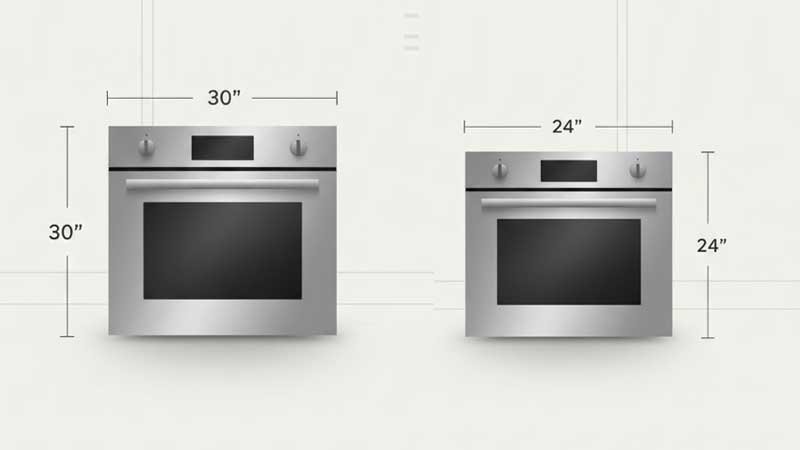
For smaller kitchens, apartments, or condos, 24-inch ovens are increasingly popular. While narrower, many modern 24-inch ovens use convection to maximize usable space. They’re ideal if you cook smaller portions or don’t entertain often—but they do require more careful planning, since replacement options are more limited than with 30-inch models.
Wall ovens also vary by height and depth, not just width. A standard single wall oven is usually around 28–29 inches tall, while double wall ovens can exceed 50 inches in height. Depth typically ranges between 24 and 25 inches, designed to sit flush with standard cabinetry. Always check the cabinet cutout dimensions, not just the oven’s exterior size—manufacturers publish these for a reason.
Interior capacity is measured in cubic feet, and this matters more than many buyers realize. A 30-inch oven can range from about 4.5 to over 6.0 cubic feet depending on design. If you regularly cook large roasts, turkeys, or multiple trays at once, capacity becomes just as important as width.
Bottom line: measure twice, buy once. Confirm cabinet cutouts, door swing clearance, and interior capacity before you commit. Size compatibility is non-negotiable—and getting it right upfront saves serious headaches later.
Common Oven Features Explained – What Actually Matters
Modern kitchen ovens come loaded with features—but not all of them improve your cooking experience. Some are genuinely useful, while others sound impressive but see little real-world use. Knowing the difference helps you avoid paying for technology you’ll never touch.
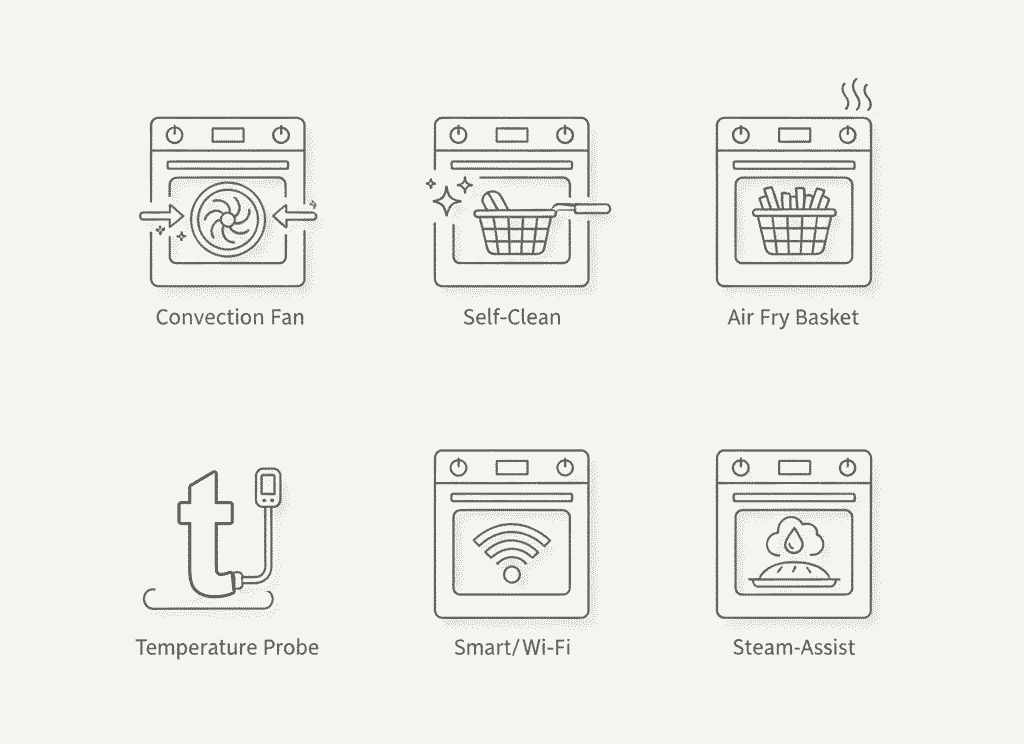
Convection cooking is the most important feature to prioritize. As covered earlier, a convection fan dramatically improves heat distribution, shortens cook times, and makes multi-rack cooking practical. If an oven lacks convection in 2026, it’s already behind the curve.
Self-cleaning modes are another major quality-of-life feature. Traditional high-heat self-clean cycles burn off residue, while newer steam-clean options use lower temperatures and water to loosen grime. Steam cleaning is quicker and gentler, but it won’t replace a deep clean. Many homeowners appreciate having both options available.
Air fry mode has exploded in popularity, but expectations should be realistic. Built-in air fry works well for vegetables, frozen foods, and smaller batches, but it doesn’t fully replace a countertop air fryer. Still, it’s a convenient bonus if you want crisp results without another appliance taking up space.
Temperature probes are underrated and extremely practical. A built-in probe lets the oven monitor internal food temperature and shut off automatically when the target is reached—perfect for roasts and poultry. If you cook meat often, this feature adds real value.
Steam cooking or steam-assist ovens are becoming more common in mid-to-high-end models. Steam helps retain moisture, improves bread crusts, and keeps reheated food from drying out. While not essential for everyone, it’s a meaningful upgrade for frequent cooks.
Smart features and Wi-Fi connectivity are a mixed bag. Remote preheating, notifications, and app controls can be useful, but they shouldn’t come at the expense of basic usability. The best smart ovens still work perfectly without an app.
The takeaway? Prioritize features that improve heat control, consistency, and ease of use. Flashy extras are fine—but fundamentals matter more than buzzwords.
How Does an Oven Work? A Simple Explanation for Buyers
At its core, an oven is a controlled heat box—but the way it creates, manages, and maintains heat has a direct impact on cooking results, efficiency, and long-term reliability. Understanding the basics helps you make sense of features, price differences, and even common problems down the road.
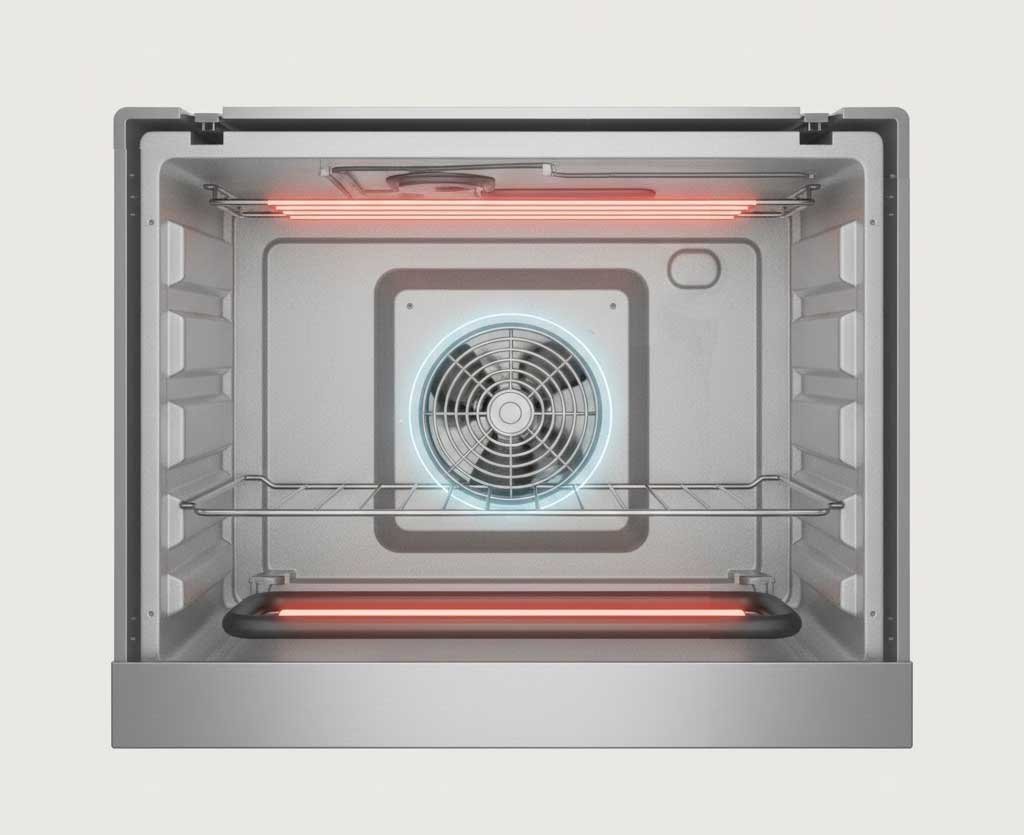
Electric ovens generate heat using one or more metal heating elements. The bake element sits at the bottom of the oven, while a broil element is usually mounted at the top. When you set a temperature, the control board cycles these elements on and off to maintain that heat. Because electricity produces dry, steady heat, electric ovens tend to be very consistent—one reason they’re favored for baking.
Gas ovens rely on a burner, typically located beneath the oven floor. When heat is needed, a gas valve opens and an ignition system lights the burner. Older models used pilot lights; modern ovens use electronic ignition for safety and efficiency. Gas heat rises quickly and can fluctuate slightly as the flame cycles, which is why convection is especially valuable in gas ovens.
Most modern ovens—gas and electric—include temperature sensors (often called thermistors). These sensors constantly read the internal temperature and communicate with the control board. If a sensor drifts out of calibration, the oven may run hot or cold, even if the display looks correct.
Convection systems add a fan, and in better designs, a dedicated heating element around that fan. This keeps hot air moving evenly, reducing hot spots and helping food cook faster and more uniformly. True convection systems are more complex, but they’re also more predictable.
Finally, everything is coordinated by the control board—the oven’s brain. It manages temperature, timing, safety shutoffs, and advanced features like probes or self-cleaning cycles. As ovens become more digital, control boards play a bigger role in performance—and repair costs—making build quality more important than ever.
How to Choose the Best Kitchen Oven for Your Home
Choosing the best kitchen oven isn’t about chasing the longest feature list—it’s about matching the appliance to how you actually cook and live. Start with fuel type. If you bake frequently and want even results, electric is usually the safest choice. If you already have a gas line and prefer fast preheating, gas can make sense—especially with convection.
Next, consider size and layout. A standard 30-inch oven fits most U.S. kitchens, but wall ovens, double ovens, or compact 24-inch models may be better depending on space and cabinet design. Always verify cutout dimensions before you buy.
Then focus on features that improve consistency. Convection, accurate temperature control, and a good self-cleaning system matter more than novelty modes. Extras like air fry or smart connectivity are useful only if you’ll actually use them.
Budget should reflect long-term value, not just upfront cost. A slightly more expensive oven with better insulation, sensors, and controls often performs better for years—and avoids frustration later.
Finally, think about how often you cook. Occasional users don’t need professional-level options. Frequent home cooks will appreciate precision, capacity, and durability.
Choose with intention, and the right oven will quietly do its job for a decade or more—no drama, just better food.
FAQ – Best Kitchen Ovens
What is the best type of oven for most homes?
For most U.S. households, a 30-inch electric convection oven offers the best balance of even cooking, easy installation, and long-term reliability.
Are convection ovens worth it for everyday cooking?
Yes. Convection improves heat distribution, shortens cook times, and makes multi-rack cooking practical. In 2026, it’s considered a baseline feature.
How long does a kitchen oven usually last?
Most quality ovens last 12–15 years with normal use. Build quality and proper ventilation matter more than brand names alone.
Is gas or electric cheaper to run?
It depends on local utility rates. Gas can be cheaper in some regions, but modern electric ovens are often comparable—especially with efficient insulation.
Do smart oven features really matter?
They’re convenient, not essential. A well-built oven with accurate temperature control matters far more than app connectivity.
Final Verdict – Choosing the Best Kitchen Oven with Confidence
Choosing the best kitchen oven in 2026 doesn’t come down to chasing the newest feature or the most expensive model—it comes down to clarity. Once you understand how different ovens heat, how convection affects results, and how size and layout impact everyday use, the decision becomes far more straightforward.
For most homes, a 30-inch electric convection oven remains the safest and most versatile choice. It offers consistent baking, reliable roasting, and broad compatibility with standard U.S. kitchens. Gas ovens still make sense for buyers who already have a gas line and prefer fast preheating, but convection is essential if you want even results. Compact and wall ovens are excellent solutions when space, ergonomics, or kitchen design demand something more specific.
Features should support how you actually cook. Convection, accurate temperature sensors, and practical self-cleaning options add real value. Flashier extras—like smart controls or air fry modes—can be useful, but they should never replace solid fundamentals. A well-built oven that quietly does its job every day is worth far more than one packed with features you’ll rarely touch.
If there’s one takeaway from this guide, it’s this: choose for your habits, not for marketing claims. Measure carefully, prioritize consistency, and match the oven to your cooking style. Do that, and the right kitchen oven won’t just fit your space—it’ll earn its place in your kitchen for years to come.