




Are Smart Dishwashers Actually Useful?
Smart home dishwashers promise more control, better efficiency, and fewer surprises—but for many buyers, the real question is simple: do these smart features actually make everyday life easier, or are they just another layer of tech you’ll never use?
If you’re upgrading your kitchen or replacing an older dishwasher, it’s natural to wonder whether Wi-Fi connectivity, app notifications, and smart diagnostics are worth the extra cost. Some households swear by them. Others never open the app after the first week.
In this comparison, we’ll break down how smart home dishwashers really perform in day-to-day use. We’ll compare key features, usability, and value—not marketing buzzwords—so you can see where smart technology genuinely helps, where it doesn’t, and which types of users benefit the most.
Smart home dishwashers differ mainly in the following areas:
- Wi-Fi connectivity for remote cycle monitoring and control
- App-based notifications when a cycle finishes or needs attention
- Basic smart diagnostics for troubleshooting and maintenance alerts
“Smart features don’t improve cleaning performance, but they add convenience for busy households and smart-home users.“
This guide is designed to help you decide whether a smart dishwasher makes sense for your home, and if it does, what to look for when comparing models.

What Makes a Dishwasher “Smart”?
A dishwasher becomes “smart” when it can connect to your home network and communicate through a mobile app or smart home system. In practice, this usually includes several core features—but not all smart dishwashers use them equally well.
Most smart models offer Wi-Fi connectivity paired with a manufacturer app. This allows you to start or monitor cycles remotely, check remaining time, and receive alerts when a cycle finishes or if an issue occurs. For busy households, notifications alone can be surprisingly useful—especially if your dishwasher runs overnight or during work hours.
Another common feature is smart diagnostics. Instead of guessing why a cycle didn’t finish properly, the dishwasher can report error codes or maintenance reminders directly to your phone. In real-world use, this can save time when troubleshooting minor issues or deciding whether a service call is actually needed.
Some models integrate with voice assistants like Alexa or Google Assistant. These integrations are usually limited to basic commands—checking cycle status or starting a preset—but they can fit naturally into an existing smart home setup.
What’s important to understand is that “smart” doesn’t automatically mean better cleaning performance. The core wash system still matters most. Smart features add convenience and visibility, not cleaning power. The value depends on how much you’ll actually use that added control.
Smart Home Dishwashers Compared: How to Read the Comparison
Before diving into individual models, it’s important to understand what actually matters when comparing smart dishwashers—and what can safely be ignored.
In the comparison below, we focus on practical factors that affect everyday ownership: smart functionality, ease of use, reliability indicators, noise levels, and efficiency. App quality matters just as much as having an app at all. A confusing interface or unreliable notifications can quickly turn “smart” into frustrating.
We also look at how well smart features integrate with normal routines. Can you check cycle progress at a glance? Do alerts arrive consistently? Are settings intuitive, or buried under menus? These details often matter more than the number of advertised features.
Finally, keep in mind that price differences between smart models often reflect ecosystem quality, not just hardware. Established brands tend to offer more stable apps and longer software support, which can make a real difference over several years of use.
Use the comparison as a decision tool—not a scoreboard. The best smart dishwasher isn’t the one with the most features, but the one whose features you’ll actually use.
This table highlights the differences that matter in everyday use—not just feature lists. App reliability, notification consistency, and long-term software support often make a bigger difference than headline specs.
| Feature / Model | Bosch 800 Series | LG ThinQ | GE Profile |
|---|---|---|---|
| App Platform | Home Connect | LG ThinQ | SmartHQ |
| Wi-Fi Remote Start | ✅ | ✅ | ✅ |
| End-of-Cycle Alerts | ✅ Reliable | ✅ Customizable | ✅ Basic |
| Smart Diagnostics | ✅ Strong | ✅ Advanced | ⚠️ Limited |
| Voice Assistant | Alexa / Google | Alexa / Google | Alexa / Google |
| Noise Level | Very Quiet | Quiet | Moderate |
| Best For | Set-and-forget users | Tech-savvy homes | Balanced households |
Smart Home Dishwashers Compared: Key Features Overview
When comparing smart dishwashers, it helps to separate core performance from smart convenience. Almost all modern dishwashers clean well. The real differences show up in how predictable, efficient, and easy they are to live with over time.
In the comparison, we focus on five practical areas. First is app usability—how intuitive the controls are and whether notifications actually arrive when they should. A well-designed app saves time; a poorly designed one gets ignored.
Second is smart diagnostics and alerts. Models that clearly explain issues or maintenance needs tend to reduce guesswork and unnecessary service calls. This isn’t flashy technology, but it’s one of the most useful smart features in everyday ownership.
Third is noise level and cycle management. Many smart dishwashers allow you to track or schedule cycles remotely, which matters in open-plan kitchens or homes where dishes run overnight.
We also consider efficiency and smart optimization, such as adaptive cycles that adjust water or energy use based on load conditions. Finally, ecosystem reliability matters more than most buyers expect. Brands with stable apps and long-term software support usually provide a better experience than those chasing feature lists.
Use the table to narrow your options, then look closer at how each model fits your routine.
Top Smart Dishwasher Models Compared
Bosch 800 Series Smart Dishwasher
Bosch’s smart dishwashers are often praised for doing something surprisingly difficult: staying quiet while remaining consistent. In real-world use, the smart features focus less on novelty and more on predictability. The Home Connect app provides clear cycle updates, maintenance reminders, and remote start without overwhelming the user.

What stands out is how seamlessly the smart layer fits into normal use. You don’t need to adjust your habits to benefit from it. Notifications are reliable, and the interface is clean enough that most users actually keep the app installed long-term. Noise levels are low enough for open kitchens, making remote monitoring genuinely useful.
The downside is flexibility. Bosch’s smart features are polished but conservative. If you enjoy deep customization or advanced automation routines, you may find the system somewhat limited. Still, for buyers who want smart functionality that quietly works in the background, this is one of the most balanced options available.
Interested in a quiet, reliable smart dishwasher?
The Bosch 800 Series is a strong option if you value consistency over complexity.
👉 Check Price on Amazon
LG Smart Dishwasher with ThinQ
LG approaches smart dishwashers from a tech-first angle. The ThinQ app offers more customization, deeper diagnostics, and broader smart home integration than most competitors. In practice, this appeals to users who already manage multiple LG appliances in one ecosystem.
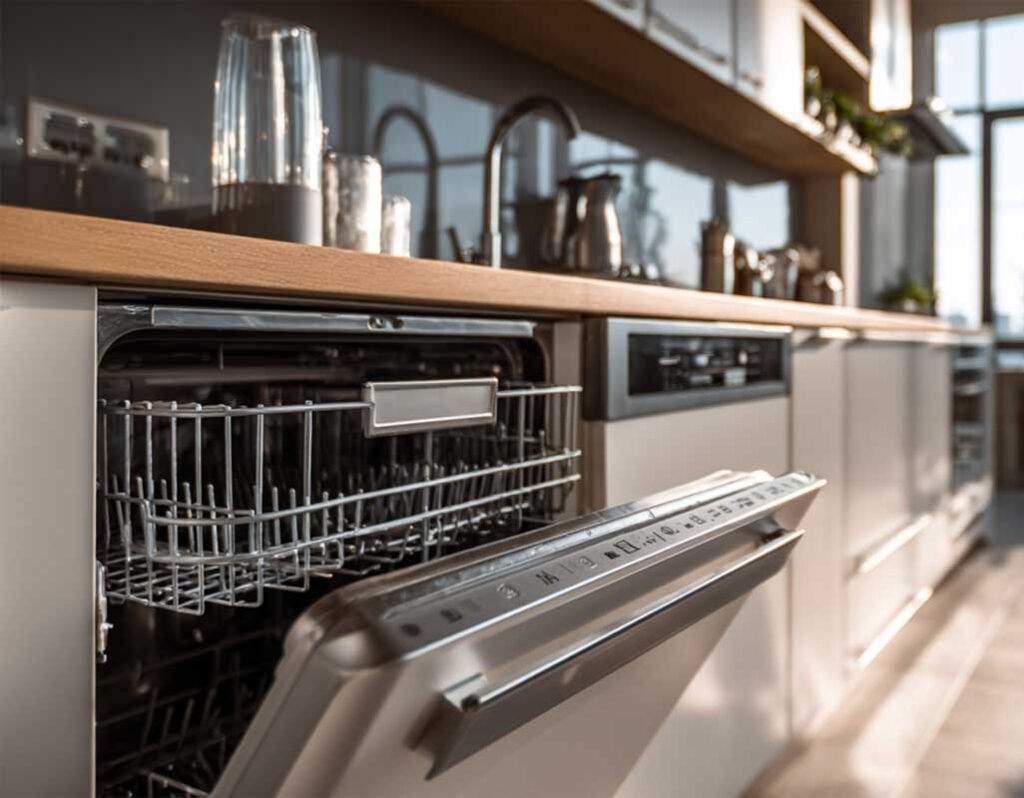
Day-to-day, the app provides detailed cycle information, downloadable wash programs, and helpful alerts. Troubleshooting features are especially strong, often pointing you toward solutions before calling support. For tech-comfortable users, this level of control can feel empowering rather than complicated.
The trade-off is complexity. There’s more to configure, and the experience depends heavily on how comfortable you are navigating app settings. If you enjoy managing smart devices, LG delivers flexibility. If you prefer a “set it and forget it” approach, it may feel like more than you need.
Compare current prices before deciding
Smart dishwasher pricing changes often, and availability varies by retailer.
👉 Check LG Prices on Amazon
GE Profile Smart Dishwasher
GE Profile sits between simplicity and customization. Its smart features focus on practical alerts, cycle tracking, and voice assistant compatibility rather than deep automation. For many households, this balance feels approachable.
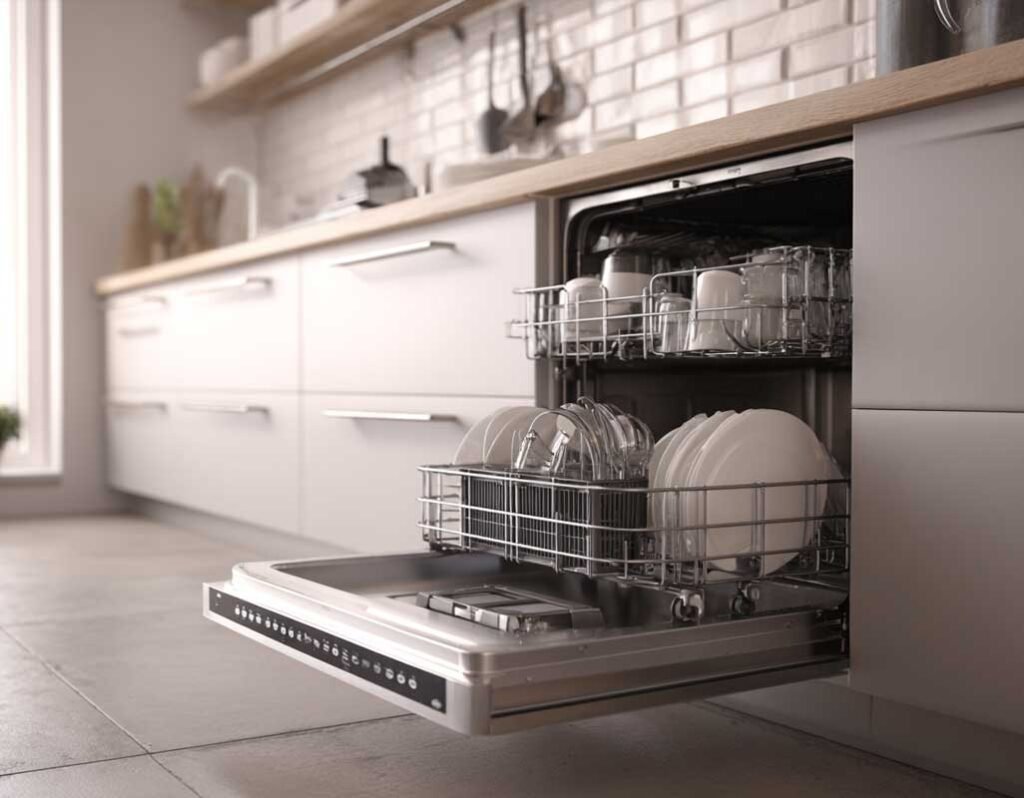
The app experience is straightforward, and integration with Alexa or Google Assistant works reliably for basic tasks like checking cycle status. In daily use, the system feels supportive rather than intrusive—useful when needed, invisible when not.
Where GE Profile may fall short is long-term differentiation. The smart features are solid but not standout, and heavy users may eventually want more advanced options. Still, for buyers looking for a dependable smart dishwasher that doesn’t demand constant attention, it remains a safe and sensible choice.
See current GE Profile pricing
Smart dishwasher prices vary by model and finish.
👉 Check GE Profile prices on Amazon
Pros and Cons of Smart Dishwashers
Smart dishwashers shine when convenience and predictability matter. The biggest advantage is visibility—you know exactly what’s happening, even when you’re not in the kitchen. Cycle status updates, end-of-cycle alerts, and maintenance notifications remove a lot of small daily friction. For households that run the dishwasher overnight or while away, this alone can be a meaningful upgrade.
Smart diagnostics are another real benefit. Instead of guessing why performance dipped, many models point you toward likely causes or simple fixes. Over time, that can save both time and unnecessary service calls.
That said, smart dishwashers aren’t universally better. The cleaning results are driven primarily by spray arms, filtration, and cycle design—not Wi-Fi. If you’re paying more solely for smart features you won’t use, the value drops quickly. App reliability also varies by brand; inconsistent notifications or clunky interfaces can turn a promising feature into dead weight.
There’s also the complexity factor. More settings and integrations can be great—or overwhelming. If you prefer appliances that disappear into the background, a simpler model may actually feel better day to day.
Who Should Choose a Smart Dishwasher
Smart dishwashers make the most sense for users who value convenience, scheduling, and integration. If you already use smart home devices, adding a dishwasher that fits into the same ecosystem feels natural rather than forced. Busy households benefit most—especially those that run loads while working, sleeping, or managing multiple routines at once.
They’re also a good fit for open-plan homes, where noise awareness and remote monitoring matter. Being able to check progress or receive alerts without walking back to the kitchen sounds minor, but it adds up over years of use.
Finally, smart models appeal to owners who plan to keep their appliance long term. Software support, diagnostics, and efficiency insights tend to deliver more value over time than on day one.
If you enjoy understanding how your appliances work—and appreciate small optimizations—smart dishwashers can genuinely improve the ownership experience.
When a Traditional Dishwasher Makes More Sense
A traditional dishwasher is often the better choice if your priorities are budget, simplicity, and reliability. If you typically start a cycle manually and unload when it’s done, smart features may not change your routine in any meaningful way.
They’re also a strong option for small apartments or rental properties, where connectivity setup and long-term app support are less important. In these cases, paying extra for smart capabilities rarely delivers proportional benefits.
Finally, if you prefer appliances that “just work” with minimal configuration, a non-smart model can be refreshing. Fewer features mean fewer things to manage—and often fewer things to troubleshoot.
In short, if you value straightforward performance over added control, a traditional dishwasher remains a perfectly sensible—and often more cost-effective—choice.
Are Smart Dishwashers Worth It in 2025?
In 2025, smart dishwashers are worth it—but only for the right type of user. The technology itself has matured. Apps are more stable, notifications are more reliable, and diagnostics are genuinely helpful compared to earlier generations. That said, the value doesn’t come from better cleaning. It comes from better awareness and control.
If you run your dishwasher at predictable times, stay home during cycles, and don’t mind checking it manually, a smart model won’t transform your routine. In that case, you’re paying for features you may rarely use.
However, if your schedule is irregular, you manage multiple smart devices, or you prefer knowing what’s happening without being physically present, smart dishwashers can quietly improve daily life. Features like end-of-cycle alerts, maintenance reminders, and remote monitoring reduce friction rather than adding novelty.
Many smart dishwashers are also certified for energy and water efficiency under Energy Star dishwasher standards, which helps reduce long-term operating costs.
The key takeaway is this: smart dishwashers deliver incremental convenience, not dramatic change. When chosen intentionally—and from brands with strong app support—they make ownership smoother over time. When chosen impulsively, they can feel unnecessary.

Final Verdict: Choosing the Right Smart Dishwasher
Smart home dishwashers aren’t about chasing technology—they’re about matching features to how you actually live. The best models don’t demand attention or constant interaction. They simply provide clarity when you need it and stay out of the way when you don’t.
If you value predictability, efficiency, and quiet integration into a connected home, a smart dishwasher can be a solid upgrade. If simplicity and cost matter more, a traditional model will serve you just as well.
The smartest choice isn’t the most connected one—it’s the dishwasher that fits your routine without forcing you to change it. Once you’re clear on that, the right option usually becomes obvious.
Smart Dishwasher FAQs
Q1: Are smart dishwashers really worth the extra cost?
A: They’re worth it if you value remote monitoring, alerts, and diagnostics. Cleaning performance is similar to non-smart models.
Q2: Do smart dishwashers use less water or energy?
A: Not because they’re smart—but many models are Energy Star certified and use efficient cycles.
Q3: What happens if the app stops being supported?
A: The dishwasher still works normally; you just lose smart features. This is why brand ecosystem matters.
Q4: Are smart dishwashers harder to repair?
A: Core components are similar. Smart diagnostics can actually make troubleshooting easier.
Q5: Can I use a smart dishwasher without Wi-Fi?
A: Yes. All models function as standard dishwashers without connectivity.