



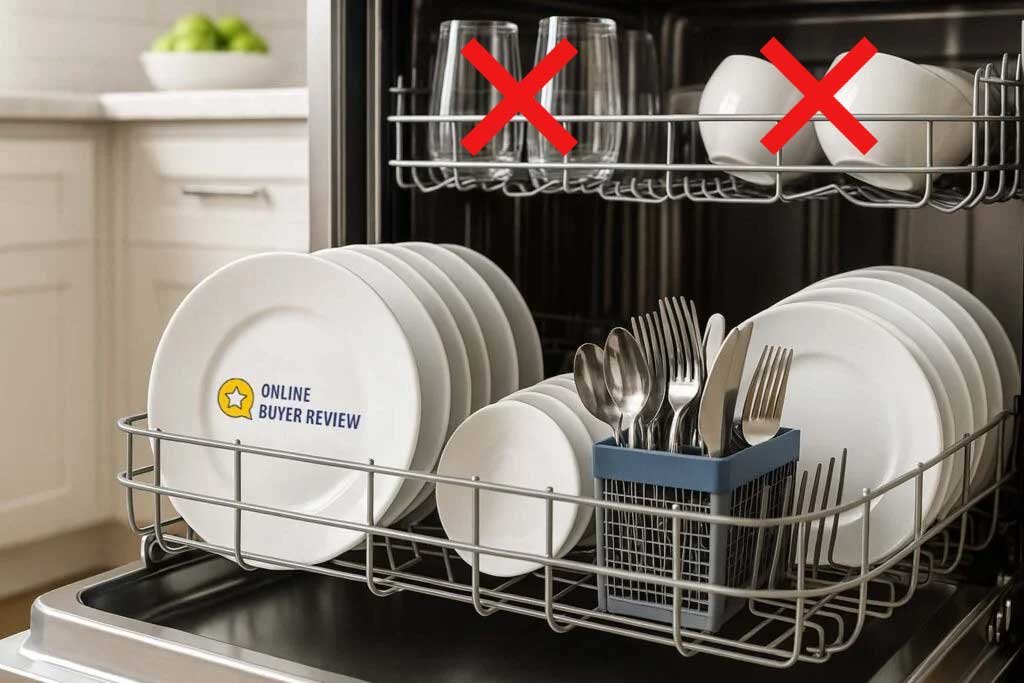
How to load a dishwasher the right way is one of those everyday skills most people assume they’ve already mastered—until the cycle ends and the results tell a different story. Cloudy glasses. Plates that still feel greasy. Plastic containers holding puddles of water instead of drying properly.
Update — February 4, 2026: Over the past year, newer dishwasher models have become even more sensitive to loading errors due to lower water usage, smarter soil sensors, and more targeted spray patterns. As a result, the same loading habits that worked five or ten years ago now lead to noticeably worse cleaning performance. This makes proper loading not just a best practice, but a requirement for modern dishwashers to clean effectively.
Here’s the thing: in most cases, the dishwasher isn’t the problem.
After years of working with different dishwasher models—budget units, premium European machines, older American-built workhorses, and the latest high-efficiency designs—I can tell you this with confidence: the way you load your dishwasher matters just as much as the detergent you use or the cycle you select.
In practice, even a top-rated dishwasher can underperform if dishes are placed without understanding how water actually moves inside the tub. Once you understand how a dishwasher works—especially how spray arms, water pressure, and circulation interact—proper loading suddenly starts to make sense.
In this guide, I’ll walk you through the exact loading principles professionals rely on—the small details most manuals barely explain, but that make a real-world difference every single wash.
If your dishwasher still struggles with dirty or cloudy dishes even when loaded correctly, the problem may not be the machine itself. This guide explains why dishwashers don’t clean well and how loading habits affect overall performance.
Why Proper Dishwasher Loading Actually Matters
At first glance, loading a dishwasher may seem simple: fit everything in, close the door, press Start. But in reality, dishwashers are engineered systems, not magic boxes. Because of that, every plate, bowl, and glass you place inside either helps or hinders the cleaning process.
The key here is understanding what your dishwasher is designed to do—and what it absolutely cannot do.
How water spray arms really clean your dishes
Dishwashers don’t “soak” food off your dishes. Instead, they rely on high-pressure water jets spinning from spray arms located at the bottom, middle, and sometimes the top of the tub. These spray arms follow fixed paths and angles, which means water only reaches dishes that are correctly exposed.
If a plate is facing the wrong direction, blocked by another item, or shadowed by a large pan, water simply won’t reach the dirty surface—no matter how powerful the dishwasher is. As a result, food residue stays put, detergent doesn’t activate properly, and cleaning performance drops.
This is why proper loading isn’t about cramming more dishes in—it’s about giving water a clear line of attack.
The impact of loading on drying performance
Drying problems are often blamed on cheap plastics or weak heating elements. However, in many cases, poor drying is actually a loading issue.
When items are stacked too closely or placed flat, water has nowhere to escape. Air can’t circulate, condensation lingers, and moisture gets trapped. As a result, even at the end of a full cycle, dishes come out wet.
By spacing items correctly and positioning them at the right angles, you allow gravity and airflow to do their job—leading to noticeably better drying, especially on glasses and plastics.
Why overloading causes dirty dishes
Overloading is one of the most common mistakes I see, especially in busy households. While it feels efficient, it usually backfires.
When dishes are packed too tightly:
- Water spray gets blocked
- Detergent can’t dissolve evenly
- Food particles redeposit onto nearby items
In short, more dishes often means worse results, not better ones. Proper loading strikes a balance between capacity and exposure—something manufacturers design their racks around, but rarely explain clearly..
Dishwasher Loading Quick Reference Table
| Item Type | Best Rack | Correct Positioning | Common Mistake to Avoid |
|---|---|---|---|
| Dinner Plates | Bottom rack | Facing inward toward spray arms | Placed flat or overcrowded |
| Bowls | Top rack | Angled, spaced apart | Nested together |
| Glasses & Cups | Top rack | Slightly tilted, not upright | Standing straight up |
| Pots & Pans | Bottom rack | Angled, along sides or back | Laid flat blocking spray |
| Plastic Containers | Top rack | Secured, angled for drainage | Flipping over mid-cycle |
| Silverware | Basket / 3rd rack | Mixed, handles down (knives blade down) | Grouping identical items |
The Basic Rules of Loading a Dishwasher
Before diving into rack-specific tips, it helps to lock in a few core principles. These rules apply to nearly every dishwasher on the U.S. market, regardless of brand or price.
Once you internalize them, loading becomes faster, easier, and far more consistent.
- Always face dirty surfaces toward the spray arms
Plates and bowls should face inward or downward, where water pressure is strongest. - Never block the spray arms
After loading, give them a quick spin by hand. If they hit anything, water flow will suffer. - Leave space between items
Water needs room to move. If dishes touch, they shield each other from spray. - Secure lightweight plastics
Unsecured plastics flip, fill with water, and block other items mid-cycle. - Match each item to the correct rack
Bottom rack for heavy-duty cleaning, top rack for delicate items—this isn’t optional.
These basic rules may sound simple. However, when applied consistently, they solve the majority of dishwasher complaints without changing detergent, cycles, or machines.
Check our guide on the Best Dishwasher Detergents for Hard Water in 2026.
Step-by-Step: How to Load a Dishwasher the Right Way
1. Scrape, Don’t Rinse
Remove large food debris with a spatula or fork. Don’t pre-rinse—modern dishwashers are designed to clean effectively with some residue.
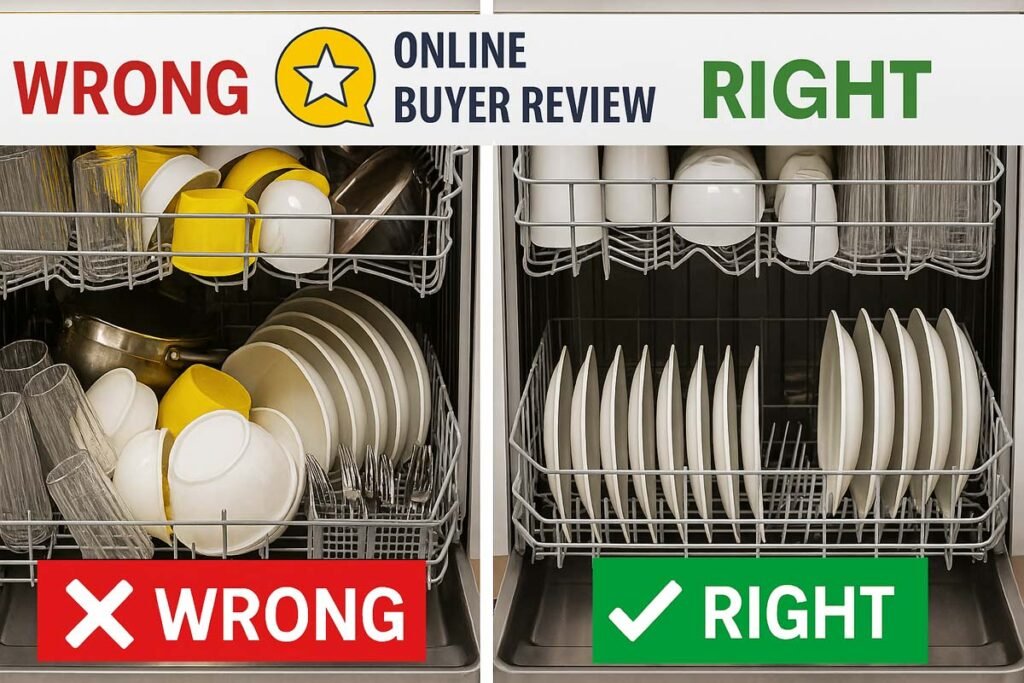
2. Load Bottom Rack the Right Way
- Place plates vertically, facing the center.
- Pots and pans should go at an angle for better spray access.
- Avoid stacking and ensure nothing blocks the spray arms.
3. Load Top Rack Properly
- Place cups and glasses upside down.
- Bowls should tilt slightly to allow water drainage.
- Place plastic items only on the top rack to avoid warping.
4. Where to Place Utensils
- Use the utensil basket or third rack.
- Mix utensils to prevent nesting (e.g., alternate spoons and forks).
- Sharp knives should go blade-down or in a separate compartment for safety.
5. Don’t Overload
- Leave space between dishes.
- Avoid nesting and crowding.
- Overloading compromises spray reach and detergent flow.
6. Use Rinse Aid and the Right Cycle
- Use rinse aid to prevent spots and improve drying.
- Choose cycle based on the soil level—use “Heavy” for pots, “Normal” for daily loads.
Learn more in our guide: What Not to Put in a Dishwasher 2026 Guide
How to Load the Bottom Rack Properly
The bottom rack is the workhorse of your dishwasher. This is where the strongest water pressure lives, and as a result, it’s designed for the dirtiest, heaviest items. However, because water force is concentrated here, mistakes on the bottom rack tend to cause the biggest problems.
The goal is simple: maximize exposure without creating blockages.
Plates – direction and spacing matter more than size
Plates should always face inward, toward the center of the rack, not straight forward or backward. This positioning aligns the dirty surface with the lower spray arm, where water pressure is strongest.
Equally important is spacing. Plates should never touch each other. When plates are packed too tightly, water can’t reach the inner surfaces, and food residue gets trapped. As a result, even a long cycle may leave behind dried-on spots.
A good rule of thumb:
If you wouldn’t be able to slide a finger between two plates, they’re too close.
Pots, pans, and baking dishes – angle beats flat placement
Large cookware belongs on the bottom rack, but placement is critical. Pots and pans should be angled downward, not laid flat. Flat placement blocks water spray and often shadows nearby plates, reducing overall cleaning performance.
Whenever possible:
- Place pans along the sides or back
- Angle them toward the center
- Avoid placing them directly in front of the detergent dispenser
This ensures water reaches both the cookware and the rest of the load.
What should never go on the bottom rack
Despite the space, not everything belongs here. Lightweight plastics, thin glassware, and heat-sensitive items should stay out of the bottom rack. The intense heat and water pressure can warp plastics and cause glasses to knock into heavier items.
If an item feels fragile in your hands, it probably doesn’t belong on the bottom.
How to Load the Top Rack the Right Way
The top rack is designed for delicate cleaning and controlled water flow. While it may look forgiving, poor loading here is a major reason for cloudy glasses, chipped rims, and half-dried plastics.
The key difference compared to the bottom rack is this: angle and stability matter more than capacity.
Glasses and mugs – tilt, don’t stack
Glasses should always be placed between the tines, never balanced on top of them. More importantly, they should be slightly angled, not standing perfectly upright.
Why? Because angled placement allows water to drain during the drying cycle. When glasses sit straight up, water pools at the base, leading to spots and streaks.
Mugs should face downward at a gentle angle, with handles positioned so they don’t block adjacent items or touch spray arms.
Bowls and small plates – avoid nesting at all costs
Bowls belong in the top rack, but nesting them together is one of the fastest ways to ruin a wash cycle. When bowls stack inside one another, water can’t reach the inner surfaces, and detergent residue gets trapped.
Instead:
- Place bowls at an angle
- Leave visible gaps between them
- Avoid stacking different sizes together
This small adjustment dramatically improves cleaning consistency.
Plastics – secure them or expect problems
Lightweight plastics are notorious for flipping over mid-cycle. When that happens, they collect dirty water, block spray arms, and interfere with drying.
To prevent this:
- Use designated plastic holders if available
- Place plastics at an angle
- Avoid overloading the top rack
Because plastics don’t retain heat well, proper placement is often the difference between dry containers and a rack full of water droplets.
How to Load the Silverware Basket Correctly
Silverware seems simple—until you realize how often it comes out still dirty, spotted, or stuck together. In reality, the silverware basket is one of the most misunderstood parts of the dishwasher, and small mistakes here have outsized effects.
The main objective is exposure. Every utensil needs direct contact with water spray and detergent—without nesting, shielding, or clumping together.
Should forks and spoons face up or down?
This is one of the most common questions, and the real answer is: it depends on the utensil.
- Forks and spoons: Place them handle down, eating end up. This exposes the dirtiest part to the strongest spray and reduces nesting.
- Knives: Always place knives handle up, blade down for safety reasons.
From years of testing and real-world use, this mixed approach delivers the most consistent cleaning while keeping things safe when unloading.
Mixing utensils for better cleaning
One of the biggest mistakes is grouping identical utensils together. When spoons sit next to spoons or forks next to forks, they naturally nest—blocking water flow.
Instead, mix forks, spoons, and knives throughout the basket. This simple habit dramatically improves cleaning results because water can reach all surfaces evenly.
If your dishwasher has individual slots, use them. If it doesn’t, spacing and mixing become even more important.
Why overcrowding the silverware basket backfires
It’s tempting to fill every slot, especially after a big meal. However, overcrowding causes:
- Poor detergent circulation
- Food redepositing on nearby utensils
- Incomplete rinsing
As a result, utensils may look clean at first glance but still feel gritty or smell off. Leaving a bit of space almost always produces better results than maxing out capacity.
Common Dishwasher Loading Mistakes to Avoid
Even people who “know” how to load a dishwasher often repeat the same hidden mistakes. Some of these mistakes go beyond poor placement and involve items that simply don’t belong in the dishwasher at all. If you’re unsure which materials or kitchen tools should stay out of the machine, this guide on what not to put in a dishwasher breaks it down clearly. These errors don’t always cause obvious problems right away, but over time, they lead to inconsistent cleaning, lingering odours, and frustration.
The good news? Most of them are easy to fix once you know what to look for.
Nesting bowls, spoons, and containers
Nesting is the silent killer of dishwasher performance. When items sit inside each other, water simply can’t reach the inner surfaces. Detergent dissolves unevenly, and food residue stays trapped.
If two items fit together perfectly, they probably shouldn’t be placed together in the dishwasher.
Blocking the detergent dispenser
This mistake causes more “my dishwasher doesn’t clean well” complaints than almost anything else. Large plates, cutting boards, or pans placed directly in front of the detergent door can prevent it from opening fully.
When that happens, detergent is released late—or not at all. The result is an entire cycle that looks normal but cleans poorly.
Before starting a cycle, always check that the dispenser door can open freely.
Loading everything “where it fits”
Just because something fits doesn’t mean it belongs there. Dishwashers are designed around specific water paths, rack heights, and spray angles.
Placing tall items in the wrong rack, mixing heavy cookware with delicate glassware, or forcing oversized items into tight spaces often causes:
- Poor cleaning
- Chipped dishes
- Blocked spray arms
Loading with intention, not convenience, makes a noticeable difference.
Does Dishwasher Loading Change by Cycle or Model?
Not all dishwashers behave the same—and neither should your loading strategy. Modern models include different dishwasher features such as soil sensors, variable spray pressure, and multiple rack configurations, all of which directly affect how dishes should be loaded. While the core principles stay consistent, cycle selection and machine design absolutely influence how you should arrange dishes.
Understanding these differences is one of those “advanced” habits that separates average results from consistently excellent ones.
Standard vs third-rack dishwashers
If your dishwasher includes a third rack, usually designed for flat items and utensils, your loading approach should adjust slightly.
Third racks are ideal for:
- Utensils and serving tools
- Lids
- Small cups and measuring spoons
By moving these items out of the main racks, you free up space below and improve water access for larger dishes. As a result, overall cleaning efficiency improves across the entire load.
However, third racks rely on lighter spray pressure. That means items placed there should be lightly soiled, not crusted with dried-on food.
High-efficiency and smart dishwashers
Modern high-efficiency dishwashers use less water and more targeted spray patterns. While they save energy, they’re also less forgiving when it comes to loading mistakes.
Because water volume is reduced, proper spacing becomes even more critical. Overloading or blocking spray arms in these machines has a bigger negative impact than it would in older models.
In practice, newer dishwashers reward careful loading—and punish careless habits.
Loading for quick vs heavy cycles
Cycle choice also matters.
- Quick or express cycles rely on shorter wash times and less water. For these cycles, lighter loads and better spacing are essential.
- Heavy or intensive cycles can handle larger, dirtier loads, but even then, poor placement will limit results.
If you’re running a quick cycle, think minimal and strategic. If you’re running a heavy cycle, think exposure—not capacity.
Quick Dishwasher Loading Checklist
If you want consistently clean dishes without overthinking every load, this checklist covers the essentials. A quick glance before pressing Start can prevent most common problems.
- Plates face inward toward the spray arms
- No items blocking the spray arms
- Detergent dispenser can open freely
- Glasses and mugs angled, not upright
- Bowls and containers spaced, not nested
- Plastics secured to prevent flipping
- Silverware mixed, not grouped
This checklist alone solves the majority of dishwasher performance complaints I’ve seen over the years.
Final Tips for Dishwasher Maintenance
- Clean the filter weekly to prevent clogs.
- Run a vinegar rinse monthly to eliminate odors and buildup.
- Leave the door ajar after a cycle to reduce moisture and mold.
FAQ – Dishwasher Loading Questions
Q: How do I prevent plastic from melting in the dishwasher?
A: Always load plastics on the top rack, away from the heating element.
Q: Is it okay to overload a dishwasher?
A: Overloading is one of the fastest ways to reduce cleaning performance. When dishes are packed too tightly, water and detergent can’t reach all surfaces evenly. In most cases, slightly smaller loads clean better than completely full ones.
Q: Should I rinse dishes before loading?
A: Scraping off large food particles is enough. Pre-rinsing wastes water and can actually confuse modern dishwashers, which rely on food sensors to adjust cycle length.
Q: Why are my glasses cloudy after washing?
A: Cloudy glasses are often caused by poor placement, hard water, or detergent residue. Proper spacing, correct detergent dosing, and the use of rinse aid usually resolve the issue.
Q: Does loading affect energy efficiency?
A: Yes. Proper loading allows the dishwasher to clean effectively in a single cycle. Poor loading often leads to rewashing, which increases water and energy use over time.
Final Thoughts – Small Changes, Cleaner Dishes
Most dishwasher problems don’t require a new machine, a different detergent, or a longer cycle. More often than not, they come down to how dishes are loaded in the first place.
Once you understand how water moves, how spray arms work, and why spacing matters, loading becomes intentional instead of habitual. The result is cleaner dishes, better drying, and fewer reruns—without changing anything else in your routine.
In short, learning how to load a dishwasher the right way isn’t about perfection. It’s about respecting how the machine was designed to work—and letting it do its job properly. And if you’re still struggling with results even after improving your loading habits, it may be time to compare newer models designe