



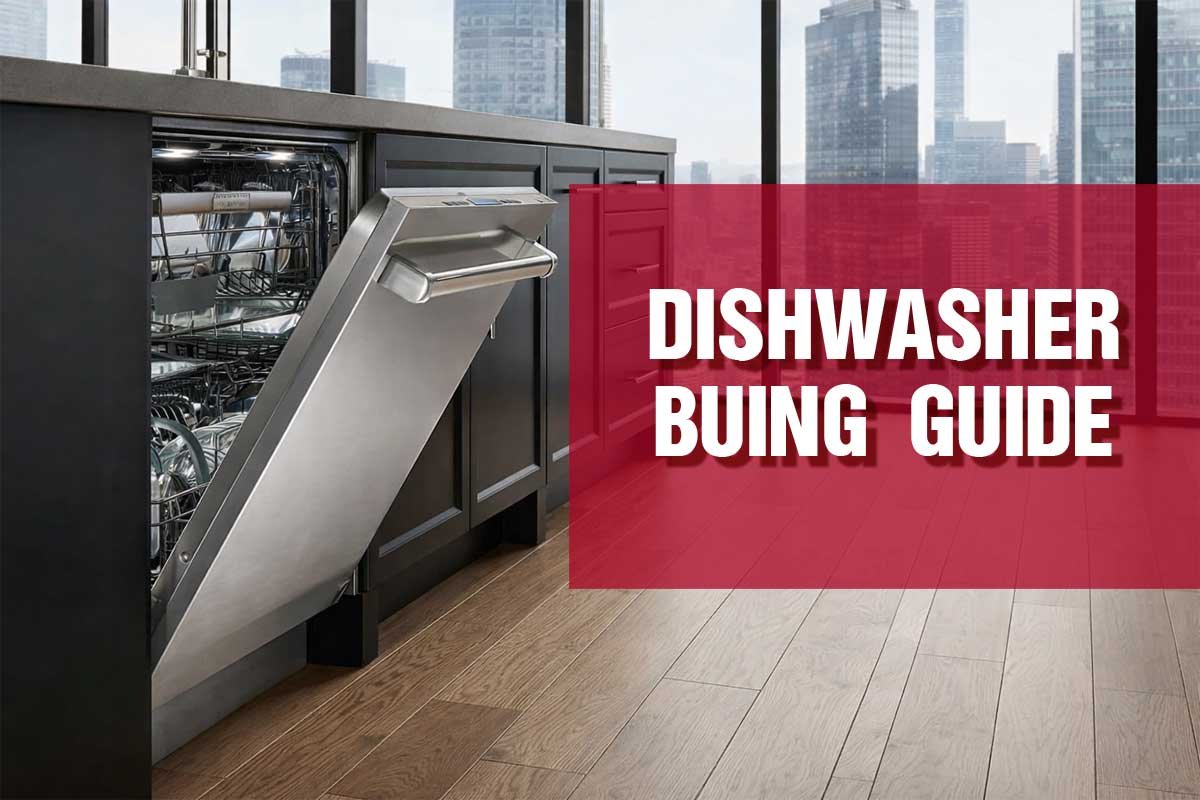
Choosing the right dishwasher buying guide matters more in 2026 than it did just a few years ago. Today’s dishwashers are quieter, more efficient, and packed with features—but not all of them improve real-world performance. For many homeowners, the challenge isn’t finding a dishwasher; it’s knowing which features actually make daily life easier and which ones simply add cost without long-term value.
This Dishwasher Buying Guide 2026 is designed to cut through the noise. Instead of brand hype or spec overload, we focus on the factors that genuinely impact cleaning results, energy use, reliability, and ease of use in typical US kitchens. Whether you’re replacing an aging unit or buying your first dishwasher, this guide will help you make a confident, well-informed decision that holds up years down the road.
Dishwasher Buying Checklist (Quick Overview)
Before diving into specs and brand names, it helps to step back and look at the decision as a whole. This dishwasher buying checklist highlights the factors that actually affect daily performance, comfort, and long-term reliability—not just what looks good on a product page.
✔ Dishwasher size and kitchen fit
✔ Noise level (measured in dBA)
✔ Wash cycles you’ll realistically use
✔ Energy and water efficiency (ENERGY STAR®)
✔ Interior layout and rack flexibility
✔ Drying performance
✔ Maintenance and filter system
✔ Reliability, warranty, and brand support
Expert insight:
In real-world use, most buyer regret comes from overlooking fit, noise, or interior layout—not from missing a “premium” feature.
If you keep these eight points in mind, you’ll avoid the most common (and costly) dishwasher mistakes US homeowners make.
Dishwasher Types: Which One Fits Your Kitchen?
Not all dishwashers are designed for the same type of home. Choosing the right dishwasher type is the foundation of a good buying decision—everything else comes second.
Built-In Dishwashers
Built-in models are the standard choice in most US kitchens. Installed under the counter, they offer full-size capacity and the widest range of features.
- Best for families and frequent use
- Most options for quiet operation and advanced drying
- Requires proper plumbing and electrical connections
From testing and long-term ownership data, built-in dishwashers deliver the best balance of performance, durability, and value for most households.
Countertop Dishwashers
Countertop dishwashers are compact units that sit on your counter and connect to a kitchen faucet.
- Ideal for apartments, RVs, and very small kitchens
- Lower capacity (typically 4–6 place settings)
- Minimal installation required
Quick reality check:
They’re not replacements for full-size models, but they can be a practical first dishwasher if space is limited.
Portable and Freestanding Dishwashers
These units roll into place and connect to the faucet when needed.
- Good option for renters
- Full-size capacity without permanent installation
- Takes up floor space when stored
They’re less common today, but still useful in older apartments where built-in installation isn’t possible.
Drawer Dishwashers
Drawer dishwashers use one or two pull-out drawers instead of a traditional door.
- Ergonomic loading and unloading
- Flexible for small or frequent loads
- Higher price point
Expert note:
Drawer models shine in design-forward kitchens, but they’re usually not the best value for large families.
Dishwasher Size & Capacity Explained
A dishwasher that doesn’t fit your space—or your daily load—quickly becomes frustrating. Size and capacity are not just measurements; they directly affect usability.
Standard vs Compact Width
- 24-inch dishwashers: The US standard, ideal for most households
- 18-inch compact models: Designed for small kitchens and apartments
Always measure width, height, and depth before shopping—especially in older homes where cabinet dimensions can vary.
Place Settings: What the Numbers Really Mean
Manufacturers often advertise capacity in “place settings,” but those numbers can be misleading.
- 12–14 place settings: Best for families
- 8–10 place settings: Couples or small households
- 6 or fewer: Singles, RVs, or countertop models
From real-world loading tests, interior layout matters more than the headline number. Adjustable racks and a third rack often add more usable space than extra place settings.
Measuring Your Kitchen Correctly
Before you buy:
- Measure the cabinet opening
- Check door clearance and nearby drawers
- Confirm access to plumbing and power
Quick tip:
Measure twice. Most installation issues happen because buyers rely on “standard size” assumptions that don’t match their actual kitchen.
What We’ve Covered So Far
At this point, you should have clarity on:
- what type of dishwasher fits your home
- what size actually works in your kitchen
- which capacity matches your daily needs
These fundamentals make every next decision easier—and prevent expensive mistakes later.
Noise Levels (dBA): How Quiet Is Quiet Enough?
Noise level is one of the most misunderstood dishwasher specs. On paper, a few decibels may not sound like much—but in real kitchens, they make a noticeable difference.
Dishwasher noise is measured in decibels (dBA). The lower the number, the quieter the machine.
Understanding dBA Ratings in Real Life
Here’s how dBA ranges translate into everyday use:
- 52 dBA and above – Clearly audible; noticeable during TV or conversations
- 46–50 dBA – Moderately quiet; acceptable in closed kitchens
- 44–45 dBA – Quiet enough for most homes
- 39–43 dBA – Very quiet; ideal for open-plan layouts
Expert insight:
From real-world use, most US homeowners are happiest once noise drops below 45 dBA. Anything quieter is a comfort upgrade—not a necessity.
Do You Really Need an Ultra-Quiet Dishwasher?
Ultra-quiet models often cost more, but they’re not always worth the premium.
- Open-concept kitchens benefit the most
- Night-time runs matter if you’re a light sleeper
- Closed kitchens usually don’t need sub-40 dBA models
Quick tip:
Don’t overpay for silence you won’t notice. Match the noise level to how your kitchen is actually used.
Wash Cycles & Cleaning Performance
Modern dishwashers advertise long lists of cycles, but most households rely on just a handful. What matters is how well the dishwasher cleans—not how many buttons it has.
Core Cycles You’ll Actually Use
These cycles cover nearly all real-life needs:
- Normal – Everyday loads
- Heavy / Pots & Pans – Baked-on food and cookware
- Quick / Express – Lightly soiled dishes
- Auto / Sensor Wash – Adjusts water and time automatically
From testing across multiple households, auto-sensing cycles often deliver the best balance of cleaning performance and efficiency.
Sensors, Spray Arms & Real Cleaning Power
Cleaning performance depends on more than cycle names.
- Soil sensors adjust water and temperature
- Multiple spray arms improve coverage
- Stainless steel tubs maintain heat better
Expert insight:
Dishwashers with good sensors often outperform models with more cycles but weaker wash systems.
Sanitizing & High-Temperature Options
Some dishwashers offer NSF-certified sanitize cycles.
- Useful for baby items and cutting boards
- Requires higher water temperatures
- Extends cycle time
These cycles add value—but only if you actually need them.
Interior Layout & Drying Performance
Interior design determines how easy a dishwasher is to live with. A well-designed layout saves time every single day.
Rack Flexibility & Loading Ease
Look beyond capacity numbers and focus on usability:
- Adjustable upper racks
- Fold-down tines for large items
- Third racks for utensils and small items
Real-world observation:
A flexible rack system often matters more than having a larger tub.
Handling Awkward Items
If you regularly wash:
- Large pots and pans
- Wine glasses or stemware
- Baby bottles or oddly shaped items
then interior flexibility becomes a priority—not a bonus feature.
Drying Performance: What Actually Works
Drying is where many dishwashers fall short, especially with plastics.
Common drying systems include:
- Heated drying – Faster, higher energy use
- Fan-assisted drying – More efficient
- Advanced systems (e.g., mineral-based or auto-door) – Best results, higher cost
Expert insight:
For most households, fan-assisted drying offers the best balance between performance and efficiency. Premium drying systems shine—but only if dry plastics matter to you.
Where You Are Now
At this stage, you understand:
- what noise level makes sense for your home
- which cycles actually matter
- how interior design affects daily use and drying results
These factors separate a dishwasher that looks good on paper from one that performs well in real life.
Energy & Water Efficiency (ENERGY STAR® Explained)
Energy efficiency isn’t just about lower utility bills—it’s also a strong indicator of modern engineering and long-term reliability. In the US, the ENERGY STAR® label @Energy Star program is the baseline standard you should look for.
What ENERGY STAR® Actually Means
ENERGY STAR® certified dishwashers meet strict federal efficiency guidelines.
- Use significantly less water per cycle
- Consume less electricity over time
- Typically include smarter sensors and cycle optimization
Expert insight:
In real-world testing, ENERGY STAR® dishwashers often outperform older models even on cleaning—despite using less water.
How Much Water Does a Dishwasher Really Use?
Modern dishwashers are far more efficient than most people expect.
- Newer models often use 3–4 gallons per cycle
- Hand-washing a full load typically uses more water
- Sensor cycles adjust usage based on soil level
Quick tip:
If efficiency matters, don’t rely on cycle length—look at gallons per cycle instead.
Long-Term Cost vs Purchase Price
An efficient dishwasher may cost more upfront, but over 7–10 years of use, savings add up.
- Lower water bills
- Reduced energy consumption
- Less wear from optimized cycles
From long-term ownership data, mid-range ENERGY STAR® models often deliver the best overall value.
Smart Dishwashers in 2026: Are They Worth It?
Smart features are becoming more common—but not every household benefits equally.
What “Smart” Really Includes
Smart dishwashers may offer:
- App-based cycle control
- Remote start and notifications
- Maintenance and error alerts
- Energy usage tracking
These features focus on convenience and monitoring, not cleaning power.
Who Benefits Most from Smart Features?
Smart functionality makes the most sense if:
- You run loads overnight or while away
- You want maintenance reminders
- You prefer app-based home control
Expert insight:
Smart features improve usability, but they rarely improve cleaning performance.
When Smart Dishwashers Aren’t Necessary
If you prefer simple controls and predictable routines, smart features may add cost without meaningful benefit.
Bottom line:
Smart dishwashers are a lifestyle upgrade—not a requirement.
Budget Guide: What You Get at Each Price Level
Understanding price tiers helps set realistic expectations. Paying more doesn’t always mean better results—it often means quieter operation and added convenience.
Entry-Level Dishwashers ($300–$600)
- Basic wash cycles
- Louder operation
- Plastic tubs
- Limited drying performance
Best for:
Budget-conscious buyers or light use.
Mid-Range Dishwashers ($600–$900)
- Quieter motors
- Stainless steel tubs
- Better drying systems
- More flexible interiors
Expert insight:
This is the sweet spot for most US households—strong performance without paying for extras you may not use.
High-End Dishwashers ($1,000+)
- Ultra-quiet operation
- Advanced drying technology
- Premium materials and design
- Smart connectivity
Best for:
Open-plan kitchens and buyers prioritizing silence and convenience.
Installation & Long-Term Maintenance
A dishwasher that’s easy to install and maintain saves money and frustration over time.
Installation Basics to Know
- Built-in models may require professional installation
- Countertop and portable units are often plug-and-play
- Always verify electrical and plumbing access
Expert tip:
Installation issues are one of the most common hidden costs—plan ahead.
Filters, Disposers & Maintenance
Maintenance-friendly features include:
- Removable filters
- Easy-access drain areas
- Self-cleaning cycles
From real-world ownership, dishwashers with simple filter access tend to last longer with fewer service calls.
Where This Leaves You
At this point, you’ve covered:
- efficiency and long-term costs
- smart vs non-smart value
- realistic budget expectations
- installation and upkeep essentials
You now have the information needed to narrow choices confidently—without chasing unnecessary features.
How All These Factors Come Together
At this point, it’s worth stepping back. Choosing a dishwasher isn’t about finding the model with the longest feature list—it’s about understanding how the pieces work together in your kitchen and daily routine.
A quiet machine won’t matter if it doesn’t fit your space. Advanced drying won’t impress if the interior layout slows you down every night. And smart features add little value if reliability and efficiency aren’t already there.
From real-world ownership patterns, the most satisfying purchases tend to come from balanced decisions—not extreme ones.
Internal Resources to Help You Narrow Your Choice
Once you understand the fundamentals, comparisons become much easier. These guides dive deeper into specific use cases and help translate theory into real product choices:
- Checklist for Choosing a Dishwasher – A quick decision framework before you shop
- Dishwasher Sizes and Dimensions Explained – Avoid fit and installation mistakes
- Common Dishwasher Features: What to Know Before Buying – Separate useful features from marketing extras
- Best Dishwashers for 2026 – Side-by-side comparisons based on real criteria
- Best Dishwashers Under $500 – Reliable options for tighter budgets
These resources build on what you’ve learned here—without repeating the same information.
When You’re Ready to Compare Models
If you’ve worked through this guide, you should now have a clear sense of:
- the right size and type for your kitchen
- the noise level that fits your space
- the cycles and features you’ll actually use
- a realistic budget range
At that point, comparing specific models becomes straightforward. We’ve already evaluated top-rated dishwashers using the exact criteria outlined above.
👉 Explore the Best Dishwashers for 2026
🟦 Check Price on Amazon
Frequently Asked Questions
How long should a dishwasher last?
Most dishwashers last 7–12 years, depending on usage, water quality, and maintenance. Models with easy-to-clean filters and efficient sensors tend to age better.
Is a quieter dishwasher always better?
Not necessarily. In closed kitchens, anything under 50 dBA is usually sufficient. Ultra-quiet models matter most in open-plan homes.
Are stainless steel tubs worth it?
Yes. Stainless steel tubs retain heat better, improve drying, and are generally more durable than plastic tubs.
Do smart dishwashers clean better?
No. Smart features add convenience and monitoring, but cleaning performance depends on wash system design and sensors—not connectivity.
Is hand-washing more efficient than a dishwasher?
In most US households, a modern ENERGY STAR® dishwasher uses less water than washing a full load by hand.
When should I replace my dishwasher instead of repairing it?
If your dishwasher is over 8–10 years old and repairs exceed half the cost of a new model, replacement usually makes more sense.
Final Thoughts: Choosing with Confidence
Choosing the right dishwasher isn’t about chasing trends or premium labels—it’s about matching the appliance to how you live.
When you focus on fit, noise, cleaning performance, efficiency, and long-term reliability, the decision becomes clear. You avoid costly mistakes, skip unnecessary features, and end up with a dishwasher that quietly does its job for years.
That’s the goal of this Dishwasher Buying Guide 2026: not to push a product, but to give you the clarity to choose the right one for your home—on your terms.