



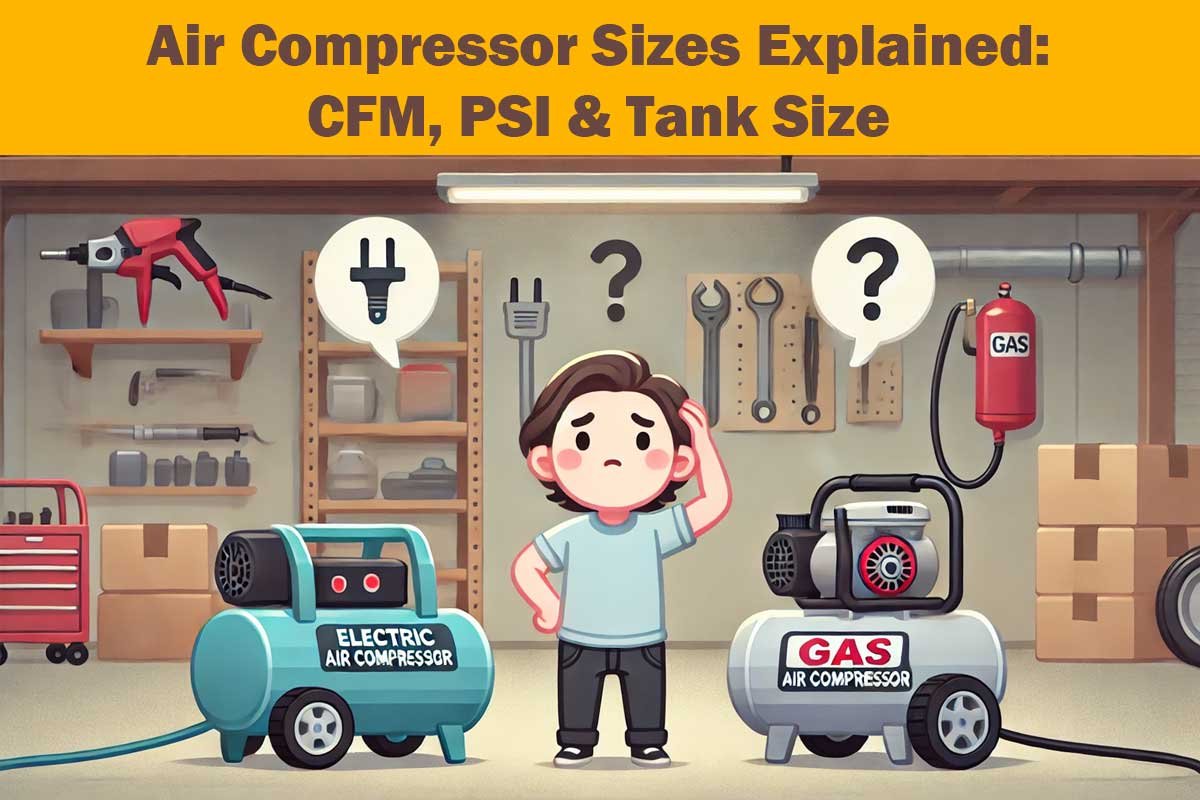
Choosing between electric vs gas air compressors is one of the most common — and most misunderstood — decisions buyers face. On the surface, it looks like a simple power question. In reality, it’s about where you work, how often you use air tools, and what trade-offs you’re willing to live with.
If you’re still figuring out what actually matters when choosing an air compressor, our air compressor buying guide walks through the key factors step by step — from airflow and noise to real-world use cases in home garages and job sites.
Over the years, I’ve seen homeowners buy gas compressors they never fully use — and contractors struggle with electric units that simply weren’t designed for their workload. The truth is, neither option is “better” across the board. Each excels in specific situations.
This comparison breaks down how electric and gas air compressors actually work, how they differ in real-world use, and which one makes more sense for your garage, workshop, or job site.
How Electric Air Compressors Work
Electric air compressors use an electric motor to drive a pump that compresses air into a storage tank. When you connect an air tool, that stored air is released at a regulated pressure to power the tool.
For most homeowners, this is the first — and often best — type of compressor they’ll own.
Why electric compressors are so popular:
- Clean operation (no exhaust fumes)
- Suitable for indoor and garage use
- Lower noise levels compared to gas models
- Simple plug-and-play setup
Electric compressors shine in residential environments: attached garages, basements, small workshops, and indoor renovation projects. As long as you have reliable power, they’re easy to live with and easy to maintain.
That said, electric models aren’t unlimited. Their output is tied to motor size and household electrical capacity. This is why understanding CFM, PSI, and tank size matters — factors that directly affect how well an electric compressor can keep up with your tools. We break this down in detail in our guide on air compressor sizes explained, with practical examples for home and DIY use.
For short to moderate sessions with nail guns, inflators, and light automotive tools, electric compressors feel smooth and predictable. For long, high-demand use, their limits show more quickly.
How Gas Air Compressors Work
Gas air compressors rely on a gasoline engine instead of an electric motor. That one difference completely changes how — and where — they’re used.
Because they don’t need electricity, gas compressors are built for mobility and independence. They’re common on construction sites, rural properties, and outdoor jobs because gas-powered compressors produce exhaust fumes. Safety guidelines recommend using them only outdoors or in properly ventilated environments.
Key strengths of gas-powered compressors:
- High air output for demanding tools
- No reliance on electrical outlets
- Designed for outdoor and remote use
- Better suited for continuous operation
However, those advantages come with trade-offs. Gas compressors are louder, produce exhaust fumes, and require engine maintenance. They’re not designed for enclosed spaces or attached garages.
In practice, gas compressors make sense when the job location dictates the tool — not the other way around. If you’re framing, roofing, or running air tools far from power, gas is often the only practical choice.
Electric vs Gas — Side-by-Side Comparison
Here’s where the differences become crystal clear.
Noise
Electric compressors are noticeably quieter, especially modern oil-free and low-RPM designs. In a home garage, this matters more than most buyers expect.
If noise is a deciding factor in your workspace, especially in attached garages or basements, we’ve compared the best quiet air compressors for indoor and garage use based on real-world sound levels and user feedback.
Gas compressors are loud by nature. Even well-built models produce enough noise to limit when and where they’re comfortable to use.
Power
Gas compressors generally deliver higher sustained airflow, making them better for heavy, continuous tool use.
Electric compressors provide more than enough power for most DIY and home garage tasks — but they’re not meant to run high-demand tools nonstop.
Maintenance
Electric models require minimal upkeep: keep them clean, drain the tank, and check fittings.
Gas compressors add engine maintenance to the mix — oil changes, fuel management, spark plugs, and winter storage considerations.
Bottom line:
Electric compressors win on convenience and comfort. Gas compressors win on independence and raw output.
Which One Is Better for Your Use Case?
Instead of asking which type is “better,” ask which one fits your reality.
For most residential setups, compressor choice comes down to comfort, noise, and how well the unit fits a typical garage environment.
Choose an electric air compressor if:
- You work in a home or attached garage
- Noise matters
- You value low maintenance
- Your projects are DIY, automotive, or home improvement focused
Choose a gas air compressor if:
- You work outdoors or remotely
- Power access is limited
- You use air tools for long, continuous sessions
- Noise and fumes aren’t dealbreakers
For most homeowners and DIY users, electric compressors are the smarter, more practical choice. That’s why the majority of models featured in our guide to best air compressors for home garages are electric.
Gas compressors earn their place — but only when the job truly demands them.
Conclusion
The electric vs gas air compressor debate isn’t about specs — it’s about fit.
Electric compressors dominate garages and workshops because they’re cleaner, quieter, and easier to live with. Gas compressors remain essential for job sites and remote work where power simply isn’t available.
If you’re still unsure, step back and consider how often you’ll use the compressor, where it will live, and what tools you actually run. For a deeper, end-to-end breakdown, our air compressor buying guide walks through every decision point step by step.
Choose the tool that works with you — not against you.
Electric vs Gas Air Compressors FAQs
Q1: Is a gas air compressor more powerful than an electric one?
Gas air compressors typically deliver higher sustained airflow, making them better for continuous, heavy-duty use. Electric compressors provide more than enough power for most home and DIY tasks.
Q2: Can I use a gas air compressor in my garage?
No. Gas air compressors produce exhaust fumes and should only be used outdoors or in well-ventilated areas.
Q3: Are electric air compressors strong enough for automotive work?
Yes. Many electric air compressors handle common automotive tools like impact wrenches, tire inflators, and air ratchets without issue.
Q4: Which type requires less maintenance?
Electric air compressors require significantly less maintenance than gas models, which need engine-related upkeep.
Q5: Why do contractors prefer gas air compressors?
Gas compressors offer independence from electrical power and sustained output, making them ideal for job sites and remote work.