



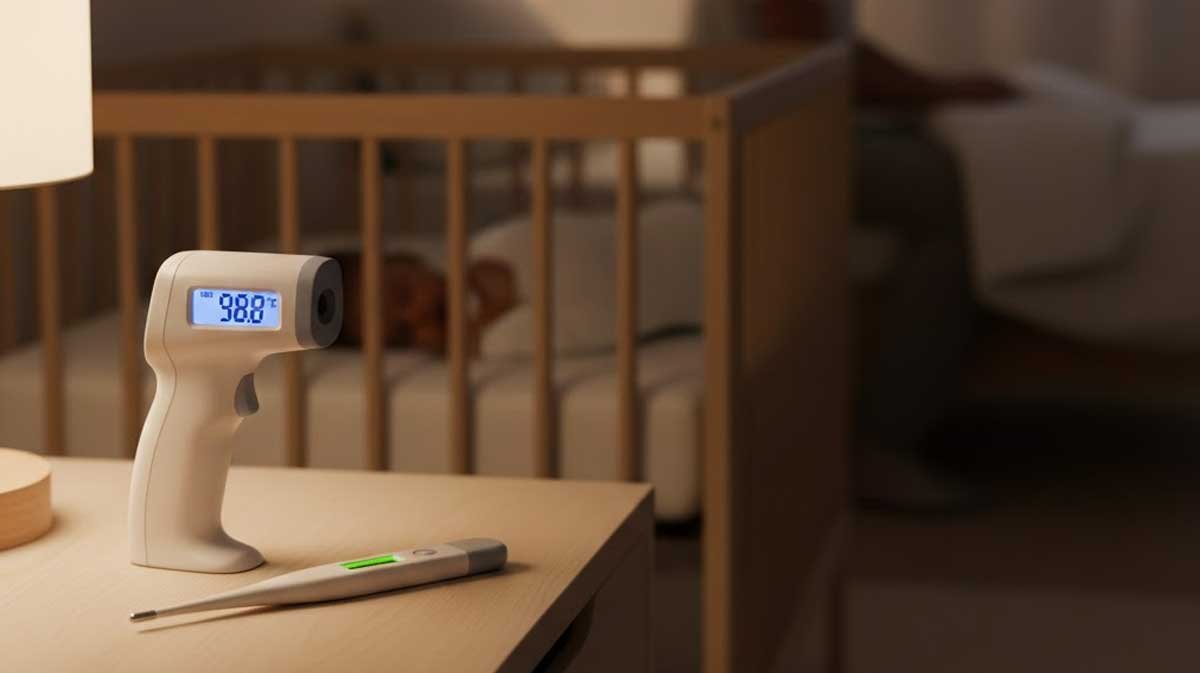
I didn’t plan on owning more than one baby thermometer. Before our newborn arrived, I assumed one would be enough—just another small item on an already overwhelming list of baby essentials. At the time, I didn’t think twice about how many thermometers do I need for my newborn; it felt like a simple decision with a simple answer.
That changed at 2 a.m., during one of those quiet early nights when everything feels heavier than usual. Our baby felt warmer than normal, and suddenly I was staring at the thermometer, wondering if the number on the screen was truly accurate—or if I should check again. That’s when the question really settled in: How many thermometers do I actually need for my newborn?
If you’re still deciding which thermometer feels right for your family, our best baby thermometers for newborns guide walks through safe, parent-approved options in detail, helping you understand what works best in real-life situations.
If you’re asking the same thing, you’re not overthinking it. Temperature checks usually happen when you’re tired, worried, and trying to make the best decision quickly. Having the right setup can turn a stressful moment into one that feels calmer and more manageable.
This article isn’t medical advice. It’s simply what I learned from real experience—what worked for us, what I wish I had known earlier, and how many thermometers actually made sense in daily life with a newborn.
The Question I Didn’t Expect to Ask at 2 a.m.
Before becoming a parent, I thought of a thermometer as a simple tool. You check the temperature, get a number, and move on. But newborn care doesn’t always work that neatly.
That first night, I took the reading once. Then again. And then I found myself wondering whether the thermometer was positioned correctly, whether the room temperature affected it, or whether I should double-check just to be safe. None of this came from panic—it came from wanting to be sure.
What surprised me most wasn’t the worry itself, but how quickly confidence fades when you’re exhausted and responsible for someone so small. In that moment, I realized that having just one way to check my baby’s temperature didn’t feel as reassuring as I expected.
For medical reference, the CDC guidance on infant fever explains when a temperature may need professional attention.
How Many Thermometers Do I Need for My Newborn — Is One Really Enough?
The honest answer is: sometimes yes—but not always.
When One Thermometer Can Work
If you have:
- a reliable, easy-to-use thermometer
- clear instructions you’re comfortable following
- a calm environment and time to recheck if needed
then one thermometer may be enough, especially during the first few days when everything is close at hand.
Many parents do perfectly fine with a single thermometer and never feel the need for another.
When One Starts to Feel Limiting
For us, one thermometer started to feel less sufficient when:
- readings didn’t match how our baby felt
- we needed to check temperature during the night
- batteries ran low at the worst possible time
In those moments, I didn’t want to guess. I wanted confirmation. And that’s where having more than one option made a difference.
Why I Ended Up With Two Thermometers (And Don’t Regret It)
We didn’t buy two thermometers at once. The second one came after a few uncertain checks and a growing sense that having a backup would help us feel more confident.
What changed immediately was the feeling—not the routine. I still checked our baby’s temperature calmly and carefully. But knowing I could confirm a reading if something felt off made the process far less stressful.
It wasn’t about owning more gadgets. It was about peace of mind.
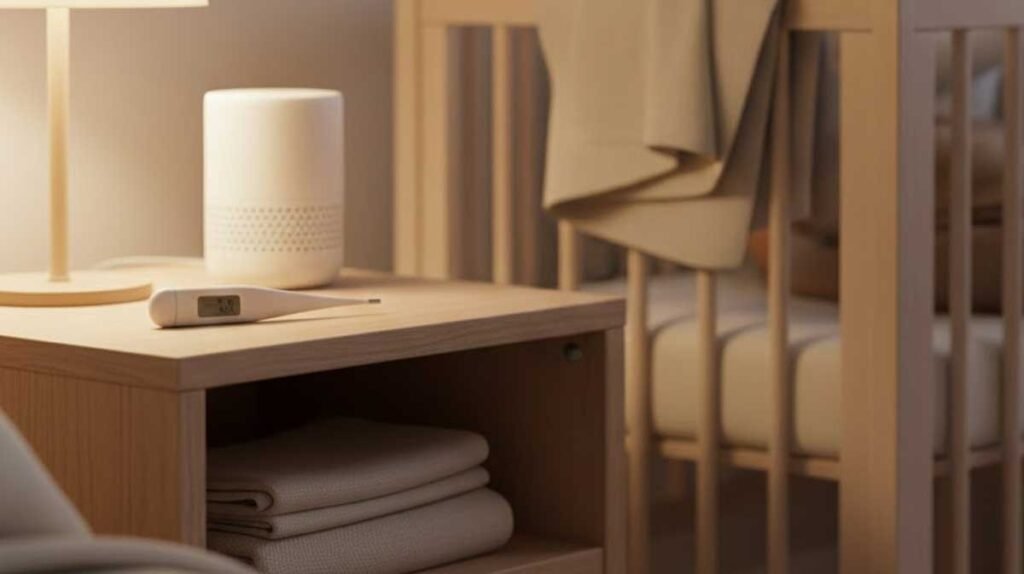
For us, the combination that worked best was:
- one non-contact thermometer for quick checks
- one digital thermometer as a reliable backup
Having two different types gave us reassurance without adding complexity.
If you’d like a deeper breakdown of which options tend to work best for newborns, we’ve covered that in our Best Baby Thermometers for Newborns (2026) guide.
What Types of Thermometers Make Sense Together
Not all thermometers serve the same purpose, and that’s something I didn’t fully understand at first.
Non-Contact Thermometers for Quick Checks
Non-contact thermometers became our go-to for:
- night checks without waking our baby
- quick reassurance when something felt “off”
- reducing handling during sleep
They’re fast and convenient, especially when you just want to know whether you need to look closer.
Digital Thermometers as a Backup
Digital thermometers felt more deliberate. We used them:
- when a reading seemed unusual
- when we wanted confirmation
- when speaking with our pediatrician
Having both options helped us stay calm and confident, rather than second-guessing ourselves.
Where I Keep Each Thermometer (This Matters More Than I Thought)
One small detail that made a bigger difference than expected was where we kept each thermometer.
The non-contact thermometer lives on our nightstand. It’s always within reach, especially during nighttime checks when walking across the room feels like a lot.
We also keep all health essentials together using a simple system from our newborn essentials checklist, which helps reduce stress during night checks.
The digital thermometer stays in our baby care drawer, along with other health essentials. We also keep a small travel thermometer in the diaper bag, which has been surprisingly useful.
Having a simple system means I never have to search—or think too hard—when it matters.
Do Pediatricians Recommend Having More Than One Thermometer?
When I eventually asked our pediatrician whether it made sense to have more than one thermometer, the answer was reassuringly simple.
There was no strict rule. No checklist. Just a calm explanation that accuracy and consistency matter more than the number of devices you own. What did come up was the idea of confirmation—especially for newborns.
Having a reliable way to double-check a reading can help parents feel more confident before making decisions or calling for advice. And confidence, I learned, plays a big role in how calmly you handle those moments.
The takeaway wasn’t “buy more,” but rather: use what helps you feel sure. For us, two thermometers did exactly that.
My Simple Rule for New Parents
After living through the early weeks, here’s the simple rule I’d share with any new parent:
If checking your baby’s temperature ever makes you doubt the result, having a second thermometer is worth it.
Not because something is wrong—but because peace of mind is valuable, especially when you’re learning and adjusting.
You don’t need a drawer full of devices. One primary thermometer and one reliable backup are often enough to cover everyday needs without overcomplicating things.
Final Thoughts — Choosing Calm Over Guesswork
Caring for a newborn is full of quiet decisions that don’t always feel small in the moment. Checking your baby’s temperature is one of them.
For some families, one thermometer will be enough. For others—especially those first few weeks—a second option brings reassurance when it’s needed most. Neither choice is wrong.
What matters is that you feel supported, confident, and able to respond calmly when questions come up. The right thermometer setup isn’t about gadgets or perfection. It’s about reducing uncertainty and helping you trust yourself as a parent.
You’re already doing that—one thoughtful decision at a time.