




The kitchen is one of the busiest rooms in any home—and surprisingly, it’s also one of the biggest sources of daily water use. From washing dishes and rinsing vegetables to cooking and cleaning, it’s easy for water to run continuously without us even noticing how much is being used.
Fortunately, learning how to save water in the kitchen doesn’t require expensive renovations or complicated equipment. In fact, many of the most effective water-saving strategies are simple habits that anyone can adopt immediately.
A few small changes—like running the dishwasher only when it’s full, installing a faucet aerator, or avoiding unnecessary rinsing—can significantly reduce water waste. Over time, these improvements can lower your utility bill while also helping conserve one of the planet’s most valuable resources.
Even better, modern kitchen technology now offers tools that make water conservation easier than ever. Efficient dishwashers, smart faucets, and leak detection systems allow homeowners to monitor and control water usage more effectively.
In this guide, we’ll explore 10 easy ways to save water in the kitchen, along with practical tips that work in real homes. Whether you’re trying to reduce water waste, lower your bills, or build a more sustainable lifestyle, these strategies can make a meaningful difference.
Why Saving Water in the Kitchen Matters
Before diving into the practical tips, it helps to understand why the kitchen plays such an important role in household water usage.
In the average home, the kitchen is responsible for a significant portion of daily water consumption. Dishwashing, food preparation, and general cleaning all require water, and these activities happen multiple times throughout the day.
However, much of this water use is often unnecessary.
For example, leaving the faucet running while rinsing dishes or washing produce can waste several gallons of water in just a few minutes. Over the course of a year, these small habits can add up to thousands of gallons of wasted water.
Reducing water use in the kitchen offers several benefits:
- lower household utility bills
- reduced strain on local water supplies
- a more environmentally responsible home
Most importantly, improving kitchen efficiency doesn’t require sacrificing convenience. With the right habits and a few smart upgrades, it’s possible to maintain a fully functional kitchen while using significantly less water.
10 Easy Ways to Save Water in the Kitchen
1. Run the Dishwasher Only When It’s Full
One of the simplest ways to save water in the kitchen is to avoid running the dishwasher with only a few items inside.
Although modern dishwashers are far more efficient than older models, each cycle still uses several gallons of water. Running the machine half-empty essentially doubles the amount of water required to clean the same number of dishes.
Instead, wait until the dishwasher is fully loaded before starting a cycle.

This simple habit maximizes the efficiency of each wash and ensures that the water being used is doing the most work possible.
Fortunately, most modern dishwashers are designed to handle large loads efficiently. Advanced spray arms and optimized wash cycles distribute water evenly across all racks, meaning that a full dishwasher often cleans dishes just as effectively as a partially loaded one.
Additionally, many newer models include eco or energy-saving cycles that further reduce both water and electricity usage.
If you’re curious about how efficient modern machines have become, you may also want to explore how much water a dishwasher actually uses, since many models now use surprisingly small amounts of water per cycle.
2. Avoid Washing Dishes Under Running Water
Many people develop the habit of rinsing dishes under a continuously running faucet. While this may seem harmless, it can waste a surprising amount of water.

In fact, a typical kitchen faucet releases about 2 gallons of water per minute. If the faucet runs for five minutes while washing dishes, that’s already 10 gallons of water used—often unnecessarily.
A more efficient method is to fill one side of the sink or a small basin with water for rinsing dishes instead of letting the faucet run constantly.
Another effective strategy is to simply scrape leftover food into the trash or compost before loading dishes into the dishwasher, rather than rinsing them thoroughly under running water.
Modern dishwashers are designed to handle small food residues without problems. By reducing unnecessary rinsing, you can save a significant amount of water over time.
In many cases, switching to this simple method can reduce dishwashing water use by dozens of gallons per week.
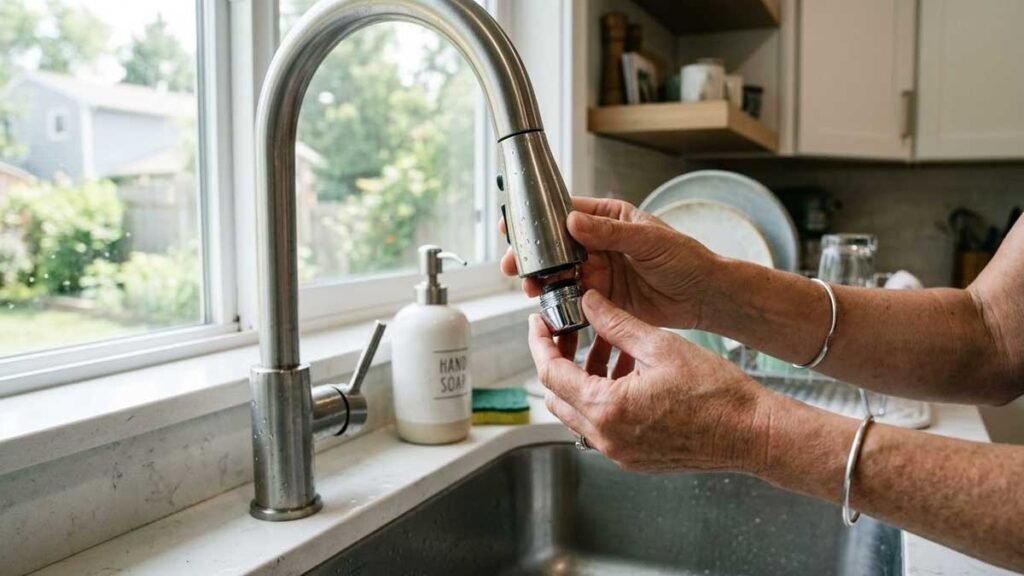
3. Install a Faucet Aerator
If you’re looking for one of the easiest and most affordable ways to reduce kitchen water usage, installing a faucet aerator is a great place to start.
A faucet aerator is a small attachment that screws onto the end of a kitchen faucet. It mixes air with the water stream, allowing the faucet to maintain strong pressure while using significantly less water.
Without an aerator, many faucets release around 2 to 2.5 gallons of water per minute. With an aerator installed, that flow rate can often be reduced to 1.0–1.5 gallons per minute.
The difference may seem small, but over the course of a year it can save thousands of gallons of water.
Another advantage is that aerators are extremely easy to install. In most cases, they simply screw onto the faucet by hand and take less than a minute to attach.
Because they are inexpensive and widely available, faucet aerators are often considered one of the best quick upgrades for a more water-efficient kitchen.
4. Fix Kitchen Faucet Leaks Immediately
At first glance, a small dripping faucet might not seem like a serious problem. However, even a slow leak can waste a surprising amount of water over time.
In fact, a faucet that drips just once per second can waste more than 3,000 gallons of water per year. That’s enough water to run dozens of dishwasher cycles or wash hundreds of loads of dishes.
Because kitchen sinks are used frequently throughout the day, leaks often go unnoticed or are simply ignored.
Fortunately, fixing a leaking faucet is usually a quick and inexpensive repair. In many cases, the problem is caused by a worn washer, cartridge, or seal inside the faucet.
Replacing these small components often takes less than 30 minutes and can immediately stop the water waste.
In addition to conserving water, fixing leaks also helps prevent other issues such as mineral buildup, water damage under the sink, and increased utility costs.
For homeowners looking to save water in the kitchen, addressing faucet leaks should always be one of the first steps.
5. Use a Dishwasher Instead of Hand Washing
Many people assume that washing dishes by hand uses less water than running a dishwasher. However, in most cases the opposite is true.
Modern dishwashers are specifically designed to use water efficiently. While older models could consume large amounts of water, newer machines often use as little as 3 to 5 gallons per cycle.
By comparison, washing dishes under a running faucet can easily use 20 gallons of water or more.
Dishwashers also reuse the same water during multiple spray cycles, allowing them to clean dishes effectively while using less water overall.
In addition, many newer models include eco cycles that further reduce both water and electricity consumption.
This is one reason why energy-efficient dishwashers are often recommended as part of a sustainable kitchen.
If you want to better understand how efficient modern machines have become, it can be helpful to explore how much water a dishwasher actually uses, since many homeowners are surprised by the results.
As a general rule, running a full dishwasher once per day is usually far more water-efficient than washing dishes by hand multiple times throughout the day.
6. Wash Fruits and Vegetables in a Bowl
Another common source of water waste in the kitchen occurs when fruits and vegetables are rinsed under a continuously running faucet.
Although this may seem like the easiest method, it often uses far more water than necessary.
Instead, try filling a bowl or large container with water and washing produce inside it.
This method allows dirt and debris to be removed effectively while using only a small amount of water.
Once the produce is clean, the water from the bowl can even be reused for other purposes. For example, many people use it to water houseplants or garden plants.
This simple habit not only helps reduce water waste but also encourages a more mindful approach to everyday kitchen tasks.
Additionally, washing produce in a bowl often cleans fruits and vegetables more thoroughly because they can be gently agitated in the water rather than simply rinsed quickly under the tap.
While this small change may seem minor, it can make a noticeable difference in overall household water usage over time.
7. Keep Drinking Water in the Refrigerator
Many people turn on the kitchen faucet and let the water run for several seconds while waiting for it to become cold enough to drink. Although this habit may seem harmless, it can waste a surprising amount of water over time.
If the faucet runs for even 20–30 seconds each time someone fills a glass, several gallons of water can easily be wasted throughout the day.
A simple solution is to keep a pitcher or bottle of drinking water in the refrigerator. This way, cold water is always available without needing to run the faucet unnecessarily.
Not only does this help save water in the kitchen, but it also makes it more convenient for everyone in the household to grab a cold drink quickly.
Many households also find that using a reusable glass pitcher encourages better hydration habits because cold water is always ready to serve.
Over time, this small adjustment can reduce water waste significantly—especially in homes where the faucet is frequently used for drinking water.
8. Install a Smart Kitchen Faucet
Technology is making it easier than ever to create a more efficient and sustainable kitchen.
One upgrade that is becoming increasingly popular is the smart kitchen faucet.
Unlike traditional faucets, smart faucets often include features such as:
- motion sensors that automatically turn water on and off
- touch controls that reduce unnecessary running water
- programmable flow settings for different tasks
Because the faucet automatically shuts off when hands or dishes are removed, water cannot accidentally be left running.
This alone can prevent a large amount of water waste, especially in busy households where the sink is used frequently throughout the day.
Some advanced smart faucets also allow homeowners to set precise water quantities—for example, dispensing exactly one cup of water for cooking or measuring ingredients.
These small innovations help improve both convenience and water efficiency, making smart faucets an excellent addition to an eco-friendly kitchen.
9. Reuse Cooking Water When Possible
Another simple yet effective way to reduce water waste in the kitchen is to reuse cooking water whenever possible.
For example, when vegetables are boiled or pasta is cooked, the remaining water often still contains useful nutrients.
Instead of pouring it directly down the drain, the water can be reused in several ways.
Some practical options include:
- watering plants once the water cools
- using the water for soups or sauces
- soaking stubborn cookware before washing
Reusing cooking water not only reduces waste but also encourages a more mindful approach to everyday kitchen routines.
In many households, these small adjustments gradually lead to a more sustainable cooking environment without requiring any special equipment.
While the amount of water saved from each instance may seem small, these habits can add up over time.
10. Choose Water-Efficient Appliances
Finally, one of the most effective long-term strategies for reducing water use in the kitchen is choosing water-efficient appliances.
Modern appliances are designed with efficiency in mind, and many use far less water than older models.
Dishwashers are a great example.
While older machines sometimes required large amounts of water per cycle, many newer dishwashers now use as little as 3–4 gallons of water to clean a full load of dishes.
Because of this efficiency, a dishwasher can often clean dishes using less water than hand washing.
For homeowners looking to reduce both water and energy usage, upgrading to an efficient dishwasher can make a noticeable difference.
If you’re researching kitchen upgrades, it’s also helpful to understand how much water a dishwasher typically uses, since modern designs are far more efficient than many people realize.
When combined with good habits—such as running the dishwasher only when full—efficient appliances can significantly reduce household water consumption.
Smart Devices That Help Save Water in the Kitchen
While simple habits can significantly reduce water waste, modern technology makes it even easier to manage water usage more efficiently. Today’s smart home devices are designed to help homeowners monitor, control, and optimize water consumption throughout the house—including in the kitchen.
These devices not only improve convenience but also help detect problems early and prevent unnecessary water waste.
Let’s look at a few smart solutions that can make a noticeable difference.
Smart Leak Detectors
Small leaks are one of the most common causes of hidden water waste in the kitchen. A slow drip under the sink or a loose connection behind an appliance can waste hundreds or even thousands of gallons of water before the problem is discovered.
This is where smart leak detectors can be extremely useful.
These compact devices are typically placed under kitchen sinks, behind dishwashers, or near water supply lines. If they detect moisture or unusual water flow, they immediately send an alert to your smartphone.
Some advanced systems can even shut off the water supply automatically to prevent further leakage.
By detecting problems early, smart leak detectors help homeowners avoid both water waste and costly repairs.
Smart Water Monitoring Systems
Another helpful technology is a whole-home water monitoring system.
These devices are installed near the main water line and track water usage throughout the entire house in real time.
Using a smartphone app, homeowners can see detailed information such as:
- daily water consumption
- unusual spikes in water usage
- potential leaks or plumbing issues
Over time, these monitoring systems help identify patterns in water usage and highlight opportunities to reduce waste.
For example, you might discover that certain appliances use more water than expected or that small leaks are increasing overall consumption.
Having this information makes it easier to adjust habits and improve efficiency in the kitchen and beyond.
Smart Faucets and Flow Sensors
As mentioned earlier, smart kitchen faucets can significantly reduce water waste.
However, another useful device is a faucet flow sensor.
These small tools measure how much water flows through the faucet and provide detailed feedback through a smartphone app. Some models even display real-time water usage directly on the device.
Over time, this data helps homeowners become more aware of their water habits.
When people can clearly see how much water is being used, they often naturally adjust their behavior—such as turning the faucet off sooner or avoiding unnecessary rinsing.
In many homes, this increased awareness alone leads to noticeable reductions in water usage.
FAQ – People Also Ask
How can I save water in the kitchen easily?
The easiest ways to save water in the kitchen include running the dishwasher only when it is full, installing a faucet aerator, fixing leaking faucets quickly, and avoiding rinsing dishes under a running tap. These simple habits can significantly reduce water waste without requiring expensive upgrades.
Does a dishwasher use less water than hand washing?
Yes, in most cases modern dishwashers use significantly less water than washing dishes by hand. Many efficient dishwashers use only 3–5 gallons of water per cycle, while hand washing dishes under a running faucet can use 20 gallons or more.
What wastes the most water in the kitchen?
Common sources of water waste in the kitchen include running the faucet while washing dishes, rinsing fruits and vegetables under a constant stream of water, and ignoring small faucet leaks. These habits can add up to hundreds of gallons of wasted water each month.
How much water does a dishwasher use?
Most modern dishwashers use between 3 and 6 gallons of water per cycle, depending on the model and selected wash program. Energy-efficient dishwashers often use even less water, especially when running eco cycles.
Are faucet aerators worth installing?
Yes, faucet aerators are one of the easiest and most affordable ways to reduce water usage in the kitchen. They mix air with the water stream, allowing the faucet to maintain strong pressure while using significantly less water.
Can smart faucets really save water?
Smart faucets can help reduce water waste by automatically shutting off when not in use and allowing precise control of water flow. Many models also include sensors or timers that prevent water from running longer than necessary.
Why is saving water at home important?
Reducing household water usage helps conserve natural resources, lower utility bills, and decrease the energy required for water treatment and heating. Even small changes in daily habits can make a meaningful environmental impact over time.
Final Thoughts: Small Kitchen Habits Can Save a Lot of Water
Saving water in the kitchen doesn’t require major renovations or expensive equipment. In fact, many of the most effective changes come from simple adjustments in everyday habits.
From running the dishwasher only when it’s full to installing a faucet aerator or fixing small leaks quickly, these small improvements can significantly reduce water waste over time.
In addition, modern kitchen appliances and smart home technologies now make it easier than ever to monitor and control water usage.
When efficient appliances are combined with mindful habits, households can reduce water consumption while maintaining the same level of convenience and comfort.
Most importantly, conserving water at home helps protect one of the planet’s most valuable resources.
By adopting even a few of these strategies, homeowners can lower their utility bills, reduce environmental impact, and contribute to a more sustainable future for the next generation.