



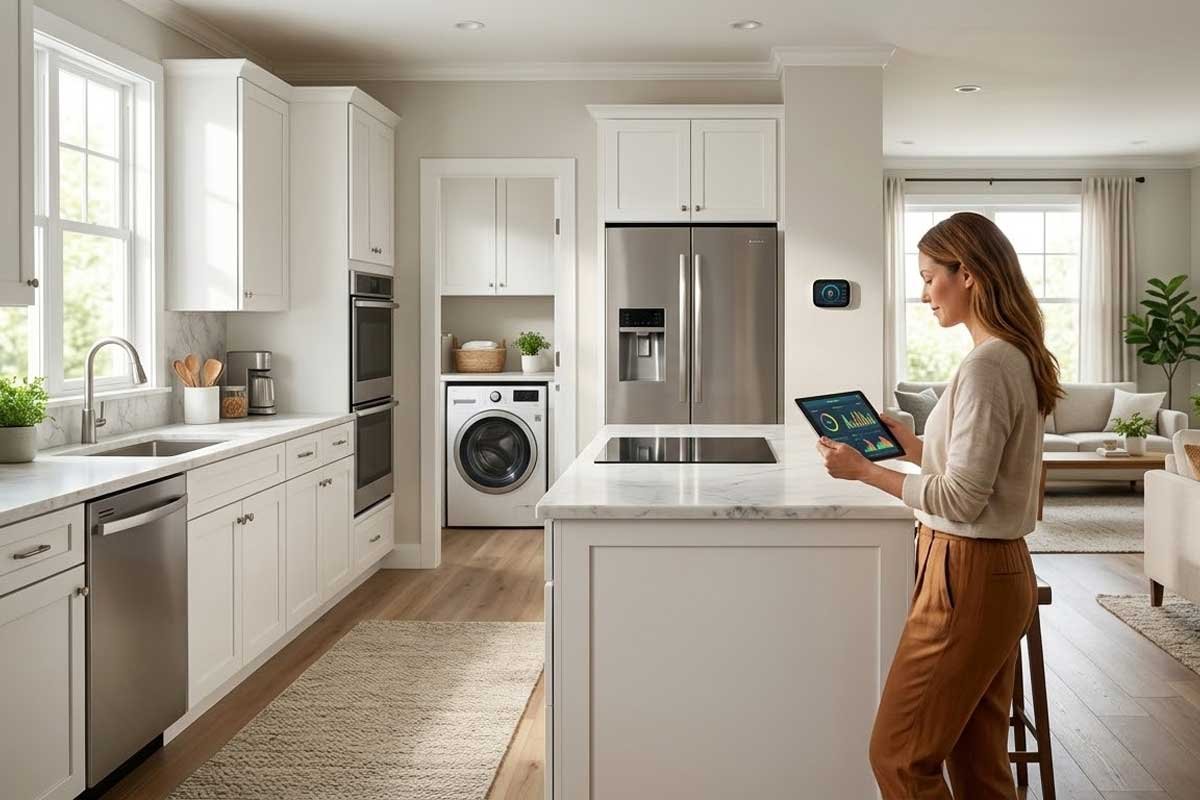
Electricity bills have been rising steadily over the past few years, and many homeowners are asking the same question: what appliances use the most electricity in a house?
The truth is, a surprisingly small number of devices account for the majority of household energy consumption. While lights, chargers, and small electronics do use electricity, the real energy demand usually comes from larger appliances that generate heat, move air, or run continuously throughout the day.
In fact, according to energy studies in the United States, just a handful of appliances—such as heating systems, water heaters, dryers, and refrigerators—can easily account for more than half of a home’s total electricity use.
However, understanding which appliances consume the most power is only the first step. Once you know where the energy goes, it becomes much easier to reduce waste, optimize appliance usage, and lower your monthly electricity bill.
Fortunately, modern technology also offers practical solutions. From energy-efficient appliances and smart thermostats to smart plugs and home energy monitoring systems, homeowners now have better tools than ever to track and control electricity usage.
So in this guide, we’ll take a closer look at the 12 appliances that use the most electricity in your home, how much energy they typically consume, and—perhaps most importantly—what you can do to reduce their impact on your energy bill.
Why Some Appliances Use More Electricity Than Others
Before diving into the list, it helps to understand why certain appliances consume significantly more electricity than others.
Not all appliances are created equal. Some devices operate occasionally and use only small amounts of power, while others run continuously or rely on heating elements that demand large amounts of electricity.
In general, appliances that use the most electricity tend to fall into three main categories: heating appliances, motor-driven systems, and devices that operate 24/7.
Let’s break this down a bit further.
Heating Appliances Use the Most Energy
First and foremost, appliances that generate heat typically consume the most electricity.
Heating elements require a large amount of energy because they convert electrical power directly into heat. As a result, devices like water heaters, electric dryers, ovens, and space heaters often rank among the biggest energy users in the home.
For example, an electric clothes dryer may use between 2,000 and 5,000 watts during operation. Similarly, electric water heaters rely on powerful heating elements to warm dozens of gallons of water every day.
Because of this, even moderate usage of these appliances can significantly impact a household’s energy consumption.
However, there is good news. Many newer appliances include energy-efficient modes and improved insulation, which help reduce electricity usage without sacrificing performance.
Motor-Driven Appliances Run Frequently
Another major source of electricity consumption comes from appliances that rely on electric motors.
Unlike heating appliances that consume large bursts of power, motor-driven appliances often use smaller amounts of electricity continuously throughout the day.
Common examples include:
- refrigerators
- air conditioners
- washing machines
- pool pumps
- ventilation systems
Take refrigerators, for instance. While a refrigerator does not use extreme amounts of electricity at any single moment, it runs 24 hours a day, 365 days a year. Over time, this continuous operation adds up.
Similarly, air conditioning systems rely on compressors and fans that must run for extended periods to maintain comfortable indoor temperatures.
As a result, these appliances become significant contributors to overall electricity use.
Appliance Age and Efficiency Matter
In addition to heating and motor systems, the age of an appliance also plays a major role in energy consumption.
Older appliances were often designed before modern efficiency standards existed. Consequently, they can consume 30–50% more electricity than newer models performing the same tasks.
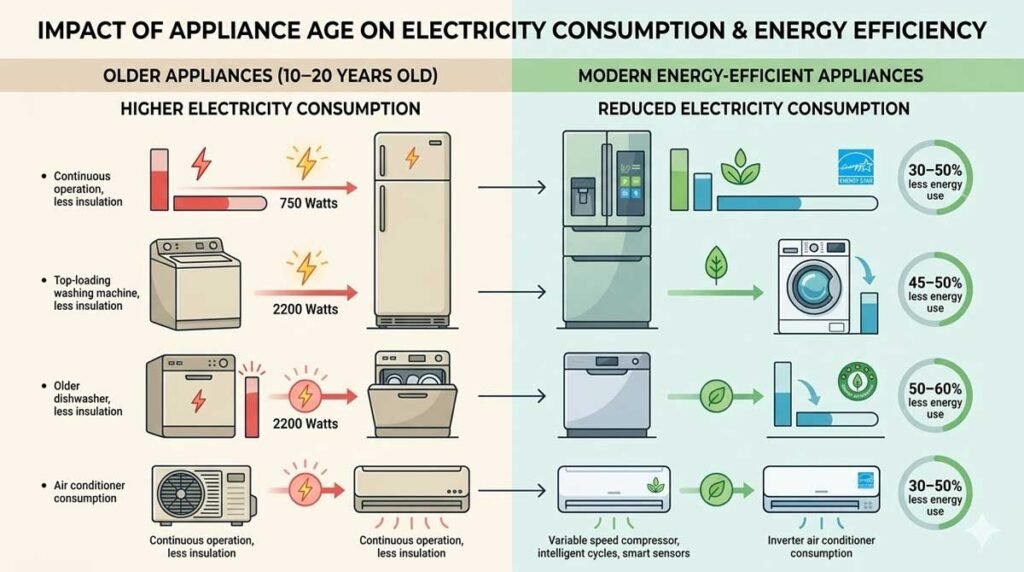
For example:
- an older refrigerator from the early 2000s may use twice as much electricity as a modern energy-efficient model
- outdated air conditioners often lack inverter technology that reduces power consumption
- older dishwashers and washing machines frequently use more water and energy per cycle
Because of these improvements, replacing outdated appliances with Energy Star–certified models can significantly reduce electricity usage over time.
Of course, replacing appliances isn’t always necessary immediately. In many cases, simple changes—such as using eco cycles, running full loads, or maintaining appliances properly—can already lead to noticeable energy savings.
The 12 Appliances That Use the Most Electricity in Your Home
Now that we understand why certain appliances consume more electricity than others, let’s take a closer look at the biggest energy users in the average household.
While the exact numbers vary depending on the size of the home and local climate, the following appliances consistently rank among the highest electricity consumers in most homes.
More importantly, understanding how these appliances work—and how to use them efficiently—can help reduce overall energy consumption without sacrificing comfort.
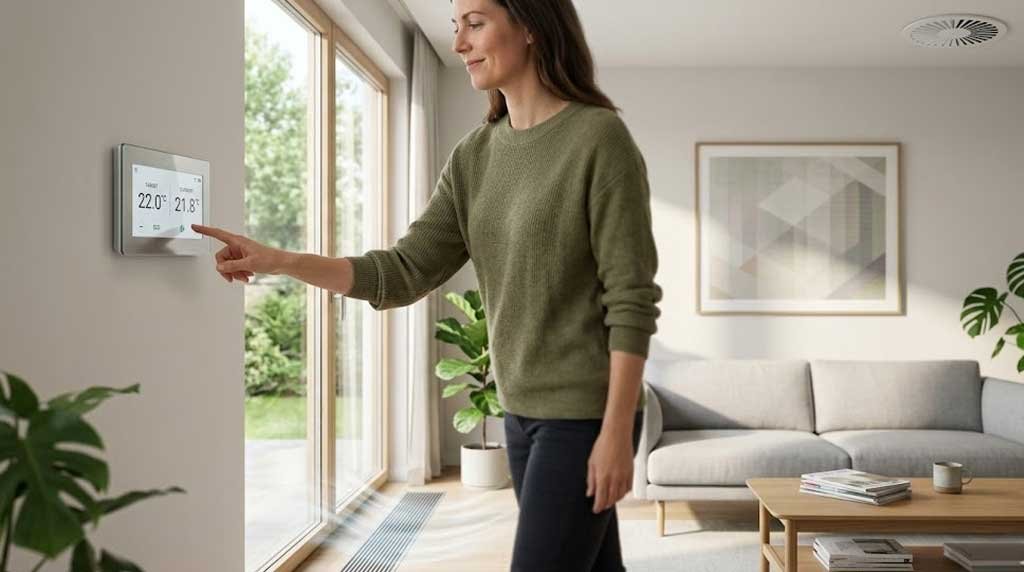
1. Heating and Cooling Systems (HVAC)
When it comes to household energy consumption, heating and cooling systems are typically the largest electricity users in the entire home.
In fact, in many U.S. households, HVAC systems can account for 40–50% of total electricity use.
These systems rely on powerful components such as compressors, fans, and heating elements to maintain comfortable indoor temperatures throughout the year. During extreme summer or winter conditions, HVAC systems may run for many hours each day.
Consequently, even small improvements in HVAC efficiency can lead to significant reductions in electricity consumption.
However, there are several practical ways to reduce the energy impact of heating and cooling systems.
For example:
- installing a smart thermostat can automatically adjust temperatures based on your schedule
- improving home insulation helps keep warm or cool air inside the house
- sealing windows and doors reduces energy loss
- regular HVAC maintenance improves overall efficiency
In addition, many modern HVAC systems now include variable-speed compressors and energy-saving modes, which allow the system to adjust power usage depending on demand.
As a result, homeowners can maintain comfort while significantly lowering electricity consumption.
2. Water Heaters
Water heaters are another major contributor to household electricity usage.
After heating and cooling systems, the water heater is often the second-largest energy consumer in a home, accounting for roughly 15–20% of total electricity use.
This is because heating water requires a significant amount of energy. Every time you take a shower, run the dishwasher, or wash clothes with hot water, the water heater must work to replace the hot water that has been used.
Traditional storage-tank water heaters keep a large tank of water heated throughout the day. While this ensures that hot water is always available, it also means the system constantly consumes energy to maintain the temperature.
Fortunately, there are several ways to improve water heater efficiency.
For instance:
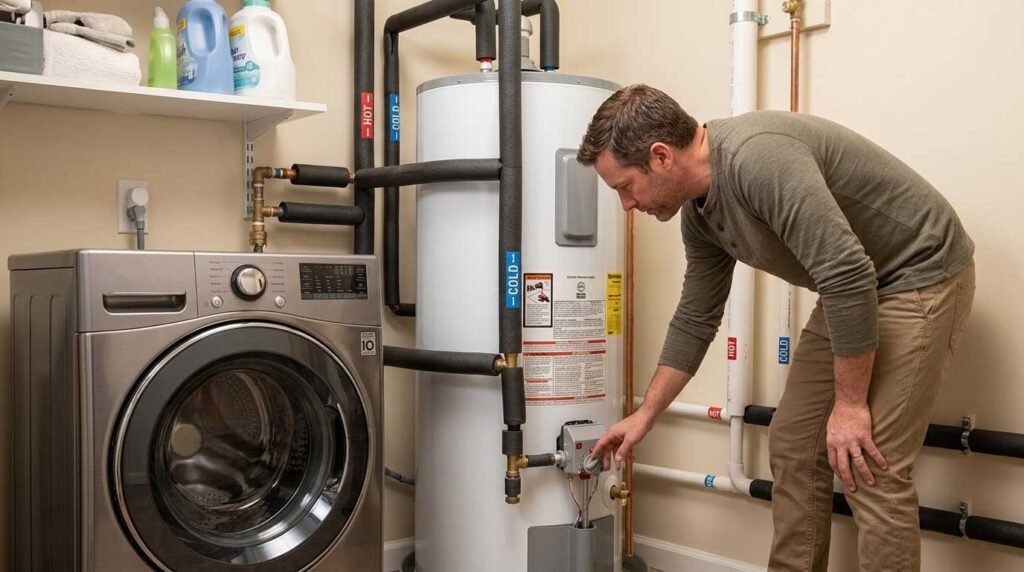
- lowering the thermostat to 120°F (49°C) can reduce energy consumption
- insulating hot water pipes prevents heat loss
- using low-flow showerheads reduces hot water demand
- switching to a tankless water heater can improve efficiency in some homes
Additionally, smart home technology is now entering the water heating space. Some modern systems allow homeowners to monitor hot water usage and adjust heating schedules through smartphone apps.
These improvements can make a noticeable difference in both energy consumption and utility costs.
3. Clothes Dryers
Clothes dryers are among the most energy-intensive appliances in the home.
Unlike washing machines, which primarily use electricity to power a motor and pump, dryers rely on powerful heating elements and airflow systems to remove moisture from clothing.
As a result, a typical electric dryer may consume between 2,000 and 5,000 watts during operation.
If your household runs several loads of laundry each week, this energy use can add up quickly.
Fortunately, there are several ways to make dryer usage more efficient.
First, consider using moisture sensor drying modes, which automatically stop the dryer when clothes are dry. This prevents unnecessary drying time and reduces electricity use.
Second, cleaning the lint filter regularly improves airflow and allows the dryer to operate more efficiently.
Another effective strategy is to reduce dryer usage altogether when possible.
For example:
- air-drying clothes on drying racks
- using outdoor clotheslines
- combining smaller laundry loads into full loads
In addition, newer dryers often include heat pump technology, which can dramatically reduce electricity consumption compared to traditional models.
Over time, these improvements can significantly lower household energy usage.
4. Refrigerators
Refrigerators are unique among household appliances because they operate continuously, day and night.
Unlike appliances that run occasionally, refrigerators must maintain a stable temperature at all times to keep food fresh and safe. As a result, even though each cooling cycle uses moderate power, the total electricity usage accumulates throughout the year.
On average, refrigerators account for roughly 7–10% of a home’s electricity consumption.
However, several factors influence how much energy a refrigerator uses.
For example:
- older refrigerators are often far less efficient than modern models
- large refrigerators require more energy to maintain temperature
- poor ventilation behind the refrigerator increases energy demand
Fortunately, improving refrigerator efficiency is often simple.
Some practical tips include:
- keeping the refrigerator temperature around 37–40°F (3–4°C)
- maintaining freezer temperature at 0°F (-18°C)
- cleaning the condenser coils regularly
- avoiding placing hot food directly inside the refrigerator
Additionally, modern Energy Star refrigerators use significantly less electricity than older units. In some cases, upgrading an outdated refrigerator can cut electricity usage nearly in half.
Smart refrigerators are also becoming more common, offering features that optimize cooling performance and energy efficiency.
5. Electric Ovens and Stoves
Electric ovens and stoves are another group of appliances that can consume significant amounts of electricity, particularly in households where cooking happens frequently.
Unlike small kitchen appliances, ovens rely on powerful heating elements that generate high temperatures. A typical electric oven can use between 2,000 and 5,000 watts during operation, depending on the temperature setting and cooking mode.
Similarly, electric stovetops also rely on heating elements that require substantial energy to maintain consistent cooking temperatures.
However, the total electricity used by ovens and stoves depends heavily on how they are used.
For instance, preheating an oven and then cooking multiple dishes at once is far more efficient than running the oven several times throughout the day.
In addition, some cooking methods naturally use less electricity than others.
For example:
- microwaves often use less energy for reheating food
- pressure cookers shorten cooking time
- convection ovens circulate hot air more efficiently
Another practical tip is to avoid opening the oven door frequently while cooking. Every time the door is opened, heat escapes, forcing the oven to work harder to restore the desired temperature.
Over time, adopting these small cooking habits can noticeably reduce electricity consumption in the kitchen.
6. Dishwashers
Dishwashers have become a standard appliance in most modern kitchens. While they do consume electricity, they are often more efficient than many people expect, especially when used correctly.
A dishwasher uses electricity primarily for two tasks:
- heating water for cleaning
- powering pumps that spray water onto dishes
Additionally, many dishwashers use electricity during the drying cycle, which can be one of the most energy-intensive parts of the process.
However, modern dishwashers have improved significantly in terms of efficiency. Many Energy Star–certified models use less electricity and water than older units.
In fact, compared to washing dishes by hand under running water, a modern dishwasher can often be the more efficient option.
Nevertheless, how the appliance is used makes a big difference.
For example, homeowners can reduce energy usage by:
- running the dishwasher only when it is fully loaded
- using eco or energy-saving wash cycles
- skipping heated drying and allowing dishes to air dry
- avoiding unnecessary pre-rinsing
Some newer models even include smart dishwasher technology that automatically adjusts water and energy use depending on the load.
Consequently, efficient dishwasher use can contribute to both electricity and water savings.
7. Washing Machines
Washing machines also play a significant role in household electricity consumption, although much of their energy use is connected to heating water.
When hot water cycles are used, the washing machine draws heated water from the water heater, which significantly increases overall energy consumption.
On the other hand, cold-water cycles require far less electricity.
Fortunately, modern laundry detergents are designed to work effectively even in cold water. As a result, switching to cold-water washing can dramatically reduce energy usage without affecting cleaning performance.
High-efficiency washing machines further improve energy savings by using advanced sensors and optimized drum movement.
These machines typically use:
- less water
- shorter cycles
- lower electricity consumption
Additionally, washing full loads instead of multiple small loads helps maximize efficiency.
Another useful strategy is to run washing machines during off-peak electricity hours, which may lower electricity costs depending on your utility provider.
Overall, simple laundry habits can make a meaningful difference in household energy consumption.
8. Portable and Window Air Conditioners
While central HVAC systems typically consume the most energy for cooling, portable and window air conditioners can also significantly increase electricity usage—especially during hot summer months.
These smaller air conditioning units are commonly used in:
- apartments
- home offices
- bedrooms
- older homes without central air conditioning
Although they are smaller than central systems, they often operate for long periods during hot weather.
A typical window air conditioner may consume between 500 and 1,500 watts, depending on its size and cooling capacity.
However, there are several ways to improve their efficiency.
For example:
- choosing models with inverter compressors reduces electricity use
- installing the unit in a well-insulated window prevents cool air loss
- using ceiling fans alongside AC units helps circulate cool air more effectively
Another increasingly popular solution is the use of smart air conditioners or smart AC controllers.
These devices allow homeowners to:
- schedule cooling times
- adjust temperatures remotely
- reduce unnecessary operation
Consequently, smart cooling technology can help maintain comfort while limiting electricity consumption.
9. Space Heaters
Space heaters may look small, but they can be surprisingly powerful when it comes to electricity consumption.
In fact, most electric space heaters use between 1,200 and 1,500 watts, which is similar to running a hair dryer continuously. Because they convert electricity directly into heat, they are among the least energy-efficient ways to heat a room.
However, space heaters remain popular because they provide quick, localized warmth—especially in bedrooms, home offices, or small apartments.
The problem occurs when these devices are used for long periods throughout the day. Running a space heater for several hours can significantly increase electricity usage, particularly during winter months.
That said, there are smarter ways to use space heaters efficiently.
For example:
- using them only in occupied rooms
- lowering the central thermostat while heating a small area
- choosing modern energy-efficient space heaters with thermostats
Some newer models even include smart temperature controls and automatic shutoff features, which prevent unnecessary energy consumption.
When used strategically, space heaters can complement central heating systems instead of replacing them.
10. Televisions and Entertainment Systems
Televisions themselves are not usually the largest electricity consumers in the home. However, modern entertainment setups often include several devices that run for many hours each day.
For instance, a typical living room entertainment system may include:
- a large television
- streaming devices
- gaming consoles
- sound systems
- media players
Individually, each device may use a moderate amount of electricity. But together—and especially when left running or in standby mode—they can add up.
In addition, large modern televisions, particularly those with large LED or OLED screens, consume more electricity than older smaller models.
Another common source of wasted energy is standby power, sometimes called phantom power. Even when turned off, many electronics continue to draw small amounts of electricity.
Over time, this background energy usage can account for 5–10% of total household electricity consumption.
Fortunately, this problem is easy to address.
Homeowners can reduce unnecessary electricity usage by:
- turning off devices completely instead of leaving them on standby
- using smart power strips that shut down idle electronics
- scheduling entertainment devices through smart home systems
These simple steps help eliminate hidden energy waste.
11. Computers and Home Office Equipment
With the rise of remote work, computers and home office equipment have become increasingly important contributors to household electricity consumption.
A typical home office setup might include:
- a desktop computer or laptop
- multiple monitors
- a printer
- networking equipment such as routers and modems
Desktop computers generally use more electricity than laptops because they require larger power supplies and cooling systems.
Additionally, monitors and office equipment often remain powered on throughout the day, even when not actively being used.
Fortunately, there are several easy ways to reduce electricity usage in home offices.
For instance:
- enabling sleep mode on computers when inactive
- shutting down equipment overnight
- using energy-efficient monitors
- replacing desktops with laptops when possible
Another effective solution is the use of smart plugs or smart power strips, which can automatically turn off office equipment during non-working hours.
Over time, these adjustments can significantly reduce electricity consumption.
12. Pool Pumps and Hot Tubs
For homeowners with pools or hot tubs, these systems can be among the largest electricity consumers in the entire household.
Pool pumps, for example, must circulate water through filtration systems to keep the pool clean and safe. Many pumps operate for 6–12 hours per day, depending on the pool size and filtration requirements.
Traditional pool pumps can use 1,500 to 2,500 watts, which means they can add substantial electricity costs over time.
Similarly, hot tubs require energy to maintain warm water temperatures, often running continuously throughout the day.
However, several improvements can reduce the energy impact of these systems.
For example:
- installing variable-speed pool pumps, which use significantly less electricity
- running pumps during off-peak hours
- using insulated covers for hot tubs to retain heat
- installing timers or smart controllers to optimize operation
In recent years, many pool systems have also integrated smart pool management technology, allowing homeowners to control pump schedules and monitor energy usage through smartphone apps.
As a result, pool and hot tub owners can enjoy these amenities while minimizing unnecessary electricity consumption.
How to Reduce Electricity Use from High-Energy Appliances
Now that we’ve identified the appliances that use the most electricity in your home, the next logical question becomes: how can you reduce their energy consumption without sacrificing comfort?
Fortunately, lowering electricity usage does not necessarily require replacing every appliance in your house. In many cases, small adjustments in how appliances are used can lead to noticeable energy savings.
Let’s look at several practical strategies that can help reduce electricity consumption across the biggest household energy users.
Upgrade to Energy-Efficient Appliances
One of the most effective long-term solutions is upgrading older appliances to modern energy-efficient models.
Appliance technology has improved dramatically over the past decade. Many newer models are designed to deliver the same performance while consuming significantly less electricity.
For example:
- modern refrigerators can use 40–50% less electricity than models produced 15–20 years ago
- high-efficiency washing machines use less water and energy per load
- energy-efficient dishwashers optimize water temperature and spray cycles
When shopping for new appliances, it is generally recommended to look for Energy Star–certified products, which meet strict efficiency standards.
Although upgrading appliances requires an initial investment, the long-term energy savings can often offset the cost over time.
Use Smart Thermostats for Heating and Cooling
Because heating and cooling systems are typically the largest electricity consumers in a home, optimizing their operation can produce significant savings.
This is where smart thermostats become extremely valuable.
Unlike traditional thermostats, smart thermostats can automatically adjust temperatures based on daily routines and occupancy patterns.
For instance, they can:
- reduce heating or cooling when nobody is home
- automatically adjust temperatures overnight
- optimize energy use during peak hours
Some smart thermostats even provide detailed reports showing how much energy is used each day.
As a result, many homeowners experience 10–20% reductions in heating and cooling costs after installing these systems.
Run Appliances During Off-Peak Hours
Electricity demand fluctuates throughout the day, and in many regions utility companies use time-of-use pricing, where electricity costs more during peak demand hours.
Consequently, running energy-intensive appliances during off-peak hours can reduce both energy costs and strain on the power grid.
Appliances that are ideal for off-peak scheduling include:
- dishwashers
- washing machines
- dryers
- water heaters
Many modern appliances and smart home systems allow users to schedule cycles automatically, ensuring they run during the most efficient times.
Maintain Appliances Regularly
Proper maintenance also plays a crucial role in reducing electricity consumption.
When appliances operate inefficiently, they often require more power to perform the same task.
Simple maintenance practices can make a noticeable difference.
For example:
- cleaning refrigerator condenser coils improves cooling efficiency
- emptying dryer lint filters improves airflow
- servicing HVAC systems ensures optimal performance
- checking door seals on refrigerators and ovens prevents energy loss
Although these tasks may seem small, they help appliances operate more efficiently and extend their lifespan.
Smart Devices That Help Reduce Energy Consumption
In addition to improving appliance habits, modern technology offers new ways to monitor and control electricity usage throughout the home.
Smart home devices make it easier than ever to identify energy waste and optimize appliance performance.
Here are some of the most useful tools homeowners can use.
Smart Thermostats
As mentioned earlier, smart thermostats are one of the most effective tools for reducing energy consumption.
They allow homeowners to:
- control temperatures remotely
- automate heating and cooling schedules
- monitor energy usage patterns
Over time, these systems learn household routines and automatically adjust settings to improve efficiency.
This automation helps maintain comfortable temperatures while minimizing unnecessary energy use.
Smart Plugs and Smart Power Strips
Another useful tool for reducing electricity waste is the smart plug.
Smart plugs connect to standard outlets and allow homeowners to control appliances through smartphone apps.
They can be used to:
- turn devices on or off remotely
- schedule power usage
- monitor electricity consumption
Smart power strips work similarly but are designed to manage multiple electronics at once.
These devices are particularly effective for reducing phantom power, which occurs when electronics consume electricity even when turned off.
Home Energy Monitoring Systems
Home energy monitors provide detailed insights into how electricity is used throughout a house.
These systems typically connect to the home’s electrical panel and track energy consumption in real time.
They can reveal:
- which appliances consume the most electricity
- daily and monthly usage trends
- unusual spikes in energy demand
Some advanced monitoring systems even identify individual appliances automatically.
By visualizing energy usage, homeowners gain a clearer understanding of where electricity is being wasted—and where improvements can be made.
Smart Water and Leak Detection Systems
Although primarily designed to prevent water damage, smart leak detection systems can also help conserve water and energy.
These devices monitor plumbing systems and send alerts when unusual water flow is detected.
In some cases, they can even automatically shut off the water supply to prevent leaks from causing damage.
Because water heating is a major energy expense, preventing unnecessary water loss also helps reduce electricity consumption.
Final Thoughts: Understanding Your Home’s Biggest Energy Users
Electricity consumption in the home is often influenced by a small number of high-energy appliances.
By identifying the devices that use the most electricity—and adopting smarter usage habits—homeowners can significantly reduce energy consumption without sacrificing comfort.
From upgrading appliances and improving maintenance to installing smart home technology, there are many practical ways to make a home more energy-efficient.
Even small improvements can add up over time, leading to lower electricity bills and a more sustainable household.
Ultimately, understanding how energy is used in your home is the first step toward making smarter, more efficient choices.