



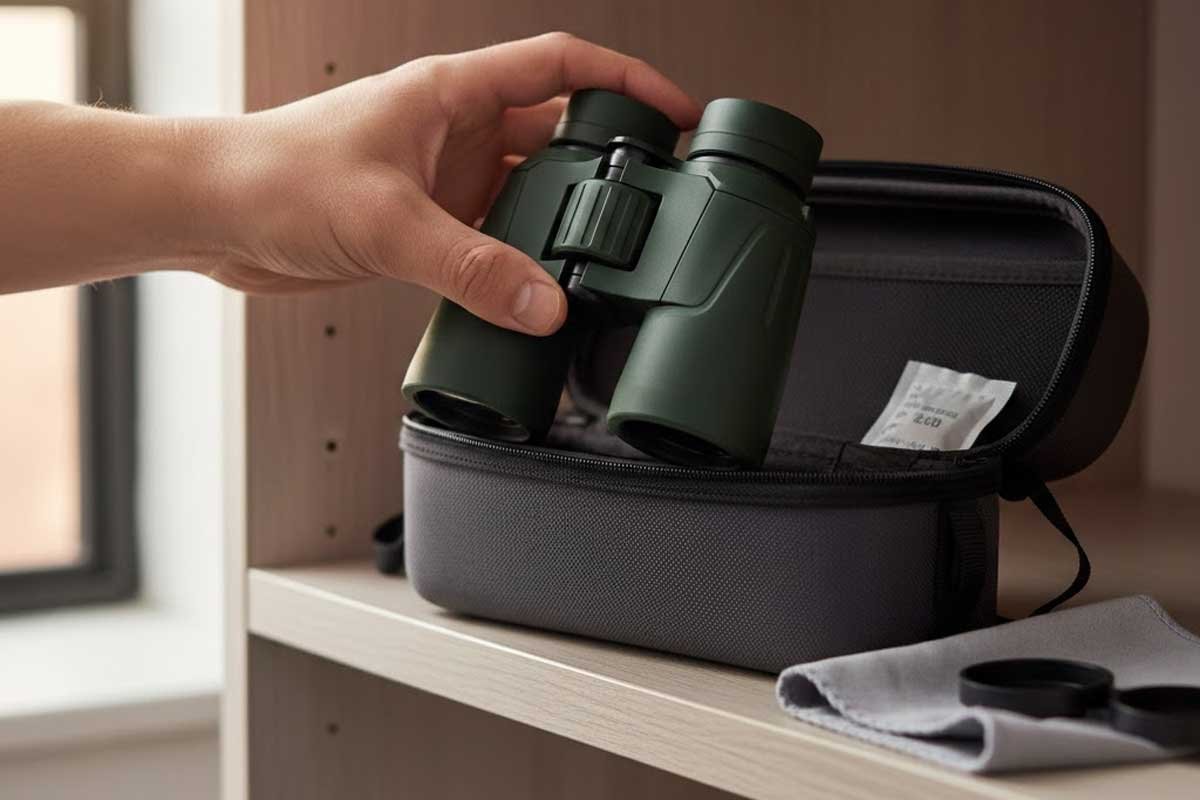
You pull your binoculars out after a few months in the closet… and the view looks hazy. The focus feels stiff. Maybe there’s even a faint internal fog that wasn’t there before.
This is exactly why learning how to store binoculars properly matters more than most people think.
Modern binoculars — even mid-range models like the Nikon Aculon A211 — rely on multi-coated lenses, internal seals, and precise mechanical components. While many are labeled “fog-proof” or “water-resistant,” improper storage can still lead to:
- Internal moisture buildup
- Mold or fungus growth
- Rubber armor deterioration
- Focus wheel stiffness
- Gradual coating degradation
The reality is simple: binoculars aren’t damaged during use nearly as often as they are damaged during storage.
If you’ve already invested time in proper cleaning — using high-quality microfiber cloths or lens wipes — storage is the final step in protecting that investment.
In this 2026 care guide, you’ll learn:
- The biggest storage mistakes people make
- How to prevent humidity damage
- Whether you should store binoculars in their case
- What to do for long-term storage
- How to protect optics in humid climates
Let’s start with why proper storage matters more than you probably realize.
Why Proper Binocular Storage Matters More Than You Think
Many people assume that if binoculars aren’t being used, they’re safe.
That’s not always true.
Storage conditions can quietly affect optics over time — especially in homes with humidity fluctuations, temperature swings, or poor ventilation.
Here’s what actually happens behind the scenes.
1️⃣ Internal Moisture Is the Real Threat
Even “fog-proof” binoculars can suffer when exposed to:
- High humidity
- Rapid temperature changes
- Long-term damp storage
While nitrogen-purged binoculars are sealed against internal fogging, seals can degrade over years — especially if stored in hot garages or damp basements.
Moisture trapped inside the housing creates the perfect environment for mold and fungus.
And once fungus forms on internal lens elements, professional repair is often the only option.
2️⃣ Mold & Fungus Growth Is More Common Than You Think
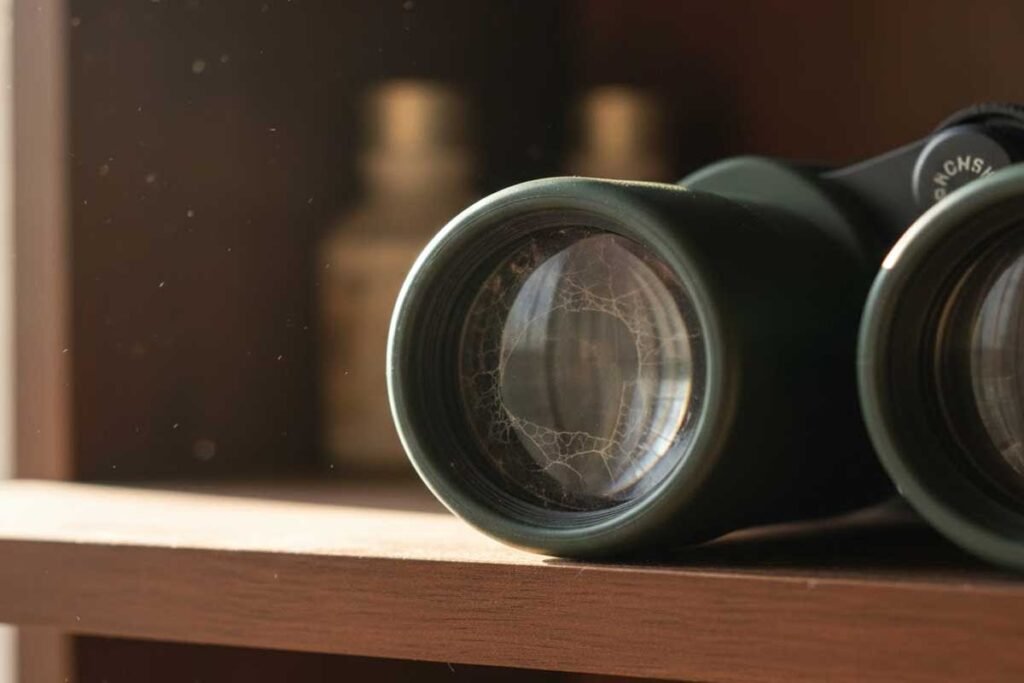
Optical fungus thrives in:
- Dark environments
- High humidity (above 65%)
- Poor airflow
Closets, basements, and sealed cases in humid regions are ideal breeding grounds.
Over time, fungus can:
- Etch lens coatings
- Create permanent haze
- Reduce contrast and sharpness
- Spread internally
This isn’t just cosmetic damage — it permanently affects performance.
Preventing it is far easier than fixing it.
According to guidance from the U.S. Environmental Protection Agency (EPA), indoor humidity levels should ideally remain below 60% to reduce mold growth risk.
3️⃣ Rubber Armor & Adhesives Break Down in Heat
Leaving binoculars in a car during summer can expose them to temperatures above 120°F.
Excessive heat can:
- Soften adhesives
- Warp internal components
- Cause rubber armor to degrade
- Reduce waterproof seal integrity
Even a few repeated heat cycles can shorten the lifespan of quality optics.
4️⃣ Focus Mechanism Can Stiffen Over Time
Mechanical parts benefit from occasional movement.
When binoculars sit unused in poor conditions:
- Lubricants can thicken
- Dust can accumulate
- Focus wheels may feel stiff
Proper storage includes occasional inspection and gentle movement to maintain smooth function.
5️⃣ Coatings Need Protection Even When Idle
Multi-coated lenses reduce glare and improve brightness. But coatings are thin layers applied to glass surfaces.
Improper storage — especially without lens caps or in dusty areas — increases the risk of:
- Surface contamination
- Micro abrasion
- Long-term optical clarity loss
Even high-quality models featured in guides like our Best Binoculars for Outdoor Use benefit from controlled storage conditions.
The Bottom Line
Binoculars don’t fail overnight.
They degrade slowly when:
- Stored damp
- Stored hot
- Stored dirty
- Stored without airflow
The good news?
Proper storage isn’t complicated. It just requires awareness and a few smart habits.
The Biggest Mistakes People Make When Storing Binoculars
Most storage damage doesn’t come from abuse.
It comes from small habits that seem harmless.
Here are the most common mistakes U.S. binocular owners make — and how to avoid them.
1️⃣ Storing Binoculars in a Humid Basement
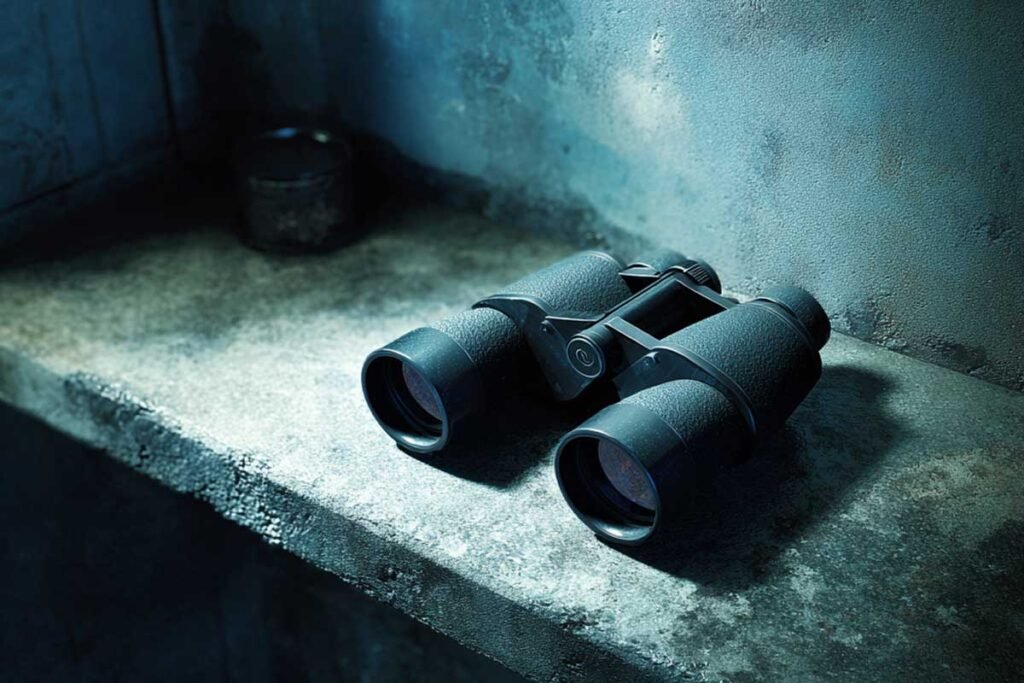
Basements often feel “safe” because they’re dark and undisturbed.
But they’re also:
- Naturally humid
- Poorly ventilated
- Prone to temperature swings
Humidity above 60–65% dramatically increases the risk of fungus growth on internal lens elements.
Even if your binoculars are nitrogen-purged, prolonged humidity exposure stresses seals over time.
Better option:
How to store binoculars properly in a climate-controlled room — not a basement shelf.
2️⃣ Leaving Binoculars in a Hot Car
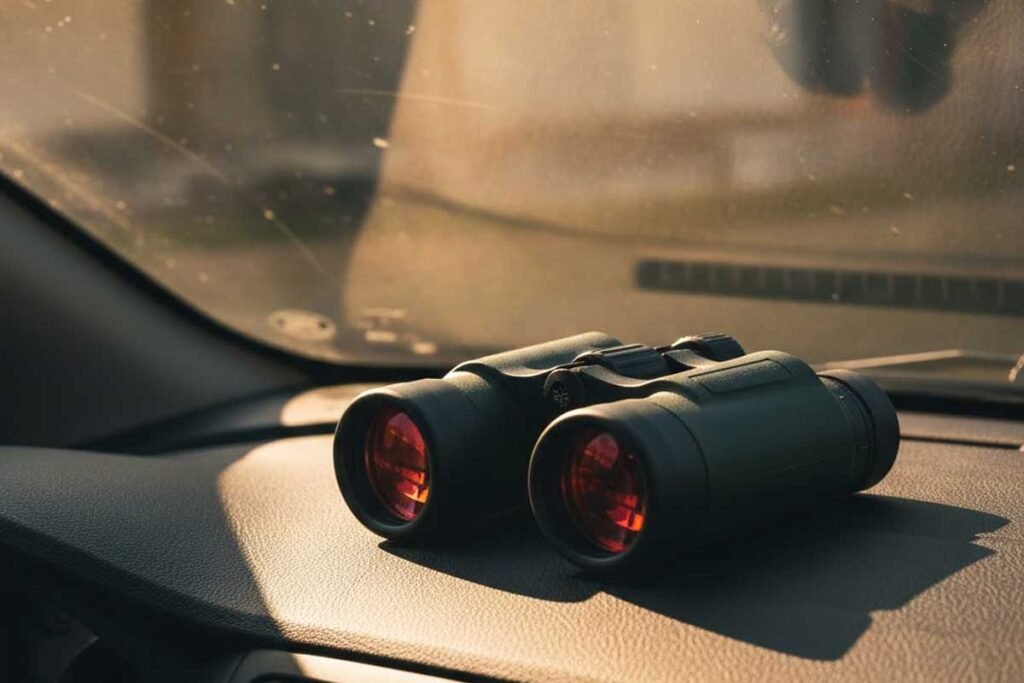
This one is extremely common.
You finish a hike, toss the binoculars in your car, and forget about them.
In summer, interior car temperatures can exceed 120°F.
Heat causes:
- Seal stress
- Rubber armor softening
- Adhesive breakdown
- Lubricant thinning or migration
Repeated heat exposure shortens lifespan — especially for mid-range optics.
Rule:
If you wouldn’t leave a laptop in your car, don’t leave your binoculars there either.
3️⃣ Sealing Binoculars in an Airtight Plastic Bag
This sounds protective — but it can trap moisture.
If even a small amount of humidity is inside when sealed, you’ve created a micro-greenhouse environment.
That’s exactly what fungus needs.
Instead of plastic bags, use:
- Breathable storage cases
- Silica gel packs
- Dry boxes (for humid climates)
4️⃣ Storing Dirty Lenses
Dust and skin oils don’t just affect viewing.
Over time, they can:
- Harden on lens surfaces
- Increase abrasion risk
- Attract moisture
Before long-term storage, always:
✔ Blow off dust
✔ Use a microfiber cloth
✔ Use lens wipes for heavy oils
If you need a refresher, our guides to the best microfiber cloths for binoculars and best lens cleaning wipes for binoculars cover proper prep before storage.
5️⃣ Forgetting About Silica Gel
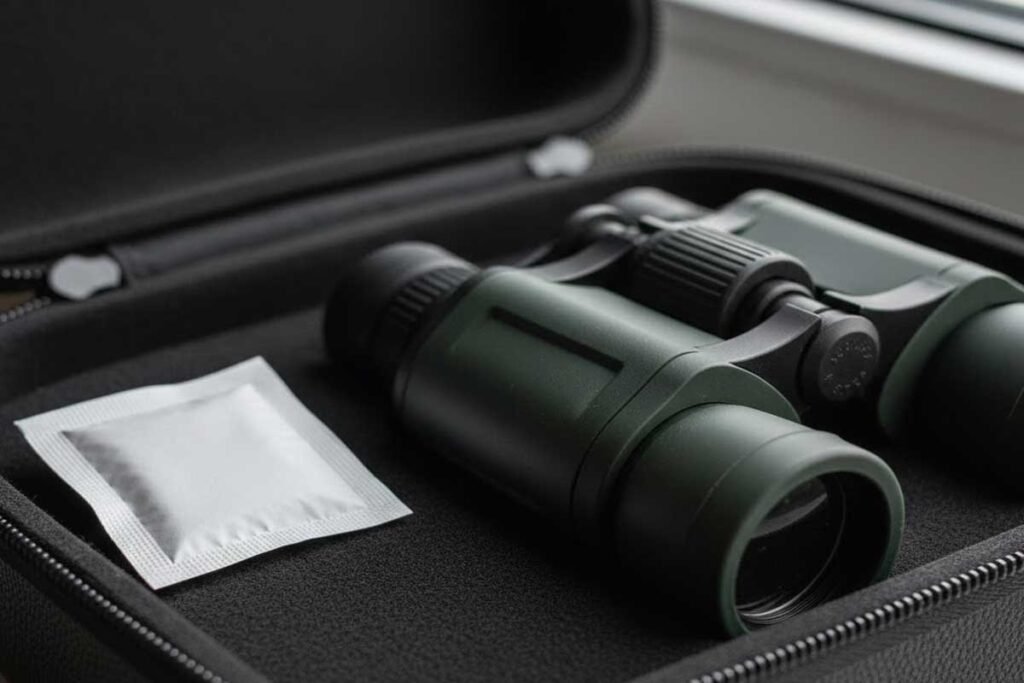
Silica gel isn’t just packaging filler.
It absorbs ambient moisture inside a case.
Without it, humidity slowly builds — especially in coastal or southern U.S. climates.
Replace silica gel packs every few months for maximum effectiveness.
They’re inexpensive insurance.
How to Store Binoculars Properly (Step-by-Step Guide)
Now let’s simplify everything into a clear system.
Follow this process anytime you’re storing binoculars for more than a few days.
Step 1: Clean Before Storing
Never store binoculars dirty.
Dust + moisture = long-term coating wear.
Before storage:
- Blow off dust with air blower
- Gently wipe with microfiber cloth
- Use a lens wipe if oils are present
Even mid-range models like those covered in our Nikon Aculon A211 review benefit from proper storage habits.
Clean optics store better.
Step 2: Ensure They Are Completely Dry
If your binoculars were exposed to:
- Rain
- Morning dew
- Cold-to-warm transitions
Let them air dry before storage.
Never seal damp binoculars inside a case.
Moisture trapped inside is the fastest way to internal fogging.
Step 3: Store in a Protective Case (But Not Sealed Wet)
Cases protect from:
- Dust
- Impact
- Light
But they should not trap moisture.
Ideal setup:
✔ Clean binoculars
✔ Completely dry
✔ Place inside case
✔ Add silica gel packet
This creates a controlled micro-environment.
Step 4: Choose a Climate-Controlled Location
Best storage locations:
- Bedroom closet
- Office shelf
- Climate-controlled room
Avoid:
- Garage
- Basement
- Attic
- Car trunk
Temperature stability matters as much as dryness.
Step 5: Avoid Direct Sunlight
Prolonged UV exposure can:
- Degrade rubber armor
- Fade coatings
- Dry out seals
Even near a sunny window, repeated exposure isn’t ideal.
Store out of direct light.
Step 6: Store Upright or Flat (Either Is Fine)
There’s a myth that binoculars must be stored upright.
In reality:
- Upright = fine
- Flat = fine
What matters more:
- Stability
- No pressure on focus wheel
- Strap not tightly twisted
Relax the strap before storing.
Step 7: Check Them Every 2–3 Months
Especially in humid regions.
Quick checklist:
✔ Inspect lenses
✔ Rotate focus wheel
✔ Replace silica gel if saturated
✔ Allow brief airflow exposure
This prevents long-term stagnation.
Simple Storage Rule
Clean. Dry. Climate-controlled. Checked occasionally.
That’s it.
How to Store Binoculars properly in Humid Climates
If you live in Florida, Louisiana, coastal California, the Pacific Northwest, or anywhere with consistent humidity above 60%, storage becomes even more important.
Humidity is the #1 long-term enemy of binocular optics.
Even nitrogen-purged binoculars are not invincible. Over time, seals age. Once compromised, internal moisture becomes a real risk.
Protecting binocular lenses long term starts with controlling humidity and preventing internal moisture buildup.
Here’s how to store binoculars properly in humid climates.
✔ Use Silica Gel — and Replace It Regularly
Silica gel absorbs moisture inside enclosed spaces.
Best practice:
- Place 1–2 silica gel packs inside the binocular case
- Replace or recharge them every 2–3 months
- Check for color-changing indicator beads
Pro tip: larger reusable desiccant packs last longer than small disposable ones.
✔ Consider a Dry Box (For High Humidity Areas)
A dry box is a sealed storage container designed to control moisture levels.
Ideal for:
- Coastal homes
- High humidity apartments
- Long-term seasonal storage
Dry boxes often include:
- Built-in humidity gauges
- Replaceable desiccant cartridges
If you store optics for 6+ months at a time, a dry box offers serious peace of mind.
✔ Keep Binoculars Away From Exterior Walls
Exterior walls tend to:
- Collect condensation
- Fluctuate in temperature
- Trap moisture pockets
How to store binoculars properly in interior closets instead.
✔ Avoid Basements — Even “Finished” Ones
Finished basements still:
- Have higher ambient humidity
- Experience temperature swings
- Trap stagnant air
If basement storage is unavoidable:
- Use a dry box
- Use a dehumidifier
- Check optics monthly
Humidity control is more important than darkness.
Should You Store Binoculars in Their Case?
This is a common question.
The short answer:
Yes — but only if they’re completely dry.
Let’s break it down.
✔ Why a Case Is Good
A proper binocular case protects against:
- Dust accumulation
- Accidental impacts
- UV exposure
- Surface scratches
Cases are ideal for short-term storage.
⚠ When a Case Becomes a Problem
A case can trap moisture if:
- The binoculars were stored damp
- The environment is humid
- No desiccant is used
Moisture + darkness = fungus growth risk.
Best Practice for Case Storage
Follow this order:
- Clean binoculars
- Ensure they are completely dry
- Place inside breathable case
- Add silica gel pack
- Store in climate-controlled room
Do not:
- Seal wet binoculars
- Store in airtight plastic bags
- Leave case inside car trunk
Cleaning binocular lenses safely before storage significantly reduces long-term coating wear.
Can Mold Grow Inside Binoculars?
Yes — and it happens more often than people realize.
Optical fungus (sometimes called “lens fungus”) grows in environments that are:
- Dark
- Humid
- Poorly ventilated
Once inside, fungus can:
- Etch lens coatings
- Create spider-web patterns
- Permanently reduce clarity
Even high-quality binoculars featured in guides like our Best Binoculars for Outdoor Use can suffer if improperly stored for long periods.
Signs of Mold Inside Binoculars
- Cloudy internal haze
- Spider-web-like patterns
- Reduced contrast even after cleaning
- Uneven brightness between barrels
Unfortunately, internal fungus often requires professional disassembly to remove — and coatings may already be damaged.
Prevention is far cheaper than repair.
Is It Safe to Store Binoculars in a Car?
Short answer:
Not long term.
Cars create extreme conditions:
- High summer heat
- Winter freezing temperatures
- Rapid daily temperature swings
Heat can:
- Soften adhesives
- Degrade seals
- Warp rubber armor
Cold can:
- Stiffen lubricants
- Cause condensation during warming
If you must store binoculars in a vehicle temporarily:
✔ Keep them inside a padded case
✔ Avoid direct sunlight
✔ Remove them when possible
Your binoculars should live in your home — not your car.
Long-Term Storage (6 Months or More)
If you’re storing binoculars for the off-season (for example, winter birding pause or seasonal hunting), follow this checklist.
Long-Term Storage Checklist
✔ Clean lenses thoroughly
✔ Dry completely
✔ Add fresh silica gel
✔ Store inside protective case
✔ Place in climate-controlled room
✔ Check every 2–3 months
✔ Move focus wheel occasionally
For image-stabilized binoculars:
✔ Remove batteries before long-term storage
This prevents battery leakage damage.
Quick Rule for Long-Term Storage
Humidity below 50%
Temperature stable
Optics clean
Airflow occasional
If you control those four factors, your binoculars can last decades.
Best Storage Accessories for Binocular Protection
Storing binoculars properly doesn’t require expensive gear.
But a few smart accessories can dramatically reduce long-term risk — especially in humid climates.
Below are the most useful storage upgrades for 2026.
1️⃣ Hard Protective Case (Best for Physical Protection)
A hard-shell case adds:
- Impact resistance
- Dust protection
- Light blocking
- Travel safety
Look for:
- Padded interior
- Snug fit (not overly tight)
- Space for silica gel
Hard cases are ideal if you:
- Travel often
- Store optics with other gear
- Keep binoculars in a backpack
For casual home storage, soft padded cases are usually sufficient — as long as humidity is controlled.
2️⃣ Dry Box (Best for Humid Climates)
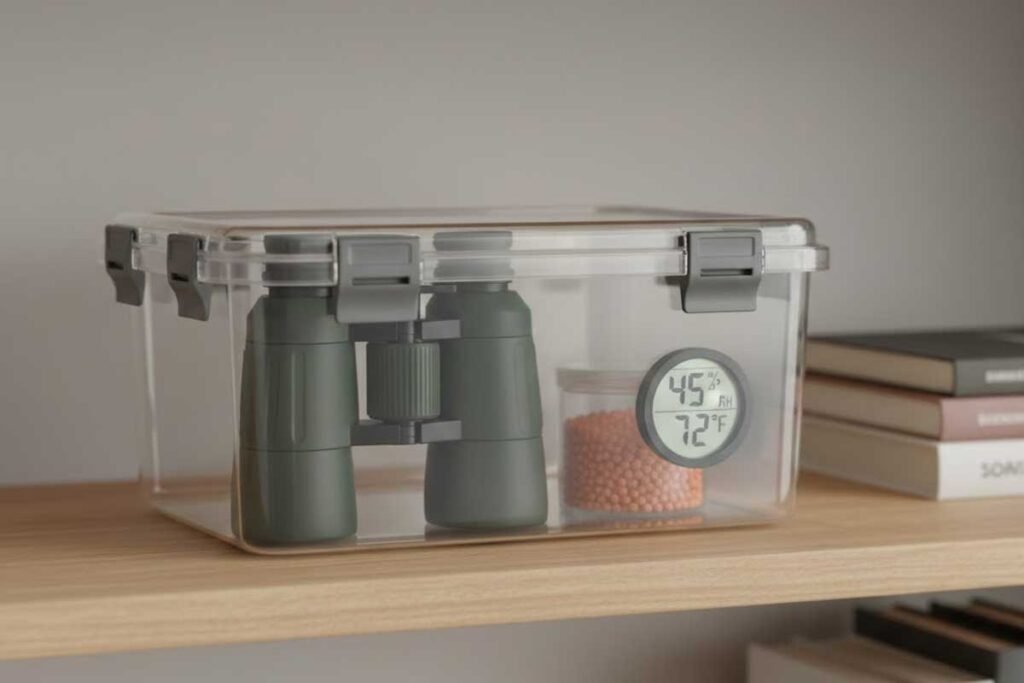
If you live in:
- Coastal states
- High humidity regions
- Basement-heavy homes
A dry box is one of the best investments you can make.
Benefits:
- Sealed moisture control
- Replaceable desiccant system
- Humidity monitoring
- Long-term storage confidence
For optics enthusiasts who own multiple devices (binoculars, camera lenses, spotting scopes), dry boxes become even more valuable.
They create a controlled micro-environment.
3️⃣ Silica Gel Packs (Essential Low-Cost Protection)
Silica gel is the simplest moisture defense.
Best practice:
- Place 1–2 packs in each binocular case
- Use color-indicating silica (changes color when saturated)
- Replace or recharge every 2–3 months
This small step alone prevents many humidity-related problems.
For most users, silica gel + climate-controlled room is enough.
4️⃣ Small Digital Hygrometer (Optional but Smart)
If you want full control, add a small hygrometer to your storage area.
Ideal humidity range for binocular storage:
- 35%–50% relative humidity
Above 60% → increased mold risk
Below 30% → excessive dryness (less common issue)
Monitoring humidity helps you act before damage occurs.
How Often Should You Check Stored Binoculars?
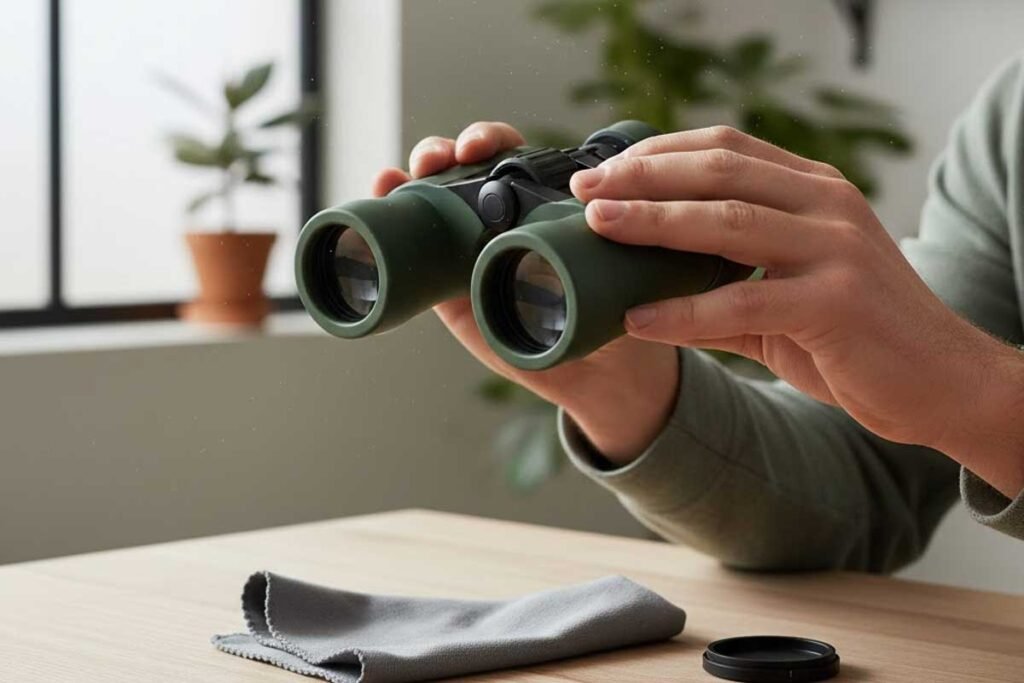
Even perfectly stored binoculars shouldn’t be forgotten indefinitely.
Follow this simple inspection schedule:
✔ Dry Climate (Low Humidity Areas)
Check every 3–4 months:
- Inspect lenses
- Rotate focus wheel
- Replace silica gel if needed
✔ Humid Climate
Check monthly:
- Inspect for haze
- Check for condensation signs
- Recharge desiccant
- Air out case briefly
✔ Long-Term Seasonal Storage
Every 2–3 months:
- Remove from case
- Let air circulate briefly
- Move focus wheel through range
- Inspect coatings under natural light
Mechanical parts benefit from light periodic movement.
Final Checklist – Safe Binocular Storage in 2026
Let’s simplify everything into a practical list you can follow anytime.
✔ Before Storage
- Blow off dust
- Clean lenses properly
- Ensure binoculars are completely dry
✔ During Storage
- Use protective case
- Add silica gel
- Store in climate-controlled room
- Avoid basement and car storage
- Keep away from direct sunlight
✔ Long-Term Care
- Check every 2–3 months
- Rotate focus wheel
- Replace moisture absorbers
- Inspect for haze or mold
FAQ (People Also Ask Optimized)
1) Should binoculars be stored in a case?
Yes — as long as the binoculars are completely dry first. A case protects from dust, sunlight, and accidental bumps. In humid areas, add a silica gel pack inside the case to prevent trapped moisture from leading to haze or fungus.
2) Can mold or fungus grow inside binoculars?
Yes. Optical fungus can grow when binoculars are stored in dark, humid, poorly ventilated conditions. Over time, fungus can etch coatings and permanently reduce clarity. Prevention (dry storage + desiccant + periodic checks) is much easier than repair.
3) How to store binoculars properly in a humid climate?
Store them in a climate-controlled room, inside a case with fresh silica gel, and check them monthly. If humidity is consistently high, a dry box or dehumidifier storage solution provides extra protection.
4) Is it safe to store binoculars in a car?
Not long-term. Cars experience extreme heat, freezing cold, and daily temperature swings that can stress seals, degrade rubber armor, and cause condensation. If you must keep them in a vehicle temporarily, store them in a padded case and remove them whenever possible.
5) How should I prepare binoculars for long-term storage?
Clean the lenses, make sure the binoculars are fully dry, store them in a protective case with silica gel, and keep them in a stable indoor environment. For long-term storage (6+ months), inspect every 2–3 months and gently rotate the focus wheel to keep mechanisms smooth.
6) What humidity level is best for storing binoculars?
Aim for 35%–50% relative humidity. Prolonged humidity above ~60% increases the risk of internal moisture problems and fungus growth. A small hygrometer can help you monitor your storage area.
7) How often should I check binoculars that are stored?
In dry climates, check every 3–4 months. In humid climates, check monthly. Quick checks should include inspecting lenses for haze, ensuring silica gel isn’t saturated, and moving the focus wheel through its range.
8) Should I store binoculars with the lens caps on?
Yes. Lens caps reduce dust buildup and protect coatings. Just make sure the binoculars are dry before capping and storing, especially after rain, dew, or temperature changes.
9) Can I store binoculars in a garage or basement?
It’s not recommended. Garages and basements tend to have higher humidity and bigger temperature swings. If you must store binoculars there, use a dry box, desiccant packs, and check them frequently.
The Bottom Line
Learning how to store binoculars properly isn’t complicated.
You don’t need expensive equipment.
You need:
✔ Clean optics
✔ Dry conditions
✔ Stable temperature
✔ Occasional inspection
That’s it.
If you combine proper cleaning (with microfiber cloths and lens wipes) and proper storage, your binoculars can easily last 10–20 years — even in challenging climates.