



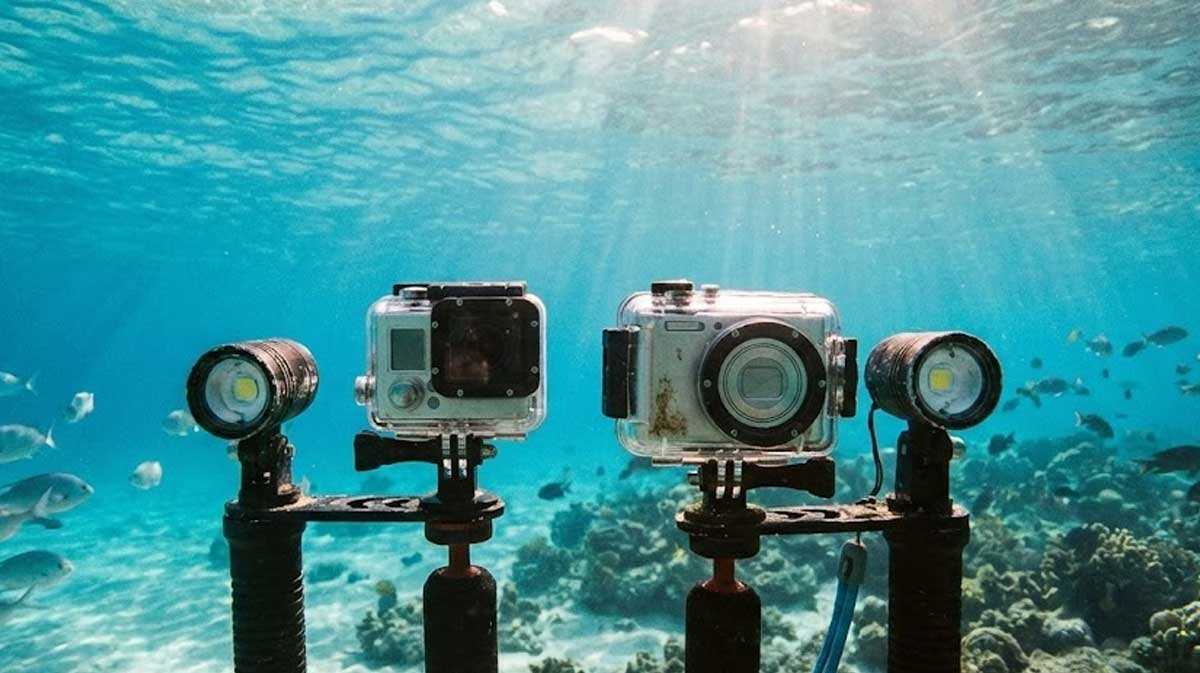
Choosing between an action camera and a compact camera for underwater photography is one of the most common—and most misunderstood—decisions new buyers face.
On land, the differences feel obvious. Underwater, those differences become amplified by light loss, movement, depth, and usability. Many people assume action cameras are “good enough” everywhere, while others jump straight to compact cameras expecting professional results—only to feel overwhelmed.
The truth is simpler: neither option is universally better. Each excels under specific conditions and fails under others. This comparison breaks down how action cameras and compact cameras actually perform underwater, using real constraints—not spec sheets—to help you choose the right tool for how you shoot.
If you want to see how these differences translate into specific models, you can jump ahead to Best Underwater Cameras for 2026. First, let’s clarify the core trade-offs.
TL;DR – Action Camera vs Compact Camera (Quick Verdict)
- Action cameras are best for underwater video, snorkeling, and travel
- Compact cameras deliver better still photos and more control underwater
- Action cameras prioritize ease, stabilization, and speed
- Compact cameras prioritize image quality, flexibility, and manual control
- The right choice depends on depth, lighting, and how you shoot
Action Cameras Underwater: Strengths and Limitations
Action cameras are designed to be simple, durable, and forgiving—qualities that translate well to underwater use, especially near the surface.
Why Action Cameras Work Well Underwater
In real conditions, action cameras shine when movement and simplicity matter more than absolute image quality.
Key strengths include:
- Built-in waterproofing (often up to ~33 ft without housing)
- Excellent electronic stabilization for swimming footage
- Ultra-wide field of view that’s forgiving with framing
- Fast startup and one-button operation
For snorkeling, surface swimming, and casual dives, these advantages often outweigh their technical limitations. This is why action cameras dominate underwater travel footage.
🔗 For model-specific recommendations, see Best Underwater Cameras by Use Case.
Where Action Cameras Fall Short
Underwater, action camera limitations become more noticeable as depth increases.
Common drawbacks:
- Small sensors struggle in low light
- Still photos lack detail and dynamic range
- Limited manual exposure control
- Fixed ultra-wide lenses limit composition
In practice, action cameras are video-first tools. If still photography matters more than motion, their weaknesses show quickly.
Compact Cameras Underwater: Strengths and Limitations
Compact cameras approach underwater photography from the opposite direction: image quality first, convenience second.
Why Compact Cameras Perform Better for Photography
Once you move beyond shallow water, compact cameras consistently outperform action cameras for still images.
Their advantages include:
- Larger sensors with better low-light performance
- Optical zoom for flexible framing
- Manual controls for exposure and focus
- Better color and detail retention underwater
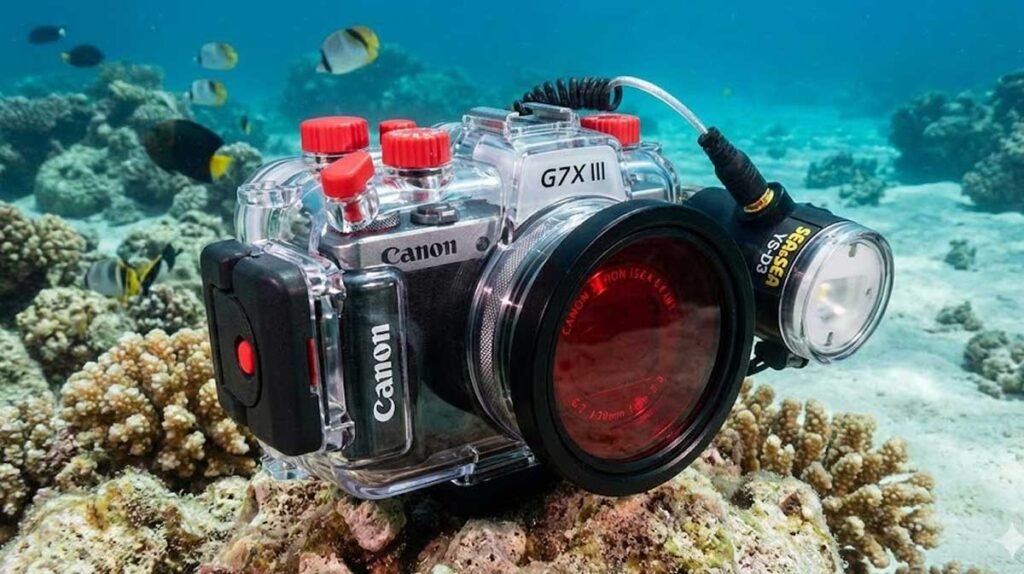
Paired with a housing, compact cameras become reliable tools for scuba diving and photography-focused users.
🔗 If you’re choosing a model, start with Best Underwater Cameras for 2026 to avoid mismatched setups.
Where Compact Cameras Can Be Frustrating
That extra performance comes with trade-offs.
Limitations include:
- Requires a housing for depth
- More setup time before dives
- Less forgiving of movement
- Steeper learning curve for beginners
For users who prioritize ease and speed, compact cameras can feel slower and more demanding.
Action vs Compact Cameras Underwater – Quick Comparison Table
| Feature | Action Camera | Compact Camera |
|---|---|---|
| Best Use Case | Video, snorkeling, travel | Still photos, scuba diving |
| Built-in Waterproofing | Yes (usually ~33 ft) | Sometimes (varies by model) |
| Low-Light Performance | Weak | Stronger |
| Photo Quality | Basic | Significantly better |
| Video Stabilization | Excellent | Moderate |
| Manual Controls | Very limited | Extensive |
| Ease of Use | Very easy | Moderate |
| Housing Required | Optional | Usually required |
| Learning Curve | Low | Medium |
Quick takeaway:
If you shoot mostly video in shallow water, action cameras make sense.
If you care about photo quality and deeper dives, compact cameras are the better tool.
Image Quality Underwater: Real Conditions, Not Specs
Low-Light Performance at Depth
Underwater, light drops fast. Even at 30–40 feet, colors fade and noise creeps in.
- Action cameras rely heavily on software processing. In bright, shallow water they look fine; deeper down, noise and softness become obvious.
- Compact cameras benefit from larger sensors and better optics. At the same depth, they retain detail and handle shadows more gracefully—especially when paired with lights.
Bottom line: if you plan to dive deeper or shoot later in the day, compact cameras have a clear edge.
Color Retention & Detail
Color loss is unavoidable underwater, but how cameras handle it differs.
- Action cameras often overcorrect, producing punchy but less accurate colors.
- Compact cameras preserve more natural tones and fine detail, which matters for still photography and close-ups.
This difference becomes obvious when photographing reefs, marine life, or textures.
Photo vs Video Priority
- If video is your primary goal, action cameras remain the easiest and most forgiving option.
- If photos matter more than motion, compact cameras consistently deliver better results.
There’s no workaround here—this is a core design difference.
Ease of Use & Handling Underwater
Setup Time Before the Dive
- Action cameras are grab-and-go. Mount, turn on, and shoot.
- Compact cameras require housings, checks, and sometimes adjustments before entering the water.
For frequent, casual use, setup friction matters more than people expect.
Controls with Gloves
Underwater gloves change everything.
- Action cameras use minimal buttons—easy, but limited.
- Compact cameras with housings provide physical dials and buttons, allowing real control but requiring familiarity.
Divers who value control appreciate this. Beginners often find it overwhelming at first.
Stability & Movement
Action cameras excel here thanks to aggressive stabilization. Compact cameras rely more on technique and accessories like trays or dual handles.
🔗 If you’re building a setup, our Underwater Camera Accessories Guide explains how stabilization tools change the experience.
Cost Comparison: Camera + Accessories
Action Camera Total Cost
Typical setup:
- Action camera
- Optional housing
- Small mount or lanyard
Result: lower upfront cost, fewer accessories, simpler upgrades.
Compact Camera Total Cost
Typical setup:
- Camera
- Dedicated housing
- Tray or handles
- Optional lights
Result: higher initial investment, but better long-term image quality.
🔗 For current picks across budgets, see Best Underwater Cameras for 2026.
Long-Term Upgrade Paths
Action cameras upgrade quickly but hit performance ceilings. Compact cameras scale better with accessories and skill.
If underwater photography becomes a serious hobby, compact systems age more gracefully.
Which Camera Should You Choose?
Choose an Action Camera If…
- You prioritize video over photos
- You snorkel or stay near the surface
- You value speed, simplicity, and travel convenience
- You don’t want to manage housings and accessories
Choose a Compact Camera If…
- You care about still image quality
- You plan to scuba dive regularly
- You’re comfortable learning manual controls
- You want room to grow your setup over time
🔗 Still unsure? The Underwater Camera Buying Guide walks through these decisions step by step.
Common Mistakes When Choosing Between Them
- Choosing based on specs instead of underwater conditions
- Ignoring lighting needs
- Assuming one camera type can “do it all”
- Underestimating setup and learning curve
Most frustration comes from mismatched expectations, not bad gear.
Conclusion
The choice between action cameras and compact cameras for underwater photography isn’t about which is better overall—it’s about which is better for you.
Action cameras win on simplicity, stabilization, and video. Compact cameras win on image quality, control, and depth performance. Once you understand these trade-offs, the decision becomes straightforward.
If you want to see how these categories translate into specific models and current picks, continue to Best Underwater Cameras for 2026. And if you’re still refining your needs, the Underwater Camera Buying Guide will help you choose with confidence.
Frequently Asked Questions
Action Cameras vs Compact Cameras for Underwater Photography
Are action cameras good enough for underwater photography?
Action cameras work well for casual underwater use, especially video and snorkeling. However, their small sensors limit photo quality in low light and at deeper depths compared to compact cameras.
Do compact cameras really take better underwater photos?
Yes. Compact cameras generally produce better still photos underwater thanks to larger sensors, optical zoom, and manual controls—especially when diving deeper than 30–40 feet.
Which is better for snorkeling: action or compact cameras?
For most snorkelers, action cameras are the better choice. They’re easier to use, stabilize movement well, and perform reliably in bright, shallow water.
Which camera type is better for scuba diving?
Compact cameras paired with housings are better suited for scuba diving. They handle low light more effectively and offer greater control at depth.
Is an underwater housing required for compact cameras?
In most cases, yes. Compact cameras usually need a housing to safely handle scuba depths and repeated saltwater exposure.
Are action cameras cheaper overall?
Yes. Action cameras typically have a lower total cost because they require fewer accessories. Compact camera setups cost more upfront but deliver better image quality.
Can beginners start with compact cameras?
Beginners can start with compact cameras, but there’s a learning curve. Many users find it easier to begin with an action camera and upgrade later as their needs grow.
Which camera type is better for video?
Action cameras are generally better for underwater video due to advanced stabilization and ease of movement.